Ferrari: Saudi Arabia Has Become a Key Driver of Our Growth in the Middle East

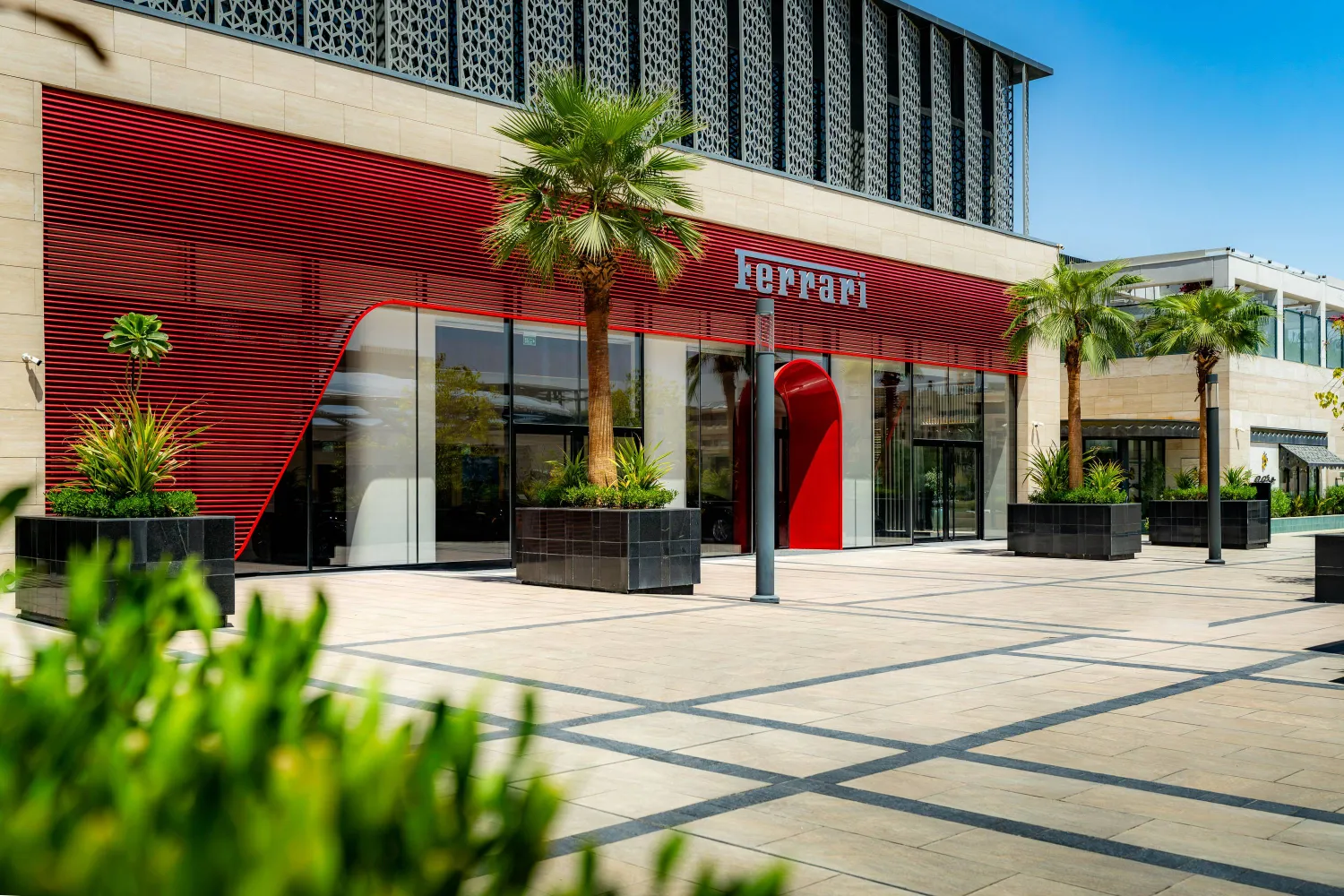
Ferrari's new showroom in the Saudi capital, Riyadh (Asharq Al-Awsat)
TT

Ferrari: Saudi Arabia Has Become a Key Driver of Our Growth in the Middle East

Ferrari's new showroom in the Saudi capital, Riyadh (Asharq Al-Awsat)

Saudi Arabia has emerged as one of the main drivers of Italian luxury sports carmaker Ferrari's growth in the Middle East, fueled by an expanding population of high-net-worth individuals, a new generation of customers and growing interest in luxury sports cars.

Despite accelerating demand across the region, the company remains committed to a strategy centered on limited production and preserving the exclusivity of its brand.

Giorgio Turri, Regional Director of Ferrari Middle East, said Saudi Arabia is no longer simply a market experiencing rising demand, but has become a strategic market for Ferrari's presence, future growth and innovation in the Middle East.

Speaking to Asharq Al-Awsat, Turri explained that the economic and social transformations associated with Saudi Vision 2030 have contributed to a shift in the company's customer demographics, with growing numbers of younger buyers interested in sports cars, vehicle personalization and motorsports.

Riyadh Showroom Reflects Market's Importance

Turri said the opening of Ferrari's new showroom in Riyadh, the first in the Middle East and Asia to adopt the company's new corporate identity, reflects the growing importance of the Saudi market within its regional strategy.

He added that demand in the Kingdom continues on an upward trajectory among both existing and first-time customers.

Ferrari is seeking to broaden its customer base by developing new models, building on the success of vehicles such as the California, Roma and Purosangue, while looking ahead to the introduction of the Luce, its first fully electric vehicle and first five-seat model.

Growth Versus Exclusivity

Despite rising demand, Turri stressed that Ferrari does not pursue higher sales volumes as an end in themselves.

"We" do not seek to increase sales volumes as a goal in itself, he said, explaining that expansion requires carefully balancing market demand with the company's commitment to limited production.

He noted that Ferrari customers in the Middle East are among the youngest worldwide, a trend also evident in Saudi Arabia, where interest in vehicle personalization programs and participation in driving and racing activities is increasing.

Turri said the Kingdom is home to one of the most active Ferrari owners' clubs globally, while Saudi customers demonstrate detailed knowledge of vehicle specifications, technology and performance.

Saudi Arabia, UAE and Qatar Lead Regional Demand

Discussing regional market performance, Turri said economic transformation and growing wealth are supporting long-term demand for luxury vehicles.

He noted that demand is accelerating more rapidly in Saudi Arabia, the United Arab Emirates and Qatar than in other markets across the region.

More than 40 percent of new Ferraris delivered annually in the Middle East go to first-time buyers of the brand, he revealed, while the proportion exceeds 50 percent in the pre-owned vehicle market.

These trends coincide with Ferrari's plan to introduce an average of four new models annually between 2026 and 2030.

Regional Disruptions Force Changes to Shipping Routes

Addressing the impact of recent geopolitical disruptions, Turri said the main effects were felt in supply chains and logistics, after the closure of the Strait of Hormuz forced Ferrari to adjust shipping routes to Gulf markets.

He explained that the company managed the challenges during March and resumed its normal pace of operations in April by rerouting maritime shipments and using air freight when necessary.

Turri confirmed that showrooms and service centers continued operating and that demand had not changed significantly, with the economic and demographic factors supporting the Gulf market remaining intact.

An Ecosystem Beyond Car Sales

Turning to Ferrari's strategy in Saudi Arabia, Turri said the next phase would focus on expanding activities associated with vehicle ownership, including driving programs, racing events and exclusive customer experiences.

He explained that the Jeddah Corniche Circuit has been part of Ferrari's programs since 2023 and is scheduled to host the Ferrari Challenge championship for the first time in February 2027, amid growing participation by Saudi amateur drivers.

Turri also highlighted the company's first customer tour in AlUla in 2025, alongside other events organized during the holy month of Ramadan.

He said these activities have become an integral part of Ferrari's strategy to deepen customers' connection with the brand.

Turri emphasized that Saudi Arabia represents a significant growth opportunity in the coming years, driven not only by increasing demand for sports cars but also by an expanding customer base and growing interest in motorsports across the Kingdom.


China, US Discuss Tariffs, Farm Trade at First Trade Council Meeting

US and Chinese flags are seen in this illustration taken March 20, 2025. (Reuters)
TT

China, US Discuss Tariffs, Farm Trade at First Trade Council Meeting

US and Chinese flags are seen in this illustration taken March 20, 2025. (Reuters)

China and the United States held their first trade council meeting under a bilateral economic and trade consultation mechanism via ‌video link ‌on Friday, China's ‌commerce ⁠ministry said on ⁠Saturday.

The two sides held "candid, in-depth and constructive discussions" on implementing outcomes ⁠from previous trade consultations, ‌including ‌tariffs, a reciprocal ‌tariff-reduction arrangement involving $30 ‌billion on each side, agricultural trade and other issues of ‌note, the ministry said.

Both sides will ⁠continue ⁠to use the council to address trade concerns, expand cooperation and reduce outstanding issues, it added.


IMF Says More Work Needed on Lebanon Reforms

A man walks past Lebanon's Central Bank headquarters in Beirut on November 10, 2026. (AFP)
TT

IMF Says More Work Needed on Lebanon Reforms

A man walks past Lebanon's Central Bank headquarters in Beirut on November 10, 2026. (AFP)

The International Monetary Fund said on Friday that more work was needed to reach an agreement on restructuring Lebanon's banking sector, one of the steps towards unlocking billions of dollars in financial assistance.

An IMF staff-level agreement reached in April 2022 laid out conditions to unlock assistance, including a law on the distribution of losses in the banking sector, known as the financial gap law, which parliament has still not voted on.

In a statement at the end of meetings that began on Tuesday, the IMF said "there was progress in further clarifying the approaches under consideration by the Banque du Liban (BdL) and the Government regarding banking sector reform, the draft financial regulation law and the recovery of deposits, and aligning them with international standards".

It however noted that "further work is needed to reach an agreement on a strategy for an effective and durable restructuring of Lebanon's banking sector, leading to a sound and resilient system".

The cabinet submitted a draft of the law to parliament in 2025, but the text is contested by the banking sector and political parties, preventing a vote.

Differences over estimates of losses and their distribution have stalled negotiations with the IMF.

In 2022, the government estimated losses resulting from the 2019 financial crisis at around $70 billion, a figure believed to have increased over the last seven years during which the crisis has remained unresolved.

Lebanese Finance Minister Yassin Jaber said during a news conference that he hoped to "achieve progress that would allow us to reach an agreement on a program with the IMF and sign it during the first quarter of next year, and by its end at the latest".

Lebanon's economic crisis, which the World Bank has ranked among the worst since 1850, has deprived depositors of access to all of their funds, destroyed confidence in the banking sector and led to greater reliance on cash liquidity in various economic and commercial activities.


Silver Demand Seen Down 5% This Year Due to Weaker Jewellery Purchases

Silver bars are stacked in the safe deposit boxes room of the Pro Aurum gold house in Munich, Germany, January 10, 2025. (Reuters)
TT

Silver Demand Seen Down 5% This Year Due to Weaker Jewellery Purchases

Silver bars are stacked in the safe deposit boxes room of the Pro Aurum gold house in Munich, Germany, January 10, 2025. (Reuters)

Silver demand is expected to fall by 5% in 2026 due to weaker jewellery demand and lower consumption in solar cells, where high prices have accelerated substitution, research showed on Friday.

Research done by consultancy Metals Focus for the Silver Institute puts demand at 1.08 billion troy ounces this year.

Silver, used in jewellery, electronics, electric vehicles and solar panels as well as for investment, is ‌down 59% ‌to $50 an ounce since retail buying drove prices ‌to ⁠a record high ⁠of $121.6 in January.

The base for that rally was created in 2025, when silver surged 147%, as massive inflows of the metal to US inventories due to tariff uncertainty and into silver-backed exchange-traded products (ETPs) tightened liquidity in the London market.

This year, expectations for higher interest rates, a stronger dollar and higher bond yields have weighed on investment ⁠sentiment.

Silver released through ETP selling, outflows from stocks ‌in the US and a smaller ‌market deficit improved liquidity in the physical market, the Silver Institute and ‌consultancy Metals Focus said on Friday.

Metals Focus sees net ETP ‌outflows of 45 million ounces this year after 278 million ounces of inflows in 2025.

As of early November, ETP holdings stood at 1.25 billion ounces.

Industrial demand is expected to fall by 3% in 2026 as installations ‌in photovoltaics have fallen short of expectations, particularly in China, while January's record silver prices accelerated ⁠substitution.

Meanwhile, demand ⁠for jewellery and silverware is forecast to decline by 22% and 17%, respectively, as higher prices and weaker rural spending in India encouraged purchases of smaller, lighter products.

Demand in China and the US is also subdued. Strong retail investment in late 2025 and early 2026 gave way to far more subdued buying from March as silver prices fell, Metals Focus said.

It expects global bar and coin demand to fall 2% this year, with US retail investment hitting its lowest level since 2010.