Oil Rises on Middle East Supply Fears, US Inventory Drawdowns

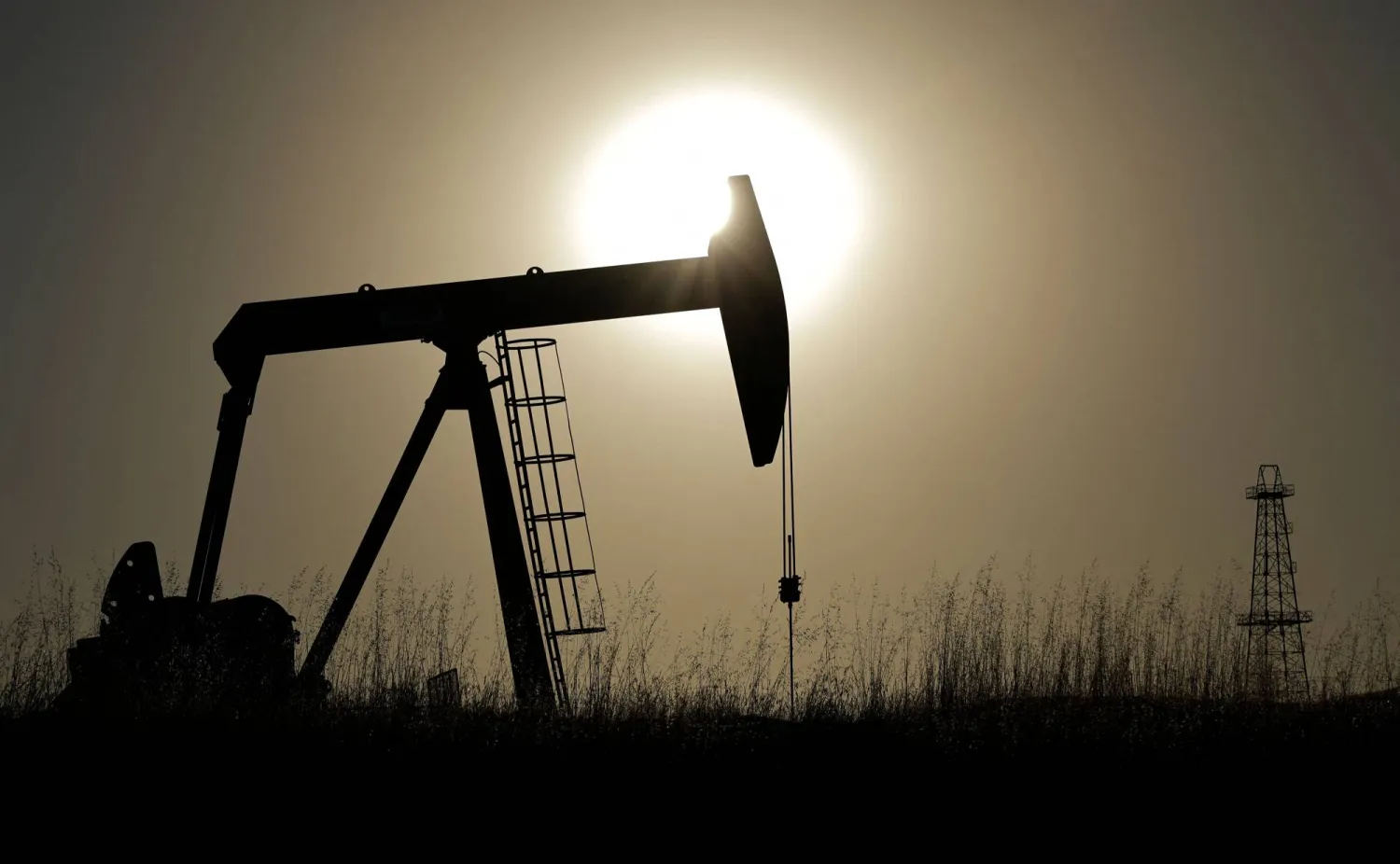
A pumpjack operates after sunrise in Kern County, which has a long history of oil production, in California's 22nd Congressional District on October 16, 2026 near Bakersfield, California. (Getty Images/AFP)
TT

Oil Rises on Middle East Supply Fears, US Inventory Drawdowns

A pumpjack operates after sunrise in Kern County, which has a long history of oil production, in California's 22nd Congressional District on October 16, 2026 near Bakersfield, California. (Getty Images/AFP)

Oil prices gained over $1 on Wednesday as escalating Middle East tensions fueled fears of supply disruptions, while falling US crude and product inventories lent support to the market.

Brent crude futures rose $1.59, or 1.5%, to $110.38 per barrel as of 0350 GMT. US West Texas Intermediate (WTI) crude gained $1.36, or 1.4%, to $99.18 per barrel.

Prices fell in the previous trading session after Iran's president discussed ‌mediation efforts in ‌a meeting with Pakistan's army chief in Tehran, though ‌Brent ⁠hit a five-month high ⁠before easing.

"Oil prices have been having a bit of wild ride in the last couple of sessions," said Suvro Sarkar, head of energy research at DBS.

"We believe this is a mix of profit taking and optimistic hopes of a Qatar- or Pakistan-brokered deal, countered by the realization that any deal is still very distant and compounded further by inventory data from the American Petroleum Institute (API), which ⁠shows drawdowns continuing in the US for both crude and ‌products."

Iran told Pakistan's army chief there would ‌be no talks with Washington until its demands were met, Iranian media outlet Nournews reported ‌on Tuesday, adding that a Qatari delegation had arrived in Tehran. There ‌was no official confirmation of the reports.

Maritime security risks are also escalating. Shiptracker Kpler said on Monday that at least 18 vessel attacks were recorded over the past two weeks, while LSEG analysts warned Iran was targeting tankers well beyond the Strait of Hormuz, reaching ‌into the Gulf of Oman and jeopardizing Gulf crude loadings and the ship-to-ship transfers supporting regional loadings.

The death toll from a Houthi attack on Yemeni government forces on Monday rose to 73 as fighting intensified.

In the US, two Energy Department officials said on Tuesday they were working with refiners around the world to boost fuel output as a diesel shortage has raised prices.

According to market sources citing API data, US crude stocks fell by 4.9 million barrels in the week ended October 16.


IMF Says More Work Needed on Lebanon Reforms

A man walks past Lebanon's Central Bank headquarters in Beirut on November 10, 2026. (AFP)
TT

IMF Says More Work Needed on Lebanon Reforms

A man walks past Lebanon's Central Bank headquarters in Beirut on November 10, 2026. (AFP)

The International Monetary Fund said on Friday that more work was needed to reach an agreement on restructuring Lebanon's banking sector, one of the steps towards unlocking billions of dollars in financial assistance.

An IMF staff-level agreement reached in April 2022 laid out conditions to unlock assistance, including a law on the distribution of losses in the banking sector, known as the financial gap law, which parliament has still not voted on.

In a statement at the end of meetings that began on Tuesday, the IMF said "there was progress in further clarifying the approaches under consideration by the Banque du Liban (BdL) and the Government regarding banking sector reform, the draft financial regulation law and the recovery of deposits, and aligning them with international standards".

It however noted that "further work is needed to reach an agreement on a strategy for an effective and durable restructuring of Lebanon's banking sector, leading to a sound and resilient system".

The cabinet submitted a draft of the law to parliament in 2025, but the text is contested by the banking sector and political parties, preventing a vote.

Differences over estimates of losses and their distribution have stalled negotiations with the IMF.

In 2022, the government estimated losses resulting from the 2019 financial crisis at around $70 billion, a figure believed to have increased over the last seven years during which the crisis has remained unresolved.

Lebanese Finance Minister Yassin Jaber said during a news conference that he hoped to "achieve progress that would allow us to reach an agreement on a program with the IMF and sign it during the first quarter of next year, and by its end at the latest".

Lebanon's economic crisis, which the World Bank has ranked among the worst since 1850, has deprived depositors of access to all of their funds, destroyed confidence in the banking sector and led to greater reliance on cash liquidity in various economic and commercial activities.


Silver Demand Seen Down 5% This Year Due to Weaker Jewellery Purchases

Silver bars are stacked in the safe deposit boxes room of the Pro Aurum gold house in Munich, Germany, January 10, 2025. (Reuters)
TT

Silver Demand Seen Down 5% This Year Due to Weaker Jewellery Purchases

Silver bars are stacked in the safe deposit boxes room of the Pro Aurum gold house in Munich, Germany, January 10, 2025. (Reuters)

Silver demand is expected to fall by 5% in 2026 due to weaker jewellery demand and lower consumption in solar cells, where high prices have accelerated substitution, research showed on Friday.

Research done by consultancy Metals Focus for the Silver Institute puts demand at 1.08 billion troy ounces this year.

Silver, used in jewellery, electronics, electric vehicles and solar panels as well as for investment, is ‌down 59% ‌to $50 an ounce since retail buying drove prices ‌to ⁠a record high ⁠of $121.6 in January.

The base for that rally was created in 2025, when silver surged 147%, as massive inflows of the metal to US inventories due to tariff uncertainty and into silver-backed exchange-traded products (ETPs) tightened liquidity in the London market.

This year, expectations for higher interest rates, a stronger dollar and higher bond yields have weighed on investment ⁠sentiment.

Silver released through ETP selling, outflows from stocks ‌in the US and a smaller ‌market deficit improved liquidity in the physical market, the Silver Institute and ‌consultancy Metals Focus said on Friday.

Metals Focus sees net ETP ‌outflows of 45 million ounces this year after 278 million ounces of inflows in 2025.

As of early November, ETP holdings stood at 1.25 billion ounces.

Industrial demand is expected to fall by 3% in 2026 as installations ‌in photovoltaics have fallen short of expectations, particularly in China, while January's record silver prices accelerated ⁠substitution.

Meanwhile, demand ⁠for jewellery and silverware is forecast to decline by 22% and 17%, respectively, as higher prices and weaker rural spending in India encouraged purchases of smaller, lighter products.

Demand in China and the US is also subdued. Strong retail investment in late 2025 and early 2026 gave way to far more subdued buying from March as silver prices fell, Metals Focus said.

It expects global bar and coin demand to fall 2% this year, with US retail investment hitting its lowest level since 2010.


Gold Rises on Bargain Hunting but Heads for Weekly Decline

Gold necklaces are on display inside a jewellery showroom on the occasion of Akshaya Tritiya, a major gold buying festival, in Mumbai, India April 18, 2018. (Reuters)
TT

Gold Rises on Bargain Hunting but Heads for Weekly Decline

Gold necklaces are on display inside a jewellery showroom on the occasion of Akshaya Tritiya, a major gold buying festival, in Mumbai, India April 18, 2018. (Reuters)

Gold rose on Friday as bargain hunting emerged after prices hit a more than one-year low in the previous session, while market focus shifted to upcoming US inflation data.

Spot gold climbed 1% to $3,915.31 per ounce by 0322 GMT but was down 3.5% so far this week. US gold futures for December delivery gained 0.9% to $3,919.60.

"Today's move is ‌more of a ‌positioning adjustment, given that several intraday short-term ‌momentum ⁠indicators had kind ⁠of hit an extreme oversold level after yesterday's dramatic fall," said Kelvin Wong, a senior market analyst at OANDA.

"A short-term driver that could be bullish for gold will be a sudden turn of the US Treasury yield, that would potentially slow down the US dollar."

Spot gold prices hit their lowest level since ⁠October 2025 on Thursday as oil prices climbed ‌on fading hopes for peace ‌in the Middle East, spurring fears of higher inflation and elevated interest ‌rates.

Markets see an 89% chance of a 25-basis-point US ‌rate hike in December, while the probability of a larger 50-basis-point move is priced at 11%, according to CME's FedWatch tool.

Although gold is typically seen as an inflation hedge, higher interest rates increase the ‌opportunity cost of holding non-yielding bullion, reducing its appeal to investors.

Federal Reserve Bank of New York ⁠President John ⁠Williams said on Thursday more rate hikes are likely as the US central bank seeks to lower high levels of inflation in an otherwise healthy economy.

Data showed the number of Americans filing new claims for unemployment benefits increased more than expected last week, but remained at a level consistent with a stable labor market.

Market participants now await the US Producer Price Index data due at 1330 GMT.

Among other metals, spot silver rose 1% to $50.49 per ounce and palladium climbed 2.1% to $1,014.50, but both were headed for weekly declines.

Spot platinum gained 1.3% to $1,538.22 and was on track for a modest weekly gain.