


Private Sector Fuels Saudi Arabia’s Growth Lead Among G20 Economies

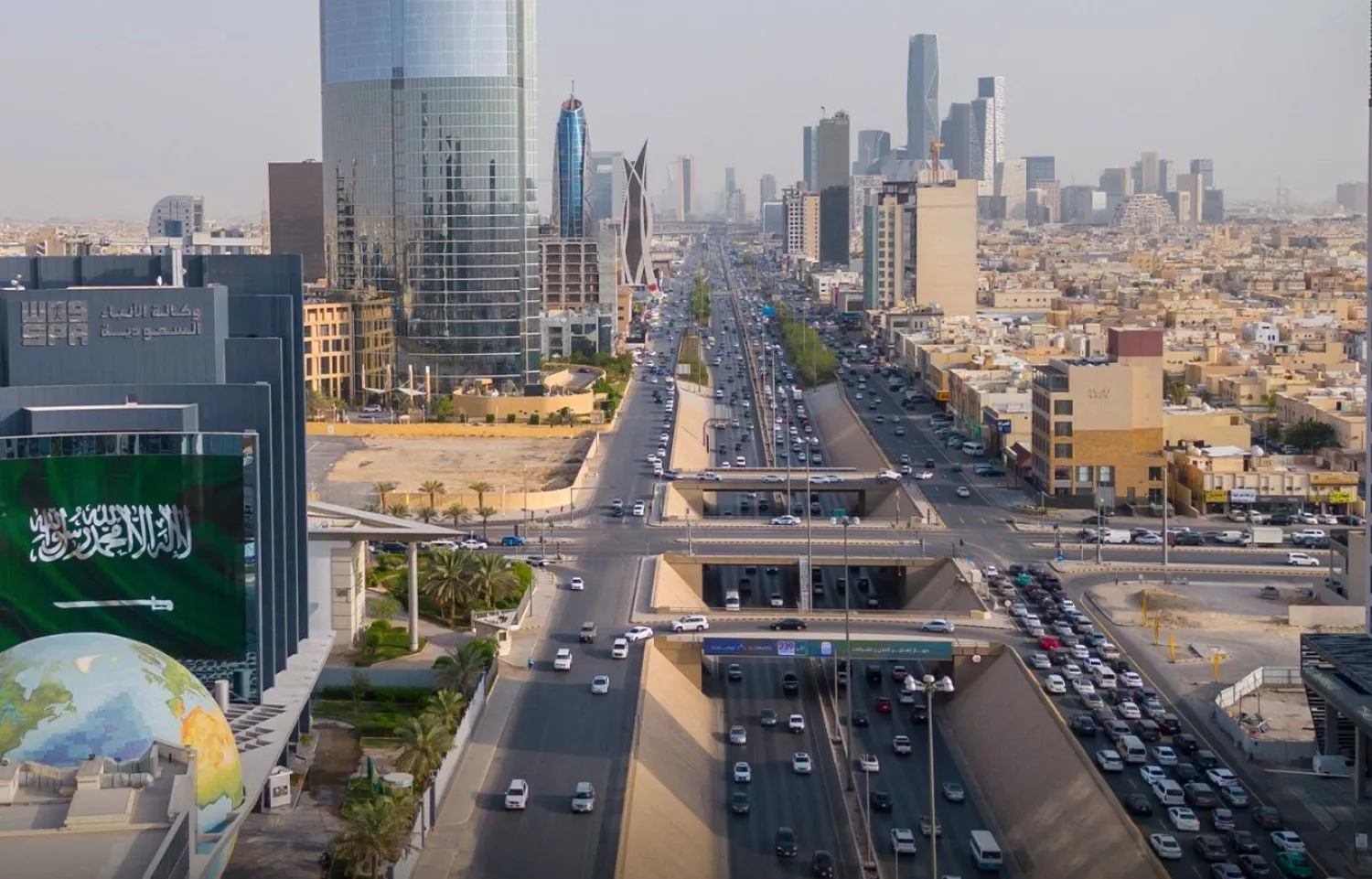
A view of the Saudi capital, Riyadh. (SPA)
TT

Private Sector Fuels Saudi Arabia’s Growth Lead Among G20 Economies

A view of the Saudi capital, Riyadh. (SPA)

Fueled by a surging private sector and expanding non-oil industries, Saudi Arabia is poised to become the G20’s fastest-growing economy in 2027, overtaking India, according to International Monetary Fund (IMF) forecasts released last week.

The IMF expects the Saudi economy to grow by 7.9%, ahead of India’s projected 7%, highlighting the Kingdom’s economic transformation as regulatory and legislative reforms unlock new investment opportunities.

Saudi Arabia’s Ministry of Investment said the forecast underscores the economy’s strength and resilience while opening new avenues for investment and growth.

Momentum in the private sector and the expansion of non-oil activities are helping steer the Kingdom toward a more diversified, sustainable and investment-friendly economy, it said.

The IMF sharply raised its forecast for Saudi Arabia’s real gross domestic product (GDP) growth to 7.9%, from 5.5% in July, an upward revision of 2.4 percentage points that reflects prospects for recovery from the fallout of war and disruptions to trade and energy markets.

The outlook also highlights the structural transformation underway through Saudi Arabia’s Vision 2030, as non-oil sectors take on a greater role in driving growth and strengthening the economy against global headwinds.

The focus now shifts to whether the Kingdom can sustain that momentum and turn rapid expansion into lasting investment opportunities and jobs.

New sectors drive growth

Saudi Arabia’s projected lead among G20 economies signals a deeper structural shift away from its traditional reliance on oil revenues, according to Fahad Binjumah, an economist and former member of the Saudi Shura Council.

The private sector is emerging as a major engine of growth, bolstered by regulatory and legislative reforms, expanding investment opportunities and the rising contribution of non-oil industries.

Binjumah told Asharq Al-Awsat that the shift marks Saudi Arabia’s gradual transition from direct government stimulus toward a more diversified and productive economy capable of generating growth.

Major government investments have helped lay the groundwork, creating a stronger business environment and opening new sectors to local and foreign investors, he explained.

Strategic projects in tourism, industry, logistics and technology are also generating economic activity well beyond their immediate scope. Investment spending is rippling through supply chains and small and medium-sized businesses, widening commercial opportunities and drawing more parts of the economy into the growth cycle.

But for Binjumah, topping the G20 growth rankings is less important than sustaining that performance over the coming years.

"The main challenge is to turn economic expansion into long-term productivity gains by improving the efficiency of domestic businesses, boosting non-oil exports, developing skills and increasing private investment independent of government spending," he stressed.

Progress on those fronts would propel Saudi Arabia into a more advanced stage of economic diversification, where success is measured not simply by rapid growth but by a more resilient, competitive economy that generates added value and sustainable jobs, he added.

Reforms bolster economic resilience

Saudi Arabia’s rise in G20 growth projections is the product of years of economic reform, not a short-lived boost in any single sector, said Nasser Al-Sahli, president of the Saudi Governance Center.

Legislative changes, easier business procedures, wider investor participation and the restructuring of key sectors have made the economy more attractive to investment and better equipped to turn capital into productive activity, Al-Sahli told Asharq Al-Awsat.

The private sector’s expanding role shows that these reforms are increasingly translating into tangible economic gains, he said.

Their importance has grown amid geopolitical tensions, global trade and energy disruptions, and risks surrounding strategic maritime routes in the region. A broader non-oil economic base is helping Saudi Arabia diversify its income sources and reduce its exposure to external shocks.

"Economic diversification does not mean complete isolation from global developments, but building a productive and investment system capable of adapting to them and maintaining business continuity under different conditions," Al-Sahli said.

The next test will be whether Saudi Arabia’s private sector can move beyond capitalizing on opportunities created by government projects to driving investment expansion independently and sustainably, he went on to say.

That will require stronger productivity and competition, better access to financing, greater innovation and a larger international footprint for Saudi companies.

Al-Sahli said the real significance of Saudi Arabia’s projected G20 lead lies not in the ranking itself but in its ability to turn growth momentum into a more diversified and efficient economy, powered by a private sector that creates high-quality jobs and lasting economic value.

How G20 economies rank

India is forecast to rank second in G20 economic growth in 2027 at 7%, followed by Indonesia at 5.1%, China at 4% and Türkiye at 3.6%, according to IMF figures presented by the Saudi Ministry of Investment.

Argentina ranks sixth at 3.5%, followed by South Korea at 2.8% and the United States at 2.3%. Brazil is projected to grow by 1.9%, Mexico by 1.8%, Canada by 1.7%, Australia by 1.6%, South Africa by 1.3% and the United Kingdom by 1.2%. Germany is forecast to expand by 1.1% and Russia by 0.9%, while France and Japan are each expected to grow by 0.7%.



Oil On Track for First Weekly Gain in November on Supply Fears

 Flames emerge from flare stacks at the oil fields in Kirkuk, Iraq October 18, 2017. REUTERS/Alaa Al-Marjani/File Photo
Flames emerge from flare stacks at the oil fields in Kirkuk, Iraq October 18, 2017. REUTERS/Alaa Al-Marjani/File Photo
TT

Oil On Track for First Weekly Gain in November on Supply Fears

 Flames emerge from flare stacks at the oil fields in Kirkuk, Iraq October 18, 2017. REUTERS/Alaa Al-Marjani/File Photo
Flames emerge from flare stacks at the oil fields in Kirkuk, Iraq October 18, 2017. REUTERS/Alaa Al-Marjani/File Photo

Oil prices were set to snap a three-week losing streak on Friday, on track for their first weekly gain in November.

Brent crude futures fell $1.42 to $95.20 a barrel by 10:16 a.m. ET (1516 GMT). Brent hit its highest since November 9 earlier in the session, but stayed shy of the $100 mark.

US West Texas Intermediate crude futures at $83.74 a barrel were up 5 cents, or 0.06%, from Wednesday's close. There was no Thursday settlement for WTI because of the US Thanksgiving holiday.

"Attacks on Middle Eastern energy facilities and tankers have brought supply disruption back into focus," said Mark Schaefer, a director at brokerage Liquidity Energy, Reuters reported.

Prices retreated in recent weeks as investors were relieved that US President Donald Trump did not step up military action against Iran after the midterm elections.

However, Iran has continued to attack ships transiting the key Strait of Hormuz, disrupting oil exports, while Yemen's Houthis have struck Saudi Arabian infrastructure.

Saudi Aramco's Jazan refinery temporarily halted some operations after a projectile struck it on Thursday, killing a worker, Saudi Arabia's Energy Ministry said.

OPEC+ is set to keep first-quarter 2027 output targets unchanged when the group meets on Sunday, three people with knowledge of the talks said.


Taiwan's Economy Expected to Grow at its Fastest Rate in Nearly 50 Years

A woman rides past poster of Taipei Mayor Chiang Wan-an displayed on a public transport bus in Taipei on November 27, 2026. (Photo by Punit PARANJPE / AFP)
TT

Taiwan's Economy Expected to Grow at its Fastest Rate in Nearly 50 Years

A woman rides past poster of Taipei Mayor Chiang Wan-an displayed on a public transport bus in Taipei on November 27, 2026. (Photo by Punit PARANJPE / AFP)

Taiwan's tech-reliant economy is expected to expand at its fastest rate in almost half a century this year thanks to continued strong AI demand, the government said on Friday, but US export controls and AI regulation could cloud the outlook.

Gross domestic product is now expected to be 13.28% higher than a year earlier, up from a forecast of 11.05% in August, the Directorate General of Budget, ⁠Accounting and Statistics ⁠said, according to Reuters. That would be the fastest growth since 1978, when GDP grew 13.56%.

Taiwan plays a leading role in fulfilling the demand for AI chips and technology from firms like Nvidia and Apple, with the island being home to the world's largest contract chip manufacturer, Taiwan Semiconductor Manufacturing Co.

For next year, it said it ⁠expected Taiwan's economy to grow 6.51%, upgrading its August prediction of 6.04%.

The agency warned of key uncertainties, including possible tighter US AI regulation and export controls, and the impact of rising financing costs.

There is also uncertainty over US tariff policy, it added.

Demand for AI already drove Taiwan's economy in 2025 to expand 8.76%.

While exports have shown no sign of weakening, there will be a greater risk next year because of a possible slowdown in demand from US clients, President Capital Management Chief Economist Lu ⁠Cheng-tao said.

"Based ⁠on current orders, there is no major problem. However, purchasing momentum in the first half of next year could very likely change," he added.

The statistics agency expects 2026 exports to rise 46.67% from a year earlier, versus a previously forecast 41.07% expansion, and said for next year exports would increase 18.63%, slightly below the prior prediction of 18.7%.

It revised up slightly its third-quarter 2026 economic growth view to 14.39% from a preliminary reading of 14.36%. It also kept its 2026 consumer price index forecast at 2.07%, slightly above the central bank's 2% target.


Gold Gains Nearly 3% as Dollar Rally Stalls, Equities Stabilize

FILE PHOTO: UK gold bullion bars are stacked at Baird & Co in Hatton Garden in London, Britain, October 8, 2025. REUTERS/Hiba Kola/File Photo/File Photo
TT

Gold Gains Nearly 3% as Dollar Rally Stalls, Equities Stabilize

FILE PHOTO: UK gold bullion bars are stacked at Baird & Co in Hatton Garden in London, Britain, October 8, 2025. REUTERS/Hiba Kola/File Photo/File Photo

Gold prices rose nearly 3% on Friday, recovering from a more than one-year low, supported by a pause in the dollar's advance and calmer equity markets.

Spot gold rose 2.9% to $3,670.69 per ounce by 0835 GMT, after it touched its lowest level since August 2025 on Wednesday.

US gold futures for December delivery gained 3.9% to $3,669.30, Reuters reported.

"After days of declines, buyers returned to the market. Technology ⁠and AI stocks ⁠seem to have stabilized after the recent selloff, which is positive for gold because the market rout had forced some investors to liquidate bullion positions to raise cash and cover losses in other positions," said Carlo Alberto De Casa, external analyst for Swissquote.

"I don't see gold ⁠easily back to $5,000, but I see good chances that the price could return to $4,000-$4,200."

The US dollar took a breather after scaling a 22-month peak earlier this week. A softer dollar makes dollar-priced metals less expensive for holders of other currencies.

Equities steadied as they neared the end of a bruising month, with a US holiday lull giving some respite from AI jitters.

The US economy grew much faster than initially estimated in the third quarter, while inflation ⁠accelerated in ⁠October, data showed on Wednesday. These reinforced expectations that the Federal Reserve will raise rates next month and again in early 2027.

Rising interest rates diminish gold's appeal by boosting returns on competing interest-bearing assets.

Meanwhile, physical gold demand in key Asian hubs improved this week, with jewelry and investment buying picking up in India, while strong retail purchases in China kept local premiums firm.

Spot silver climbed 6.6% to $44.25 per ounce, platinum gained 5.4% to $1,360.82 and palladium rose 4.6% to $913.07. All three metals were on track for weekly gains.