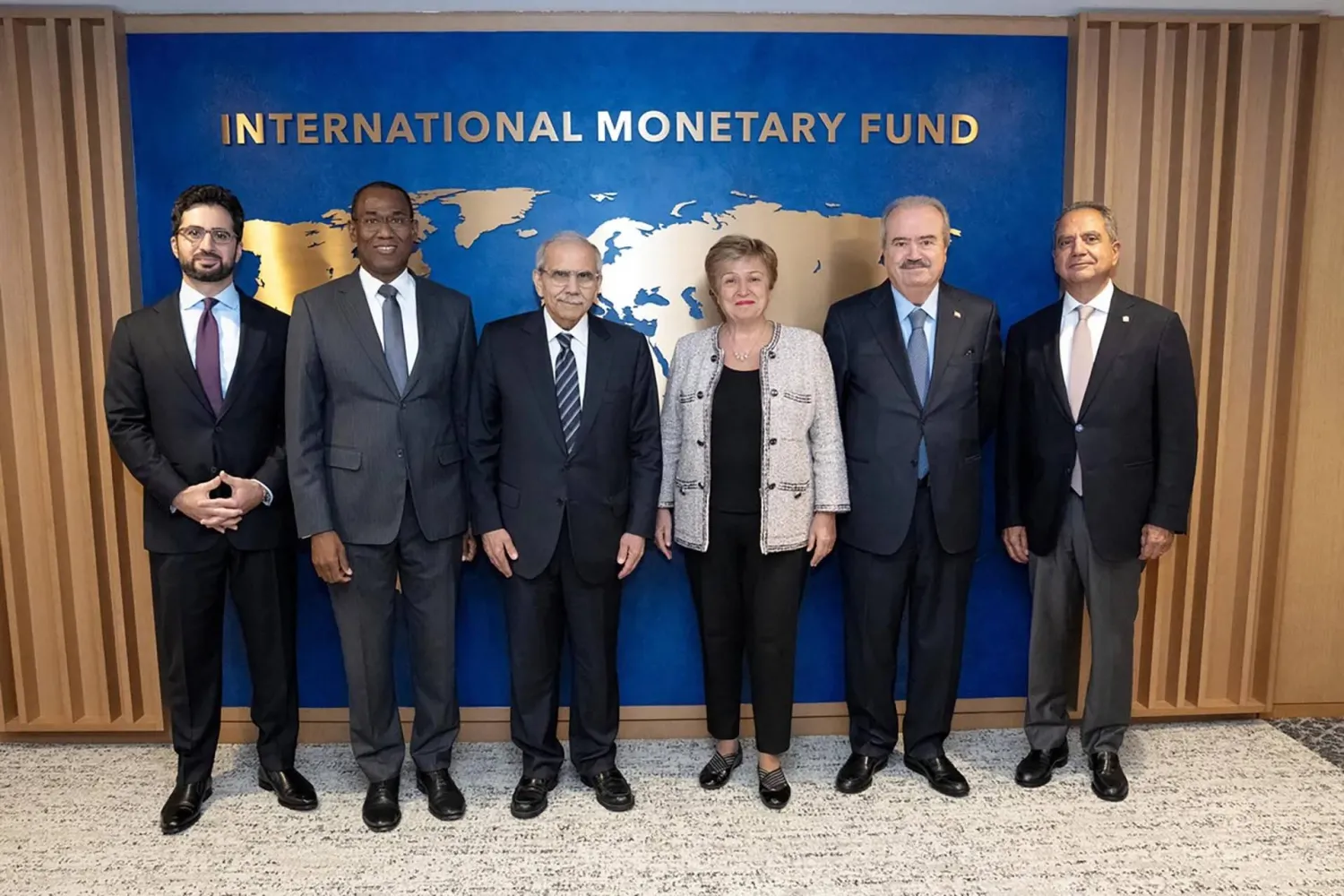

Talks that concluded in Paris on Thursday between Lebanon’s central bank, the Banking Control Commission and representatives of Lebanese banks revealed persistent differences over banking sector restructuring and the distribution of losses, as the International Monetary Fund (IMF) insists on a 15% capital adequacy ratio for banks seeking to remain operational, to be achieved within five to seven years.
According to information obtained by Asharq Al-Awsat, the meetings were hosted by Rothschild, the international adviser to Banque du Liban (BDL), in an effort to reconcile differing approaches to the provisions of the draft Financial Regularization and Deposit Recovery Law.
The discussions produced new proposals involving relatively minor changes in form but a more substantive approach to the draft law submitted by the government to Parliament late last year. The proposals are expected to influence subsequent stages of the legislative process.
However, efforts to bridge the differences were not matched by any shift in the IMF’s position. The Fund’s delegation reportedly maintained its firm stance on limiting the use of public funds and upholding the hierarchy of loss absorption, under which bank capital, shareholders and equity holders are first in line to bear losses.
Against this backdrop, the IMF has introduced an additional requirement, informing banking executives that operating banks must restructure their capital positions to achieve a 15% capital adequacy ratio as a key condition for remaining in business.
A source familiar with the matter told Asharq Al-Awsat that the Fund had stipulated a period of five to seven years from the start of restructuring to meet the requirement.
Although the proposed ratio is substantially higher than the requirements set under Basel III standards, the IMF argues that it is necessary for the banking sector, together with BDL as its regulator, to demonstrate a serious commitment to addressing the consequences of Lebanon’s unprecedented financial crisis.
The aim is to emerge from the crisis with a financial sector in the strongest possible position, paving the way for the restoration of international confidence.
Lebanese banks, however, face considerable difficulties persuading existing shareholders to inject such large amounts of private capital within a relatively short period.
Shareholders remain reluctant to commit fresh funds before negotiations produce a final agreement with the IMF, the government meets structural reform requirements in the public sector, a medium-term fiscal plan is adopted, and the outcome of Lebanon’s Eurobond restructuring becomes clear.
What is required of banks?
An initial assessment by Asharq Al-Awsat indicates that meeting the IMF’s requirement would entail substantial cash injections and capital contributions or the attraction of new investors, a task that appears nearly impossible under current conditions.
Preliminary estimates suggest the funds required could amount to twice banks’ current capital, which has fallen sharply from levels exceeding $20 billion as a result of the Lebanese pound’s collapse.
The challenge comes as Lebanon and its economy face an exceptional contraction in investment inflows because of wars and the financial losses and heavy reconstruction costs they have left behind.
These burdens add to a financial gap that the government estimates at approximately $70 billion.
Insistence on this approach could undermine the banking sector’s prospects for recovery and its ability to contribute effectively to the broader economic rebound, given the difficulty most banks would face in injecting or attracting capital on such a scale.
Banking officials argue that the approach fails to account for the state’s role and responsibility in drawing financing from BDL’s balance sheet.
They also point out that a government decision to suspend repayment of all obligations on Lebanon’s Eurobonds deprived both commercial banks and the central bank of access to vital financial assets.
Meanwhile, a financial official noted that BDL’s handling of the consequences of the financial and monetary collapse, which have been concentrated heavily in the banking system, requires realism and a balance between two interconnected principles: ensuring a fair distribution of losses and avoiding the sacrifice of financial institutions.
This includes restructuring banks’ balance sheets and capital positions while enabling them to make the greatest possible contribution toward the gradual repayment of depositors’ claims, in accordance with the distribution mechanism established under existing central bank circulars.
Before the crises erupted, BDL imposed stringent solvency requirements on operating banks, with average ratios exceeding 15%.
Bank managements also voluntarily adhered strictly to international professional standards for assessing capital adequacy, enabling Lebanese banks to achieve leading regional positions in covering credit, market and operational risks.
Their risk management practices also included measuring and monitoring other exposures, such as interest rate risk in the banking book, credit concentration, liquidity and reputational risks.
Rothschild serves as BDL’s international adviser in negotiations concerning the financial sector, while Lazard performs the same role for Lebanon’s Finance Ministry.