Bahrain Announces Investments and Partnerships in Industry, Technology, Tourism and Aviationhttps://english.aawsat.com/business/5336711-bahrain-announces-investments-and-partnerships-industry-technology-tourism-and
Bahrain Announces Investments and Partnerships in Industry, Technology, Tourism and Aviation
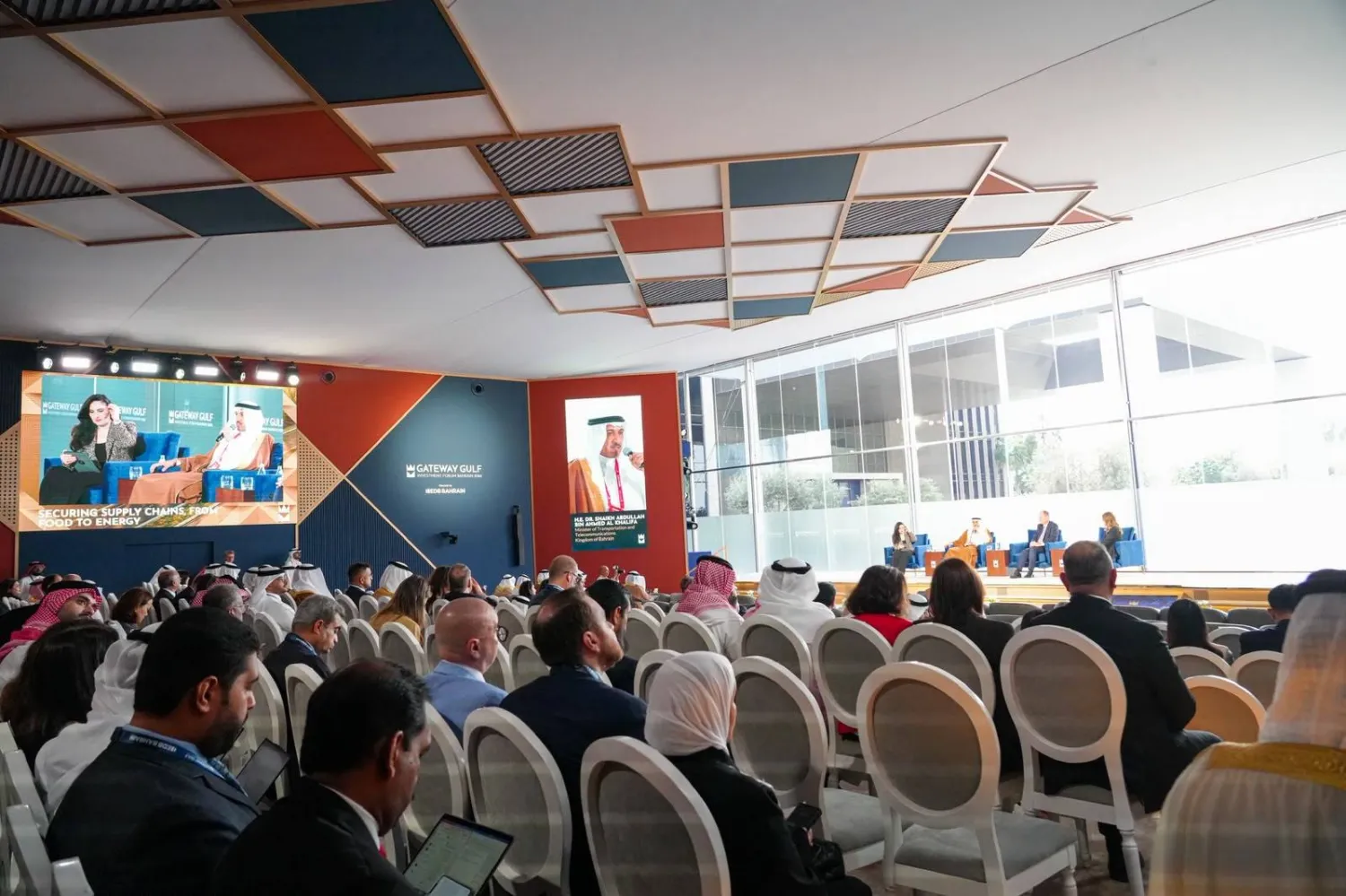
A scene from Gateway Gulf 2026, which concluded on Monday in the Bahraini capital, Manama (BNA)
Gateway Gulf 2026 saw the announcement of a series of investments, agreements and expansion projects across industry, technology, aviation, financial services, healthcare, tourism, education and real estate.
The announcements included plans to establish Bahrain's first electrical power transformer factory, open an office for global payments company Visa, launch a liquidity investment fund, and provide telecommunications services to Gulf Air Group, alongside healthcare and tourism projects expected to create more than 320 jobs.
The announcements came during the fourth edition of the forum, organized by the Bahrain Economic Development Board (Bahrain EDB) on November 1 and 2 under the theme "Redefining Global Partnerships and Driving Sustainable Growth," with the participation of investors, business leaders and policymakers.
Bahrain's First Power Transformer Factory
In the industrial sector, Amiri Industries launched its Amform project to establish Bahrain's first electrical power transformer manufacturing facility on a 23,000-square-meter site in the Hidd area.
The factory will produce medium-voltage distribution transformers to meet domestic demand and reduce reliance on imports, with plans to expand into Gulf Cooperation Council (GCC) markets at a later stage.
Technology and Aviation
In the technology sector, British company Lexness Technologies announced the launch of its operations in Bahrain, which will serve as a base for expansion into Gulf markets, focusing on artificial intelligence, automation, cybersecurity and digital transformation.
Global payments company Visa also announced plans to open an office in Bahrain in 2027 to strengthen its presence in the digital payments market and expand cooperation with financial institutions and businesses.
Batelco, part of Beyon Group, signed a five-year master services agreement with Gulf Air Group to provide telecommunications, networking, cloud services and satellite connectivity solutions as part of the group's digital transformation program.
The agreement includes connecting more than 1,000 employees across multiple locations and improving operational efficiency and customer communications.
Batelco also signed a two-year cooperation agreement with Bariq Al Retaj Real Estate Services to develop telecommunications solutions and smart home and building technologies.
Meanwhile, Beyon Connect signed a memorandum of understanding with Omani company PhazeRo to develop digital identity and electronic Know Your Customer (eKYC) solutions, beginning in Oman while exploring opportunities for expansion across the GCC.
Liquidity and Investment Fund
In financial services, ASB Capital, which manages $10.2 billion in assets, announced the launch of the Shariah-compliant ASB Liquidity Fund.
The fund will invest in short-term deposits, government and bank sukuk, and other eligible instruments across GCC and Middle East and North Africa markets, aiming to preserve capital, provide daily liquidity and manage volatility risks.
Healthcare and Tourism Projects
In the healthcare sector, Bahrain's Labour Fund, Tamkeen, signed an agreement with Mubadala Health Bahrain to establish a multidisciplinary medical facility developed through a partnership between M42 Group and Bahrain-based HealthVision.
The hospital will offer 20 medical specialties and create more than 200 jobs, alongside genetic testing services and AI-enabled precision medicine.
In tourism, Tamkeen signed an agreement to support more than 120 employment opportunities for Bahrainis at the Club Hawaii @ Bahrain Surf Park project, being developed by Edamah in collaboration with GFH Financial Group in the Bilaj Al Jazayer area.
Spanning more than 52,000 square meters, the project will feature a wave lagoon and tourism and entertainment facilities. It is expected to open this year and attract approximately 300,000 visitors annually.
British Investment in Education
In the education sector, Britain's Repton Schools Group announced plans to open a school in Bahrain for students aged three to 18.
The project will occupy a 32,000-square-meter site and offer the British curriculum, including International GCSE qualifications and A-Levels, becoming the 13th school in the group's network.
These projects reflect Bahrain's efforts to attract investment across diverse sectors, expand employment opportunities and strengthen the Bahraini economy's connections with Gulf and international markets.
Iraq Resumes Crude Oil Pumping for Export Purposes via Pipeline to Türkiye, Oil Minister Sayshttps://english.aawsat.com/business/5342260-iraq-resumes-crude-oil-pumping-export-purposes-pipeline-t%C3%BCrkiye-oil-minister-says
A general view of oil tanks at Türkiye’s Mediterranean port of Ceyhan, some 70 km (43.5 miles) from Adana, February 19, 2014. (Reuters)
TT
TT
Iraq Resumes Crude Oil Pumping for Export Purposes via Pipeline to Türkiye, Oil Minister Says
A general view of oil tanks at Türkiye’s Mediterranean port of Ceyhan, some 70 km (43.5 miles) from Adana, February 19, 2014. (Reuters)
Iraq has resumed the pumping of crude oil for export purposes through the Kirkuk-Ceyhan pipeline to Türkiye at an initial capacity of 120,000 barrels per day, with plans to gradually increase flows to 500,000 bpd, the country's oil minister said on Tuesday.
The reopening of the pipeline, which has been shut for more than a decade, provides Iraq with an additional export route for oil from the north of the country, alongside a pipeline from the Kurdistan region, reducing its reliance on southern terminals and shipments through the Strait of Hormuz.
OPEC's second-largest producer has been working to find alternative export routes for its oil since the strait, its usual outlet, was disrupted by the Iran war.
The overall impact on Iraq's exports from the reopening of the Kirkuk-Ceyhan pipeline will depend on available supplies and whether the volumes come in addition to existing shipments.
Exports via the 960-km pipeline, which once handled about 0.5% of global supply, were halted in 2014 after repeated attacks by ISIS militants.
EU Sees Eurozone Economy Hold Up Despite Iran Warhttps://english.aawsat.com/business/5342259-eu-sees-eurozone-economy-hold-despite-iran-war
European Union flags flap in the wind outside EU headquarters in Brussels, Monday, Nov. 16, 2026. (AP Photo/Virginia Mayo)
The EU on Tuesday raised its growth forecast for the eurozone this year after the economy weathered the energy shock from the Middle East conflict better than expected, while warning that inflation would remain high.
The European Commission expects GDP in the 21-country single currency area to expand by 1.2 percent this year, up from its forecast of 0.9 percent last spring.
It also expects the euro area to grow by 1.2 percent next year.
"In 2026, Europe's economy is holding up better than expected. But we cannot take this for granted, nor can we be content with resilience alone," EU economy chief Valdis Dombrovskis said in a statement.
Brussels now expects eurozone inflation to hit 3.1 percent in 2027, up sharply from its previous forecast of 2.3 percent.
The EU also revised up its prediction for consumer price rises this year, expecting inflation to reach 3.2 percent after a previous forecast of 3.0 percent, AFP reported.
The US war against Iran launched in late February has sent global energy costs soaring, with Tehran's retaliation against Washington's Gulf allies sharply curtailing oil and natural gas supplies.
The EU said energy inflation would "moderate" next year but food inflation was "set to accelerate" as higher energy and fertilizer costs feed through to prices and extreme weather in summer 2026 disrupted harvests.
Eurozone inflation climbed to a three-year high of 4.0 percent in October, raising expectations of another interest rate hike by the ECB this year.
The commission said economic growth in the first three quarters of 2026 was "driven by steady consumption and a sharp rebound in exports of goods, which benefited manufacturing activity".
But it warned that "risks to the outlook remain linked to the evolution of the ongoing conflicts and their implications for global energy markets".
The EU also pointed to several "sources of uncertainty" including geopolitical tensions, trade policy, financial market turmoil and other technological, security and climate-related risks.
Forecasts for the EU's two biggest economies, Germany and France, also showed a significant divergence. Germany is now expected to grow by 1.3 percent this year, more than double the 0.6 percent predicted in the spring.
But France will only grow by 0.4 percent this year, significantly below the 0.8 percent forecast in spring.
And next year it will fare no better, the EU said, with France expected to grow by 0.6 percent compared to 1.0 percent for Germany.
Specialty Products Chart a New Path for Growth for Saudi Petrochemicalshttps://english.aawsat.com/business/5342235-specialty-products-chart-new-path-growth-saudi-petrochemicals
Specialty Products Chart a New Path for Growth for Saudi Petrochemicals
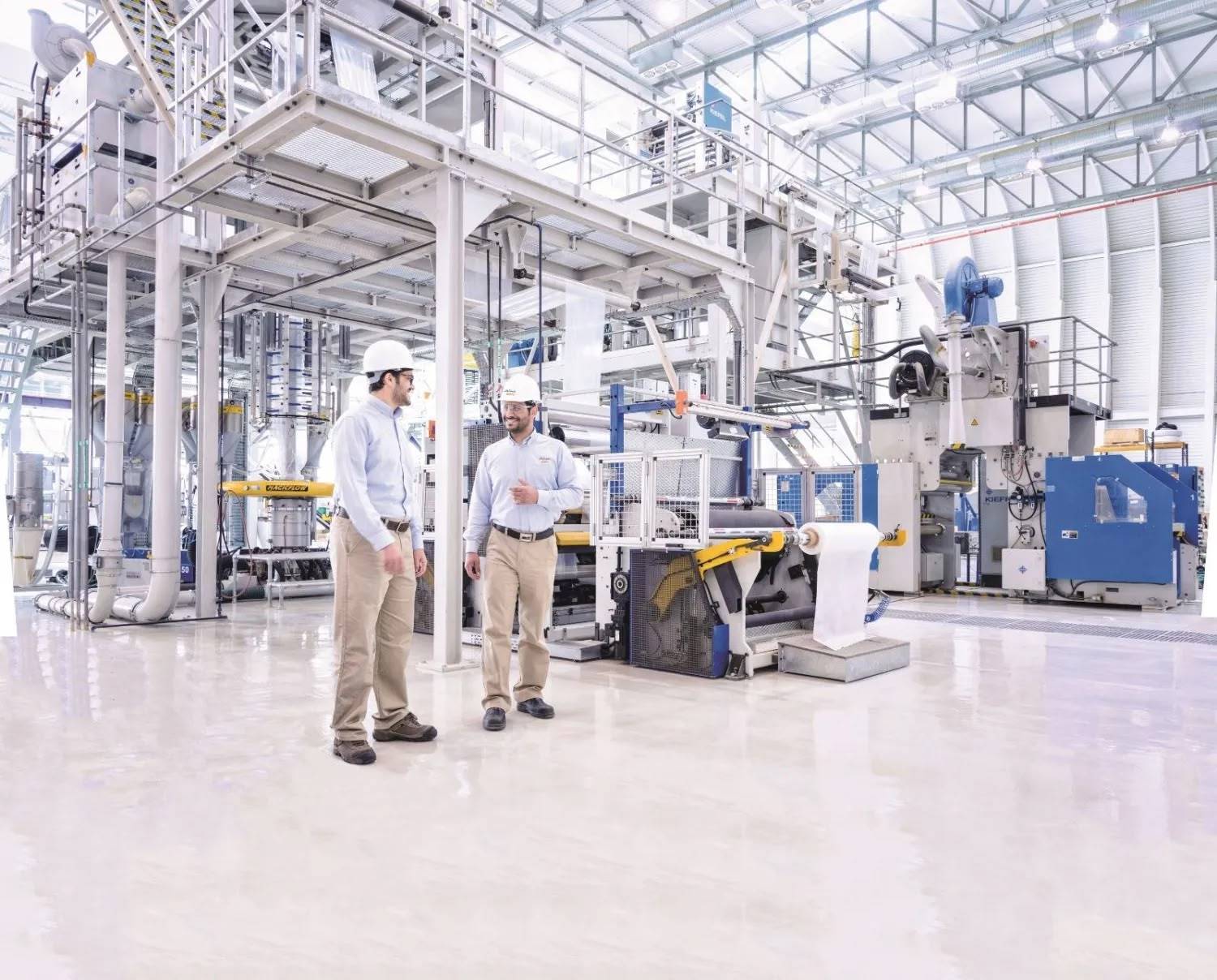
An engineer carries out his work at a SABIC plant. (SABIC)
The Saudi petrochemicals industry is entering a phase that requires reorienting its growth compass amid persistent global oversupply and shrinking margins on basic products, even as opportunities expand in specialty products and materials linked to advanced industries.
Growing demand for energy infrastructure supplies, power grids, and data centers is opening up new avenues for Saudi producers, who are capitalizing on the Kingdom's advantages in feedstock availability, industrial infrastructure, and operational expertise, in addition to opportunities to develop more diversified value chains and boost production value-add.
Helder Santos, Managing Director and Head of Infrastructure and Capital Projects in the Middle East at Alvarez & Marsal, believes that the petrochemicals sector is undergoing a transitional phase that coincides with its usual industrial cycle.
He explained that the advantages enjoyed by producers in Saudi Arabia and Gulf countries provide a foundation for improving returns, even though shifts in feedstock costs and global supply make operational performance and product selection all the more critical.
In an interview with Asharq Al-Awsat, Santos said that rising feedstock costs and substantial additions to production capacities require companies to place greater focus on operational efficiency and investment decisions.
Analyses by Alvarez & Marsal indicate that global ethylene plant operating rates remain below pre-2019 levels and are expected to stay at these levels until the end of the current decade amid capacity expansions, particularly in China, which is projected to account for roughly half of global ethylene capacity additions through 2028.
Santos said that persistently low operating rates reflect uneven recovery prospects across products and markets, depending on demand growth, capacity additions, and operating levels, meaning the rebound will not reach all products at the same pace.
However, producers do not need to wait for a market-wide recovery to boost profitability. They can enhance returns by improving operational reliability, increasing capital efficiency, and carefully developing their investment portfolios, as well as optimizing maintenance efficiency, managing working capital, and expanding into higher value-added applications and products.
Engineers at a Yansab plant. (Yansab)
71% surge in ethane prices
On feedstock costs, analysis data from Alvarez & Marsal showed that ethane prices in Saudi Arabia rose from $1.75 per million British thermal units (MMBtu) in 2023 to $3 in January 2025, an increase of nearly 71%.
Despite this increase, Santos stressed that Saudi producers continue to enjoy a competitive advantage in feedstock costs. He explained that comparisons in the firm's analysis demonstrate that Gulf ethane remains competitive with US ethane and is significantly cheaper than the naphtha used in cracking units across Asia and Europe.
He noted that this advantage can be strengthened by boosting operational efficiency and capital productivity, improving production reliability, developing maintenance programs, effectively planning turnarounds and periodic maintenance, and aligning manufacturing schedules with customer needs.
Santos also highlighted the importance of directing investments toward products that generate the highest commercial returns from available feedstock sources and extending the operational lifespan of assets whenever technically feasible, as well as building technical partnerships and expanding into downstream industries to develop higher value-added applications and products.
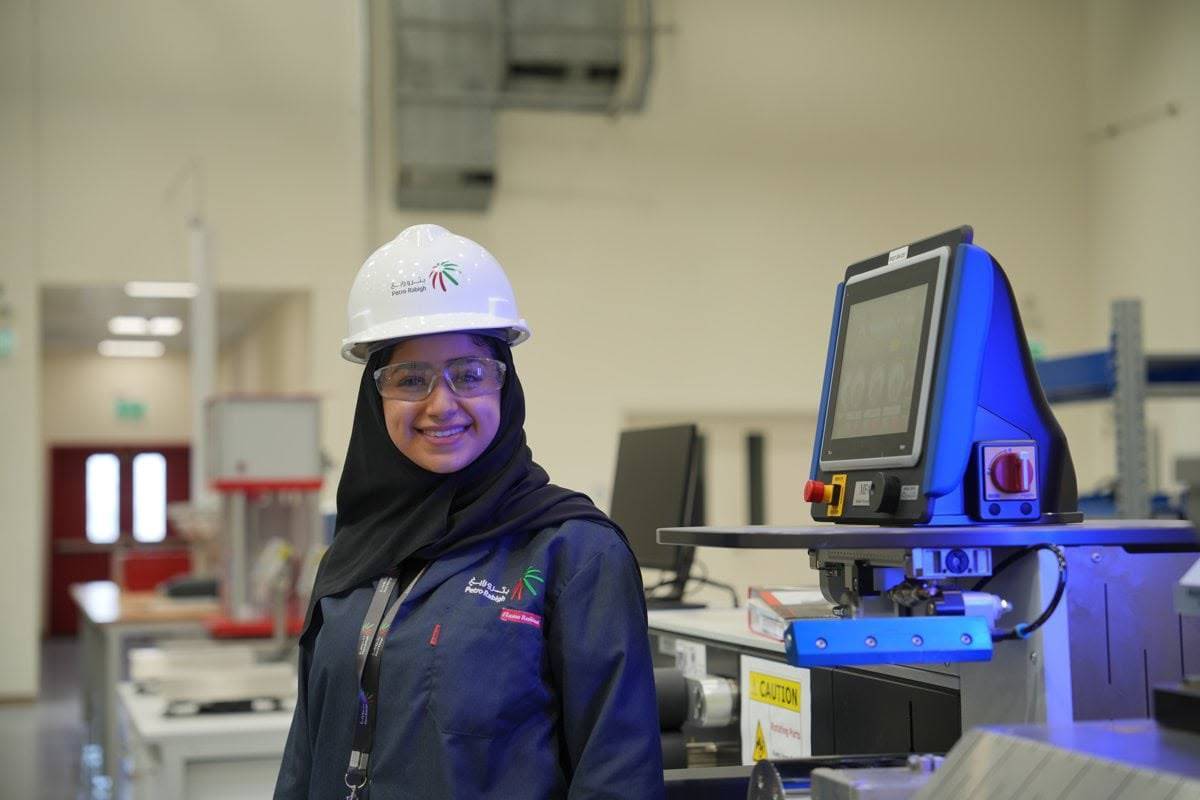
An engineer carries out her duties at Petro Rabigh. (Petro Rabigh)
New markets support expansion opportunities through 2027
On the international competition front, Santos said that Saudi and Gulf producers possess strong fundamentals to strengthen their presence in global markets in the coming phase, capitalizing on production cost advantages, industrial infrastructure, and operational expertise.
However, he noted that certain basic products, foremost among them ethylene, will continue to face pressure from abundant supply and pricing through 2027.
He explained that maintaining and boosting a presence in export markets requires combining competitive production costs with delivery reliability and building sustainable commercial relationships with customers.
Conversely, shifts in the global demand landscape present new opportunities for Gulf producers, particularly in Asian markets.
Santos cited the firm's analysis of forecasts published in 2025, which point to Indian demand for polyolefins growing at an annual rate of between 7.5% and 8.5% over the next decade. He also noted that announcements regarding the closure of several cracking units in Europe could open the door for Gulf suppliers to expand their share in those markets.
Seizing these opportunities requires adopting export strategies tailored to the nature of each product and market, adhering to customer-approved specifications, ensuring logistics efficiency, and aligning commercial terms, he added.
Data centers and power grids open new markets
In the context of the shift toward specialty products, Santos identified chemicals linked to energy infrastructure, electronics, and advanced technologies as among the most promising growth areas over the next five years, driven by the expansion of energy projects, power grid development, and growing investments in data centers.
He explained that compounds for manufacturing high-voltage cables, insulation materials, transformer fluids, and certain composite materials represent opportunities directly tied to energy infrastructure expansion, while additional opportunities are emerging in electronics and data center applications through specialized cooling fluids, ultra-pure chemicals, and specialty gases.
According to the firm's analysis, demand for these specialty chemicals within data center programs in Saudi Arabia and the UAE reaches thousands of tons, while power grid expansion is expected to boost demand for chemicals used in grid components and equipment.
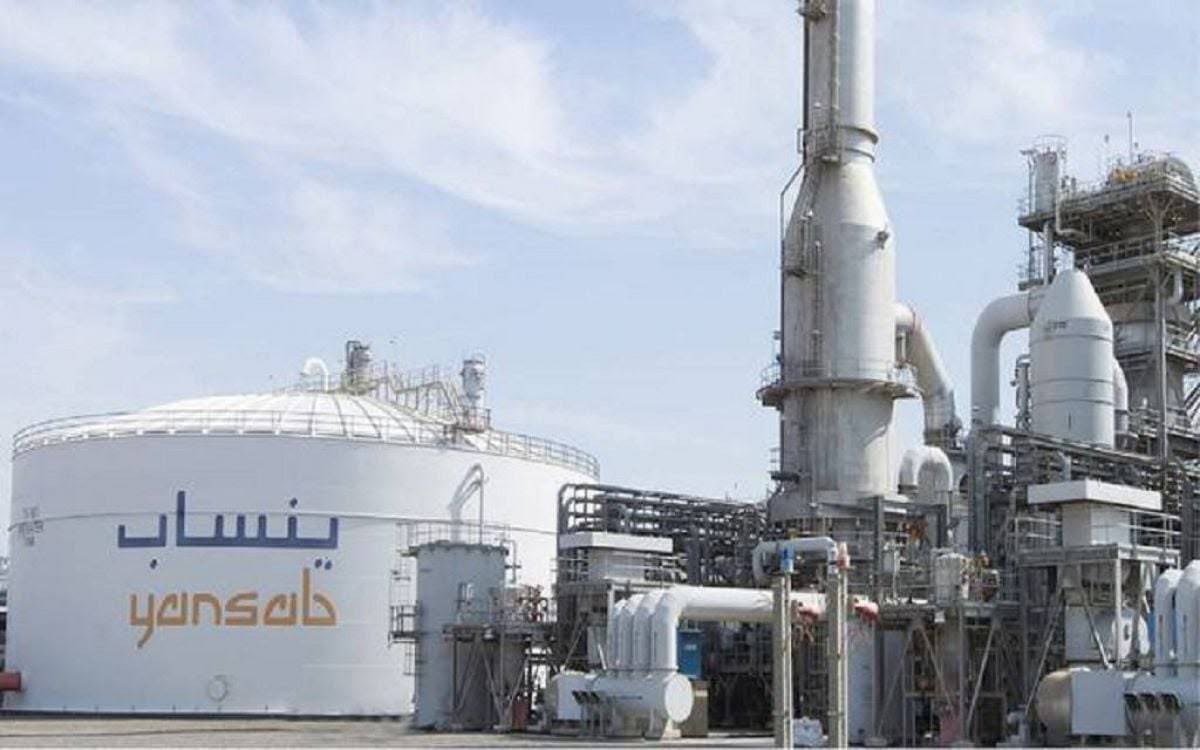
One of Yansab's plants. (Yansab)
Operational efficiency frees up $20 million to $50 million for investment
Opportunities to develop the petrochemicals industry are not limited to expanding into new products and promising markets, but also include improving the efficiency of existing assets and tapping into their available financial resources to provide additional funding for future investments.
Santos said that enhancing the performance of current operations can unlock significant opportunities to bolster companies' liquidity and investment capacity.
He explained that estimates point to the potential to reduce net working capital by 10% to 20%, generating a one-time liquidity boost depending on a company's baseline performance, in addition to achieving recurring savings in overhead and controllable expenditure items.
Investment appeal
On the investment appeal of the Saudi petrochemicals sector amid profitability challenges and rising project costs, Santos stressed that the Kingdom continues to possess strong fundamentals for attracting investments, capitalizing on competitive production economics, a developed industrial ecosystem, and opportunities to expand value chains in downstream industries.
Integration between the refining and petrochemicals sectors reinforces these advantages by providing broader options for feedstock sources and enabling the development of diverse products, he went on to say.
Ethane cracking typically yields between 75% and 80% ethylene, whereas naphtha cracking produces a wider mix that includes propylene, butadiene, and aromatics, creating greater opportunities to develop derivative products and broaden the manufacturing base, he told Asharq Al-Awsat.
He expected companies to increasingly shift toward producing derivatives and composite materials, developing specialized applications, and strengthening customer relationships, while basic product capacities will remain important in projects that demonstrate cost competitiveness and sustained demand.
Santos said that industrial integration broadens options for investors, though achieving viable returns still depends on sound product selection, the availability of necessary technical and manufacturing capabilities, and access to target markets.
He underlined the importance of evaluating investment projects based on returns generated across the entire value chain rather than focusing on the production economics of a single material, while leveraging product qualification arrangements and offtake agreements when making major capital expenditure decisions.
Engineers at a Petro Rabigh plant. (Petro Rabigh)
2030: A more diversified and specialized industry
Looking ahead to 2030, Santos projected that the Gulf petrochemicals industry will move toward greater diversification and specialization by combining highly competitive basic material production with expansion into derivative products, composite materials, and advanced chemical applications.
He said that Saudi Arabia's existing petrochemicals base provides a strong foundation to strengthen the Kingdom's presence in advanced chemical industries, noting that expanding this role requires linking production capabilities with applied expertise and specialized technologies, as well as building long-term customer relationships and securing their product qualifications.
He stressed that early investment in laboratories, specialized material compounding testing facilities, technology licensing, and talent development are essential pillars for expanding product lines and preparing companies to enter new markets.
New product lines entering development in 2026 could begin generating revenue by 2028 at the earliest, depending on the time required to complete qualification requirements and achieve commercial readiness, he continued.
He said that the success of this transformation depends on developing technologies, specialized skills, and infrastructure in parallel with production investments.
Partnerships and selective acquisitions can accelerate the building of these capabilities and help Saudi producers establish competitive positions by 2030, launching from there into additional growth opportunities over the following decade, he said.
لم تشترك بعد
انشئ حساباً خاصاً بك لتحصل على أخبار مخصصة لك ولتتمتع بخاصية حفظ المقالات وتتلقى نشراتنا البريدية المتنوعة