

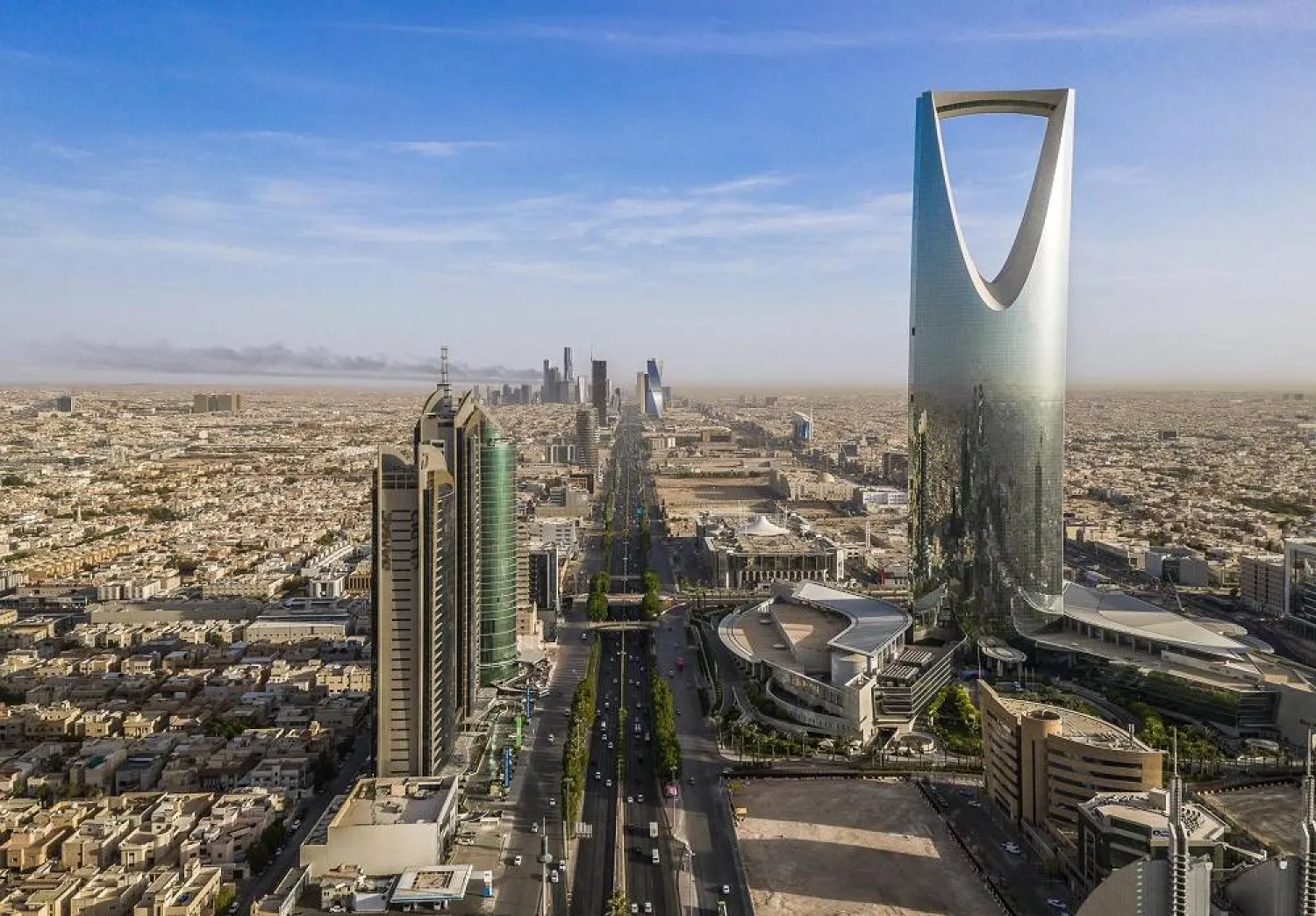

Strength of Saudi Arabia's External Position Supports Economy Despite Challenges of War

A view of Riyadh, Saudi Arabia. (SPA)
TT

Strength of Saudi Arabia's External Position Supports Economy Despite Challenges of War

A view of Riyadh, Saudi Arabia. (SPA)

The Saudi economy continues to benefit from the strength of its external position, supported by significant reserves and revenues from its oil and non-oil exports, despite the challenges imposed by the regional war on trade and tourism.

Data from the second quarter of the current year showed a decline in the current account deficit by around 30 percent compared to the same period last year, at a time when personal remittances abroad recorded a record level.

The external position refers to the totality of the Kingdom's economic and financial transactions with the rest of the world, including trade in goods and services, investment flows, financial transfers, and foreign reserves. Its resilience reflects the economy's capability to generate foreign currency, meet its external obligations, and absorb shocks, thereby providing a cushion to confront disruptions in global trade and markets.

These indicators reflect the economy's capability to maintain a significant portion of its external flows under extraordinary regional circumstances, even though the components of the balance of payments were affected to varying degrees. Export revenues remained a primary source of funds entering the Kingdom, and investment returns contributed to supporting the current account, against service payments and outward remittances.

According to data from the Saudi Central Bank, the current account deficit reached around $9.5 billion in the second quarter of 2026, compared to around $13.4 billion in the same period last year. The account had recorded a surplus of $4.1 billion in the first quarter, as oil revenues rose due to higher prices, coinciding with a decline in imports at the beginning of the war.

The current account is one of the primary components of the balance of payments, measuring the revenues the Kingdom generates through exports of goods and services and investment income, against what it pays to purchase goods and services and transfer funds abroad. Therefore, reading its status does not depend on exports alone, but encompasses the totality of current financial flows between the Saudi economy and the world.

As for the financial account, it monitors the movement of investments and capital between the Kingdom and the world, including foreign investments within the Saudi economy, investments by Saudi residents abroad, alongside flows of loans, deposits, and other financial instruments.
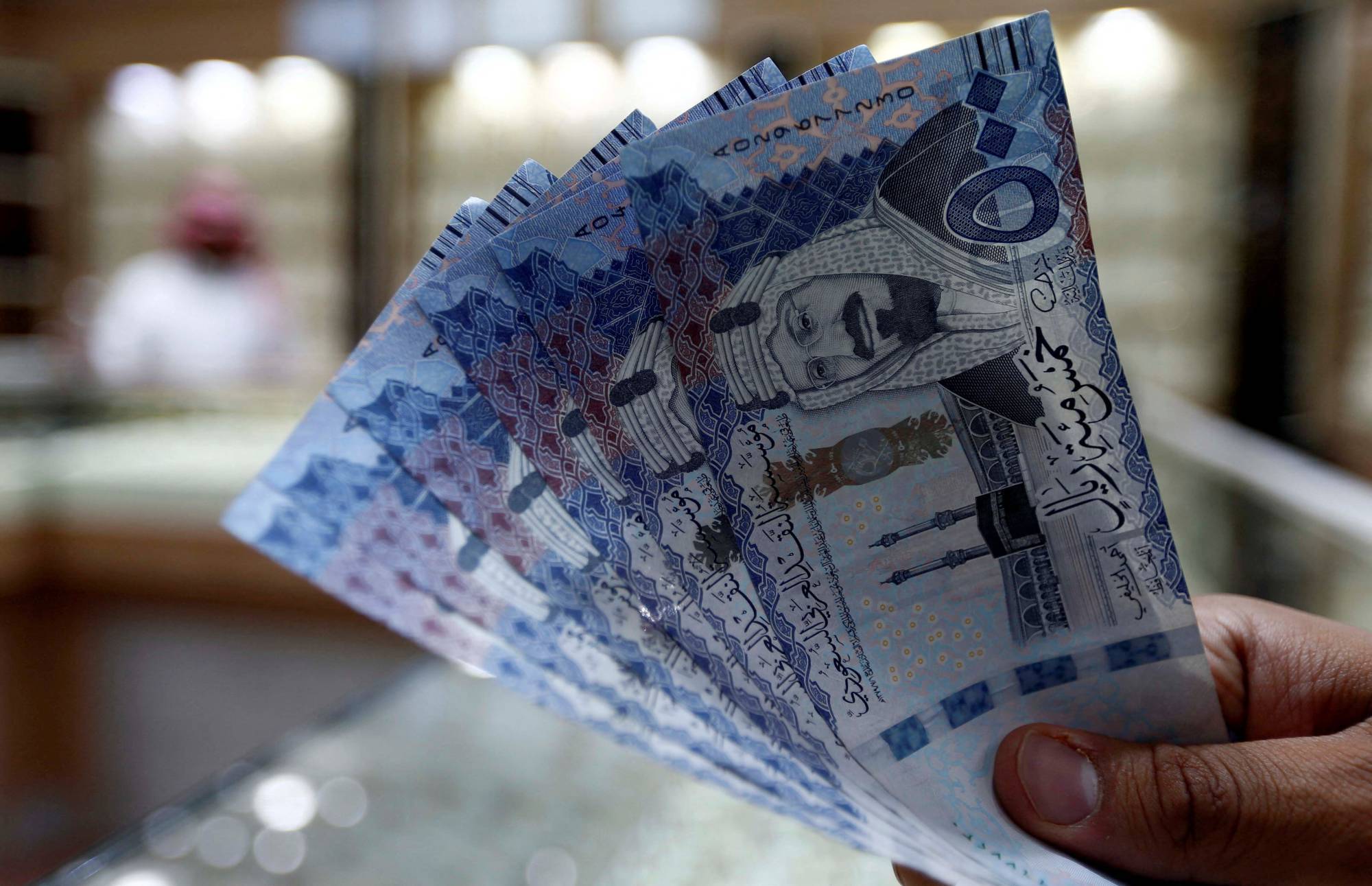
A Saudi money changer displays Saudi Riyal banknotes at a currency exchange shop in Riyadh, Saudi Arabia July 27, 2017. (Reuters)

Exports continue to support flows

Despite the challenges facing trade movements, oil and non-oil exports remained an important source of external revenues. The value of oil exports reached around $54.2 billion in the second quarter, compared to $49.6 billion in the same period last year, while non-oil exports recorded around $21 billion.

These figures demonstrate the export sector's continued ability to provide significant revenues, despite a decline in exports compared to the first quarter, in light of the circumstances surrounding trade and shipping movements because of the war.

The Kingdom achieved a surplus of $21.7 billion in goods trade; however, this surplus shrank to around $5.4 billion when service trade was factored in as well, which recorded a deficit of $16.4 billion due to outward service payments exceeding the revenues generated from them.

Remittances and investment returns

In contrast to payments related to services and outward remittances, the Saudi economy recorded supportive flows from investment returns. The primary income item achieved a surplus of around $4.4 billion in the second quarter, up from $3.5 billion in the same period last year, supported mainly by returns on portfolio investments.

Personal remittances abroad rose to a record level of around $18.2 billion, representing an increase of more than 30 percent year-on-year, to constitute one of the most prominent payment items in the current account.

These figures highlight the multi-faceted nature of the current account components; alongside export revenues, investment returns contribute to supporting external revenues, while being offset by payments for services and personal remittances abroad. Consequently, the account balance is determined by the collective outcome of these components combined, rather than by the trajectory of a single item in isolation from the rest.

Investment flows reflect capital movements

Moving beyond the current account, financial account data reveals another aspect of the Saudi economy's relationship with the world, represented by cross-border capital and investment movements. While the current account records revenues from exports, services, investment income, and remittances, the financial account monitors the purchase and sale of financial assets, direct investment, loans, deposits, and other investment and financing transactions.

Within this framework, Saudi Central Bank data showed shifts in investment flows between the first and second quarters. In the first quarter, Saudi investors sold foreign equities worth around $23 billion and increased their external deposits by around $13 billion, while Saudi entities borrowed about $27 billion from non-residents.

In the second quarter, residents turned to purchasing foreign equities worth around $9 billion, while Saudi entities issued debt instruments valued at around $5 billion.

In regard to direct investment, investment inflows from abroad into the Kingdom continued at levels exceeding $5 billion in the second quarter despite regional challenges, reaching around $5.2 billion compared to $6.2 billion in the first quarter. Direct investments by Saudi residents abroad declined to some $1.1 billion, down from $7.9 billion in the previous quarter, which contributed to a shift in net direct investment to an inflow of around $4 billion, after having recorded an outflow of about $1.7 billion in the first quarter.
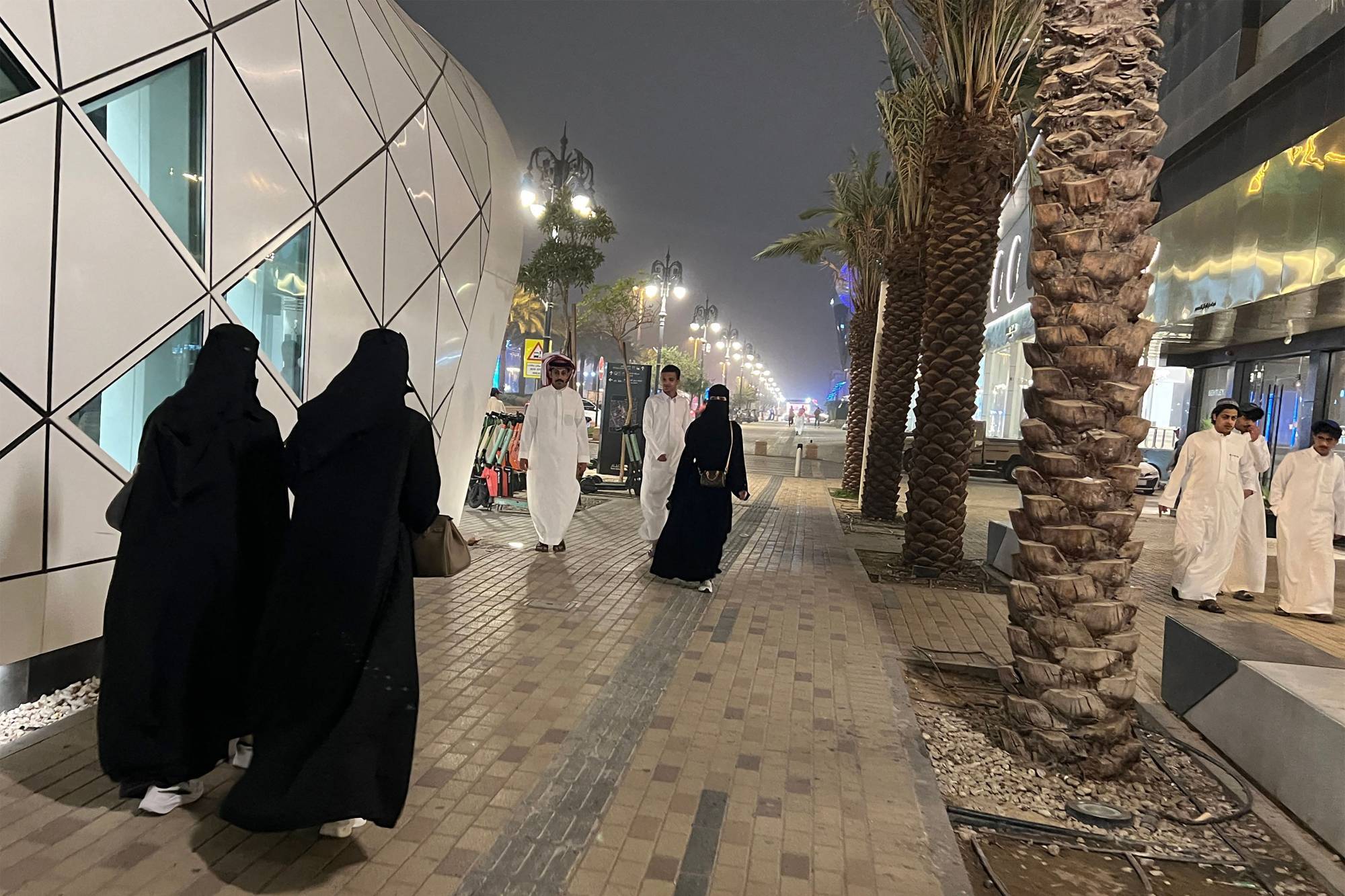
People walk along Riyadh's commercial Tahlia Street late at night on April 4, 2026. (AFP)

Reserves boost capability to confront fluctuations

The strength of the external position remains one of the elements supporting the Saudi economy in confronting regional and international turmoil. Foreign exchange reserves at the Saudi Central Bank reached around $440.7 billion at the end of September, representing a 3.7 percent increase year-on-year, in addition to the substantial foreign assets held by other public sector entities.

These reserves and assets provide an important cushion for dealing with periods of uncertainty, and boost the Kingdom's capability to confront fluctuations in external flows and maintain the stability of its financial position.

The International Monetary Fund's evaluation in the Article IV consultation report issued in July 2026 pointed to the strength of Saudi reserves and their ability to comfortably cover import needs. It also explained that rising domestic investment increases the demand for imports, particularly capital goods, reflecting an aspect of the requirements for economic transformation and project implementation.

While second-quarter data reveals the pressures imposed by regional developments on certain components of the balance of payments, the year-on-year decline in the current account deficit and the continued strength of external reserves underscore the economy's capacity to absorb some of these repercussions.

The sustainability of this position will remain linked to the recovery of trade and travel movements, oil revenue trends, and the continued expansion of non-oil sectors' contribution to exports and the provision of foreign exchange resources.



Saudi Arabia’s Operating Revenue Index Climbs 12.2% in September

The King Abdullah Financial District (KAFD) in Riyadh. (Royal Commission for Riyadh City)
TT

Saudi Arabia’s Operating Revenue Index Climbs 12.2% in September

The King Abdullah Financial District (KAFD) in Riyadh. (Royal Commission for Riyadh City)

Saudi Arabia’s operating revenue index rose 12.2% year-on-year in September 2026 and gained 6.6% from August, according to data from the General Authority for Statistics (GASTAT).

The annual growth was driven by a 27.5% surge in mining and quarrying activities and a 15% rise in manufacturing. Financial and insurance activities expanded 19.3%, while wholesale and retail trade and motor vehicle repair activities grew 2.1%. Construction activities edged up 0.4%.

On a monthly basis, the index was bolstered by a 37.3% jump in mining and quarrying, a 3.5% gain in manufacturing and 4% growth in financial and insurance activities.

Human health and social work activities also advanced 3.5%, while professional, scientific and technical activities rose 1.2%.

Saudi Arabia’s employee compensation index climbed 6.8% year-on-year in September, supported by growth across several economic sectors.

Manufacturing activities recorded an 8.4% gain, followed by wholesale and retail trade and motor vehicle repair activities at 8.2%, financial and insurance activities at 5.6%, mining and quarrying at 5.2%, and construction at 2%.

On a monthly basis, the index edged up 0.5%, driven by gains of 1% each in financial and insurance activities and transportation and storage.

Construction activities advanced 0.8%, manufacturing grew 0.3%, and mining and quarrying rose 0.2%.

The number of building permits issued in Saudi Arabia jumped 14.6% year-on-year in September 2026 to 6,092, compared with 5,317 in the same month of 2025.

On a monthly basis, the number of permits issued grew 8.4% from 5,621 in August 2026.


Saudi Real Estate Firms Earn $1.1 Billion Despite Mixed Results

Saudi Arabia’s real estate market is seeing an expansion in development projects and an increase in property supply. (SPA)
TT

Saudi Real Estate Firms Earn $1.1 Billion Despite Mixed Results

Saudi Arabia’s real estate market is seeing an expansion in development projects and an increase in property supply. (SPA)

Saudi Arabia’s listed real estate companies reported a 7% decline in combined net profits during the first nine months of 2026, reflecting uneven performance as expanding property supply and intensifying competition put greater emphasis on operational efficiency, financing and liquidity management.

Combined net profits of property management and development companies fell to SAR 4.11 billion ($1.1 billion), from SAR 4.42 billion ($1.18 billion) a year earlier, a decline of approximately SAR 310 million ($82.7 million).

While several major companies posted earnings growth, weaker results and losses at others weighed on the sector’s overall performance.

The figures highlight differences in companies’ ability to capitalize on market growth and development projects, particularly as property supply expands in Riyadh. Capital management, project execution and the ability to generate sustainable cash flows are becoming increasingly important determinants of profitability.

Most profitable companies

Cenomi Centers topped the sector with net profits of SAR 993.1 million ($264.8 million), despite a 16.6% year-on-year decline from SAR 1.19 billion ($317.3 million).

Masar, the listed Umm Al Qura for Development and Construction Co., ranked second with SAR 927.95 million ($247.5 million), up 1.7%. Dar Al Arkan Real Estate Development came third, reporting a 12.1% increase in profits to SAR 789 million ($210.4 million), from SAR 703.6 million ($187.6 million).

The rankings reflect differences in revenue sources. Companies operating income-generating properties and shopping centers rely more heavily on recurring operating income, while developers’ earnings fluctuate according to land and unit sales, project handovers and revenue recognition.

Saudi Real Estate Company (Al Akaria) recorded one of the strongest increases, with net profits surging 127.2% to SAR 609.9 million ($162.6 million), from SAR 268.5 million ($71.6 million).

However, revenue fell 27.3% to approximately SAR 1.1 billion ($293.3 million), from SAR 1.53 billion ($408 million), alongside a decline in operating profit. The earnings increase was partly driven by nonrecurring gains recorded in the first quarter, underscoring the distinction between one-off accounting gains and profits generated by core operations.

Makkah Construction and Development Company reported profits of SAR 415.6 million ($110.8 million), up nearly 9%, while Taiba Investments earned SAR 230.9 million ($61.6 million).

Sumou Real Estate posted SAR 110 million ($29.3 million), up 1.3%, supported by higher revenue from development and contracting activities. Retal Urban Development Company reported SAR 93.7 million ($25 million).

Meanwhile, Emaar, The Economic City, Red Sea International, Ladun Investment and Ayyan Investment Company recorded losses, weighing on combined sector earnings.

Third-quarter results

Combined third-quarter net profits fell 16.8% year-on-year to SAR 1.51 billion ($402.9 million), from SAR 1.82 billion ($484.1 million). However, earnings rose 16.5% from the second quarter, when they totaled around SAR 1.3 billion ($346.7 million), indicating a sequential improvement despite continued year-on-year pressure.

Masar led third-quarter earnings with SAR 666.9 million ($177.8 million), up 29.1% year-on-year.

Cenomi Centers followed with SAR 404.9 million ($108 million), down 19.1%, while Dar Al Arkan ranked third with SAR 290 million ($77.3 million), up approximately 13.5%.

Knowledge Economic City recorded a 253% surge in quarterly profits to SAR 99.7 million ($26.6 million), from SAR 28.2 million ($7.5 million).

By contrast, Al Akaria’s quarterly profits fell 20.6% to SAR 30.9 million ($8.2 million), alongside a 10.3% decline in revenue.

Riyadh Development Company reported a 73.8% drop in profits to SAR 37.7 million ($10 million), while Alramz Real Estate Company saw earnings plunge 94.1% to SAR 10.1 million ($2.7 million).

Emaar, The Economic City posted a quarterly loss of SAR 241 million ($64.3 million), while Red Sea International recorded a loss of SAR 31.2 million ($8.3 million).

Uneven performance

Real estate expert Abdullah Al-Mousa told Asharq Al-Awsat that the nine-month results reflected disparities in companies’ financial and operational performance rather than a broad downturn in the sector.

He said the 7% decline in combined profits, despite continued earnings growth at several companies, demonstrated differences in their ability to adapt to market conditions, depending on their business activities, revenue sources and stages of project execution.

Al-Mousa stressed the importance of distinguishing property market performance from companies’ reported accounting profits.

Earnings, he explained, are influenced not only by demand and property transactions but also by project execution and handover schedules, revenue recognition, financing and operating costs, and exceptional gains that may not reflect improvements in underlying operations.

He noted that owners of income-generating assets benefit from recurring operating revenue, while developers are more exposed to project cycles and the timing of land and property sales.

He added that the sector is gradually shifting toward greater emphasis on operational efficiency, earnings quality and liquidity management. Portfolio size and project value are no longer sufficient measures of a company’s strength, he said. What increasingly matters is its ability to convert investments into stable cash flows and sustainable returns.

Profit margins in 2027

Looking ahead to 2027, Al-Mousa expects growth opportunities to persist, supported by population growth, urban expansion, development projects and housing programs.

However, companies’ ability to capitalize on these opportunities will depend on their financial strength, execution efficiency and capacity to deliver products aligned with market demand and buyers’ purchasing power.

He said increasing property supply, particularly in Riyadh, presents both opportunities and challenges. While greater supply expands consumer choice and strengthens competition, it could also put pressure on prices and developers’ profit margins, particularly for similar properties or those whose prices are not aligned with actual market demand.

More efficient companies could offset some margin pressure through higher sales volumes and faster capital turnover.

Al-Mousa said competitive advantages would increasingly favor developers capable of diversifying their portfolios, controlling construction and financing costs, and accelerating project completion.

Financing and construction expenses, lengthy development cycles, liquidity management and project handover schedules will remain major challenges, particularly for companies pursuing capital-intensive expansion and relying heavily on financing.

He expects 2027 to test developers’ ability to deliver sustainable growth as competition intensifies and pricing becomes more disciplined.

Ultimately, he said, the strongest performers will not necessarily be those with the largest portfolios or the most projects, but those capable of developing assets efficiently, meeting market needs and converting investments into sustainable cash flows and profits.


France’s 2027 Economic Growth Forecast of 1% at Risk of Being Downgraded, Minister Says

France's Economy, Finances and Industry Minister Roland Lescure speaks during the weekly session of Questions to the Government at the French National Assembly (Assemblee Nationale), France's lower house of Parliament, in Paris on November 17, 2026. (AFP)
TT

France’s 2027 Economic Growth Forecast of 1% at Risk of Being Downgraded, Minister Says

France's Economy, Finances and Industry Minister Roland Lescure speaks during the weekly session of Questions to the Government at the French National Assembly (Assemblee Nationale), France's lower house of Parliament, in Paris on November 17, 2026. (AFP)

The French government's 2027 economic growth forecast of 1% for 2027 is at risk of being downgraded but the goal ‌of limiting ‌the public deficit ‌to ⁠5% of gross domestic ⁠product (GDP) must be maintained, French Finance Minister Roland Lescure said on Monday.

"We are currently updating our figures but ⁠it (the forecast) is at ‌risk ‌and the risk is that ‌of a downgrade," Lescure ‌told Franceinfo television, adding the new data will be disclosed in January.

"The objective of ‌5% public deficit (for 2027) must be kept regardless ⁠of ⁠uncertainties over economic growth. It is non-negotiable."

Lescure also confirmed that President Emmanuel Macron was considering a constitutional reform that would impose stricter controls on public spending as France grapples with mounting debt and persistent budget deficits.