


Saudi Arabia Offers 100% Social Insurance Debt Waiver to Businesses That Have Exited Market

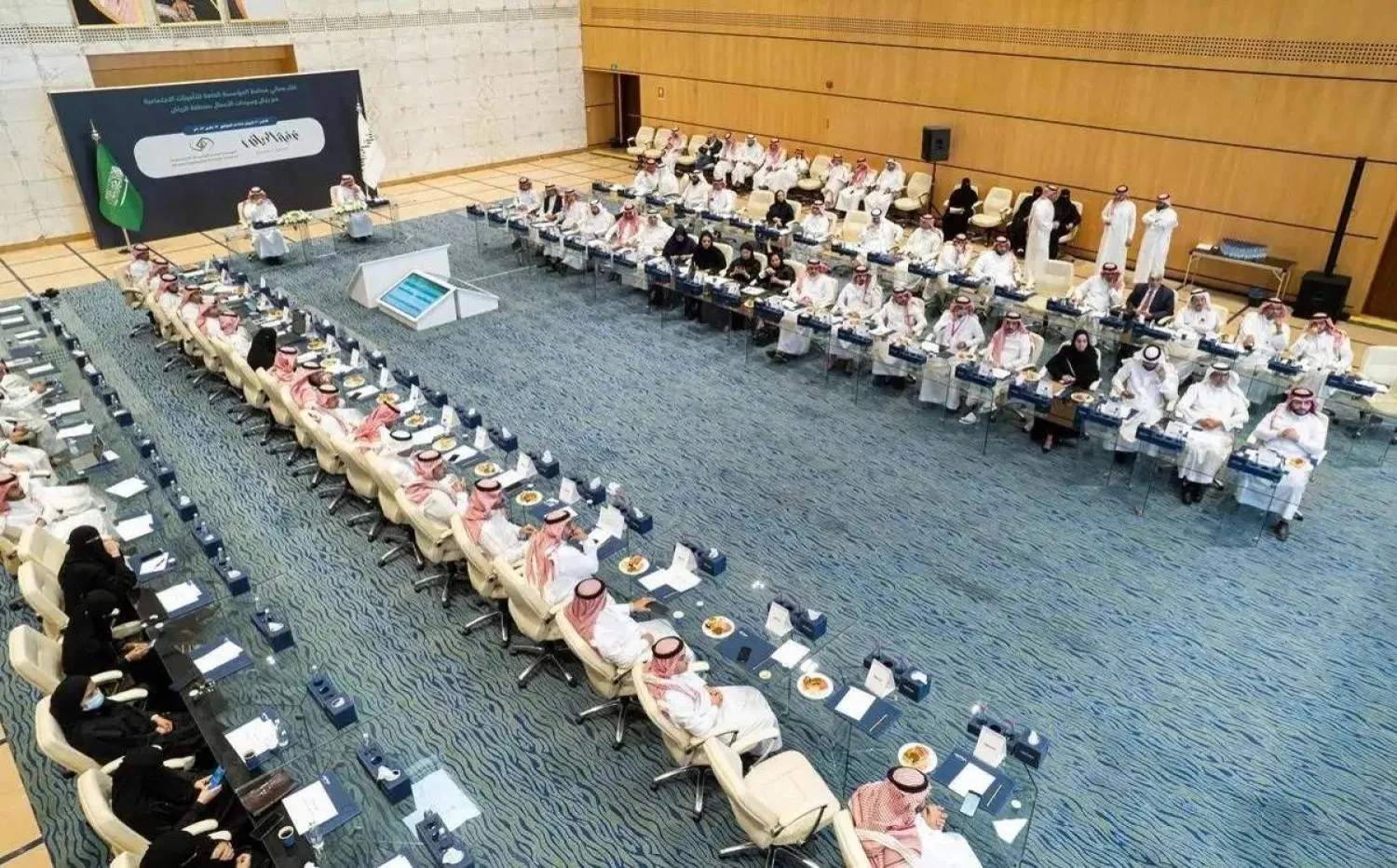
Officials from the General Organization for Social Insurance at an earlier meeting with businessmen and businesswomen at the Riyadh Chamber (SPA)
TT

Saudi Arabia Offers 100% Social Insurance Debt Waiver to Businesses That Have Exited Market

Officials from the General Organization for Social Insurance at an earlier meeting with businessmen and businesswomen at the Riyadh Chamber (SPA)

Saudi Arabia's General Organization for Social Insurance (GOSI) has made businesses that have ceased operations and exited the Saudi market eligible for a 100% waiver of outstanding social insurance debts, subject to approved conditions, Asharq Al-Awsat has learned.

The move aims to address accumulated financial obligations, help businesses settle their accounts and close outstanding cases, and support stability in the Kingdom's private sector while resolving financial difficulties faced by companies that have left the market.

The measure is part of a broader package of improvements GOSI is implementing to enhance services for employers and businesses, in response to feedback and suggestions gathered during direct meetings with officials and business owners, in cooperation with chambers of commerce.

Taking Economic Conditions into Account

The initiative has economic and regulatory implications beyond debt relief, seeking to address financial and administrative liabilities left behind by businesses that have exited the market and facilitate the formal closure of their records in accordance with regulations.

Its main significance lies in striking a balance between protecting the rights of the social insurance system and its contributors, on the one hand, and taking into account the economic circumstances of businesses that have ceased operations, on the other.

It also reinforces regulatory flexibility in the business environment, ensuring that accumulated obligations do not become a permanent obstacle to the settlement of financial and administrative affairs.

Enhancing Market Attractiveness

The initiative reflects a more flexible approach to dealing with business distress, focusing on resolving outstanding liabilities rather than allowing them to remain a continuing burden on business owners.

This approach is expected to strengthen confidence in regulatory procedures and enhance the attractiveness of Saudi Arabia's business environment.

The move is particularly significant given the changing nature of the business sector, with new companies entering the market each year while others cease operations because of competition, rising costs, or shifting market conditions.

Settling the social insurance accounts of businesses that have exited the market could ease the administrative and financial burden on their owners, help them reorganize their financial affairs and potentially pave the way for a return to commercial activity in the future, without old liabilities remaining an obstacle, subject to applicable regulations.

According to information obtained by Asharq Al-Awsat, GOSI has notified all companies and establishments of improvements introduced to its business services, including the debt waiver.

The measure is designed to enable businesses that have ceased operations to resolve their outstanding social insurance obligations and complete the regulatory procedures associated with closing their operations, easing the financial burden on owners whose businesses are no longer active.

Service Improvements

In a related development, GOSI's improvements include upgrades to services for registering businesses, terminating their activities and managing ownership records, alongside efforts to resolve recurring technical problems and improve the quality of digital services.

The changes are intended to improve the user experience and accelerate transaction processing.

GOSI has also expanded electronic payment options through its GOSI Business app, allowing employers to pay amounts exceeding 30,000 Saudi riyals ($8,000) in multiple installments.

The measure aims to make it easier for businesses to meet their financial obligations while providing greater payment flexibility.

The updates also include measures to increase transparency in transaction processing by clarifying the reasons for rejecting occupational injury claims and contributor-related transactions.

Notifications have also been introduced through the GOSI Business and Tawakkalna apps to inform users when applications are received, accepted, returned, or rejected.

Together, the improvements reflect GOSI's efforts to modernize its digital services, simplify procedures for employers and improve the management of social insurance obligations.

The measures are also intended to support the business environment and help resolve outstanding financial and administrative matters involving businesses.



Crown Prince: 2027 State Budget Maximizes Saudi Vision 2030 Impact, Turns Achievements into Sustainable Economic Strength

Saudi Crown Prince Mohammed bin Salman bin Abdulaziz Al Saud - SPA
TT

Crown Prince: 2027 State Budget Maximizes Saudi Vision 2030 Impact, Turns Achievements into Sustainable Economic Strength

Saudi Crown Prince Mohammed bin Salman bin Abdulaziz Al Saud - SPA

On the approval of the State's General Budget for fiscal year 1448/1449 AH (2027), Prince Mohammed bin Salman bin Abdulaziz Al Saud, Crown Prince, Prime Minister, and Chairman of the Council of Economic and Development Affairs, affirmed that the 2027 budget embodies the government's commitment to placing the nation's advancement and the interests of its citizens at the forefront of its priorities, and preserving development gains for current and future generations.

He noted that the achievements realized thus far are the result of the directives of Custodian of the Two Holy Mosques King Salman bin Abdulaziz Al Saud and the efforts of Saudi Arabia's citizens.

The Crown Prince stated that work in the third phase of Saudi Vision 2030 builds upon the reforms and accomplishments achieved during the previous two phases, stating: "We are maximizing the impact of the Vision on people's lives, transforming its achievements into a sustainable strength for our economy and renewed opportunities for future generations."

He emphasized the continued expansion of development opportunities, investment in the capabilities of Saudi citizens, and the building of a more diverse and competitive economy whose impact extends beyond 2030, SPA reported.

The Crown Prince affirmed that the 2027 budget is part of a long-term financial plan that balances supporting sustainable growth, implementing development priorities, and strengthening public finance sustainability, while maintaining flexibility in resource allocation and continued funding for programs and projects with economic and social impact. He noted that enhancing the effectiveness of the social support and protection system—by directing spending to those most in need and raising living standards and quality of life—remains a core priority within Saudi Arabia's fiscal and economic policy, alongside continued investment in infrastructure and essential services for citizens, residents, and visitors, and the development of transport and logistics networks to strengthen regional connectivity, enhance investment appeal, improve the efficiency of goods movement, and bolster economic resilience against shifts in global supply chains.

According to SPA, the Crown Prince underscored the importance of increasing spending efficiency, measuring its outcomes, aligning resource allocation with national strategies, and maximizing returns from government assets and investments. He stressed that government entities are responsible for ensuring high-quality monitoring, execution, and transparency, as well as achieving targeted project outcomes that support medium- and long-term development. He further noted that economic reforms and policies supporting economic activity have broadened the economic base and enhanced competitiveness, pointing out that 2026 estimates indicate a 2.5% growth in real GDP from non-oil activities, reflecting progress in economic diversification plans.

The Crown Prince stated that financial sector growth, underpinned by strong regulatory frameworks, supports economic financing and private sector expansion, and that maintaining the strength of Saudi Arabia's financial position facilitates access to financial markets and diversifies funding sources while keeping public debt at sustainable levels and maintaining substantial government reserves to navigate changes and sustain development.

He commended the private sector's role in driving economic growth amid ongoing regulatory and structural reforms aimed at developing the business environment, enhancing investment stability and attractiveness for local and international investors, expanding investment opportunities, increasing the private sector's economic contribution, and supporting small- and medium-sized enterprises (SMEs), local content development, non-oil exports, and job creation.

The Crown Prince affirmed that the Public Investment Fund (PIF) continues to develop strategic and promising sectors aligned with development priorities and economic diversification by strengthening partnerships with the private sector and supporting SMEs through investments that localize knowledge, develop national talent, enhance local content in the fund's operations, and expand investment opportunities in domestic and global markets.

Complementing this role, the Crown Prince said that the National Development Fund, through its affiliated development funds and banks, continues to enhance financing efficiency, direct funding toward national priorities, expand financing opportunities for development sectors and projects, and incentivize private sector participation to support the budget and maximize the developmental impact of available resources.

Internationally, the Crown Prince stressed that Saudi Arabia has demonstrated its capability and standing as a sustainable and reliable global supplier in securing world energy supplies, backed by strategic investments in energy and logistics infrastructure to ensure the flow of oil and non-oil exports by utilizing the East-West Pipeline and ports along the western coast. He reaffirmed the Kingdom's commitment to continued cooperation with producing countries, expanding economic partnerships, and contributing to efforts supporting regional and global development and stability, in line with Saudi Arabia's international standing and responsibility.

The Crown Prince stated that current geopolitical developments have demonstrated the resilience of the Saudi economy and its high capacity to adapt to changing circumstances through flexible fiscal policies and effective coordination among entities. He noted that the Kingdom closely monitors all regional and global developments, including uncertainty in the global economy, stressing that national security and stability are the foundation for preserving development achievements and continuing to develop military and defense capabilities. He expressed his pride in the officers and personnel of the armed forces and security sectors, including those stationed along the nation's borders, for their efforts and sacrifices in defending the Kingdom and its assets.

Concluding his statement, the Crown Prince affirmed that the Kingdom of Saudi Arabia, under the leadership and directives of the Custodian of the Two Holy Mosques, continues to expand opportunities for its citizens, safeguard its stability, security, and inviolable sovereignty, and defend its assets with strength and determination, while pursuing comprehensive growth and development across all sectors and reinforcing its active role in the global economy and in establishing the foundations of peace and stability in the region and the world with wisdom and objectivity.


Aljadaan: Saudi Arabia Implemented 200 Policy and Regulatory Measures This Year

Saudi Finance Minister Mohammed Aljadaan at a press conference on the Kingdom's 2027 state budget (Asharq Al-Awsat)
TT

Aljadaan: Saudi Arabia Implemented 200 Policy and Regulatory Measures This Year

Saudi Finance Minister Mohammed Aljadaan at a press conference on the Kingdom's 2027 state budget (Asharq Al-Awsat)

Saudi Finance Minister Mohammed Aljadaan said the Kingdom had implemented around 200 measures this year in response to disruptions affecting the region. These included policy, procedural and regulatory measures, public awareness initiatives and interventions by national development funds.

The funds provided financing facilities to borrowers and supported businesses requiring funding and working capital liquidity to import additional goods, including food and essential supplies, as well as production inputs. The measures were aimed at addressing challenges affecting not only Saudi Arabia but the wider region, many of which have also had global repercussions.

Speaking at a press conference on Saudi Arabia's 2027 state budget, Aljadaan said the government had taken several steps to cushion the impact of shocks during an exceptional year. These included facilitating the use of airports and ports, expanding transportation and shipping capacity, monitoring the flow of goods and the availability of production inputs, and strengthening the Kingdom's ability to meet demand.

Other measures included establishing a marine insurance pool and the wage support announced Tuesday for Saudi employees at affected businesses through the SANED unemployment insurance program, helping ease employers' wage burdens.


US Tech Stock Rebound Opens Opportunities for Saudi Companies, with HUMAIN in Spotlight

A stock market screen displays Nvidia shares (Reuters)
TT

US Tech Stock Rebound Opens Opportunities for Saudi Companies, with HUMAIN in Spotlight

A stock market screen displays Nvidia shares (Reuters)

Rapid developments in the US technology sector, led by Nvidia, have restored momentum to global stock markets following Jensen Huang's return as the company's chief executive. The move has revived confidence in artificial intelligence stocks and raised questions about how the new wave of investment could affect Gulf markets, particularly Saudi Arabia.

The announcement sparked a strong rally in Nvidia shares, with gains spreading across US equity markets as optimism over AI investment and digital infrastructure returned. The rebound has also brought renewed attention to companies and sectors linked to the AI ecosystem worldwide.

The recovery has extended to the Saudi stock market, where the benchmark Tadawul All Share Index (TASI) rose in early Tuesday trading as investors monitored global market developments and assessed how improving risk appetite could affect local equities.

Mohammed Al Farraj, Senior Director and Head of Asset Management at Arbah Capital, said the renewed momentum in US technology stocks should not be viewed merely as a temporary rebound in share prices, but as a clear indication of a revival in the global investment cycle associated with digital infrastructure.

Speaking to Asharq Al-Awsat, Al Farraj explained that the momentum would not necessarily translate into an automatic rise in Saudi Arabia's benchmark index, given the market's dependence on domestic drivers, including oil prices, government spending and corporate earnings.

He said the impact would be felt through three main channels: improved global liquidity and risk appetite, increased capital expenditure on infrastructure, and a revaluation of local companies connected to the AI ecosystem.

HUMAIN and the AI Value Chain

Discussing the Saudi sectors most likely to benefit from renewed global investment in artificial intelligence, Al Farraj said opportunities span interconnected industries that together form an integrated value chain.

He explained that this would allow Saudi Arabia to move beyond consuming technology toward securing a share in its production.

The opportunities begin with telecommunications and technology services companies such as solutions by stc and extend to the data center sector, driven by major initiatives including Public Investment Fund-backed HUMAIN, which is developing an integrated cloud ecosystem.

Al Farraj added that the benefits would also extend to the energy and electricity sectors, including ACWA Power, Saudi Electricity Company and Saudi Aramco, given the substantial need for reliable power supplies and advanced cooling systems to operate data centers.

Other potential beneficiaries include digital companies such as Elm and supporting industrial sectors that stand to gain from the localization of manufacturing for transformers, cables and backup power equipment.

Contracts and Cash Flow Key to Sustaining Gains

On the sustainability of the rally, Al Farraj stressed the importance of distinguishing between sustained investment in artificial intelligence and continued increases in stock valuations.

He noted that sharp gains in US markets reflect investors' sensitivity to developments in the sector but are not, on their own, sufficient evidence that returns will be sustainable.

He said the real measure of Saudi companies' performance in the sector would not be their announcements of AI adoption, but their ability to meet three fundamental financial conditions.

These include converting contracts into genuine earnings growth, generating returns on invested capital that exceed the cost of capital, and, most importantly, producing tangible free cash flow that is not consumed by substantial capital expenditure.

Ultimately, Al Farraj believes Saudi Arabia has a strategic opportunity to localize supply chains and translate the global investment cycle into added value for its domestic economy.

He emphasized that the strongest investment opportunities would not necessarily lie with companies that merely promote their AI strategies, but with those that possess the infrastructure and assets needed to turn the technological transformation into sustainable profits and cash flows.