


India’s Yamuna River Laps Walls of Taj Mahal after Heavy Rain

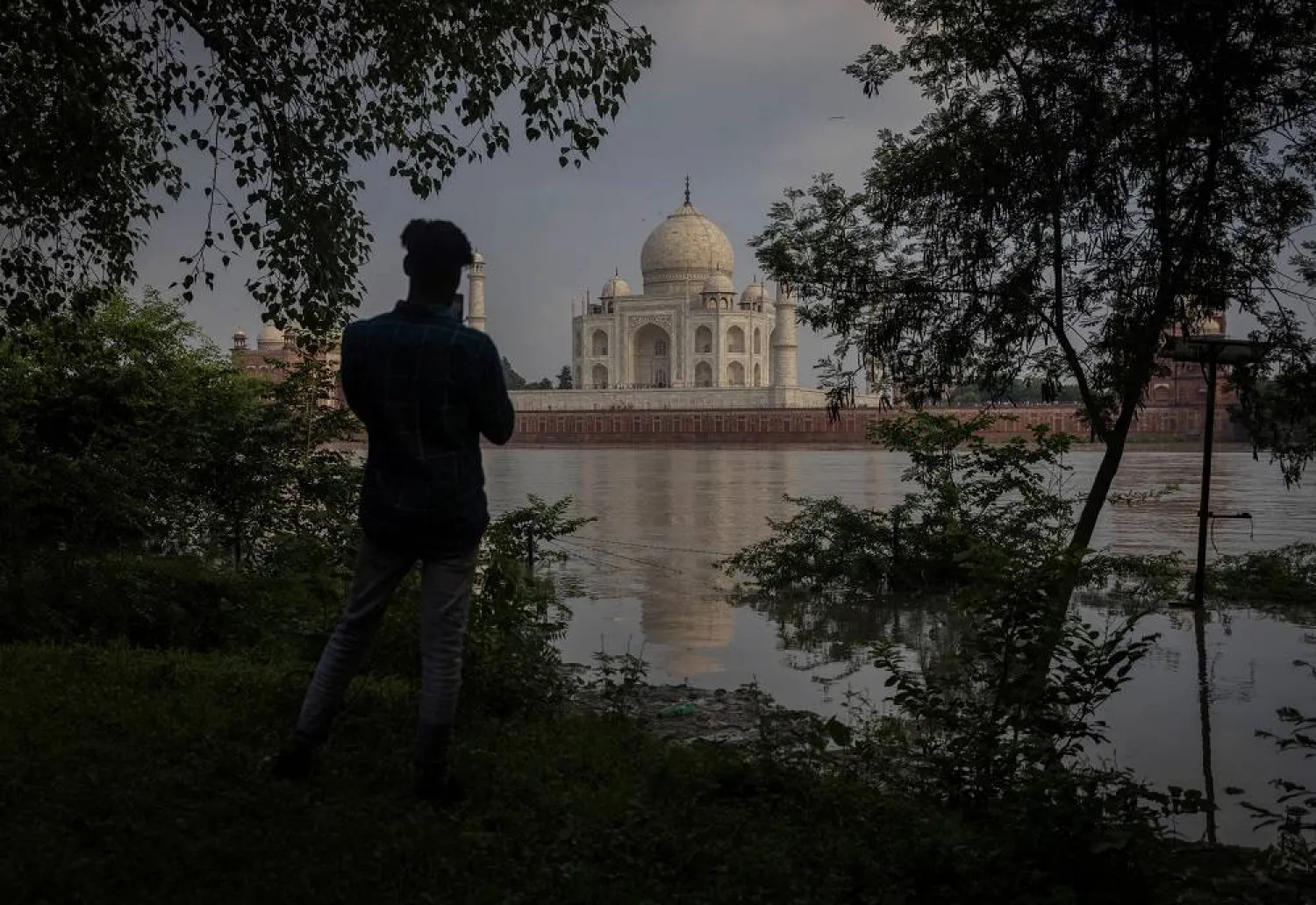
A man takes picture of historic Taj Mahal as the Yamuna River overflows following heavy rains, in Agra, India July 18, 2023. (Reuters)
TT

India’s Yamuna River Laps Walls of Taj Mahal after Heavy Rain

A man takes picture of historic Taj Mahal as the Yamuna River overflows following heavy rains, in Agra, India July 18, 2023. (Reuters)

A river that runs through the northern Indian state of Uttar Pradesh has risen to lap the compound walls of the iconic Taj Mahal in Agra city, causing concern about damage to the 17th-century white marble monument.

The water level of the Yamuna River has increased over the last few days after unusually heavy rain in northern India, including Uttar Pradesh, which has received 108% of its normal rainfall since the four-month monsoon season began on June 1.

According to India's Central Water Commission (CWC), the portion of the river flowing alongside the Taj Mahal rose to 152 meters (499 feet) late on Tuesday, well above the warning level for potential danger of 151.4 meters. The level considered dangerous is 152.4 meters.

Local media outlets reported that the last time the river reached the walls of the monument, built by Mughal Emperor Shah Jahan in memory of his queen Mumtaz Mahal, was 45 years ago, in 1978.

CWC data also indicates that its station near the monument recorded the river's highest flood level that year at 154.76 meters.

Visuals from the area on Tuesday showed the red sandstone boundary wall of the Taj Mahal surrounded by muddy water, with pieces of garbage floating in it, the mausoleum itself looming over the scene, untouched by the river.

Officials from the Archaeological Survey of India (ASI), which oversees the Taj Mahal along with several other monuments in the country, said there was "no serious concern" about the monument at present.

"If it rains more, or the water stays this high for some days, we will need to assess the situation again," said Raj Kumar Patel, superintendent archaeologist with ASI.

Several other monuments and gardens located in the vicinity of the Taj Mahal, closer to the banks of the Yamuna, however, "have been submerged" and damaged, he said.

These include the tomb of Itimad-ud-Daulah, often called "baby Taj", which dates back to the 1600s, and Mehtab Bagh, also from the same period, whose structure has been damaged and garden area - currently under water - completely destroyed.

Tourists from around the world continued to stream in through the gates of the Taj Mahal on Tuesday evening, undeterred by the rising water levels.

"It is crazy to see the water go up so much, but to see the Taj Mahal was beautiful," said Mathew Kreton, 20, a student from Lucerne, Switzerland.

Local residents were more concerned, fearing the river would eventually invade their homes.

"We have kept our belongings on top so that they do not float away. Along with that we are staying on alert," said Sundar Dubey, 49, who lives near the temple.


Cultural Camp at King Abdulaziz Camel Festival Showcases Saudi Heritage

The camp celebrates authentic Saudi heritage and reinforces culture as a cornerstone of national identity - SPA
TT

Cultural Camp at King Abdulaziz Camel Festival Showcases Saudi Heritage

The camp celebrates authentic Saudi heritage and reinforces culture as a cornerstone of national identity - SPA

The cultural camp is a key feature of the 10th King Abdulaziz Camel Festival, held in Al-Sayahid desert. The camp celebrates authentic Saudi heritage and reinforces culture as a cornerstone of national identity, according to SPA.

It offers a range of programs, including live performances and interactive events, that highlight camels' historical significance in Arab culture and illustrate the values of patience, strength, and belonging.

The camp has attracted over 2,000 guests from 71 nationalities, emphasizing its global appeal as a cultural platform for diversity and tradition.

Visitors engage with cultural content through innovative methods that merge authenticity with modern technology, enhancing awareness of the camel's cultural legacy. This initiative aligns with Saudi Vision 2030 by preserving heritage and connecting younger generations with their roots.


Tuwaiq Sculpture 2026 Announces 25 Participating Artists for Seventh Edition

The 2026 edition features a month-long live sculpting phase alongside a community engagement program - SPA
TT

Tuwaiq Sculpture 2026 Announces 25 Participating Artists for Seventh Edition

The 2026 edition features a month-long live sculpting phase alongside a community engagement program - SPA

Under the Royal Commission for Riyadh City and Riyadh Art, Tuwaiq Sculpture has announced the selection of 25 artists for the seventh edition of the annual sculpture symposium and exhibition, taking place from January 10 to February 22, 2026.

This year’s edition unfolds under the curatorial theme “Traces of What Will Be,” inviting artists to reflect on how sculptural form can express the physical, cultural and conceptual traces that shape the future of cities and communities, SPA reported.

A total of 25 artists from 18 countries, including Saudi artists, have been selected for the seventh edition. Their proposals reflect a diverse range of artistic approaches, responding to the theme through explorations of transformation, place, and materiality.

Director of the Tuwaiq Sculpture Symposium Sarah Alruwayti said: "The seventh edition of Tuwaiq Sculpture received more than 590 applications, reflecting the cultural diversity and global interest in the symposium. The selection of the 25 participating artists was carried out by a jury of industry experts and specialists. Their proposals show meaningful engagement with the theme and reflect the strength and diversity of contemporary sculptural practice. We look forward to welcoming them to Riyadh for the creation of new works that will become lasting additions to the city.”

Building on the evolving material practice of the symposium, Tuwaiq Sculpture 2026 introduces two sculpting categories: granite with optional stainless-steel integration and reclaimed metal. Twenty artists will work in granite, while five will create new works in reclaimed metal. Over four weeks, they will produce large-scale sculptures that will later be added to Riyadh Art’s permanent public art collection.

The 2026 edition features a month-long live sculpting phase alongside a community engagement program, inviting visitors to witness the creation of artworks and take part in panel discussions and workshops. The symposium will conclude with a public exhibition showcasing the completed sculptures from its seventh edition.


ALECSO Celebrates Opening of Arabic Calligraphy Center in Saudi Arabia

Arabic calligraphy adorns wrcades, Walls of the Grand Mosque of Makkah - SPA
TT

ALECSO Celebrates Opening of Arabic Calligraphy Center in Saudi Arabia

Arabic calligraphy adorns wrcades, Walls of the Grand Mosque of Makkah - SPA

The Arab League of Educational, Cultural and Scientific Organization (ALECSO) congratulated Saudi Arabia on the opening of the Prince Mohammed bin Salman Global Center for Arabic Calligraphy in Madinah on December 22, 2025.

In a statement, ALECSO called the center a significant addition to the Arab and Islamic cultural landscape, noting its role in preserving Arabic calligraphy and enhancing its global presence, SPA reported.

This achievement reflects the Kingdom's commitment to culture and heritage, aligning with Saudi Vision 2030’s objectives of fostering cultural creativity and reinforcing Arabic identity.

ALECSO emphasized that such institutions serve as global bridges for cultural exchange and ensure the relevance of traditional arts through dedicated research and training facilities.