


Opera for the Public: Spain’s Teatro Real Opera House Offers Free Broadcast to Towns and Cities

Opera fans and passers-by watch Giacomo Puccini's "Turandot" opera on a giant screen in a square outside Teatro Real opera house in Madrid, Spain, Friday, July 14, 2023. (AP)
TT

Opera for the Public: Spain’s Teatro Real Opera House Offers Free Broadcast to Towns and Cities

Opera fans and passers-by watch Giacomo Puccini's "Turandot" opera on a giant screen in a square outside Teatro Real opera house in Madrid, Spain, Friday, July 14, 2023. (AP)

On a night in the middle of July, tenors, sopranos and a choir delighted the crowd in Madrid’s luxurious Teatro Real opera house with Giacomo Puccini’s masterpiece, “Turandot.”

After the curtain came down, the audience filed from their plush seats and left the theater’s state-of-the-art air conditioning for the summer swelter outside — only to be met again by the voices of Calaf and Princess Turandot.

The performance they had just seen was being replayed on a giant television screen in the big square at the back of the theater.

Here, the spectators sat on hundreds of plastic chairs. Many wore shorts and sandals. Others, tourists included, sat on the low walls and benches in the square or leaned on the barriers and the nearby subway station’s railings.

Some chewed on rolls of Spanish jam, others played cards. But most were absorbed with the show on the 9- by 5-meter (30- by 16-foot) screen.

The night was part of Teatro Real’s “opera week,” which for eight years has been providing a free broadcast of an opera in the theater to towns and cities across Spain.

More than 100 towns displayed the broadcast of the July 14 “Turandot” performance. All the towns need is a computer, a good Wi-Fi connection and somewhere to project the video.

During the week, the crowds outside the theater in Madrid also got to see other Teatro Real shows, including a ballet and flamenco act. The week cost the theater 107,000 euros ($118,000).

The chief aim is to spread interest in opera.

Opera “is popular music, it was always the total art where literature, music and dance met, (when) there was no television, there was no radio,” said Spanish tenor Jorge de León, who played Calaf.

“We have to remove that label of elitism that opera has, because they (operas) talk about stories, about very understandable things,” he said, sitting on one of the plastic chairs among the spectators in the square.

In Mino de San Esteban, a village of 44 inhabitants about 160 kilometers (100 miles) north of Madrid, 94-year-old Nemesia Olmos soaked up the projection of “Turandot” on the wall of the town’s Romanesque church.

Cultural life in the village has changed greatly. Gone is the crowded ballroom and visits from traveling theater groups. No longer do residents listen to songs from what was the only radio in the village. For the villagers, the Teatro Real’s offering is a delight.

“We’ve never had it so close. It seemed like we saw it right there, although it is a bit long,” Olmos said, as she left a little before the end.


Jazan Festival 2026 Kicks Off Thursday with Grand Parade

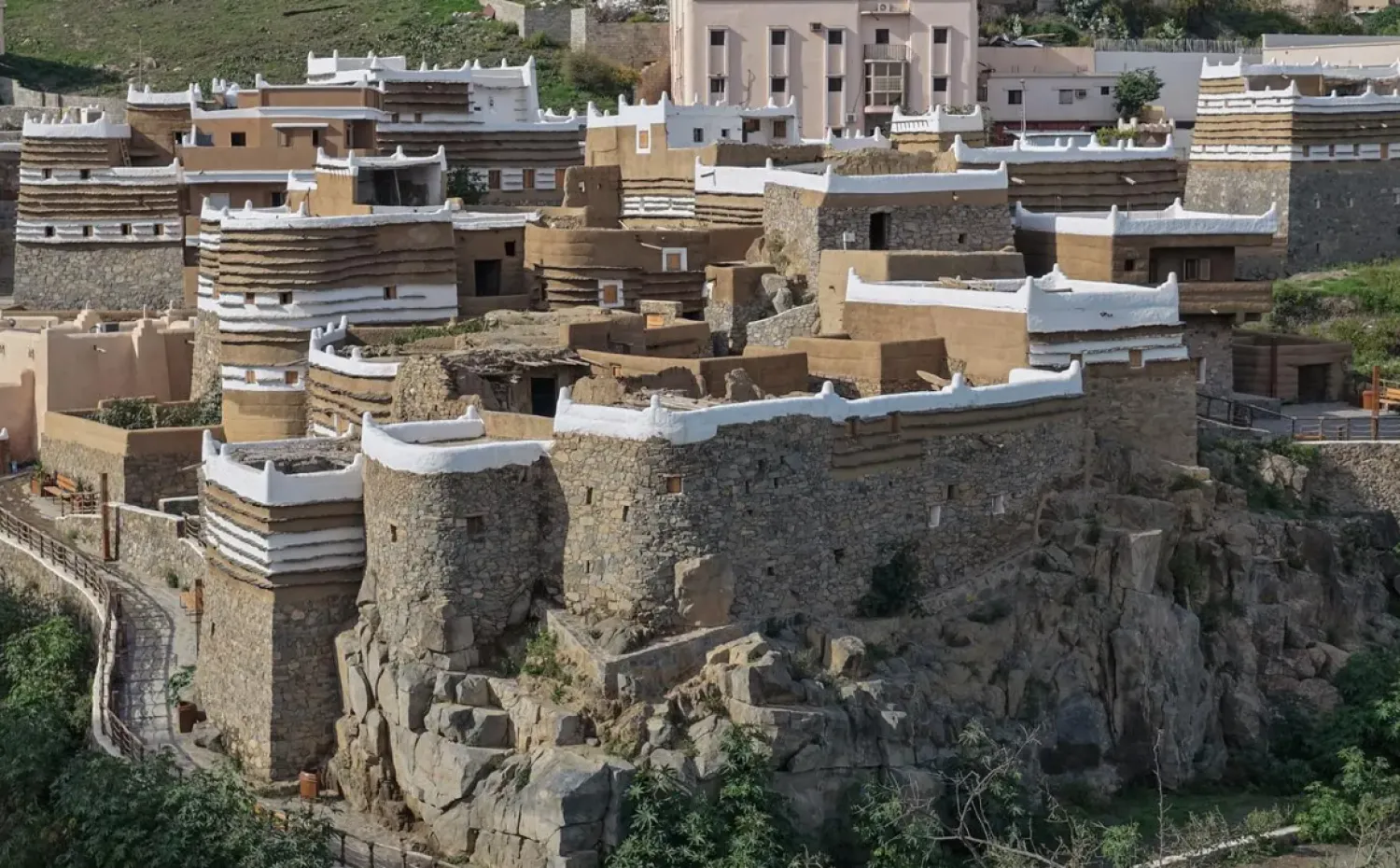
his year’s festival offers an unprecedented experience that brings together the charm of the region’s unique geographic diversity - SPA
TT

Jazan Festival 2026 Kicks Off Thursday with Grand Parade

his year’s festival offers an unprecedented experience that brings together the charm of the region’s unique geographic diversity - SPA

The Jazan Festival 2026 will launch on Thursday in a carnival anticipated by thousands of visitors from within the region and beyond.

The festival will open with a grand celebratory parade starting at 3:45 p.m. along the Jazan city waterfront, signaling the start of an entertainment and cultural season that will extend for several months, according to SPA.

This year’s festival offers an unprecedented experience that brings together the charm of the region’s unique geographic diversity, from its towering green mountains and golden beaches to its picturesque islands, alongside the authenticity of its rich heritage, complemented by modern touches in entertainment programs designed to meet the aspirations of all age groups.

Performing arts inspired by local folklore will add an authentic dimension, while moving installations will flow in harmonious rhythm.

Completing the visual spectacle, integrated light and sound shows will create an enchanting atmosphere before the festivities conclude with a dazzling fireworks display lighting up the Jazan sky in vibrant colors.


UNESCO Chair in Translating Cultures Hosts Lectures on Safeguarding Intangible Cultural Heritage

The program was presented as an advanced knowledge initiative that combined theoretical perspectives with practical application - SPA
TT

UNESCO Chair in Translating Cultures Hosts Lectures on Safeguarding Intangible Cultural Heritage

The program was presented as an advanced knowledge initiative that combined theoretical perspectives with practical application - SPA

The United Nations Educational, Scientific and Cultural Organization (UNESCO) Chair in Translating Cultures at the King Faisal Center for Research and Islamic Studies (KFCRIS), with support from the Literature, Publishing, and Translation Commission, organized a training course and a series of specialized lectures on the translation and safeguarding of intangible cultural heritage, SPA reported.

The program was presented as an advanced knowledge initiative that combined theoretical perspectives with practical application, opening space for in-depth discussion of the challenges of translating intangible heritage as a living, evolving form of culture closely tied to its cultural, social, and performative contexts.

The course and lectures adopted a comprehensive approach that views translation as a cultural tool for preserving oral memory and building bridges between local specificity and the global sphere.

This approach was reflected through applied models, field experiences, and contemporary conceptual frameworks.


Ancient Egyptian Pharaoh’s Boat Is Being Reassembled in Public at Grand Egyptian Museum

People walk next to King Khufu's boat gem, also known as the Solar Boat, as work to restore the second solar boat has started with wooden planks part of the 1,650-piece structure being installed on a metal frame through Egyptian-Japanese cooperation with two Japanese universities, marking the start of preparations for the second boat's public display at the Grand Egyptian Museum (GEM), near the Giza Pyramid Complex, in Giza, Egypt, December 23, 2025.
TT

Ancient Egyptian Pharaoh’s Boat Is Being Reassembled in Public at Grand Egyptian Museum

People walk next to King Khufu's boat gem, also known as the Solar Boat, as work to restore the second solar boat has started with wooden planks part of the 1,650-piece structure being installed on a metal frame through Egyptian-Japanese cooperation with two Japanese universities, marking the start of preparations for the second boat's public display at the Grand Egyptian Museum (GEM), near the Giza Pyramid Complex, in Giza, Egypt, December 23, 2025.

A boat belonging to an Egyptian pharaoh is being assembled in full view at the Grand Egyptian Museum’s exhibition hall.

Staff began piecing together the cedarwood boat, one of two that were found that belong to King Khufu, Tuesday morning as dozens of visitors watched.

The assembly of the 42-meter (137-foot) -long vessel, which sits next to its already-assembled twin that has been on display, is expected to take around four years, according to Issa Zeidan, head of restoration at the Grand Egyptian Museum. It contains 1,650 wooden pieces.

King Khufu ruled ancient Egypt more than 4,500 years ago and built the Great Pyramid of Giza.

“You’re witnessing today one of the most important restoration projects in the 21st century,” said Tourism and Antiquities Minister Sherif Fathy, who attended the event.

The $1 billion museum, also known as GEM, was touted as the world’s largest when it was lavishly inaugurated last month. It's home to nearly 50,000 artifacts, including the collection of treasures from the tomb of the famed King Tutankhamun, which was discovered in 1922. The museum, located near the pyramids at the edge of Cairo, is expected to boost Egypt’s tourism revenues and help bolster its economy.

The boat was one of two discovered in 1954, opposite the southern side of the Great Pyramid. The excavation of its wooden parts began in 2014, according to the museum’s website.

The exact purpose of the boats remains unclear, but experts believe they were either used to transport King Khufu’s body during his funeral or were meant to be used for his afterlife journey with the sun god Ra, according to the museum.