


League of Islamic Universities Urges Nations Allowing Quran Burning to Restore Cultural Awareness

Snapshot of the attendees at the conference “Framing Liberties According to Islamic Values and Principles of International Law” in Rabat, Morocco (Asharq Al-Awsat)
TT

League of Islamic Universities Urges Nations Allowing Quran Burning to Restore Cultural Awareness

Snapshot of the attendees at the conference “Framing Liberties According to Islamic Values and Principles of International Law” in Rabat, Morocco (Asharq Al-Awsat)

The League of Islamic Universities convened representatives from Islamic jurisprudence bodies, major universities, experts in international law, as well as academics and thinkers, to deliberate on issues of freedom and their real-world implications and practice.

This took place during a scholarly international conference titled, “Framing Liberties According to Islamic Values and Principles of International Law.”

The conference was held in the Moroccan capital, Rabat, and was inaugurated by the president of the League, Sheikh Mohammed Al-Issa.

The meeting takes place against the backdrop of increasing crimes committed against Islamic and religious sanctities in general, under the pretext of “freedom of opinion and expression.”

The conference included scholarly sessions that hold significant importance in clarifying this noble human value, which holds great significance in Islam, and in establishing the desired academic role in education and intellectual stimulation towards a future that fosters more solidarity, understanding, and respect among followers of religions and civilizations.

This aims to address the narratives of cultural clash and religious conflict.

In his opening speech at the conference, Al-Issa emphasized that a rational approach does not accept that the legislative understanding of freedoms remains unchecked without a framework that upholds values and preserves rights, particularly the dignity of others, especially their sanctities.

According to Al-Issa, this framework also prevents the ignorant and the malicious from employing freedom of expression in a way that harms world peace and the harmony of societies.

A final statement was issued by the conference, in which the participants agreed that honoring and respecting humanity is a common ground among followers of religions and cultures.

They emphasized that nurturing and developing humans spiritually, intellectually, and materially forms the cornerstone of constructing civilized societies aimed at repairing the world and bringing happiness to individuals.

As per the communique, freedom is considered a fundamental human value guaranteed to everyone, like other values and principles, but is neither arbitrary nor synonymous with chaos and recklessness.

Moreover, the final statement emphasized the call to countries that have permitted the burning of copies of the Holy Quran to “reexamine their constitutional concepts, restore their cultural awareness, and recall the lessons of history.”

It said that those countries should avoid conflating the humane meaning of freedoms with the chaos that detracts from that meaning, especially by allowing the concept of freedoms to deteriorate into insulting the dignity of others and inciting futile conflicts between nations and peoples solely based on religious and ideological differences.
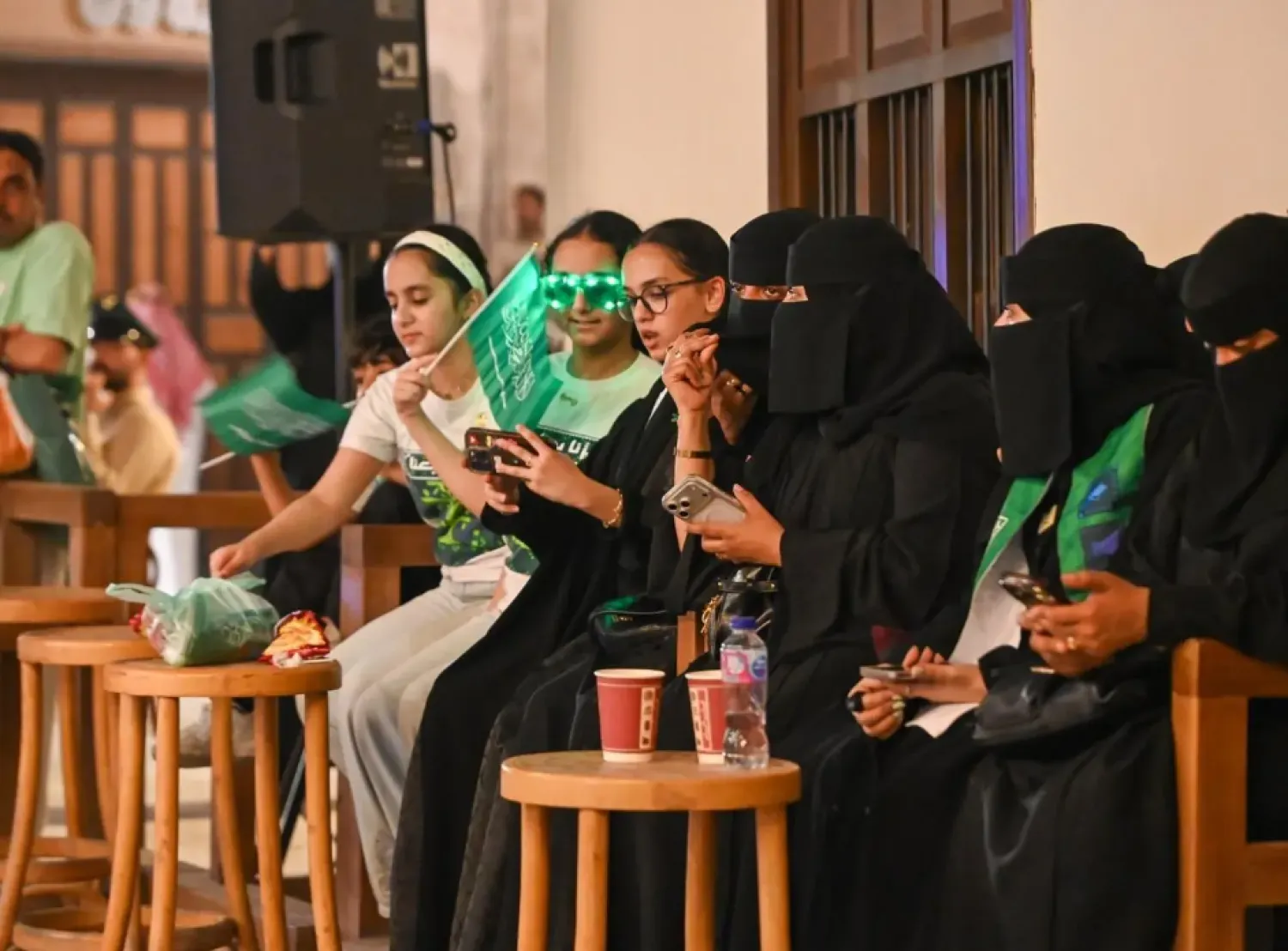



Zawiya 97 Celebrates Saudi National Day with Craft, Artistic Experiences in Historic Jeddah

The craft workshops drew on elements of Saudi identity and heritage - SPA
TT

Zawiya 97 Celebrates Saudi National Day with Craft, Artistic Experiences in Historic Jeddah

The craft workshops drew on elements of Saudi identity and heritage - SPA

Zawiya 97 in Historic Jeddah celebrated Saudi National Day through a range of craft and artistic experiences and interactive activities inspired by local heritage and national identity, in an atmosphere combining the authenticity of the place with artisans' creativity.

The events featured short craft experiences that allowed visitors to practice a range of crafts and arts, including screen printing on fabrics, plaster engraving, drawing a map of Saudi Arabia on coffee cups, and clay shaping to make prayer beads and bracelets, SPA reported.

The activities also included live demonstrations of woodturning and plant distillation, along with experiences for assembling the "Manjour," inspired by the traditional architecture of Historic Jeddah. National musical performances and a photography corner added to the interactive atmosphere.

The craft workshops drew on elements of Saudi identity and heritage, including handmade clay construction, shaping a pottery plate inspired by the palm tree, and making a candle inspired by the Saudi coffee cup, decorated with details from local heritage.


Visual Artists Mark Saudi National Day with Vision 2030 Mural in Al-Ahsa

Visual Artists Mark Saudi National Day with Vision 2030 Mural in Al-Ahsa
TT

Visual Artists Mark Saudi National Day with Vision 2030 Mural in Al-Ahsa

Visual Artists Mark Saudi National Day with Vision 2030 Mural in Al-Ahsa

A local culture and arts association in Al-Ahsa Governorate created an art mural on Saudi Arabia's journey under Saudi Vision 2030, as part of Saudi National Day celebrations in Al-Ahsa Governorate.

The event included creating artworks on two obelisks the same height as the mural, with 25 artists involved, SPA reported.

The participation is part of an exhibition of a number of visual artworks, as well as live painting sessions in front of visitors, contributing to enriching the artistic scene accompanying the Saudi National Day celebrations.


US Returns Stolen Antiquities Worth $5 Million to Syria

The Palmyran stone was removed from the UNESCO World Heritage site Palmyra before ISIS members destroyed much of the city from 2015 to 2017. (Reuters)
TT

US Returns Stolen Antiquities Worth $5 Million to Syria

The Palmyran stone was removed from the UNESCO World Heritage site Palmyra before ISIS members destroyed much of the city from 2015 to 2017. (Reuters)

US officials announced Wednesday the return of 36 stolen antiquities to Syria, including a stone trafficked during the ISIS group's destruction of the ancient site of Palmyra.

Authorities seized the items, collectively valued at more than $5 million, from New York's Metropolitan Museum of Art and several ancient art collectors.

"Repatriation ceremonies are a powerful reminder that preserving cultural heritage transcends any border or nationality," said Manhattan District Attorney Alvin Bragg.

The Palmyran stone was removed from the UNESCO World Heritage site Palmyra before ISIS members destroyed much of the city from 2015 to 2017, according to a press release.

Weighing more than 450 kilograms, the carved limestone sculpture depicts a reclining male surrounded by a woman and three children.

The United States has returned looted antiquities over the years to several countries, including China, Greece and Italy.

Mohammad Kanatri, Syria's charge d'affaires in Washington, said the transfer demonstrates how "a shared commitment to protecting cultural heritage can build lasting bridges between our two countries."

"Through Syrian-American cooperation, a part of Syria's history is finally returning home thanks to the efforts of the Manhattan District Attorney's Office," he said in a statement.

Four of the antiquities were seized from American collector Michael Steinhardt, who in 2021 returned about 180 items stolen from around the world as part of a deal with the US government. The pieces had a total value of $70 million.

The Manhattan District Attorney's office said the 13 items seized from the Met were among 402 antiquities valued at $98.7 million that it has taken from the cultural institution since 2017.