


Saudi Heritage Commission Unearths Neolithic Human Activity Traces in Jabal Irf

The results of laboratory analyses of radiocarbon (C14) indicate that the peak of human settlement at the site was during the sixth and early fifth millennium BC. SPA
TT

Saudi Heritage Commission Unearths Neolithic Human Activity Traces in Jabal Irf

The results of laboratory analyses of radiocarbon (C14) indicate that the peak of human settlement at the site was during the sixth and early fifth millennium BC. SPA

The Saudi Heritage Commission, in cooperation with the German Max Planck Institute (MPI) of Geoanthropology in the Green Arabia Project, revealed one of the most significant sites of the prehistoric period near Jabal Irf in Hail region. The site study was published in an article in PLOS ONE magazine.

A scientific team that participated in the project—including researchers and specialists from the Kingdom, Australia, Britain, Italy, and the United States in various specializations of the prehistoric period—is studying numerous archaeological materials from different sites dating back to the Neolithic period.

Jabal Irf is located in a lake basin within the Jubbah Oasis, north of the city of Hail and south of the Nafud Desert.

The site was found to date back to the Neolithic, through archaeological evidence, the results of laboratory and comparative analyses that showed a little bit about the role of this period and its cultural connotations.

The site is also a unique natural landscape from the Neolithic, containing evidence of stone manufacturing where there was a rock shelter and an open site containing traces of settlement and seasonal human activity dating from the middle and late Holocene era.

The results of laboratory analyses of radiocarbon (C14) indicate that the peak of human settlement at the site was during the sixth and early fifth millennium BC.

Excavation work revealed that humans in this place used stone pestles and mills in daily activities even after they were broken due to frequent use.

A group of them was found inside many fire stoves, covered with small stones and fragments of the broken pestles, which were proven to be used in preparing plants and grinding bones, based on the results of analyzes using microscopic examination of a group of these grinders, to determine the methods of use and dietary habits of humans in that period.

The results of the study of stone mills also showed the dietary habits and economic life of humans in that period, and their uses in preparing plant and animal food, which gave certain indications of the beginnings of economic transformation, from hunting to food production according to the available resources.

Man used these simple stone mills to prepare plants as food and extract marrow from animal bones, which was an important food source in the Neolithic environment, where there were different types of wild animals living in the Arabian Peninsula that humans consumed for food, including cows, deer, sheep, oryx, goats, and ostriches.

The grinding tools were used in the production of pigments for art, as they are a distinctive feature of the colored rock art that was common in the northern Arabian Peninsula in the Neolithic. It is possible that these pigments were also used as cosmetics.
The use of stone grinders formed an important part of the life of human societies in the Arabian Peninsula, and their use has not stopped. Ethno-archaeological studies have shown the presence of stone grinders in many villages in rural areas that depend on agriculture as a main food source.

These distinctive discoveries shed light on some unknown aspects of human activities in prehistoric periods, which preceded the discovery of writing and the emergence of history. They give an indication of human adaptation to this region, and ways of exploitation of available environmental resources.

They also reflect artistic aspects through the use of these tools to produce materials through which these ancient individuals and communities expressed their lifestyle and livelihood during the various prehistoric periods.

This discovery comes within the framework of the Heritage Commission's efforts in the archaeological survey and excavation work that it conducts periodically, and continuing discoveries and scientific studies of national archaeological sites across all the Kingdom's regions that are to be introduced and benefitted from as an important cultural and economic resource within the national strategy for emerging culture from Saudi Vision 2030.


Saudi Arabia's History, National Heritage Showcased at 'Bridge of Civilizations' Art Exhibition in Cairo

The exhibition features more than 60 visual artists from Saudi Arabia, Egypt, and Russia. (SPA)
TT

Saudi Arabia's History, National Heritage Showcased at 'Bridge of Civilizations' Art Exhibition in Cairo

The exhibition features more than 60 visual artists from Saudi Arabia, Egypt, and Russia. (SPA)

The "Bridge of Civilizations" art exhibition opened in Cairo, highlighting the power of art to foster closer ties between civilizations and peoples, reported the Saudi Press Agency on Monday.

The exhibition features more than 60 visual artists from Saudi Arabia, Egypt, and Russia, with prominent artists and art enthusiasts in attendance.

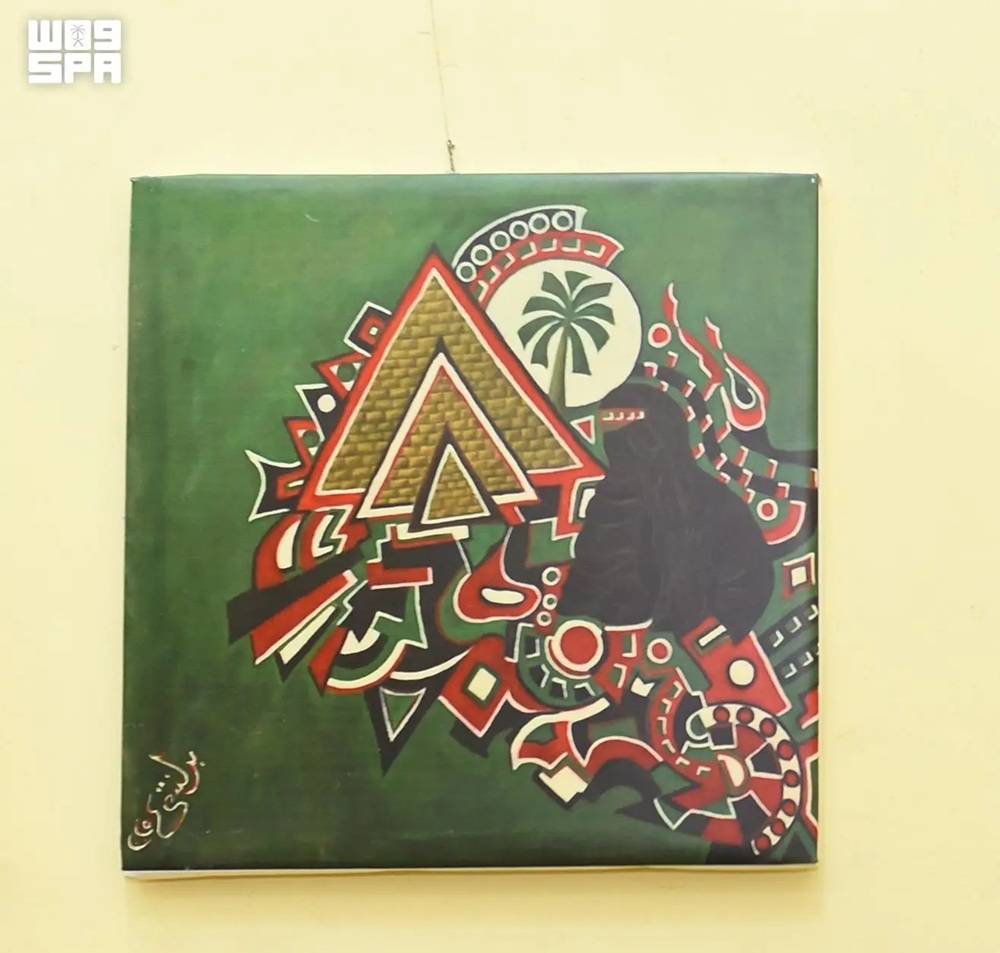
At the three-day exhibition, around 30 Saudi visual artists will present a diverse collection of works highlighting the Kingdom's history, national symbols, and heritage passed down through generations.

An artwork featured at the exhibition in Cairo. (SPA)

The Saudi artists' paintings document Islamic heritage, the Prophet Muhammad's biography, and historical sites associated with the Two Holy Mosques. They also highlight the Kingdom's development achievements, including the Haramain High Speed Railway, as well as its cultural and architectural heritage, such as Najdi Sadu weaving and Al-Masmak Palace.

Participating Saudi artists told SPA that they aim to introduce audiences to the Kingdom's history, identity, and heritage through contemporary artistic approaches while highlighting the development of visual arts in Saudi Arabia.


Red Sea Museum Showcases Jeddah's Black Coral Prayer-Bead Making Heritage

The gallery also features a wall displaying shells, molluscs and pieces of coral from the Red Sea - SPA
TT

Red Sea Museum Showcases Jeddah's Black Coral Prayer-Bead Making Heritage

The gallery also features a wall displaying shells, molluscs and pieces of coral from the Red Sea - SPA

The Red Sea Museum represents a valuable addition to Jeddah's cultural and tourism landscape, offering an educational experience that brings the history of the Red Sea to life and highlights Saudi Arabia’s rich civilization and cultural heritage associated with navigation, trade and Hajj.

As one of Saudi Arabia’s prominent cultural and educational destinations, the museum presents art exhibitions and cultural and educational programs that explore the history and civilization heritage of the Red Sea and document its connection with navigation, trade and human life through experiences that bring together visual arts, architecture, cinema and storytelling, SPA reported.

The Red Sea Museum showcases the craft of prayer-bead making. An identification label accompanying a set of prayer beads made from black coral on display at the museum bears the name of craftsman Ahmed Al-Halabi, who made the beads in Jeddah. The beads tell part of his family's history, as it is one of the oldest families known for this craft in the city.

The gallery also features a wall displaying shells, molluscs and pieces of coral from the Red Sea.

Visitors can observe coral in its natural form before seeing how the craftsman shaped black coral into beads, threaded them together to make a string of prayer beads, and designed them to pass smoothly between the fingers.


Landmark Bus Tours, Folk Arts, and Stargazing Draw Crowds to 'Wasm Hail' Cultural Festival

The program features traditional camel processions, folk arts, stage and musical performances, handicraft stalls, exhibition pavilions, and classic car displays - SPA
TT

Landmark Bus Tours, Folk Arts, and Stargazing Draw Crowds to 'Wasm Hail' Cultural Festival

The program features traditional camel processions, folk arts, stage and musical performances, handicraft stalls, exhibition pavilions, and classic car displays - SPA

The Wasm Hail events at Al-Qishlah Palace in Hail have welcomed thousands of residents and tourists from within the region and beyond to enjoy a diverse array of experiences blending heritage, culture, and entertainment.

The program features traditional camel processions, folk arts, stage and musical performances, handicraft stalls, exhibition pavilions, and classic car displays. A dedicated tourist bus service also offers guided tours of landmarks, SPA reported.

Adding an educational dimension, the festival includes an astronomical experience enabling visitors to observe the moon and planets through optical telescopes and safely view the sun via specialized solar telescopes, highlighting Hail's diverse cultural and tourism assets.
