


North Korea Appears to Demolish ‘Reunification Arch’ as Kim Jong Un Turns Against Ties With South 

This photo shows the Arch of Reunification, a monument to symbolize the hope for eventual reunification of the two Koreas, in Pyongyang, North Korea, on Sept. 11, 2018. (AP)
TT

North Korea Appears to Demolish ‘Reunification Arch’ as Kim Jong Un Turns Against Ties With South 

This photo shows the Arch of Reunification, a monument to symbolize the hope for eventual reunification of the two Koreas, in Pyongyang, North Korea, on Sept. 11, 2018. (AP)

North Korea appears to have torn down a huge arch in its capital that symbolized reconciliation with South Korea, a week after leader Kim Jong Un dismissed decades of hopes for peaceful reunification with the war-divided peninsula’s south, according to satellite photos analyzed by The Associated Press on Wednesday.

South Korea’s military also said Wednesday that North Korea fired several cruise missiles into waters off its western coast.

Kim last week described the Pyongyang monument as an “eyesore” and called for its removal while declaring that the North was abandoning long-standing goals of a peaceful unification with South Korea and ordered a rewriting of the North’s constitution to define the South as its most hostile foreign adversary.

Satellite images from Planet Labs PBC appeared to show the destruction of Pyongyang’s Monument to the Three Charters for National Reunification, also called the Arch of Reunification. An image Tuesday clearly showed the arch missing along a roadway.

Clouds and snow cover made it difficult to ascertain when North Korea tore down the monument, but it appeared to be within the last few days. NKNews, a website focused on North Korea, first reported on the satellite images.

The arch was a 30-meter (about 100-foot) tall structure that looked over a highway leading to the city of Kaesong near the border with South Korea.

The cruise missile launches were North Korea’s second known launch event of the year, following a Jan. 14 test-firing of the country’s first solid-fuel intermediate range ballistic missile, which reflected its efforts to advance its lineup of weapons targeting US military bases in Japan and Guam.

South Korea’s Joint Chiefs of Staff said Wednesday that the US and South Korean militaries were analyzing the latest launches. It did not immediately confirm the exact number of missiles fired or their specific flight details.

Tensions on the Korean Peninsula have increased in recent months as Kim continues to accelerate his weapons development and issue provocative threats of nuclear conflict with the United States and its Asian allies.

While North Korean cruise missile activities aren’t directly banned under UN sanctions, experts say those weapons potentially pose a serious threat to South Korea and Japan, as they are designed to fly like small airplanes and travel along landscape that would make them harder to detect by radar.

There are concerns that North Korea could dial up tensions in a US election year. Experts say the North would aim to increase its bargaining power as it plans for eventual negotiations with whoever wins the November presidential vote.

North Korea also has a long history of ramping up pressure on rival South Korea when it doesn’t get what it wants from Washington.

During the speech at Pyongyang’s rubber-stamp parliament where Kim announced that his country would no longer pursue reconciliation with the South, he accused South Korea of acting as “top-class stooges” of the Americans and repeated a threat that he would use his nukes to annihilate the South if provoked.


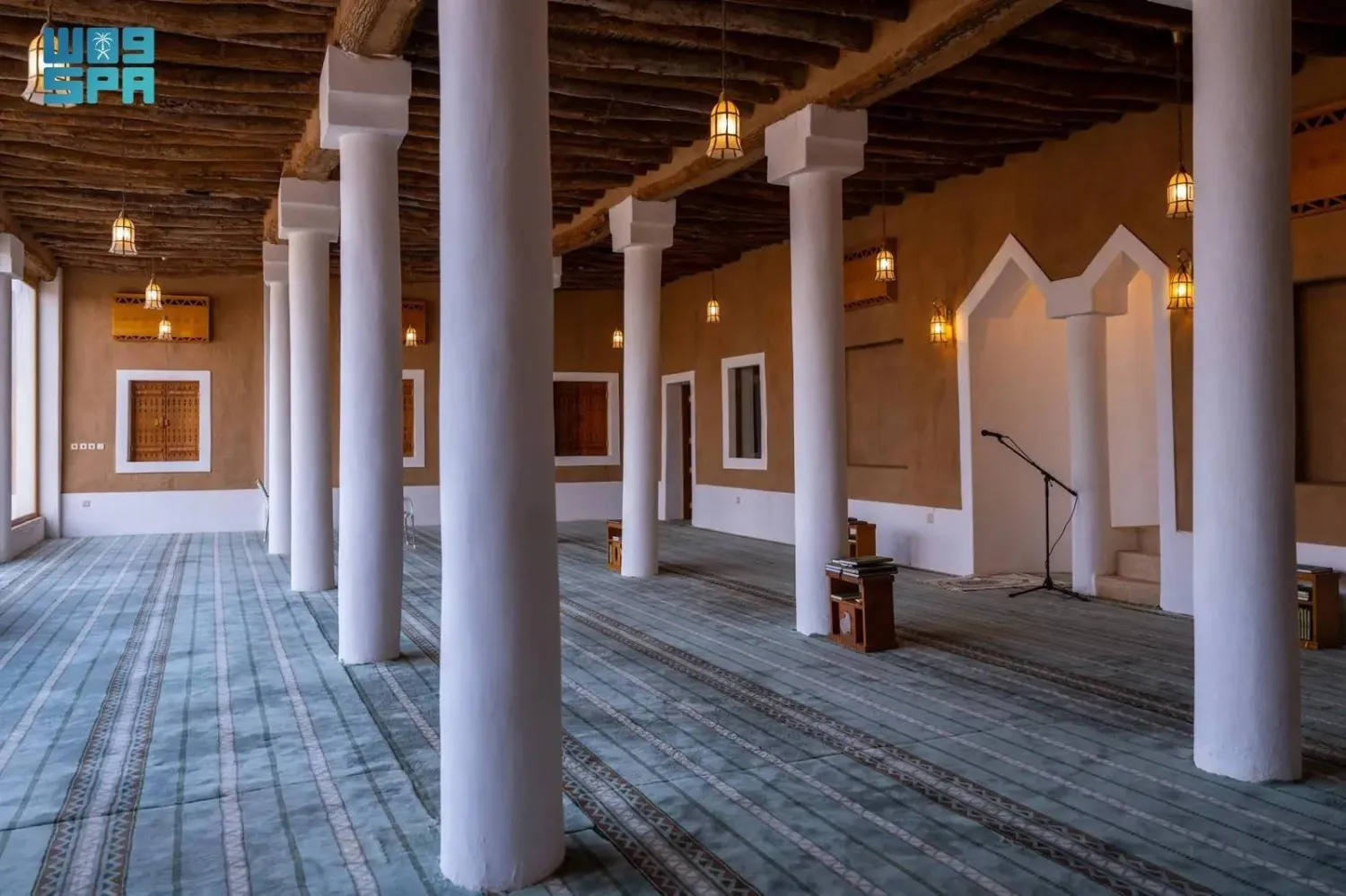

Prince Mohammed bin Salman Project Renovates Historic Al-Qibli Mosque in Riyadh

Al-Qibli Mosque is named for its location west of Manfuha and near the Principality Palace - SPA
TT

Prince Mohammed bin Salman Project Renovates Historic Al-Qibli Mosque in Riyadh

Al-Qibli Mosque is named for its location west of Manfuha and near the Principality Palace - SPA

The Prince Mohammed bin Salman Project for the Development of Historical Mosques continues efforts to preserve the Kingdom’s authentic architectural identity.

One of its recent projects is the comprehensive renovation of Al-Qibli Mosque in the old neighborhood of Manfuha in Riyadh. The restoration reflects traditional Najdi architecture and highlights the mosque’s connection to the town’s administrative and social history, SPA reported.

Al-Qibli Mosque is named for its location west of Manfuha and near the Principality Palace. It was historically the closest mosque to the town’s seat of government and was frequented by princes and prominent figures. The mosque spans approximately 500 square meters. It includes an outer courtyard, an inner prayer hall, and a lower prayer room of equal size that dates back to the original construction. Square, plaster-lined windows on the north and south sides provide natural ventilation.

These were added during the mosque’s second reconstruction around 1364 AH (1945 AD).

The covered inner prayer hall measures 15 by 8 meters and rests on 33 columns arranged in three rows. It was built by architect Abdullah bin Masoud upon the order of King Abdulaziz bin Abdulrahman. The roof is constructed using tamarisk and palm trunks, and a minaret stands at the center of the northern façade. Following earlier renovations in 1414 AH (1993 AD), the mosque remains the last mud-brick mosque in old Manfuha.

According to SPA, its design creates a visual connection between the courtyard and the inner hall, alongside a secluded lower prayer room. The site also includes the historic water fountain of Faris bin Abdullah bin Shaalan, who died in 1175 AH (1762 AD), and an old ablution area.

The current renovation uses the same local materials as the original construction, including mud, plaster, tamarisk wood, and palm fronds. Specialized Saudi heritage companies and engineers are overseeing the work to ensure preservation of historical authenticity while meeting modern sustainability standards.

The restoration aligns with the project’s four objectives: preparing historical mosques for worship, restoring architectural authenticity, highlighting the Kingdom’s cultural dimension, and enhancing religious significance. The project supports the cultural and civilizational goals of Saudi Vision 2030 and contributes to preserving the Kingdom’s architectural heritage for future generations.


Qassim Region Principality Illuminated in Green in Celebration of Founding Day

The Qassim Region Principality illuminated in green marking Founding Day - SPA
TT

Qassim Region Principality Illuminated in Green in Celebration of Founding Day

The Qassim Region Principality illuminated in green marking Founding Day - SPA

The Qassim Region Principality building was illuminated in green in celebration of Founding Day.

The scene reflected pride in the historical roots of the Saudi state and embodied feelings of belonging on this cherished national occasion, SPA reported.

The illumination affirms the deep historical significance of Founding Day, marking 299 years since the establishment of the First Saudi State by Imam Mohammed bin Saud.

It also reflects the enduring principles upon which it was founded, including unity, stability, and state-building. These foundations culminate in the security, stability, and prosperity that the Kingdom of Saudi Arabia enjoys today under its wise leadership.


Prince Mohammed bin Salman Project Restores Century-Old Uqlat Al-Suqur Mosque in Qassim

The renovation utilized traditional mud, stone, and wood to preserve the mosque's authentic Najdi architectural style. (SPA)
TT

Prince Mohammed bin Salman Project Restores Century-Old Uqlat Al-Suqur Mosque in Qassim

The renovation utilized traditional mud, stone, and wood to preserve the mosque's authentic Najdi architectural style. (SPA)

The Prince Mohammed bin Salman Project for the Development of Historical Mosques has completed the restoration of the Uqlat Al-Suqur Mosque in Qassim Region, revitalizing a heritage landmark dating back to 1922, reported the Saudi Press Agency on Saturday.

Originally the only mosque in the area, it served as a vital religious and social hub for education and community governance.

The renovation, executed by specialized Saudi firms, utilized traditional mud, stone, and wood to preserve its authentic Najdi architectural style.

The project increased the mosque's area to 544 square meters, expanding its capacity to 250 worshippers while maintaining its historical identity.

The initiative aligns with Vision 2030 to preserve the Kingdom's urban heritage and boost the cultural and religious significance of its historical mosques for future generations.