
In Cyprus Halloumi War, an Ex-Pilot Champions the Old Ways 

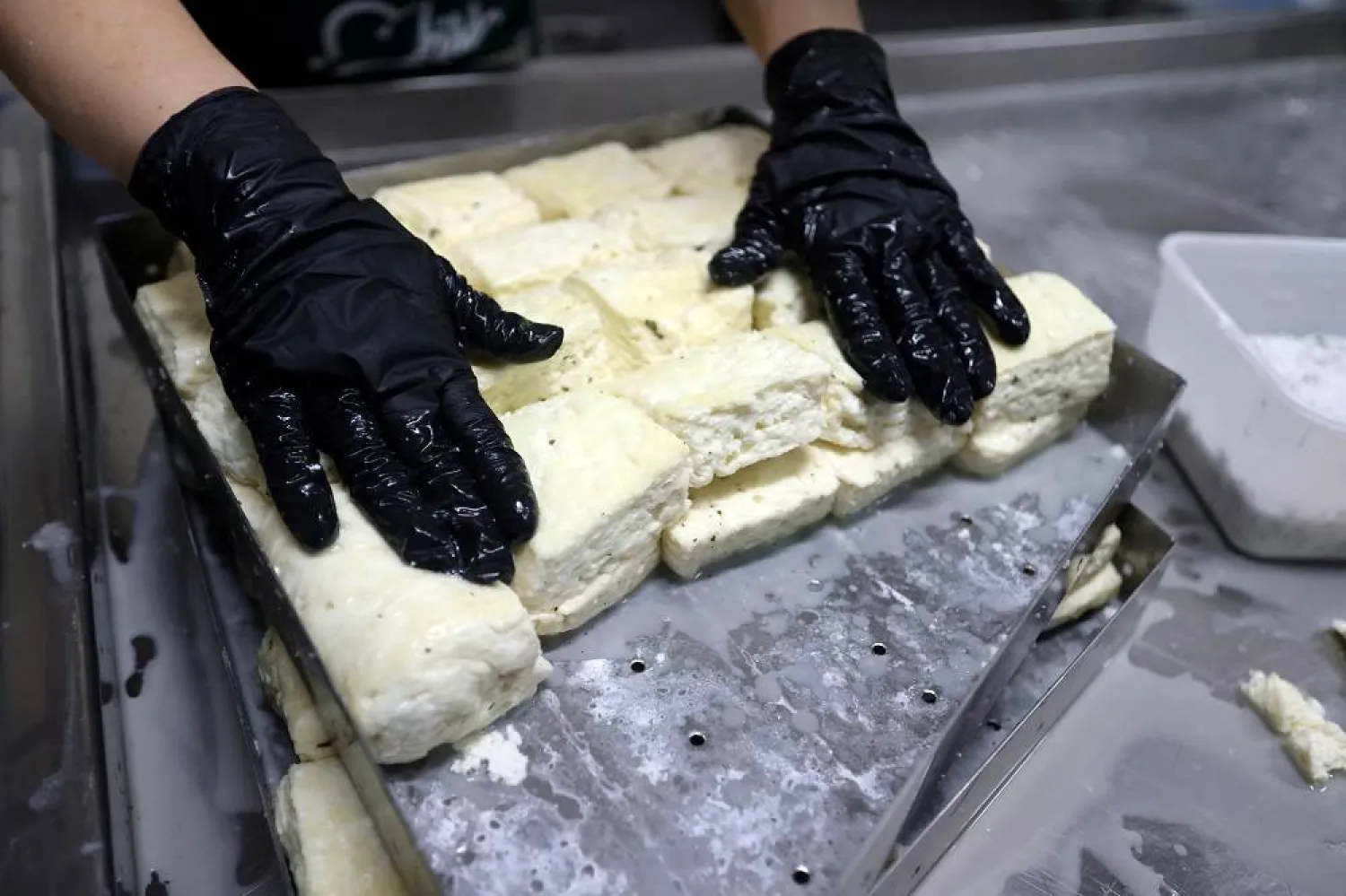
A worker prepares halloumi on Pantelis Panteli's farm in Kokkinotrimithia, Cyprus February 10, 2024. (Reuters)
TT

In Cyprus Halloumi War, an Ex-Pilot Champions the Old Ways 

A worker prepares halloumi on Pantelis Panteli's farm in Kokkinotrimithia, Cyprus February 10, 2024. (Reuters)

On a cold winter evening in a car park in the Cypriot capital Nicosia, queues are already forming before former airline pilot Pantelis Panteli arrives in a small van to sell his produce.

After being made redundant following the closure of Cyprus Airways in 2013, Panteli decided to try his hand at cheese-making. He hasn’t looked back.

Now the newcomer has become an unlikely bastion of an old tradition amid a bitter legal battle about the ingredients of Cyprus's prized Halloumi. Should it be made from cow's milk - which now forms the bulk of exports and has a mellower taste - or from tarter goat and ewe milk, which some purists swear by?

Panteli makes Halloumi exclusively from ewe's milk - even though some dairy farmers on the Mediterranean island say that method is not viable.

"Nobody is making the real thing anymore, and that is our aim," he told Reuters, standing in a pen with about 300 noisy sheep at his farm in Kokkinotrimithia, west of Nicosia.

Panteli started making Halloumi with guidance from his mother-in-law. Now he has his own "Kouella" brand, Cypriot for ewe.

"It was all trial and error with a small pot, then a bigger pot - and just like Steve Jobs - in our garage," he said.

Panteli only has a permit to sell direct to consumers, and is restricted to producing 150 liters of milk per day at a new purpose-built dairy in the farm compound.

But he is proving popular. He alerts customers to his whereabouts on social media, and makes videos on Tiktok and the social media platform X. Within two hours, he is normally sold-out.

Heated debate

Soft, rubbery Halloumi can be eaten raw, grilled, boiled or fried without losing its shape. It is the island's largest export after pharmaceuticals.

Panteli cooks the milk in rennet which allows curdles to form. After resting, the curdles are cut and reheated. He hoists up layered grills from the whey, containing steaming hot slabs of Halloumi, and flips them onto a counter where he salts and folds them. He puts them in brine for a few hours, then packages them for sale.

It has been three years since Cyprus won its status as the only country able to produce and market the prized cheese. In gaining a protected designation of origin (PDO) from the European Union, Cyprus committed to increase the quantity of ewe or goat milk to just over 50% by July 2024.

But the dispute about ingredients has triggered farmers demonstrations. Industry stakeholders say ewe and goat's milk is highly seasonal, and could therefore have an impact on production capacity. Cheese makers had threatened to shut their dairies because there wasn't enough milk, while cattle-breeders are angry at the threat to the market for cows' milk.

Authorities now plan to push back full compliance with the specifications to 2029.

Nicos Papakyriakou, director-general of the cattlebreeders association, said that based on an older 1985 trade standard, accepted ingredients for Halloumi were not only goat and ewes' milk, but cows' milk as well.

He says it is the mellower cows' milk that has allowed Halloumi to capture overseas markets.

"The PDO says it should smell like a farm," he said, referring to official product specifications that Halloumi should have a 'barnyard' smell.

"It would smell like goats! What consumer abroad would buy that?" he said.


Saudi Arabia's History, National Heritage Showcased at 'Bridge of Civilizations' Art Exhibition in Cairo

The exhibition features more than 60 visual artists from Saudi Arabia, Egypt, and Russia. (SPA)
TT

Saudi Arabia's History, National Heritage Showcased at 'Bridge of Civilizations' Art Exhibition in Cairo

The exhibition features more than 60 visual artists from Saudi Arabia, Egypt, and Russia. (SPA)

The "Bridge of Civilizations" art exhibition opened in Cairo, highlighting the power of art to foster closer ties between civilizations and peoples, reported the Saudi Press Agency on Monday.

The exhibition features more than 60 visual artists from Saudi Arabia, Egypt, and Russia, with prominent artists and art enthusiasts in attendance.

At the three-day exhibition, around 30 Saudi visual artists will present a diverse collection of works highlighting the Kingdom's history, national symbols, and heritage passed down through generations.

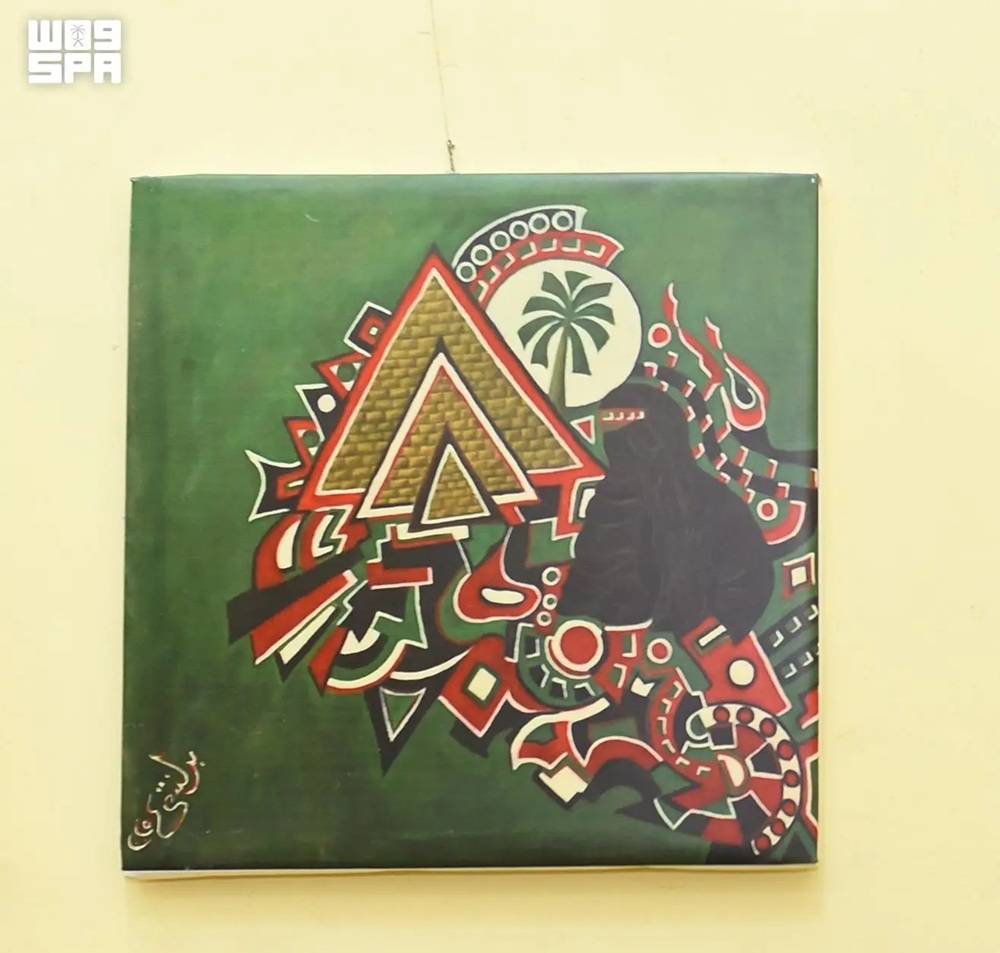
An artwork featured at the exhibition in Cairo. (SPA)

The Saudi artists' paintings document Islamic heritage, the Prophet Muhammad's biography, and historical sites associated with the Two Holy Mosques. They also highlight the Kingdom's development achievements, including the Haramain High Speed Railway, as well as its cultural and architectural heritage, such as Najdi Sadu weaving and Al-Masmak Palace.

Participating Saudi artists told SPA that they aim to introduce audiences to the Kingdom's history, identity, and heritage through contemporary artistic approaches while highlighting the development of visual arts in Saudi Arabia.


Red Sea Museum Showcases Jeddah's Black Coral Prayer-Bead Making Heritage

The gallery also features a wall displaying shells, molluscs and pieces of coral from the Red Sea - SPA
TT

Red Sea Museum Showcases Jeddah's Black Coral Prayer-Bead Making Heritage

The gallery also features a wall displaying shells, molluscs and pieces of coral from the Red Sea - SPA

The Red Sea Museum represents a valuable addition to Jeddah's cultural and tourism landscape, offering an educational experience that brings the history of the Red Sea to life and highlights Saudi Arabia’s rich civilization and cultural heritage associated with navigation, trade and Hajj.

As one of Saudi Arabia’s prominent cultural and educational destinations, the museum presents art exhibitions and cultural and educational programs that explore the history and civilization heritage of the Red Sea and document its connection with navigation, trade and human life through experiences that bring together visual arts, architecture, cinema and storytelling, SPA reported.

The Red Sea Museum showcases the craft of prayer-bead making. An identification label accompanying a set of prayer beads made from black coral on display at the museum bears the name of craftsman Ahmed Al-Halabi, who made the beads in Jeddah. The beads tell part of his family's history, as it is one of the oldest families known for this craft in the city.

The gallery also features a wall displaying shells, molluscs and pieces of coral from the Red Sea.

Visitors can observe coral in its natural form before seeing how the craftsman shaped black coral into beads, threaded them together to make a string of prayer beads, and designed them to pass smoothly between the fingers.


Landmark Bus Tours, Folk Arts, and Stargazing Draw Crowds to 'Wasm Hail' Cultural Festival

The program features traditional camel processions, folk arts, stage and musical performances, handicraft stalls, exhibition pavilions, and classic car displays - SPA
TT

Landmark Bus Tours, Folk Arts, and Stargazing Draw Crowds to 'Wasm Hail' Cultural Festival

The program features traditional camel processions, folk arts, stage and musical performances, handicraft stalls, exhibition pavilions, and classic car displays - SPA

The Wasm Hail events at Al-Qishlah Palace in Hail have welcomed thousands of residents and tourists from within the region and beyond to enjoy a diverse array of experiences blending heritage, culture, and entertainment.

The program features traditional camel processions, folk arts, stage and musical performances, handicraft stalls, exhibition pavilions, and classic car displays. A dedicated tourist bus service also offers guided tours of landmarks, SPA reported.

Adding an educational dimension, the festival includes an astronomical experience enabling visitors to observe the moon and planets through optical telescopes and safely view the sun via specialized solar telescopes, highlighting Hail's diverse cultural and tourism assets.