


Greece is Buoyed by Turkish Official's Comments about Parthenon Sculptures Taken by Britain

The antiquities, also known as the Elgin Marbles, were removed in the early 19th century by Lord Elgin - The AP
TT

Greece is Buoyed by Turkish Official's Comments about Parthenon Sculptures Taken by Britain

The antiquities, also known as the Elgin Marbles, were removed in the early 19th century by Lord Elgin - The AP

One of the world’s most intractable cultural disputes is back in the spotlight after a Turkish official cast doubt on the existence of proof long cited by Britain that it had legally acquired the Parthenon Marbles, 2,500-year-old sculptures taken from the Acropolis in Athens.

Greece's culture minister said the comments made at a UNESCO meeting in Paris last week on the return of cultural property bolster Greece's argument that the sculptures were illegally removed from the Parthenon temple on the Acropolis and should be returned.

The antiquities, also known as the Elgin Marbles, were removed in the early 19th century by Lord Elgin, Britain's ambassador to the Ottoman Empire which ruled Greece at the time, and are housed in the British Museum in London. Greece has long campaigned for their return.

The museum maintains Elgin removed the sculptures legally after Ottoman authorities granted him an imperial edict, or “firman,” allowing him do so.

But Zeynep Boz, the head of the Turkish Culture Ministry’s anti-smuggling committee, said at a meeting of UNESCO's Intergovernmental Committee for Promoting the Return of Cultural Property in Paris that no such document has been found.

As the successor to the Ottoman Empire, "Türkiye is the country that would have the archived document pertaining to things that were sold legally at that time,” Boz told The Associated Press Wednesday. “Historians have for years searched the Ottoman archives and have not been able to find a ‘firman’ proving that the sale was legal, as it is being claimed.”

Boz added she felt obliged to intervene during the UNESCO meeting after a British participant said in his speech that the Elgin Marbles were bought legally during the Ottoman era.

“To have remained silent would have amounted to acknowledging the British claim,” she said. “I had to say: ‘We are not aware of such a document’.”

The only known existing document referring to the imperial edict is an Italian translation.

However, Boz said it has “no signature, no stamp, no tughra (official seal of the sultan). Nothing to make it official. The document it allegedly refers to is nowhere to be found.”

While ties between Greece and Türkiye are often strained and the two countries are at odds over a wide series of issues, including territorial claims, both seek the return of cultural artifacts removed from their territories and currently housed in museums around the world.

Greek Culture Minister Lina Mendoni said the comments bolstered Greece’s argument that Elgin illegally removed the sculptures.

“There never was an Ottoman ‘firman’ granting Elgin the permission to treat the Parthenon Sculptures with the brutality with which he did,” Mendoni said Tuesday. “Türkiye's representative (at the UNESCO meeting) confirmed what the Greek side has been arguing for years. That there was no ‘firman’.”

Mendoni said Greece remained “open to dialogue” and would continue its efforts for the return of the sculptures, which have a place set aside for them in the Acropolis Museum in Athens.

While the British Museum is banned by law from permanently returning the sculptures, its leaders have held talks in the recent past with Greek officials about a possible compromise that could see the sculptures displayed in both Athens and London.

Those efforts suffered a setback last November, when a diplomatic spat erupted over the marbles and British Prime Minister Rishi Sunak abruptly canceled a planned meeting with his Greek counterpart, Kyriakos Mitsotakis.

Asked about Boz's comments, the British Museum referred to a statement it gave to the UNESCO meeting reiterating its desire for a “Parthenon partnership” to resolve the dispute, and said it had nothing more to add.

“The British Museum recognizes the strong desire of Greece for the Parthenon Sculptures in London to be returned to Athens,” the statement said. “This is a question with a very long history, and we understand and respect the strong feelings that this debate commands."

It said it was “keen to develop a new relationship with Greece — a ‘Parthenon partnership’ — and to explore the possibility of innovative ways of working (with our Greek friends) in the hope that understanding of the Parthenon Sculptures deepens and continues to inspire people across the world.”
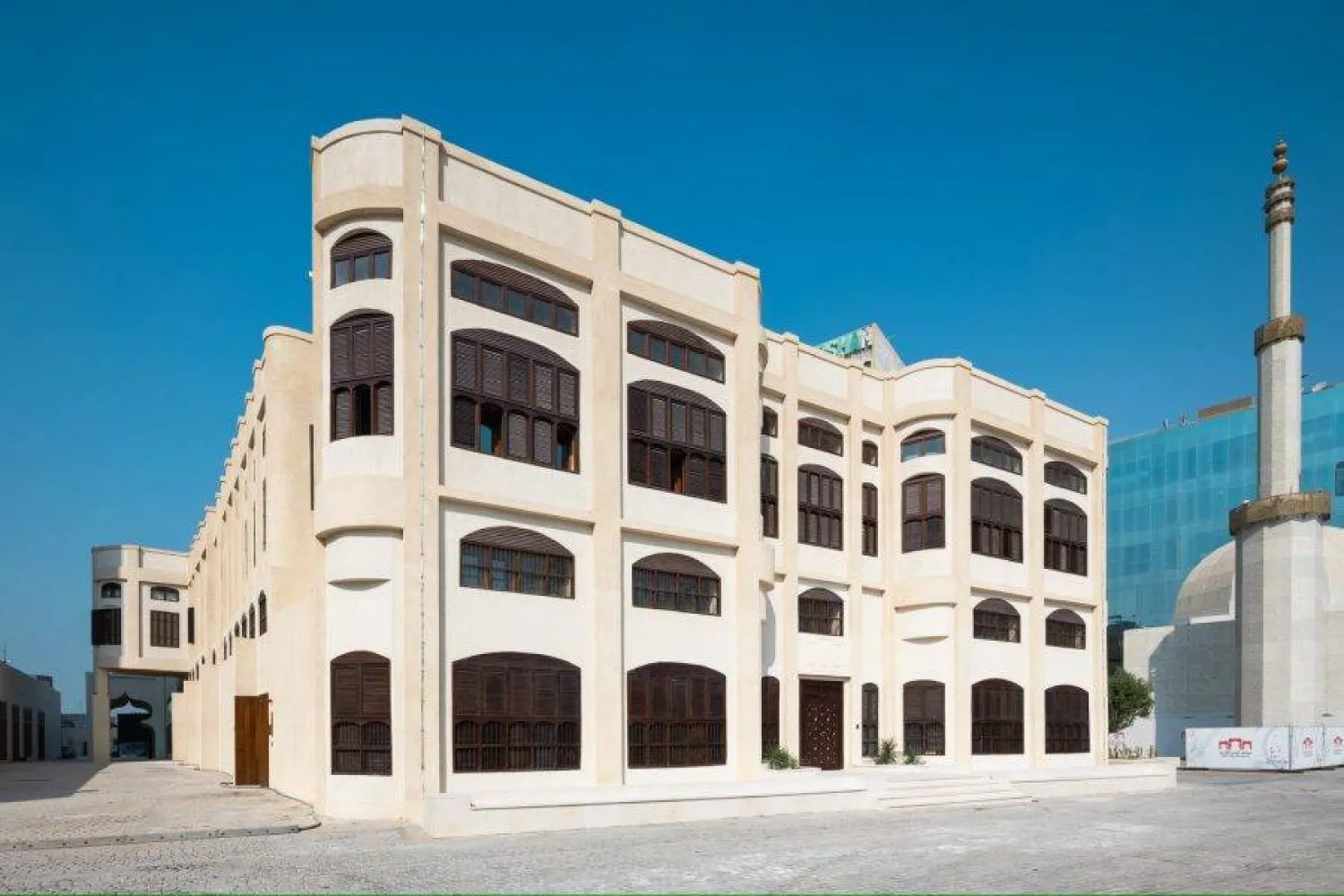



Jeddah's Red Sea Museum Announces Ramadan Program 

The Red Sea Museum. (Red Sea Museum)
TT

Jeddah's Red Sea Museum Announces Ramadan Program 

The Red Sea Museum. (Red Sea Museum)

Jeddah's Red Sea Museum announced on Thursday a curated program of creative and cultural activities for the holy month of Ramadan, running from February 22 to March 14.

Led by local artists, artisans, and cultural practitioners, the museum's Ramadan program includes contemplative workshops, storytelling sessions, outdoor community gatherings, and musical performances that honor the spirit of reflection, creativity, and connection.

The series of engaging sessions creates space for visitors to explore traditional crafts, contemporary storytelling, and cultural heritage through hands-on experiences blending creativity and reflection.

Curated for families, artists, and visitors of all backgrounds, the program runs alongside "Sunken Treasures: The Maritime Heritage of the Red Sea," the museum's major temporary exhibition opening on February 25, which explores how archaeological discoveries reveal centuries of trade, navigation, and human connection across the Red Sea.

In celebration of Founding Day on February 22, the "Inspirational Threads: Makkah & Madinah" contemplative embroidery workshop invites participants to engage with archival black-and-white photographs of the Red Sea, Makkah, and Madinah. Through basic embroidery techniques, participants can embellish these images with Islamic geometric and symbolic motifs, adding layers of color, texture, and meaning while reflecting on devotion, memory, and connection.

The "Radiance in Pieces: Mosaic Lantern" hands-on workshop on February 24 explores the tradition of Islamic mosaic art through the creation of illuminated lanterns inspired by Red Sea heritage. Children and families will learn how small, colorful pieces come together to form meaningful geometric designs, blending creativity, cultural heritage, and reflection.

The opening evening of "Sunken Treasures: The Maritime Heritage of the Red Sea" on February 25 features a panel discussion with archaeologists, scientists, and historians exploring the maritime heritage of the Red Sea.

The "One Big Table - Ramadan Gathering" on March 5 brings everyone together in a shared space where families, friends, and neighbors celebrate the spirit of Ramadan.

On March 7, the "From Sand to Porcelain" painting workshop invites participants to paint calligraphy on fine porcelain using natural sand collected from Jeddah to add subtle texture and depth. While learning basic porcelain painting techniques, participants will engage in a reflective, hands-on experience that encourages mindful creation, resulting in a personal keepsake that embodies devotion, place, and the spirit of Ramadan.

In the spirit of International Women's Day on March 8, the "Ramadan Spirit: Thread & Needle" hands-on punch needling workshop explores Ramadan iconography through traditional symbols, including the crescent, star, and lantern. Participants will create textured textile pieces while learning basic punch needle techniques, celebrating both the holy month and the creative contributions of women to traditional textile arts.

On March 14, the "Spirit of Ramadan and the Tale of Jabir Al-Khawatir" storytelling session for children and families explores Ramadan as a season of compassion and healing, reminding people that the spirit of the holy month lives in small acts of care and human connection.


Saudi Arabia: Ship of Tolerance Initiative Promotes Cultural Dialogue in Jeddah

The Royal Institute of Traditional Arts (Wrth) will offer traditional craft workshops throughout Ramadan. SPA
TT

Saudi Arabia: Ship of Tolerance Initiative Promotes Cultural Dialogue in Jeddah

The Royal Institute of Traditional Arts (Wrth) will offer traditional craft workshops throughout Ramadan. SPA

The Saudi Ministry of Culture, in collaboration with the "Lenobadir" volunteer and community partnership program and the Athr Foundation, has launched the Ship of Tolerance initiative in Historic Jeddah during Ramadan.

The initiative aims to enhance shared human values through arts, and promote tolerance and coexistence among children and families. It provides an educational and cultural experience aligned with the area’s unique character as a UNESCO World Heritage site.

As part of this global art project, children will create artworks that represent acceptance and dialogue.

The Royal Institute of Traditional Arts (Wrth) will offer traditional craft workshops throughout Ramadan, linking the initiative's values with local heritage and enriching visitors' connection to the region's identity.

This effort supports cultural programs with educational and social dimensions in Historic Jeddah, activating local sites for experiences that combine art, crafts, and community participation. It aligns with the National Strategy for Culture under Saudi Vision 2030, focusing on heritage preservation and expanding culture's impact on daily life.


Oscar Contender ‘Hamnet’ Boosts Tourism at Shakespeare Heritage Sites 

A view of Shakespeare’s Birthplace, William Shakespeare's childhood home, in Stratford-upon-Avon, Britain, February 9, 2026. (Reuters)
TT

Oscar Contender ‘Hamnet’ Boosts Tourism at Shakespeare Heritage Sites 

A view of Shakespeare’s Birthplace, William Shakespeare's childhood home, in Stratford-upon-Avon, Britain, February 9, 2026. (Reuters)

On a cloudy winter's day, visitors stream into what was once William Shakespeare's childhood home in Stratford-upon-Avon and the nearby Anne Hathaway's cottage, family residence of the bard's wife.

Hathaway's cottage is one of the settings for the BAFTA and Oscar best film contender "Hamnet", and the movie's success is drawing a new wave of tourists to Shakespeare sites in the town in central England.

Shakespeare's Birthplace is the house the young William once lived in and where his father worked as a glove maker, while Hathaway's cottage is where he would have visited his future wife early in their relationship.

Typically, around 250,000 visitors, from the UK, Europe, the United States, China and elsewhere, walk through the locations each year, according to the Shakespeare Birthplace Trust. ‌The charity looks after ‌Shakespeare heritage sites, which also include Shakespeare's New Place, the site of ‌the ⁠Stratford home where the ⁠bard died in 1616.

Visitors are flocking in this year thanks to "Hamnet", the film based on Maggie O'Farrell's 2020 novel, which gives a fictional account of the relationship between Shakespeare and Hathaway, also known as Agnes, and the death of their 11-year-old son Hamnet in 1596.

"Visitor numbers have increased by about 15 to 20% across all sites since the film was released back in January. I think that will only continue as we go throughout the year," Richard Patterson, chief operating officer for the Shakespeare Birthplace Trust, said.

"They particularly want ⁠to look (at) Anne Hathaway's cottage and the specifics around how the family ‌engaged in the spaces and the landscape in and around ‌the cottage... you can see why he would have been inspired."

NEW ACCESS TO SHAKESPEARE

"Hamnet" has 11 nominations at ‌Sunday's British BAFTA awards, including best film and leading actress for Jessie Buckley, who plays Agnes. It ‌also has eight Oscar nominations, with Buckley seen as the frontrunner to win best actress.

"Hamnet" is set in Stratford-upon-Avon and London although it was not filmed in Stratford.

It sees Paul Mescal's young Shakespeare fall for Agnes while teaching Latin to pay off his father's debts. The drama, seen mainly through Agnes' eyes, focuses on their ‌life together and grief over Hamnet's death, leading Shakespeare to write "Hamlet".

"Shakespeare... is notoriously enigmatic. He writes about humanity, about feeling, about emotion, about conflict, ⁠but where do we understand ⁠who he is in that story?" said Charlotte Scott, a professor of Shakespeare studies and interim director of collections, learning and research at the Shakespeare Birthplace Trust.

"And that's driven people creative and otherwise for hundreds and hundreds of years. Where is Shakespeare's heart? And this is what the film I think has so beautifully opened up."

Little is known about how the couple met. Shakespeare was 18 and Hathaway 26 when they married in 1582. Daughter Susanna arrived in 1583 and twins Judith and Hamnet in 1585.

The film acknowledges the names Hamnet and Hamlet were interchangeable back then. While grief is a dominant theme, audiences also see Shakespeare in love and as a father.

"A lot of people will see this film not necessarily having... had any kind of relationship with Shakespeare," Scott said.

"So people will come to this film, I hope, and find a new way of accessing Shakespeare that is about creativity, that is about understanding storytelling as a constant process of regeneration, but also crucially, looking at it from that kind of emotive angle."