


Italy’s Vintage Trains Lure Tourists off Beaten Track 

Passengers on the vintage carriage "cento porte", which means hundred doors in English, look through the windows at the train station in Palena, Italy July 21, 2024. (Reuters)
TT

Italy’s Vintage Trains Lure Tourists off Beaten Track 

Passengers on the vintage carriage "cento porte", which means hundred doors in English, look through the windows at the train station in Palena, Italy July 21, 2024. (Reuters)

As it rolls across Italy's central regions, a vintage diesel locomotive towing carriages from the 1930s and 1950s crosses the forests of the Majella National park and the Abruzzo highlands, giving tourists on board a glimpse of hidden hamlets.

Across its just over 100 kilometers (62 miles), the so-called Italian Transiberian rail line, also known as the Park Railway, slips into gorges, snakes into 58 tunnels and braves huge viaducts.

It was the first of some 1,000 kilometers of line to have re-opened under a project by Fondazione FS, part of state-controlled national rail company Ferrovie dello Stato (FS).

The "Timeless tracks" project takes tourists to forgotten parts of Italy, offering an alternative to the fast-paced, mass tourism of the major cities.

"These are tracks that have lived through different eras, they have carried soldiers to the front, cows to pasture... they were mistakenly considered unproductive during the 1960s and 70s but are now once again of value," Luigi Cantamessa, who heads Fondazione FS, told Reuters.

Inspired by train travel in Switzerland, the project now carries 45,000 tourists a year across its 13 lines. Fondazione FS expects to open two new ones by 2026, both in the southern region of Sicily.

"What were considered to be the dry branches of Italy's train network, have now proved to be the green shoots," Cantamessa added.

NO FROZEN PIZZAS

"People are used to cities and places, like Florence, that everyone knows.. but then there are other areas that need to be discovered. (This) is the right kind of tourism that does not spoil the authenticity of places," said Norma Pagiotti, a 28-year-old from Florence travelling on the train with two friends.

With arrival numbers above pre-pandemic levels, popular European travel destinations including Venice have introduced measures aimed at managing visitor numbers amid rising concerns about overcrowding.

"The train reminds me of my youth, I feel a bit nostalgic for the things of the past, which were simpler, now everything is fast, short-lived," says Caterina Quaranta, from Taranto in southern Italy, sitting on the wooden seats of the train.

The trips attract Italians and foreigners, a lot of families and children, younger people who get off to hike and cycle, and older people "who have time to spare", explained Laura Colaprete, a local guide.

"It's for those who don't want mass market, cluttered destinations. A conscious traveler, who is looking for something special," said Cantamessa of Fondazione FS. "These are not trips that serve you frozen pizza for lunch," he added.

FOLK MUSIC AND LOCAL FOOD

After climbing up almost 1,000 meters in altitude, the Transiberian's first stop is in Palena, a medieval hill-top town known for its breathtaking views over the national park.

Traditional folk music accompanies people getting off the train, with local delicacies such as lamb skewers and soft pancakes made with an iron mold, known as pizzelle, and products by local artisans awaiting them at the station.

"The train helps several small towns around here. This line was a dead line before," said Gino Toppi, 60, as he helped his wife with the food stall in the small station.

Milan's Bocconi University recently estimated that for every euro spent by passengers on tickets - which cost between 30 euros and 70 euros ($32.50 - $76)- up to a further 3 euros are spent on food, accommodation, tours and souvenirs.

That helps to support the economy of villages that have long lost population due to the dwindling birth rate and younger people leaving for the bigger cities

"There certainly are benefits, this is a way to show my products," said Annalisa Cantelmi, a herbalist.

"These tourists are slowly discovering these new territories, their traditions and people," she added.


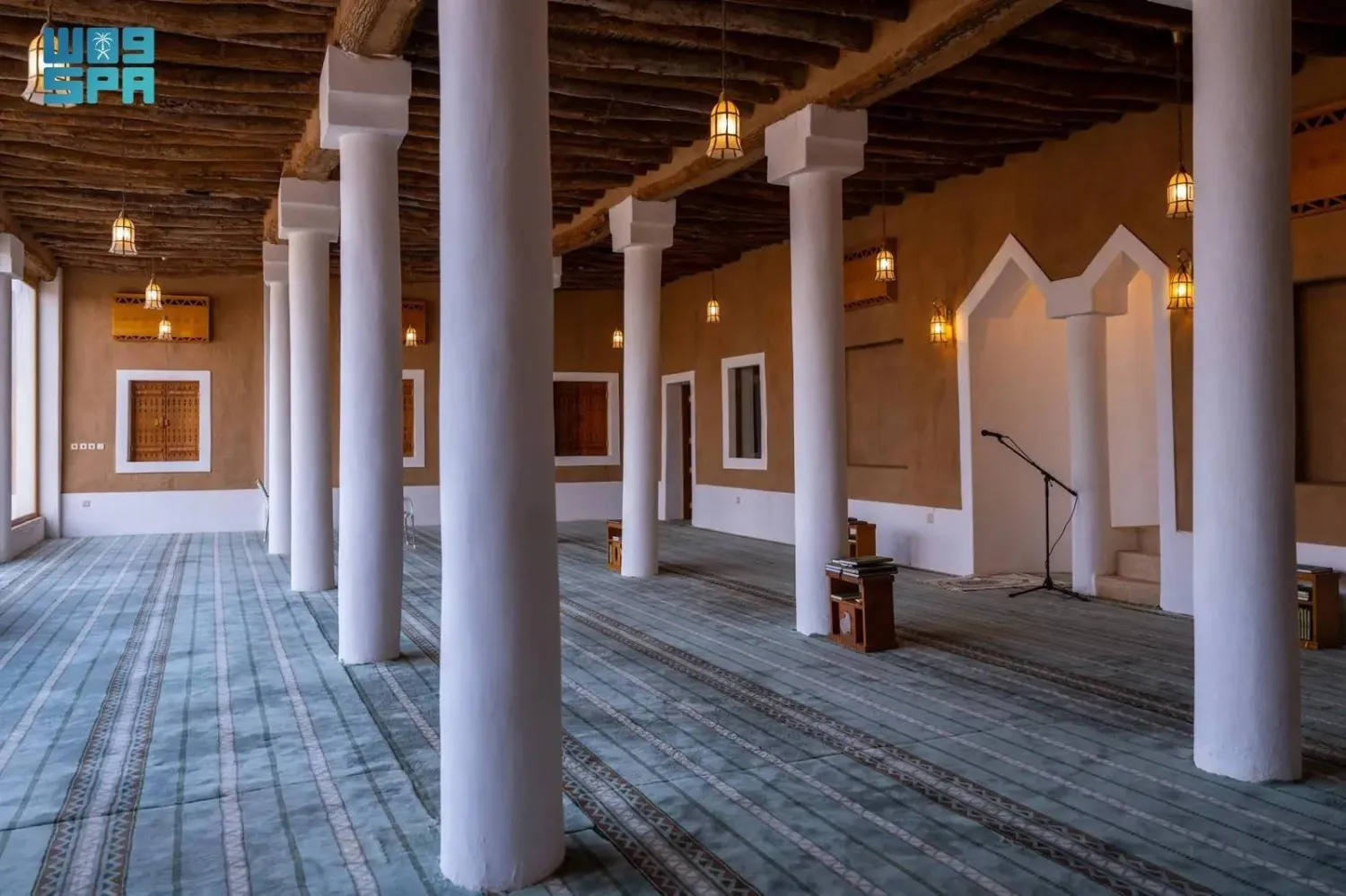

Prince Mohammed bin Salman Project Renovates Historic Al-Qibli Mosque in Riyadh

Al-Qibli Mosque is named for its location west of Manfuha and near the Principality Palace - SPA
TT

Prince Mohammed bin Salman Project Renovates Historic Al-Qibli Mosque in Riyadh

Al-Qibli Mosque is named for its location west of Manfuha and near the Principality Palace - SPA

The Prince Mohammed bin Salman Project for the Development of Historical Mosques continues efforts to preserve the Kingdom’s authentic architectural identity.

One of its recent projects is the comprehensive renovation of Al-Qibli Mosque in the old neighborhood of Manfuha in Riyadh. The restoration reflects traditional Najdi architecture and highlights the mosque’s connection to the town’s administrative and social history, SPA reported.

Al-Qibli Mosque is named for its location west of Manfuha and near the Principality Palace. It was historically the closest mosque to the town’s seat of government and was frequented by princes and prominent figures. The mosque spans approximately 500 square meters. It includes an outer courtyard, an inner prayer hall, and a lower prayer room of equal size that dates back to the original construction. Square, plaster-lined windows on the north and south sides provide natural ventilation.

These were added during the mosque’s second reconstruction around 1364 AH (1945 AD).

The covered inner prayer hall measures 15 by 8 meters and rests on 33 columns arranged in three rows. It was built by architect Abdullah bin Masoud upon the order of King Abdulaziz bin Abdulrahman. The roof is constructed using tamarisk and palm trunks, and a minaret stands at the center of the northern façade. Following earlier renovations in 1414 AH (1993 AD), the mosque remains the last mud-brick mosque in old Manfuha.

According to SPA, its design creates a visual connection between the courtyard and the inner hall, alongside a secluded lower prayer room. The site also includes the historic water fountain of Faris bin Abdullah bin Shaalan, who died in 1175 AH (1762 AD), and an old ablution area.

The current renovation uses the same local materials as the original construction, including mud, plaster, tamarisk wood, and palm fronds. Specialized Saudi heritage companies and engineers are overseeing the work to ensure preservation of historical authenticity while meeting modern sustainability standards.

The restoration aligns with the project’s four objectives: preparing historical mosques for worship, restoring architectural authenticity, highlighting the Kingdom’s cultural dimension, and enhancing religious significance. The project supports the cultural and civilizational goals of Saudi Vision 2030 and contributes to preserving the Kingdom’s architectural heritage for future generations.


Qassim Region Principality Illuminated in Green in Celebration of Founding Day

The Qassim Region Principality illuminated in green marking Founding Day - SPA
TT

Qassim Region Principality Illuminated in Green in Celebration of Founding Day

The Qassim Region Principality illuminated in green marking Founding Day - SPA

The Qassim Region Principality building was illuminated in green in celebration of Founding Day.

The scene reflected pride in the historical roots of the Saudi state and embodied feelings of belonging on this cherished national occasion, SPA reported.

The illumination affirms the deep historical significance of Founding Day, marking 299 years since the establishment of the First Saudi State by Imam Mohammed bin Saud.

It also reflects the enduring principles upon which it was founded, including unity, stability, and state-building. These foundations culminate in the security, stability, and prosperity that the Kingdom of Saudi Arabia enjoys today under its wise leadership.


Prince Mohammed bin Salman Project Restores Century-Old Uqlat Al-Suqur Mosque in Qassim

The renovation utilized traditional mud, stone, and wood to preserve the mosque's authentic Najdi architectural style. (SPA)
TT

Prince Mohammed bin Salman Project Restores Century-Old Uqlat Al-Suqur Mosque in Qassim

The renovation utilized traditional mud, stone, and wood to preserve the mosque's authentic Najdi architectural style. (SPA)

The Prince Mohammed bin Salman Project for the Development of Historical Mosques has completed the restoration of the Uqlat Al-Suqur Mosque in Qassim Region, revitalizing a heritage landmark dating back to 1922, reported the Saudi Press Agency on Saturday.

Originally the only mosque in the area, it served as a vital religious and social hub for education and community governance.

The renovation, executed by specialized Saudi firms, utilized traditional mud, stone, and wood to preserve its authentic Najdi architectural style.

The project increased the mosque's area to 544 square meters, expanding its capacity to 250 worshippers while maintaining its historical identity.

The initiative aligns with Vision 2030 to preserve the Kingdom's urban heritage and boost the cultural and religious significance of its historical mosques for future generations.