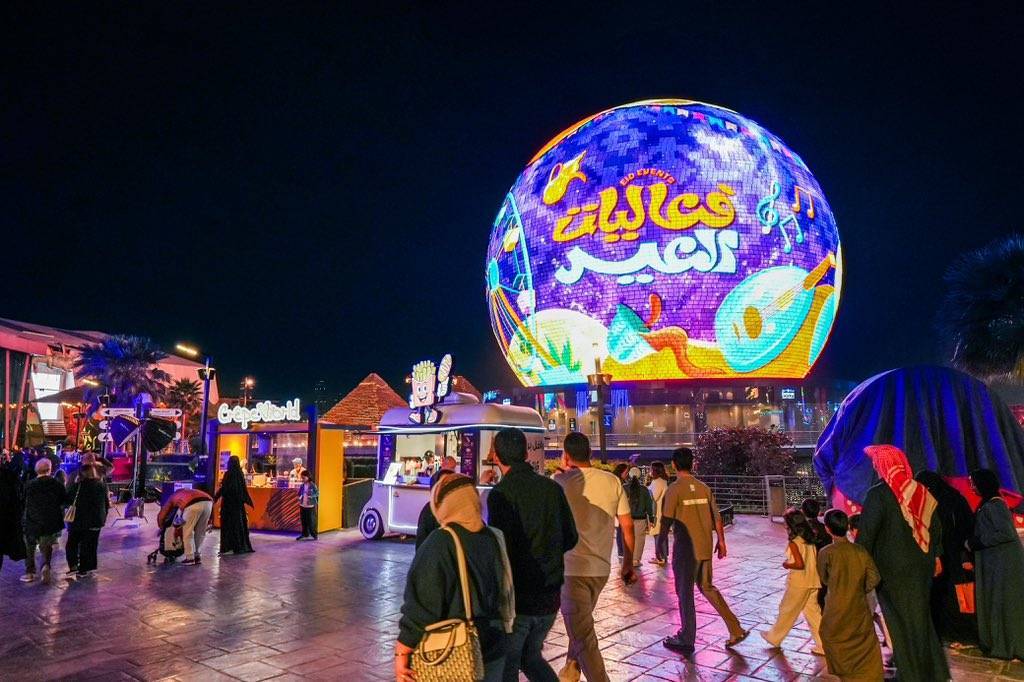
Dubai Culture Opens Participation in Al Marmoom Short-Film Competition

The competition aims to enrich the local film scene, provide an innovative platform to support filmmakers and encourage them to share their experiences. WAM
TT

Dubai Culture Opens Participation in Al Marmoom Short-Film Competition

The competition aims to enrich the local film scene, provide an innovative platform to support filmmakers and encourage them to share their experiences. WAM

Dubai Culture and Arts Authority (Dubai Culture) has launched the open call for the Al Marmoom Short-Film Competition, held as part of the fourth Al Marmoom: Film in the Desert festival, Emirates News Agency (WAM) reported.

The competition aims to enrich the local film scene, provide an innovative platform to support filmmakers and encourage them to share their experiences and knowledge, inspiring new talent to join this field, WAM said Wednesday.

Dubai Culture invited all emerging filmmakers and creatives locally, regionally, and globally to participate and submit their works for the festival’s competition.

Applications are open from August 14 to September 30, after which a specialized committee comprising a group of experts, directors, and filmmakers will screen the applications and evaluate the submitted films, in preparation for announcing the list competing for the festival awards, which will be held at Al Marmoom Desert Conservation Reserve from January 3 to 12, 2025.

The competition includes four categories: documentaries, animated films, live-action, and films made using artificial intelligence. Eligible works will be selected based on a set of criteria related to quality and content. This open call targets all emerging filmmakers and directors, whether working individually or in groups, WAM said.

Participants are required to present distinctive ideas that express their artistic visions and commitment to innovation, in addition to ensuring that the work is original, recent, and not previously shown in any local, regional, or global festival or event.

The film should be between 3 and 30 minutes long, free from any offence to public morals, religions, or communities, and the participant must own all rights to the short film.

The previous Al Marmoom Short-Film Competition saw 56 short films competing within its three categories.

Egypt Discovers Rare Reservoirs, Buildings at Ancient Aydhab Port in Halaib

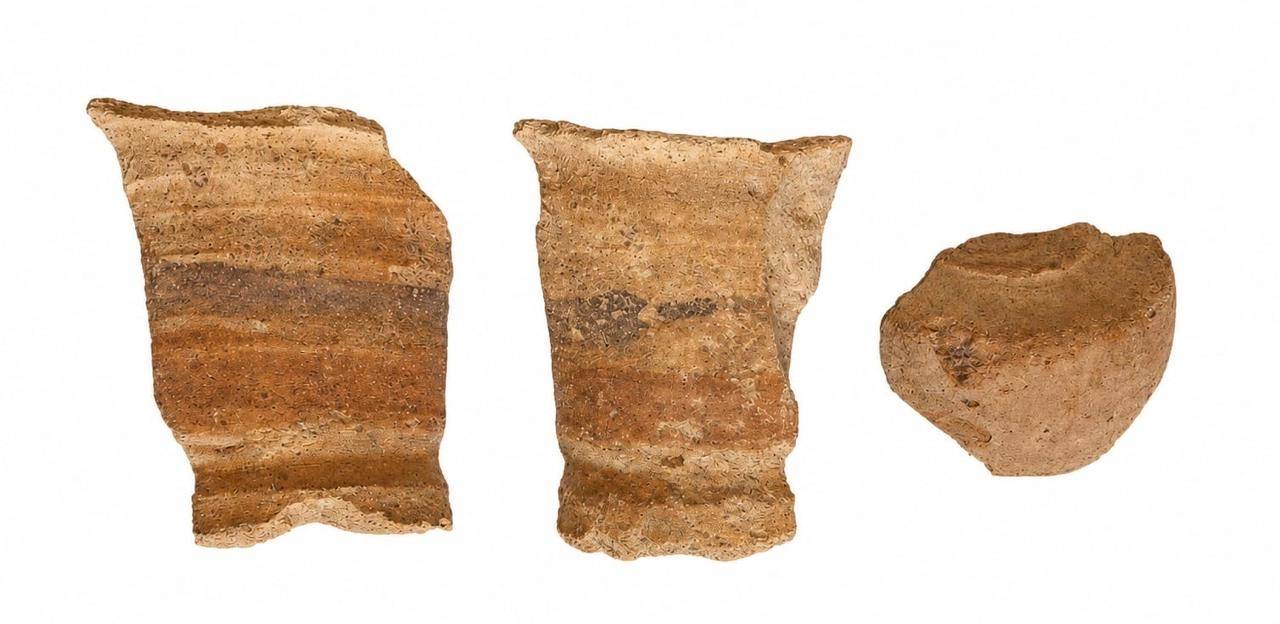
A collection of archaeological finds and fragments of Chinese porcelain (Ministry of Tourism and Antiquities)
TT

Egypt Discovers Rare Reservoirs, Buildings at Ancient Aydhab Port in Halaib

A collection of archaeological finds and fragments of Chinese porcelain (Ministry of Tourism and Antiquities)

Egypt’s Ministry of Tourism and Antiquities announced Thursday the discovery of massive water reservoirs and cisterns, along with rare buildings and service facilities, at the archaeological site of the ancient port of Aydhab on the Red Sea coast in the Halaib region in southern Egypt near the Sudanese border. The port once served as a major transit point for pilgrims.

The discovery was made during excavation work carried out by an Egyptian archaeological mission affiliated with the Supreme Council of Antiquities at the site of the ancient port of Aydhab, which the ministry described as “one of the most prominent and important Egyptian ports during the Islamic period.”

Some of the artifacts discovered at the site (Ministry of Tourism and Antiquities)

Hisham el-Leithy, secretary-general of the Supreme Council of Antiquities, said the discovery highlights an important aspect of the service infrastructure on which the historic port of Aydhab depended. He noted that the water cisterns played a vital role in supporting maritime and trade activity, as well as meeting the needs of pilgrims arriving at the port on their way to the holy lands, according to the ministry’s statement.

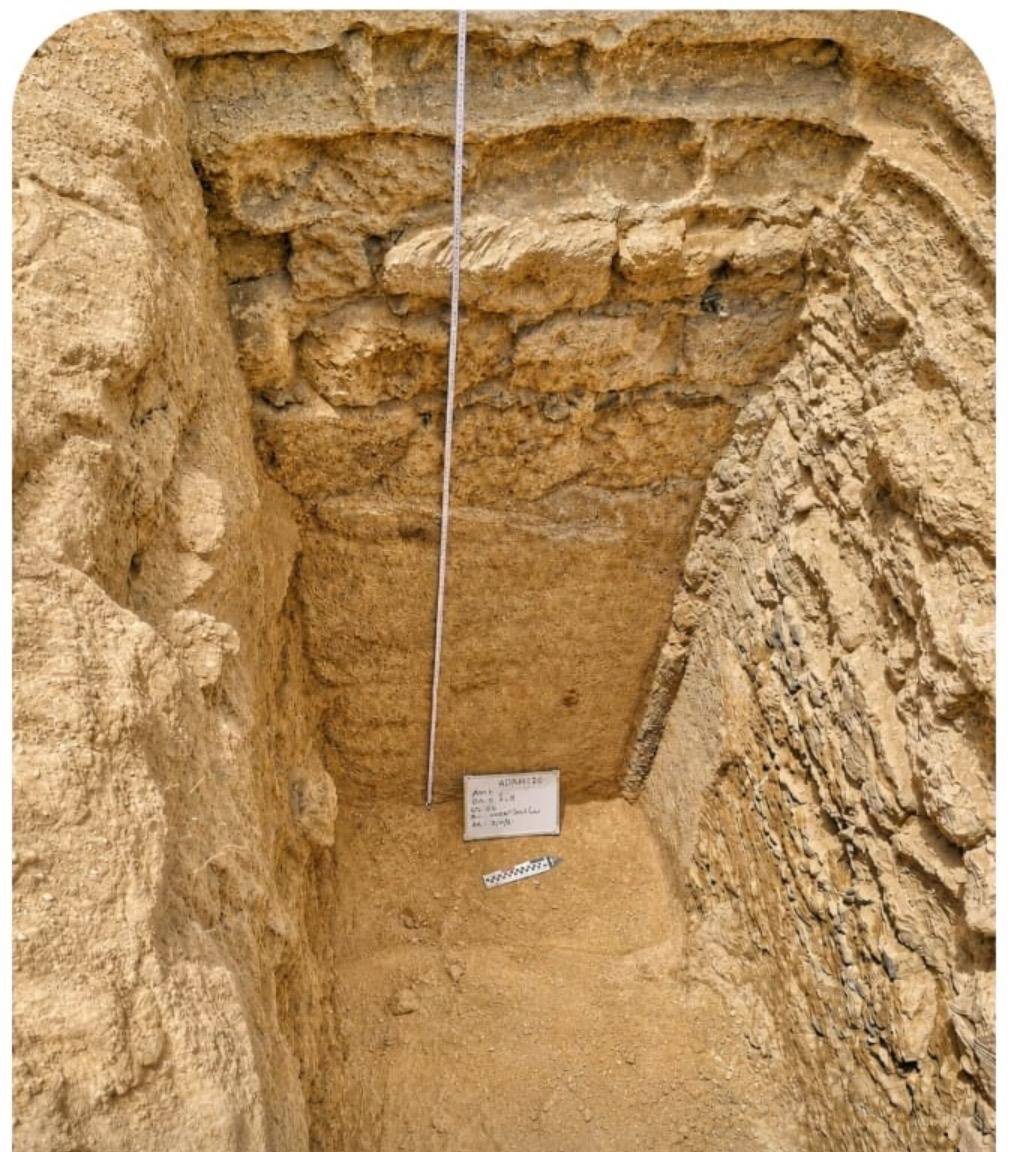
Excavation work uncovered a massive main reservoir measuring approximately 15.10 meters in length, 3.15 meters in width and nearly three meters in height. It was constructed using sandstone and local coral stones, then coated with a layer of white lime mortar to insulate the water and prevent leakage. Several additional cisterns were also uncovered in the southern part of the site.

Diaa Zahran, head of the Islamic, Coptic and Jewish Antiquities Sector, said archaeological surveys in the surrounding area also revealed the remains of residential building foundations, watchtowers and service facilities, indicating the existence of an integrated system for managing the port and meeting the needs of pilgrims and merchants who passed through it over many centuries.

The mission also uncovered a collection of artifacts, including pottery fragments dating back to the Fatimid era, some glazed in green, in addition to shards of imported Chinese porcelain. The finds reflect the flourishing commercial activity at the port and the breadth of its maritime trade network with many regions, particularly India, Yemen and East Africa.

The site includes service buildings used by pilgrims (Ministry of Tourism and Antiquities)

Egyptian Tourism and Antiquities Minister Sherif Fathi described the discovery as “a contribution to highlighting the development witnessed by ancient Egyptian ports and the advanced infrastructure they possessed to serve trade routes and pilgrims.” In a press statement, he said the discovery confirms Egypt’s strategic status as a major civilizational and commercial center throughout history.

Fathi stressed the ministry’s commitment to excavation work and archaeological studies in border and remote areas because of their significant historical and cultural importance.

Historian Bassam el-Shammaa described the discovery as “one of the most important archaeological discoveries of the 21st century,” telling Asharq Al-Awsat that “the importance of archaeological discoveries lies not in their size, but in the extent to which they deepen understanding of history across different periods.”

He said the discovery proves the existence of social and commercial ties linking Asia and Egypt that extended to China and other civilizations. He added that it also carries humanitarian and security dimensions through the discovery of service buildings and water cisterns dedicated to serving pilgrims during that period, as well as watchtowers used to secure the borders.

El-Shammaa proposed organizing tourism trips to Egypt’s ancient ports and making use of archaeological discoveries at several historic ports along the Red Sea and Mediterranean coasts.

The port of Aydhab was among the most prominent Red Sea ports during the Middle Ages, serving as a key station for pilgrims arriving from Egypt and the Maghreb on their way to the holy sites, in addition to playing a central role in maritime trade.


Modern Dishes Challenge Traditional Eid al-Adha Breakfasts in Saudi Arabia

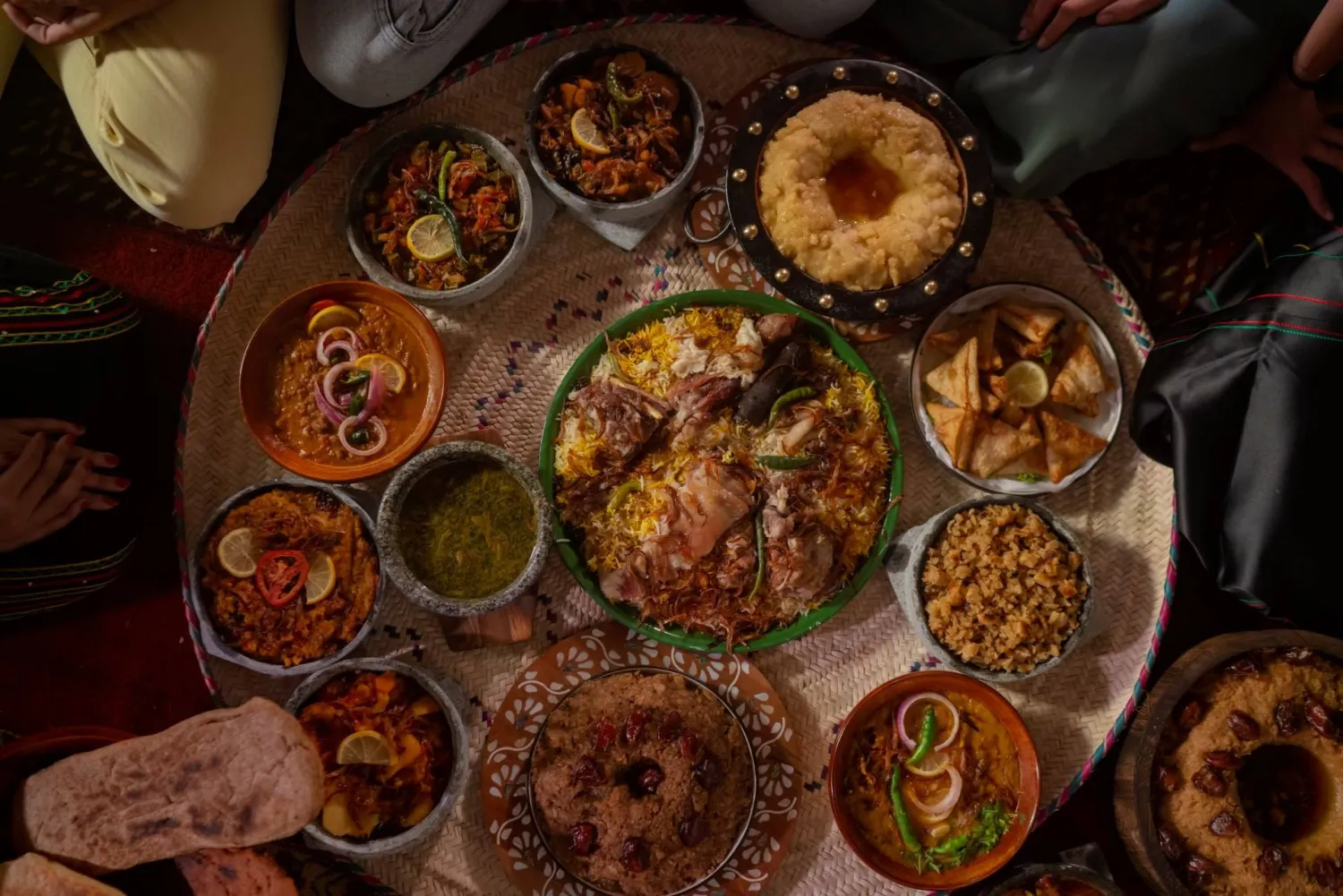
 Many Saudis say traditional dishes remain an essential part of Eid celebrations. (Ministry of Tourism)
Many Saudis say traditional dishes remain an essential part of Eid celebrations. (Ministry of Tourism)
TT

Modern Dishes Challenge Traditional Eid al-Adha Breakfasts in Saudi Arabia

 Many Saudis say traditional dishes remain an essential part of Eid celebrations. (Ministry of Tourism)
Many Saudis say traditional dishes remain an essential part of Eid celebrations. (Ministry of Tourism)

In Saudi Arabia, the smell of liver and muqalqal drifting from family kitchens on the morning of Eid al-Adha has long been part of the holiday ritual, closely tied to the sacrificial feast that follows Eid prayers. For many Saudis, the celebration does not truly begin without these traditional dishes.

“The real taste of Eid starts right after the prayer,” said 25-year-old Nasser Al Ibrahim, who insists the customary breakfast remains an essential part of the holiday. “Today we ate liver and muqalqal prepared from the sacrifice slaughtered this morning. The whole family makes sure we do that because these foods are tied to Eid memories and traditions.”

But across the Kingdom, Eid breakfast tables are beginning to change.

Instead of preparing the familiar dishes, 27-year-old Abir Ahmed chose a more contemporary approach this year, ordering a ready-made cheese platter for her small family. Her choice reflects broader social and culinary shifts quietly reshaping holiday traditions in Saudi Arabia.

In recent years, Eid breakfasts have expanded beyond staples such as liver and muqalqal — a dish of seasoned diced lamb cooked with tomatoes — to include modern options presented in increasingly elaborate and visually appealing ways.

An increasing number of Saudis have started preferring to spend Eid morning outside the home. (Riyadh Season)

From the first hours of dawn, worshippers across Saudi Arabia gathered at mosques and prayer grounds for Eid al-Adha prayers amid festive scenes filled with families and children. The holiday remains one of the Kingdom’s most important religious and social occasions, marked by rituals that stretch from communal prayers to the first family breakfast.

Yet even those rituals are evolving. Many Saudis say traditional breakfasts are gradually giving way to contemporary dishes shaped by changing lifestyles and the growing influence of social media, where stylish food presentations have become part of the celebration itself.

Others, however, criticize the trend, arguing that many of the new breakfast displays are more about appearance than preserving the spirit of Eid. For them, traditional dishes remain deeply connected to the holiday’s cultural identity and collective memory.

Ahmed said growing competition among families over how Eid breakfasts are presented has encouraged many to turn to modern ready-made platters.

“There are many elegantly arranged breakfast platters served on Eid morning, especially cheese platters, and people have become used to them recently,” she said.

Over the past few years, the cheese platter has become one of the season’s most popular Eid breakfast items. Typically arranged with assorted cheeses, toasted bread, roasted olives, cherry tomatoes and grapes, the platters are often decorated with honey, biscuits, walnuts, rusks and mortadella to create a more festive appearance.

Prices vary depending on the ingredients and presentation, generally starting at around 80 Saudi riyals ($21) and reaching as high as 500 riyals for a single platter in what has become a thriving seasonal market during holidays and family occasions.

The shift extends beyond food. While Saudis traditionally gathered for Eid breakfast at home in large family settings, a growing number now prefer spending the morning at restaurants, cafés and resorts in search of a more celebratory atmosphere for children and relatives.

Despite these changes, the ritual sacrifice remains deeply rooted in Saudi society. Many families continue to perform the rite on behalf of themselves or deceased relatives, honoring family traditions and reinforcing values of charity, kinship and social solidarity that remain central to Eid al-Adha.


As Iran Diplomacy Picks Up, Rubio Tours Taj Mahal

United States Secretary of State Marco Rubio poses with his wife, Jeanette Rubio, during their visit to the Taj Mahal in Agra, India, Monday, May 25, 2026. Pool via Reuters
TT

As Iran Diplomacy Picks Up, Rubio Tours Taj Mahal

United States Secretary of State Marco Rubio poses with his wife, Jeanette Rubio, during their visit to the Taj Mahal in Agra, India, Monday, May 25, 2026. Pool via Reuters

As diplomacy intensifies on ending the Iran war, top US diplomat Marco Rubio was spending Monday not in negotiations but at India's world-famous monument to love, the Taj Mahal.

Rubio, on his first-ever visit to India, flew to Agra and spent 45 minutes at the Taj Mahal with his wife Jeanette, who usually shuns the spotlight.

"It's one of the wonders of the world," Rubio said of the Taj Mahal.

"I think it's important to show respect to the culture of the countries that you visit."

Under a blazing sun in 40C heat, Rubio removed the tie from his navy-blue suit, put his arm around Jeanette, who wore a flowing dress with elegant heels.

The couple posed for pictures on the bench from where Princess Diana was photographed alone in an iconic 1992 shot.

The US ambassador to India, Sergio Gor, a high-octane former aide to President Donald Trump, smiled and eagerly joined some of the couple's pictures.

The normally teeming street leading to the Taj Mahal were cleared for Rubio, with other tourists kept 100 meters away from him -- although it was only a partial shutdown unlike when Vice President JD Vance visited.

Rubio was not entirely away from Iranian influence at the Taj Mahal, whose domes and four-way charbagh gardens are heavily influenced by Persian architecture.

The Taj Mahal was built in the 17th century on orders of Mughal emperor Shah Jahan as a mausoleum for his beloved wife Mumtaz Mahal who died in childbirth.

The excursion is unusual for Rubio, who in nearly a year and a half on the job has preferred short, business-like trips and rarely done events outside of government meetings.

Rubio said he was taking advantage of a one-day break in his schedule before a meeting in New Delhi on Tuesday of the Quad -- Australia, India, Japan and the United States.

He will also visit the palace-filled city of Jaipur on Monday to tour the Amber Fort.

Rubio is visiting four cities over four days in India as he seeks to revive ties with a country successive US administrations saw as a like-minded partner in a world dominated by China's rise.

Trump has shaken up that approach since returning to office, temporarily imposing high tariffs, warming to both China and India's historic adversary Pakistan, curbing visas used by Indian professionals and reposting insulting language about Indian immigrants.

Trump, in remarks Sunday by speakerphone to a celebration in New Delhi for the 250th anniversary of US independence, insisted he was on board with the relationship, telling the crowd, "we've never been closer to India, and India can count on me 100 percent".