


‘Roaring Lion’ Churchill Portrait Retrieved from Italy after Canada Theft

 Canadian Cultural Heritage Deputy Minister Isabelle Mondou unveils Yousuf Karsh's "Roaring Lion" portrait of Churchill, stolen in 2022 from Ottawa’s Fairmont Chateau Laurier and recovered in Italy, during a ceremony at the Canadian Embassy in Rome, Italy, September 19, 2024. (Reuters)
Canadian Cultural Heritage Deputy Minister Isabelle Mondou unveils Yousuf Karsh's "Roaring Lion" portrait of Churchill, stolen in 2022 from Ottawa’s Fairmont Chateau Laurier and recovered in Italy, during a ceremony at the Canadian Embassy in Rome, Italy, September 19, 2024. (Reuters)
TT

‘Roaring Lion’ Churchill Portrait Retrieved from Italy after Canada Theft

 Canadian Cultural Heritage Deputy Minister Isabelle Mondou unveils Yousuf Karsh's "Roaring Lion" portrait of Churchill, stolen in 2022 from Ottawa’s Fairmont Chateau Laurier and recovered in Italy, during a ceremony at the Canadian Embassy in Rome, Italy, September 19, 2024. (Reuters)
Canadian Cultural Heritage Deputy Minister Isabelle Mondou unveils Yousuf Karsh's "Roaring Lion" portrait of Churchill, stolen in 2022 from Ottawa’s Fairmont Chateau Laurier and recovered in Italy, during a ceremony at the Canadian Embassy in Rome, Italy, September 19, 2024. (Reuters)

Italy handed back to Canada on Thursday a famous photographic portrait of Winston Churchill that was stolen from an Ottawa hotel more than two years ago and sold at auction to an unsuspecting Italian lawyer.

The so-called "Roaring Lion" photograph was shot by Yousuf Karsh in 1941 just after Britain's World War Two leader had given a speech to the Canadian parliament.

With his hand on his hip, Churchill is seen scowling severely at the lens -- an expression that Karsh put down to the fact that he had just plucked a cigar from the prime minister's hand before releasing the shutter.

The picture hanged for years in the Fairmont Chateau Laurier hotel, where the Armenian-Canadian photographer used to have a studio, but staff realized in August 2022 that their original image had been replaced with a signed copy.

A subsequent investigation found that their version had gone missing during the 2021 Christmas holidays and had been sold by an auction house in London in May 2022 to lawyer Nicola Cassinelli, who agreed to return it when he found out the truth.

"I think that if Mr. Karsh donated it to the hotel, it means that he really wanted it to stay there," Cassinelli said during a ceremony in the Canadian embassy to return the work.

He said he had paid 5,200 pounds ($6,895) excluding commission at the auction and had received only a partial refund. "I didn't get all the money back, but I did get a very funny story to tell," said Cassinelli.

The hotel director said the photo was an iconic image and an integral part of its history. "Its value far exceeded its monetary worth," said Geneviève Dumas.

Canadian media said a man from Ontario had been arrested and charged over the theft.
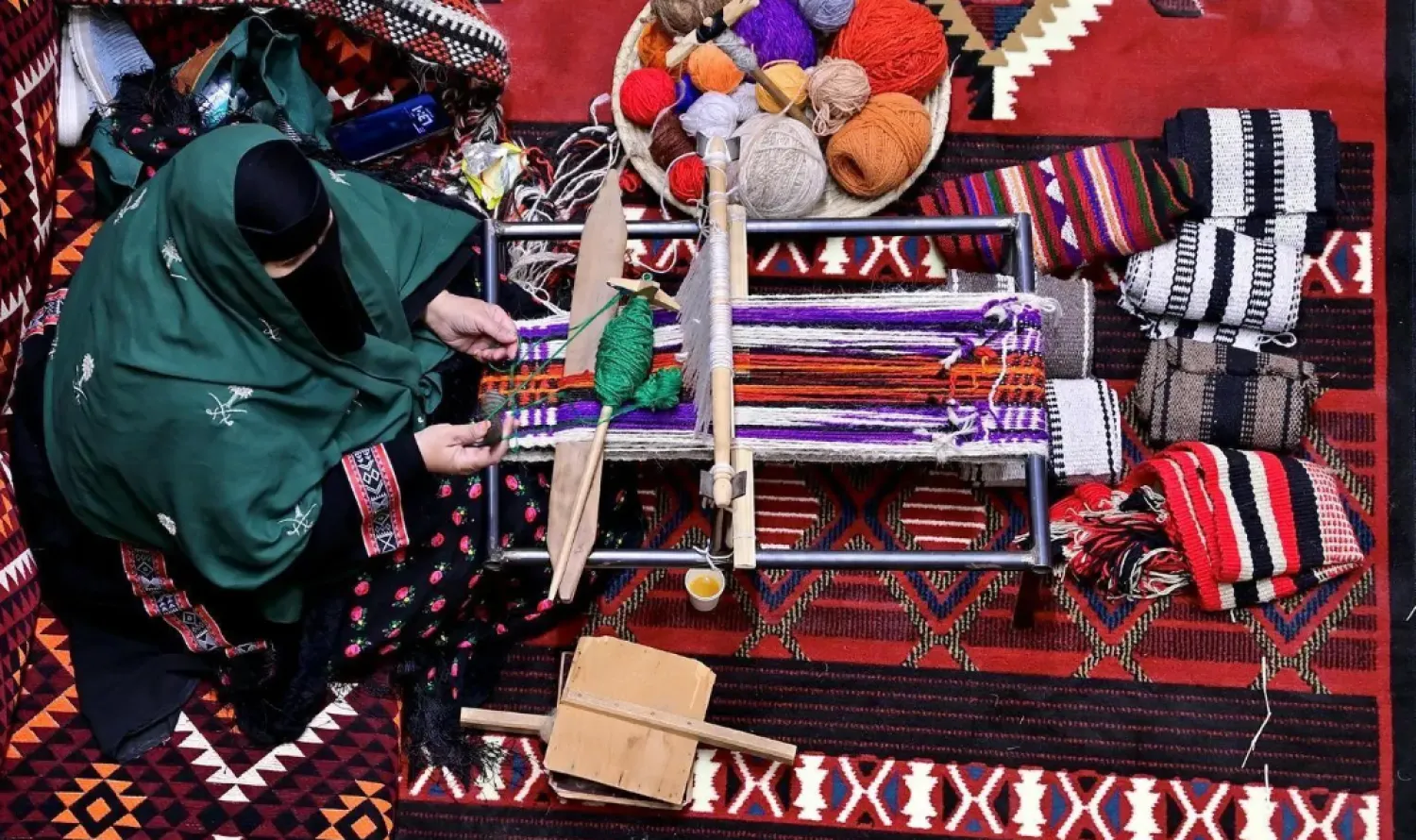


Riyadh Cultural House Marks Founding Day with Creative Heritage Programs

The celebration underscored the role of cultural houses in strengthening national identity - SPA
TT

Riyadh Cultural House Marks Founding Day with Creative Heritage Programs

The celebration underscored the role of cultural houses in strengthening national identity - SPA

The Riyadh Cultural House celebrated the Kingdom’s Founding Day with a range of cultural programs that highlighted national values and showcased the nation’s heritage in a modern, creative spirit.

The events included poetry evenings, dialogue sessions, cultural performances, and interactive workshops, all emphasizing the history and principles on which the Saudi state was founded, SPA reported.

The celebration underscored the role of cultural houses in strengthening national identity, fostering pride in the Kingdom’s history, and preserving its cultural legacy for future generations.


Riyadh Cultural House Marks Founding Day with Creative Heritage Programs

The events included poetry evenings, dialogue sessions, cultural performances, and interactive workshops. SPA
TT

Riyadh Cultural House Marks Founding Day with Creative Heritage Programs

The events included poetry evenings, dialogue sessions, cultural performances, and interactive workshops. SPA

The Riyadh Cultural House celebrated the Kingdom’s Founding Day with a range of cultural programs that highlighted national values and showcased the nation’s heritage in a modern, creative spirit.

The events included poetry evenings, dialogue sessions, cultural performances, and interactive workshops, all emphasizing the history and principles on which the Saudi state was founded.

The celebration underscored the role of cultural houses in strengthening national identity, fostering pride in the Kingdom’s history, and preserving its cultural legacy for future generations.


Prince Mohammed bin Salman Project Renovates Historic Al-Qibli Mosque in Riyadh

Al-Qibli Mosque is named for its location west of Manfuha and near the Principality Palace - SPA
TT

Prince Mohammed bin Salman Project Renovates Historic Al-Qibli Mosque in Riyadh

Al-Qibli Mosque is named for its location west of Manfuha and near the Principality Palace - SPA

The Prince Mohammed bin Salman Project for the Development of Historical Mosques continues efforts to preserve the Kingdom’s authentic architectural identity.

One of its recent projects is the comprehensive renovation of Al-Qibli Mosque in the old neighborhood of Manfuha in Riyadh. The restoration reflects traditional Najdi architecture and highlights the mosque’s connection to the town’s administrative and social history, SPA reported.

Al-Qibli Mosque is named for its location west of Manfuha and near the Principality Palace. It was historically the closest mosque to the town’s seat of government and was frequented by princes and prominent figures. The mosque spans approximately 500 square meters. It includes an outer courtyard, an inner prayer hall, and a lower prayer room of equal size that dates back to the original construction. Square, plaster-lined windows on the north and south sides provide natural ventilation.

These were added during the mosque’s second reconstruction around 1364 AH (1945 AD).

The covered inner prayer hall measures 15 by 8 meters and rests on 33 columns arranged in three rows. It was built by architect Abdullah bin Masoud upon the order of King Abdulaziz bin Abdulrahman. The roof is constructed using tamarisk and palm trunks, and a minaret stands at the center of the northern façade. Following earlier renovations in 1414 AH (1993 AD), the mosque remains the last mud-brick mosque in old Manfuha.

According to SPA, its design creates a visual connection between the courtyard and the inner hall, alongside a secluded lower prayer room. The site also includes the historic water fountain of Faris bin Abdullah bin Shaalan, who died in 1175 AH (1762 AD), and an old ablution area.

The current renovation uses the same local materials as the original construction, including mud, plaster, tamarisk wood, and palm fronds. Specialized Saudi heritage companies and engineers are overseeing the work to ensure preservation of historical authenticity while meeting modern sustainability standards.

The restoration aligns with the project’s four objectives: preparing historical mosques for worship, restoring architectural authenticity, highlighting the Kingdom’s cultural dimension, and enhancing religious significance. The project supports the cultural and civilizational goals of Saudi Vision 2030 and contributes to preserving the Kingdom’s architectural heritage for future generations.
