


Louisiana’s Cajun and Creole Heritage Will Be Showcased at 50th Annual Festivals Acadiens et Creoles

Son of the Zydeco King Clifton Chenier, C.J. Chenier holds his father's accordion in Houston, May 29, 2006. (Ben Desoto/Houston Chronicle via AP, File)
TT

Louisiana’s Cajun and Creole Heritage Will Be Showcased at 50th Annual Festivals Acadiens et Creoles

Son of the Zydeco King Clifton Chenier, C.J. Chenier holds his father's accordion in Houston, May 29, 2006. (Ben Desoto/Houston Chronicle via AP, File)

Louisiana's Cajun and Creole heritage takes center stage this weekend when the Festivals Acadiens et Creoles marks a half-century of honoring and celebrating the culture through music, arts, food and community.

What started as a one day concert in 1974 to entertain 150 French-speaking journalists gathered in Lafayette — considered the heart of Cajun country — has grown into a three-day event and possibly one of the largest Cajun and Zydeco festivals held globally, organizers said. And, they note, the entire event is free.

Barry Jean Ancelet, one of the event's organizers, said when the idea formed 50 years ago, nobody knew if anyone would even come out to hear the music.

"Cajun music at that time was largely considered ‘old people’s music,'" he said. "You've got to remember, we were in the throes of Rock ‘n’ Roll at the time. The people here loved it when they encountered it in dance halls, but this concert was designed to call attention to the music in a different way, to point out its value. They had to sit — not dance — and pay attention. And they ended up hearing it in a different way. It was so successful. We ended up turning it into an annual event where we could call positive attention to this important asset and get people to consider it."

The festival, now held annually in Lafayette's Girard Park, brings together multi-generations of musicians and artists who annually fight to preserve a culture that continues to evolve.

"We've always been about celebrating the past and handing it off to the future," Ancelet said. "If you value and respect evolution, the culture will produce things that will continue to surprise you. It all comes out in the wash. What's good will last and what's not, won't."

Festival co-founder Pat Mould said the festival is a "self-celebration of who we are, how we live, what we eat, the music and how we speak."

"If you know nothing and want to learn about the culture, this one weekend out of the year allows you to find out everything. Everything you want to know is represented at the festival. It's a quick study of Cajun and Creole living," he said.

On tap musically for the Friday through Sunday event are performances by 60 musicians — all homegrown talent — including Steve Riley and the Mamou Playboys, Wayne Toups, CJ Chenier, Nathan and the Zydeco Cha Chas, Chubby Carrier and the Bayou Swamp Band, The Revelers, Beausoleil avec Michael Doucet and The Lost Bayou Ramblers.

On Friday, contemporary artists will pay tribute to the 1974 concert house band that included Zydeco pioneer Clifton Chenier, Cajun accordion maker Marc Savoy, the Balfa Brothers, a Cajun music ensemble of five brothers, Cajun accordion players Nathan Abshire and Blackie Forrester, and Jimmy C. Newman, a country music and Cajun singer-songwriter and long-time star of the Grand Ole Opry.

"Get ready for Louisiana pure fun," said Carrier, who's scheduled to perform with his band on Sunday. "Get ready to eat some really good food and have the time of your life."

"People all over the word have these dates circled on their calendar," he continued. "It's an event that helps the younger generations continue the traditions. I'm a third generation Zydeco musician. This is a family oriented festival that brings people together of all ages."

Riley, who's been performing at this festival since 1988, said he keeps returning for several reasons but especially because it helps preserve the culture.

"It's important to see us on stage, singing and speaking in French. That has an effect on people who come to see us and helps them fall in love with the culture," he said.

"There are a lot of events leading up to the weekend that focuses on the importance of the language, the culture, the food and, of course, the music. There's none other that celebrates it like this one. I think it's the biggest complete celebration of everything Cajun. It's also inclusive of different generations, bands with lineage. That's key," he said.

Riley, now 55, said he's very proud that his three children all play music.

"It's a beautiful thing for my family and others like mine," he said. "Having your kids play with you is awesome. Most kids don't want to have anything to do with what their parents do. Mine, think what I do is fun and it is."

Riley said when he first started there weren't too many young bands playing Cajun music.

"There was real fear that the music would die off and dissipate like the language," he recalled. "The opposite has happened. More young folks are preserving and playing this music than ever. The Zydeco scene down here is packed with young people. It's super vibrant and alive. The same with the Cajun scene as well."


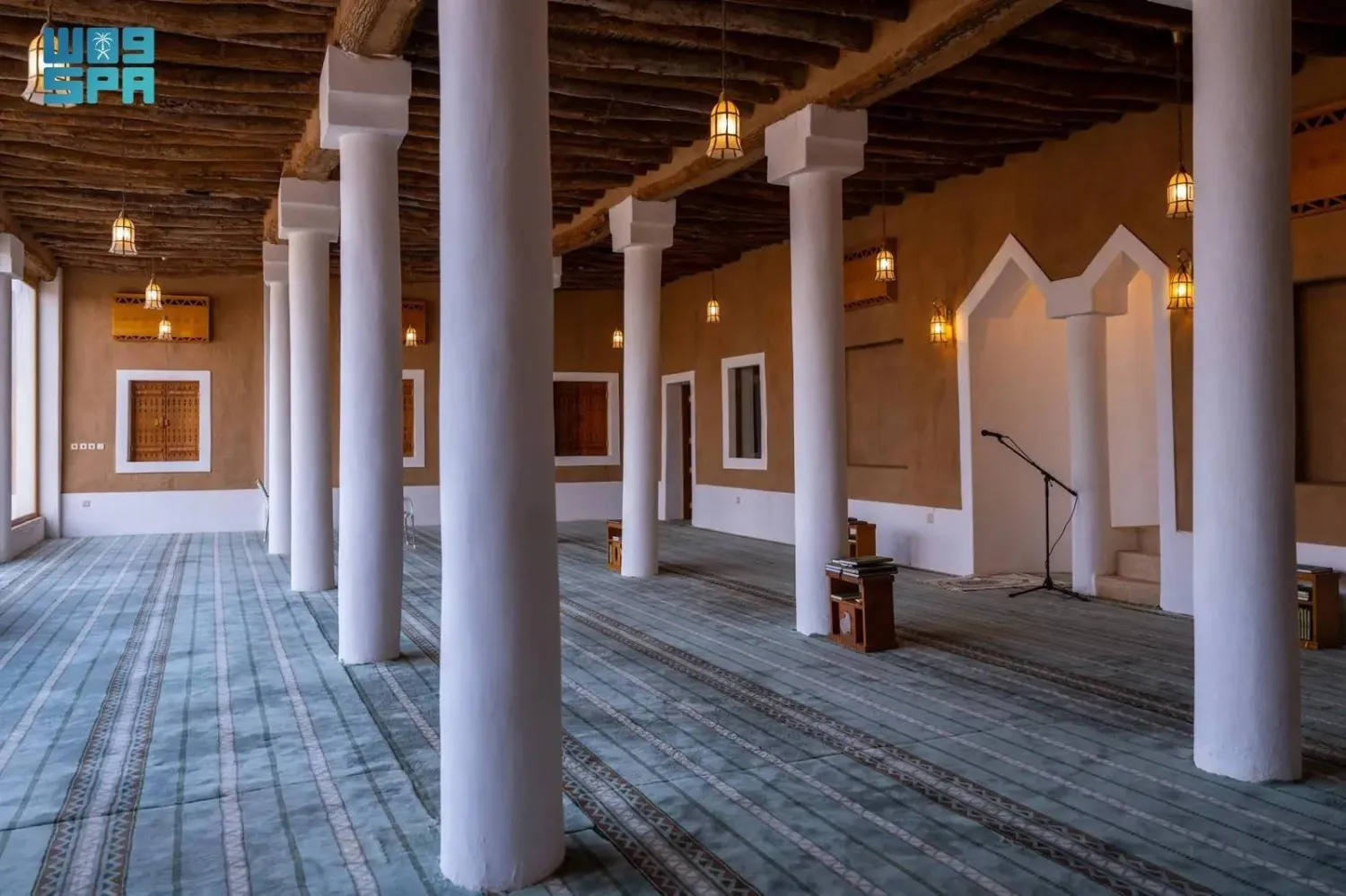

Prince Mohammed bin Salman Project Renovates Historic Al-Qibli Mosque in Riyadh

Al-Qibli Mosque is named for its location west of Manfuha and near the Principality Palace - SPA
TT

Prince Mohammed bin Salman Project Renovates Historic Al-Qibli Mosque in Riyadh

Al-Qibli Mosque is named for its location west of Manfuha and near the Principality Palace - SPA

The Prince Mohammed bin Salman Project for the Development of Historical Mosques continues efforts to preserve the Kingdom’s authentic architectural identity.

One of its recent projects is the comprehensive renovation of Al-Qibli Mosque in the old neighborhood of Manfuha in Riyadh. The restoration reflects traditional Najdi architecture and highlights the mosque’s connection to the town’s administrative and social history, SPA reported.

Al-Qibli Mosque is named for its location west of Manfuha and near the Principality Palace. It was historically the closest mosque to the town’s seat of government and was frequented by princes and prominent figures. The mosque spans approximately 500 square meters. It includes an outer courtyard, an inner prayer hall, and a lower prayer room of equal size that dates back to the original construction. Square, plaster-lined windows on the north and south sides provide natural ventilation.

These were added during the mosque’s second reconstruction around 1364 AH (1945 AD).

The covered inner prayer hall measures 15 by 8 meters and rests on 33 columns arranged in three rows. It was built by architect Abdullah bin Masoud upon the order of King Abdulaziz bin Abdulrahman. The roof is constructed using tamarisk and palm trunks, and a minaret stands at the center of the northern façade. Following earlier renovations in 1414 AH (1993 AD), the mosque remains the last mud-brick mosque in old Manfuha.

According to SPA, its design creates a visual connection between the courtyard and the inner hall, alongside a secluded lower prayer room. The site also includes the historic water fountain of Faris bin Abdullah bin Shaalan, who died in 1175 AH (1762 AD), and an old ablution area.

The current renovation uses the same local materials as the original construction, including mud, plaster, tamarisk wood, and palm fronds. Specialized Saudi heritage companies and engineers are overseeing the work to ensure preservation of historical authenticity while meeting modern sustainability standards.

The restoration aligns with the project’s four objectives: preparing historical mosques for worship, restoring architectural authenticity, highlighting the Kingdom’s cultural dimension, and enhancing religious significance. The project supports the cultural and civilizational goals of Saudi Vision 2030 and contributes to preserving the Kingdom’s architectural heritage for future generations.


Qassim Region Principality Illuminated in Green in Celebration of Founding Day

The Qassim Region Principality illuminated in green marking Founding Day - SPA
TT

Qassim Region Principality Illuminated in Green in Celebration of Founding Day

The Qassim Region Principality illuminated in green marking Founding Day - SPA

The Qassim Region Principality building was illuminated in green in celebration of Founding Day.

The scene reflected pride in the historical roots of the Saudi state and embodied feelings of belonging on this cherished national occasion, SPA reported.

The illumination affirms the deep historical significance of Founding Day, marking 299 years since the establishment of the First Saudi State by Imam Mohammed bin Saud.

It also reflects the enduring principles upon which it was founded, including unity, stability, and state-building. These foundations culminate in the security, stability, and prosperity that the Kingdom of Saudi Arabia enjoys today under its wise leadership.


Prince Mohammed bin Salman Project Restores Century-Old Uqlat Al-Suqur Mosque in Qassim

The renovation utilized traditional mud, stone, and wood to preserve the mosque's authentic Najdi architectural style. (SPA)
TT

Prince Mohammed bin Salman Project Restores Century-Old Uqlat Al-Suqur Mosque in Qassim

The renovation utilized traditional mud, stone, and wood to preserve the mosque's authentic Najdi architectural style. (SPA)

The Prince Mohammed bin Salman Project for the Development of Historical Mosques has completed the restoration of the Uqlat Al-Suqur Mosque in Qassim Region, revitalizing a heritage landmark dating back to 1922, reported the Saudi Press Agency on Saturday.

Originally the only mosque in the area, it served as a vital religious and social hub for education and community governance.

The renovation, executed by specialized Saudi firms, utilized traditional mud, stone, and wood to preserve its authentic Najdi architectural style.

The project increased the mosque's area to 544 square meters, expanding its capacity to 250 worshippers while maintaining its historical identity.

The initiative aligns with Vision 2030 to preserve the Kingdom's urban heritage and boost the cultural and religious significance of its historical mosques for future generations.