


UAE’s Salem Al Qassimi Stresses Culture’s Role in Sustainable Development

UAE Minister of Culture Shaikh Salem bin Khalid Al Qassimi. WAM
TT

UAE’s Salem Al Qassimi Stresses Culture’s Role in Sustainable Development

UAE Minister of Culture Shaikh Salem bin Khalid Al Qassimi. WAM

UAE Minister of Culture Shaikh Salem bin Khalid Al Qassimi emphasized the UAE's commitment to integrating culture into sustainable development and climate action, Emirates News Agency (WAM) reported.

The Minister's remarks came during his participation at the G20 Culture Ministers' Meeting in Salvador, Di Bahia, Brazil, WAM said Wednesday.

Addressing the meeting, Al Qassimi said that the UAE has been galvanizing global cooperation to mainstream culture as a key enabler of sustainable development. He also stressed the UAE's leading role in promoting a culture of climate action and as a lever for inclusive and equitable economic growth.

"Culture not only preserves heritage but also provides innovative solutions to complex global issues, including climate change. As we face an evolving climate, culture strengthens our resilience against these challenges,” he said.

The Minister highlighted the UAE and Brazil's joint efforts in creating the Group of Friends for Culture-Based Climate Action (GFCBCA) and the support the group has received since its launch at COP28 last year.

"This coalition symbolizes our dedication to addressing climate challenges through a cultural lens, and we are grateful to the many partners who have joined this mission. We are especially proud that both the UAE Framework for Global Climate Resilience and the GFCBCA were included in the declaration, highlighting the importance of integrating cultural and resilient approaches to climate action on a global scale," he added.

The Minister also pointed out that measuring the contribution of the cultural and creative industries is of utmost importance as it is essential to tailor regulations and incentives that nurture the creative sector. "Data insights reveal emerging trends, consumer preferences, and areas for innovation."

"We are working with global partners to bolster mechanisms to collect data from the creative sector and leverage it to guide the future direction of CCI. Our dedication to nurturing creativity is not only about economic growth but about securing the legacy and identity of our communities for generations to come," WAM quoted him as saying.

A delegation from the Ministry of Culture actively participated in the fourth Culture Working Group (CWG) meeting. The UAE contributed to discussions on four priority areas: Protection and Restitution of Cultural Property, Harnessing Living Heritage for a Sustainable Future, Promotion of Cultural and Creative Industries, and Leveraging Digital Technologies for Culture, all of which informed the G20 Culture Ministers' Declaration.

By focusing discussions on culture in the four topics above, the countries gathered in the G20 Culture Working Group will be able to deepen their understanding of the challenges and possibilities of culture in a constantly changing world. The panels were designed to provide countries with the means to improve their public policies and national actions.

The CWG discussions are expected to foster new degrees of understanding and partnerships between countries, advancing principles such as promoting peace, sustainable and inclusive development, dialogue, and common understanding for the benefit of all.
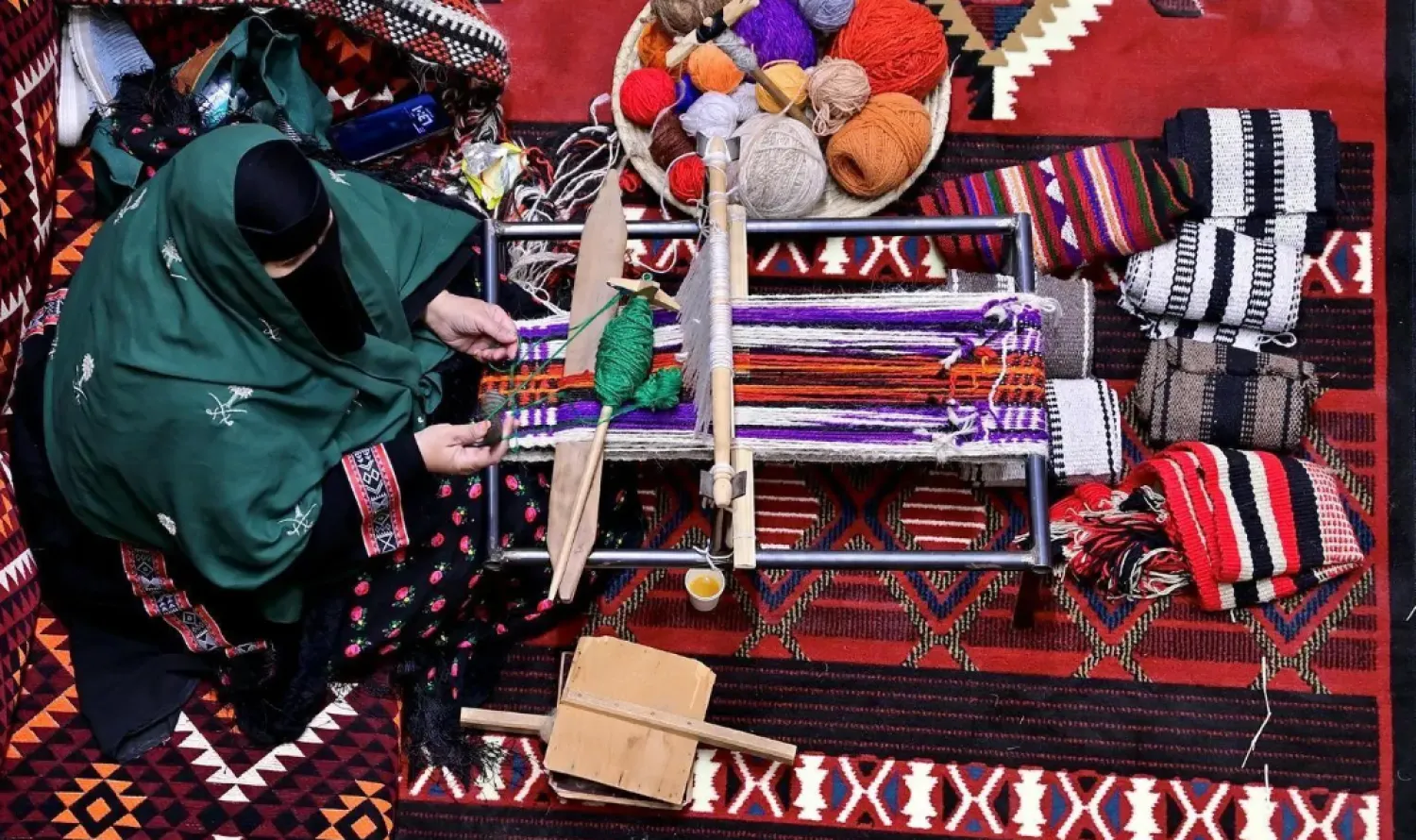



Riyadh Cultural House Marks Founding Day with Creative Heritage Programs

The celebration underscored the role of cultural houses in strengthening national identity - SPA
TT

Riyadh Cultural House Marks Founding Day with Creative Heritage Programs

The celebration underscored the role of cultural houses in strengthening national identity - SPA

The Riyadh Cultural House celebrated the Kingdom’s Founding Day with a range of cultural programs that highlighted national values and showcased the nation’s heritage in a modern, creative spirit.

The events included poetry evenings, dialogue sessions, cultural performances, and interactive workshops, all emphasizing the history and principles on which the Saudi state was founded, SPA reported.

The celebration underscored the role of cultural houses in strengthening national identity, fostering pride in the Kingdom’s history, and preserving its cultural legacy for future generations.


Riyadh Cultural House Marks Founding Day with Creative Heritage Programs

The events included poetry evenings, dialogue sessions, cultural performances, and interactive workshops. SPA
TT

Riyadh Cultural House Marks Founding Day with Creative Heritage Programs

The events included poetry evenings, dialogue sessions, cultural performances, and interactive workshops. SPA

The Riyadh Cultural House celebrated the Kingdom’s Founding Day with a range of cultural programs that highlighted national values and showcased the nation’s heritage in a modern, creative spirit.

The events included poetry evenings, dialogue sessions, cultural performances, and interactive workshops, all emphasizing the history and principles on which the Saudi state was founded.

The celebration underscored the role of cultural houses in strengthening national identity, fostering pride in the Kingdom’s history, and preserving its cultural legacy for future generations.


Prince Mohammed bin Salman Project Renovates Historic Al-Qibli Mosque in Riyadh

Al-Qibli Mosque is named for its location west of Manfuha and near the Principality Palace - SPA
TT

Prince Mohammed bin Salman Project Renovates Historic Al-Qibli Mosque in Riyadh

Al-Qibli Mosque is named for its location west of Manfuha and near the Principality Palace - SPA

The Prince Mohammed bin Salman Project for the Development of Historical Mosques continues efforts to preserve the Kingdom’s authentic architectural identity.

One of its recent projects is the comprehensive renovation of Al-Qibli Mosque in the old neighborhood of Manfuha in Riyadh. The restoration reflects traditional Najdi architecture and highlights the mosque’s connection to the town’s administrative and social history, SPA reported.

Al-Qibli Mosque is named for its location west of Manfuha and near the Principality Palace. It was historically the closest mosque to the town’s seat of government and was frequented by princes and prominent figures. The mosque spans approximately 500 square meters. It includes an outer courtyard, an inner prayer hall, and a lower prayer room of equal size that dates back to the original construction. Square, plaster-lined windows on the north and south sides provide natural ventilation.

These were added during the mosque’s second reconstruction around 1364 AH (1945 AD).

The covered inner prayer hall measures 15 by 8 meters and rests on 33 columns arranged in three rows. It was built by architect Abdullah bin Masoud upon the order of King Abdulaziz bin Abdulrahman. The roof is constructed using tamarisk and palm trunks, and a minaret stands at the center of the northern façade. Following earlier renovations in 1414 AH (1993 AD), the mosque remains the last mud-brick mosque in old Manfuha.

According to SPA, its design creates a visual connection between the courtyard and the inner hall, alongside a secluded lower prayer room. The site also includes the historic water fountain of Faris bin Abdullah bin Shaalan, who died in 1175 AH (1762 AD), and an old ablution area.

The current renovation uses the same local materials as the original construction, including mud, plaster, tamarisk wood, and palm fronds. Specialized Saudi heritage companies and engineers are overseeing the work to ensure preservation of historical authenticity while meeting modern sustainability standards.

The restoration aligns with the project’s four objectives: preparing historical mosques for worship, restoring architectural authenticity, highlighting the Kingdom’s cultural dimension, and enhancing religious significance. The project supports the cultural and civilizational goals of Saudi Vision 2030 and contributes to preserving the Kingdom’s architectural heritage for future generations.