
UNESCO Grants Heritage Status to Aleppo Soap as Syria War Flares

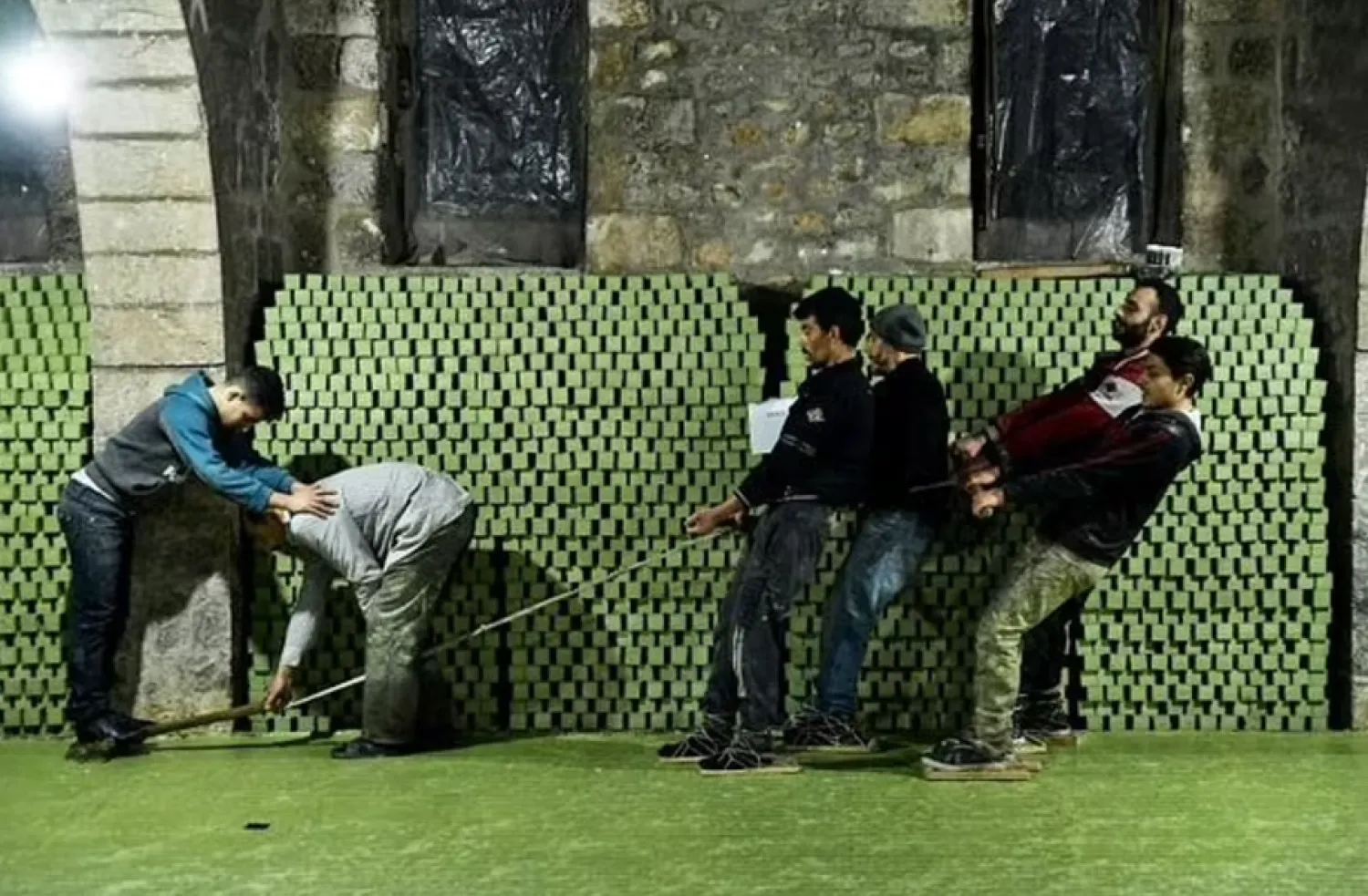
Artisans have been using the same methods from 3,000 years to make the famous Aleppo soap - AFP
TT

UNESCO Grants Heritage Status to Aleppo Soap as Syria War Flares

Artisans have been using the same methods from 3,000 years to make the famous Aleppo soap - AFP

The UN's cultural organization added Aleppo's famous soap to its intangible cultural heritage list Tuesday with Syria's second city again wracked by war.

Artisans have brewed olive and laurel oil in large pots for some 3,000 years in the city allowing the mixture to cool before cutting it into blocks, and stamping them by hand, AFP reported.

Aleppo soap joins the city's traditional music, Al-Qudoud al-Halabiya, on UNESCO's list of intangible cultural heritage, while the city itself -- declared a world heritage site in 1986 -- was added to the organization's endangered list in 2013 amid the country's civil war.

Aleppo had been slowly recovering from the wounds inflicted by more than a decade of civil war when armed opposition groups captured the city last week in a shock offensive that put forces loyal to Syria's President Bashar al-Assad to flight.

Of the 100 soap factories in the city only about 10 remain, with many having relocated to Damascus or neighboring Türkiye.

But the soap remains essential to the families and communities involved in the trade.

"The collaborative production process promotes community and family unity," said UNESCO.


Saudi, Malaysian Translation Associations Sign MoU to Promote Cultural Exchange

The MoU aims to enhance cooperation in the fields of translation and publishing, promote cultural and knowledge exchange, and support scientific and academic efforts of mutual interest. SPA
TT

Saudi, Malaysian Translation Associations Sign MoU to Promote Cultural Exchange

The MoU aims to enhance cooperation in the fields of translation and publishing, promote cultural and knowledge exchange, and support scientific and academic efforts of mutual interest. SPA

The Saudi Arabian Translation Association and the Malaysian Translators Association have signed a memorandum of understanding (MoU) at Saudi Arabia's pavilion, the guest of honor at the 2026 Kuala Lumpur International Book Fair.

The MoU aims to enhance cooperation in the fields of translation and publishing, promote cultural and knowledge exchange, and support scientific and academic efforts of mutual interest.

It also seeks to facilitate the exchange of expertise and specialized consultations, contributing to advancing the translation sector and strengthening its presence on the international cultural scene.

The memorandum represents an important step toward building sustainable professional and cultural partnerships that contribute to strengthening civilizational dialogue between Saudi Arabia and Malaysia, while opening the door to joint projects and initiatives that support translation activities and expand the exchange of literature and knowledge between the two languages.

The MoU comes as part of the cultural momentum witnessed by the Kingdom’s pavilion at the 2026 Kuala Lumpur International Book Fair, led by the Literature, Publishing and Translation Commission through a diverse cultural and knowledge-based program that highlights the growing stature of Saudi culture and its presence in international forums.

This underscores the importance of international book fairs as effective platforms for enhancing cultural cooperation and signing agreements and partnerships that contribute to expanding prospects for joint work among cultural and knowledge institutions around the world.


Saudi Heritage Commission Uncovers Over 1,700 Artifacts at Ancient Al-Juhfah Miqat Site

Discoveries included diverse fragments used in daily life, six pottery kilns, a water channel - SPA
TT

Saudi Heritage Commission Uncovers Over 1,700 Artifacts at Ancient Al-Juhfah Miqat Site

Discoveries included diverse fragments used in daily life, six pottery kilns, a water channel - SPA

Saudi Arabia's Heritage Commission completed the first season of its joint scientific mission with the University of Exeter at the ancient Al-Juhfah Miqat site, uncovering more than 1,700 artifacts, including pottery, glass, stone pieces, shells, and worked objects, confirming the site's significance along the Egyptian pilgrimage route.

Discoveries included diverse fragments used in daily life, six pottery kilns, a water channel believed to have served pilgrims and travelers, and 13 tombstones dating to the Umayyad and Abbasid periods. Some finds originated from the Levant, Egypt, and Ethiopia, reflecting the diverse origins of pilgrims who passed through this miqat, SPA reported.

Al-Juhfah Miqat is located 187 kilometers northwest of Makkah and has been an established miqat since the early Islamic period, associated with the Prophet's migration, and is known to have flourished in the second Hijri century, with water facilities and shops serving pilgrims.

These works are part of the Heritage Commission's efforts to survey and document archaeological sites along the Hijrah route between Makkah and Madinah, using advanced technologies to reveal the historical and civilizational depth of the Kingdom.


Makkah Museum Displays Rare Quran Manuscript Dating Back to 1843

The manuscript is distinguished by its precise script written in black ink with full diacritical marks - SPA
TT

Makkah Museum Displays Rare Quran Manuscript Dating Back to 1843

The manuscript is distinguished by its precise script written in black ink with full diacritical marks - SPA

The Holy Quran Museum in the Hira Cultural District in Makkah showcases a collection of rare Quranic artifacts and collectibles that document Muslims’ care for the Holy Quran throughout the ages. Among the most notable exhibits is a rare Quran dating back to 1259 AH, corresponding to 1843 AD, which stands as a historical testament to the beauty of Quranic manuscript writing and ornamentation.

The manuscript is distinguished by its precise script written in black ink with full diacritical marks. Its pages are adorned with gilded borders, golden verse separators, and intricate floral decorations that highlight the advanced craftsmanship achieved in the gilding and embellishment of Quran manuscripts during that historical period, SPA reported.

Information accompanying the artifact indicates that the Quran later underwent restoration and rebinding to protect it from deterioration. This step helped preserve this rare Quranic treasure and maintain it as a witness to a cultural and civilizational legacy spanning more than a century and a half.

The display of this Quran is part of the educational and cultural content presented by the Holy Quran Museum, which enables visitors and pilgrims to explore diverse examples of historical Qurans and rare manuscripts and to learn about the various stages of writing, copying, and decorating Quranic manuscripts across different Islamic eras.

The museum serves as a prominent cultural and educational destination in Makkah, highlighting the historical efforts of Muslims in serving and preserving the Holy Quran. It also promotes awareness of the value of Islamic heritage associated with the Holy Quran through modern museum displays and interactive educational experiences that enrich visitors’ experiences and enhance their connection with the history of the Holy Quran.