

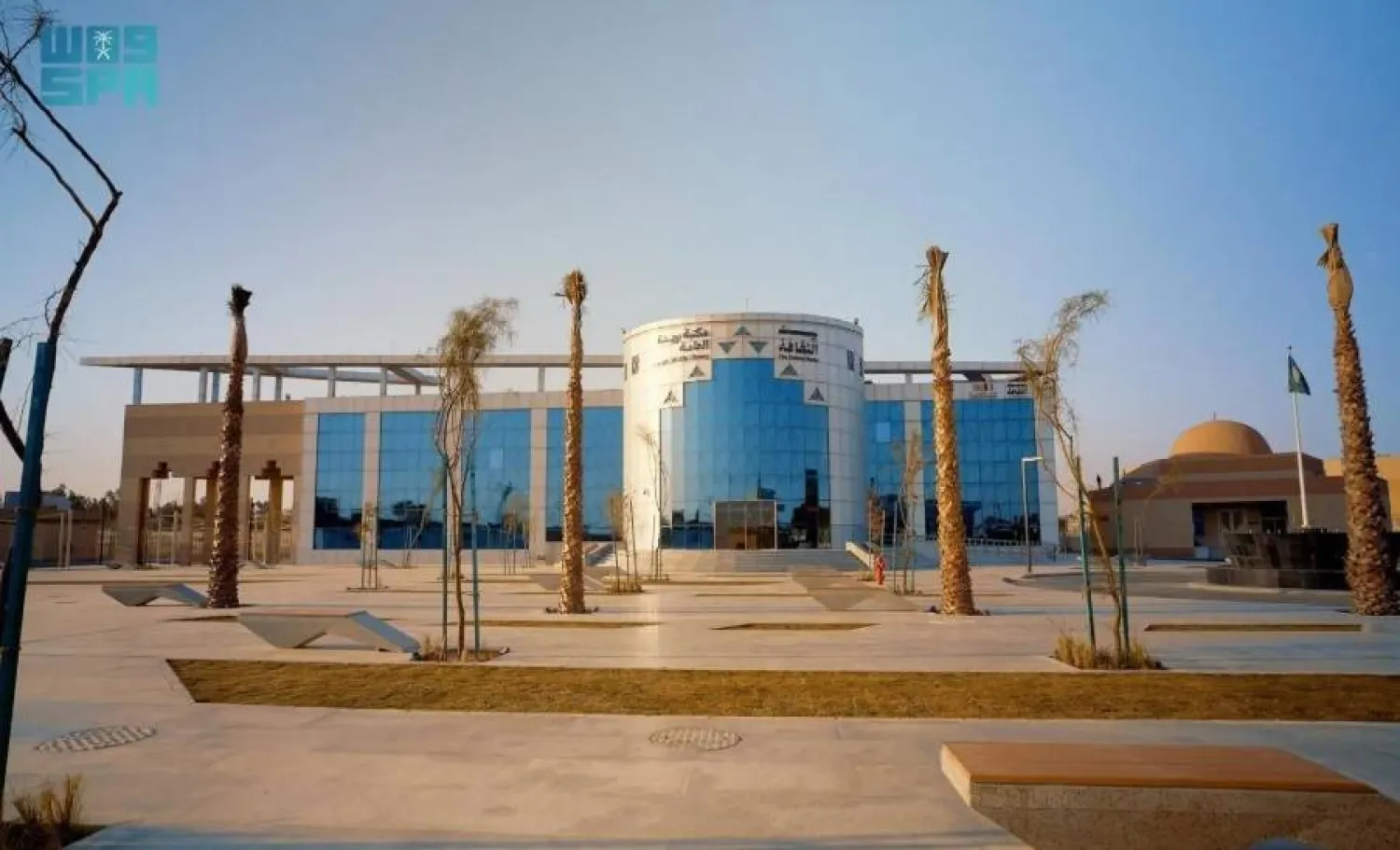

Libraries Commission Expands 'Cultural House' Project to 5 New Saudi Regions

Through its Cultural Houses project, the commission aims to achieve several strategic goals. SPA
TT

Libraries Commission Expands 'Cultural House' Project to 5 New Saudi Regions

Through its Cultural Houses project, the commission aims to achieve several strategic goals. SPA

The Libraries Commission has launched the pilot phase of its initiative to develop and transform public libraries into Cultural Houses in five new cities: Buraidah, Hail, Sakaka, Najran, and Jizan.

Since its launch, the project has hosted 93 events attended by over 31,005 visitors, and has offered 1,703 diverse programs that engaged more than 63,076 beneficiaries across various age groups.

The Cultural Houses offer modern libraries, dedicated spaces for youth and children, community activity areas, and venues for arts and creative workshops. These facilities cater to visitors’ aspirations while providing an integrated cultural experience.

Through its Cultural Houses project, the commission aims to achieve several strategic goals. These include enhancing access to culture and knowledge, redefining the public library's role as a vibrant community hub, and fostering a reading and creative society through sustainable initiatives that support reading, arts, and local talent.

This phase is part of a comprehensive national plan to expand the Cultural Houses project across all regions of the Kingdom, aligning with Saudi Vision 2030, particularly its goals of strengthening national identity and developing the cultural sector.



Aseer’s Traditional Mud Houses Stand as Symbols of Cultural Heritage

The projects form part of a broader range of initiatives launched by the Heritage Commission - SPA
TT

Aseer’s Traditional Mud Houses Stand as Symbols of Cultural Heritage

The projects form part of a broader range of initiatives launched by the Heritage Commission - SPA

Mud houses in Aseer Region represent one of the most distinctive elements of the region's traditional architectural heritage, and they have been closely connected to the local environment, serving as an architectural model uniquely adapted to the region’s terrain.

While these houses were traditionally built using simple mud-and-stone construction methods, they are now experiencing a revival through restoration projects that employ the same natural materials with greater precision and craftsmanship.

According to SPA, traditionally, mud-house construction consisted of two principal stages. The first involved building stone foundations to safeguard the structure against dampness, while the second focused on preparing and applying mud made from cohesive soil mixed with water and agricultural byproducts, including straw.

The projects form part of a broader range of initiatives launched by the Heritage Commission to preserve the urban landscape and strengthen local identity.

These efforts have contributed to the revitalization of numerous villages and mud-brick houses through restoration programs that use the same traditional clay mixtures. The programs also incorporate modern molding techniques to improve efficiency while preserving the structures' original character.

Preserving traditional construction methods is essential to maintaining the unique climatic qualities of mud-brick houses, which provide effective thermal insulation and help regulate indoor temperatures naturally.


Lebanon Heritage Site Damaged by Israeli Bombardment

 Smoke rises from the site of an Israeli airstrike that targeted a neighborhood in the southern Lebanese coastal city of Tyre on June 7, 2026.  (Photo by Kawnat HAJU / AFP)
Smoke rises from the site of an Israeli airstrike that targeted a neighborhood in the southern Lebanese coastal city of Tyre on June 7, 2026. (Photo by Kawnat HAJU / AFP)
TT

Lebanon Heritage Site Damaged by Israeli Bombardment

 Smoke rises from the site of an Israeli airstrike that targeted a neighborhood in the southern Lebanese coastal city of Tyre on June 7, 2026.  (Photo by Kawnat HAJU / AFP)
Smoke rises from the site of an Israeli airstrike that targeted a neighborhood in the southern Lebanese coastal city of Tyre on June 7, 2026. (Photo by Kawnat HAJU / AFP)

Israeli bombardment has damaged a World Heritage site in Lebanon's southern city of Tyre, a culture ministry official told AFP on Monday, as correspondents there saw debris and damage.

One of the oldest cities on the Mediterranean coast, Tyre lies around 20 kilometres (12 miles) from the Israeli border, and its UNESCO World Heritage listed ruins are located in two main areas of the city.

Israel's military has heavily bombed Tyre since the latest war erupted with Hezbollah, and on Sunday it issued a further evacuation warning that covered districts including one of the archaeological areas, known as the city site, which is home to Roman ruins.

AFP correspondents on Monday saw dust and debris close to ancient columns after the previous day's bombardment, as well as twisted metal and broken tree branches near several stone artefacts.

Concrete and metal debris also appeared to have been strewn onto a stone stairway.

Ali Badawi, regional director of archaeological sites for south Lebanon in the culture ministry, said Sunday's bombardment had had "the worst impact" on Tyre's ancient areas since the war began.

"The amount of debris and damage at the site is high," he said, noting both the direct impact, with the site's administrative office struck, and the indirect impact of debris strewn from nearby bombardment.

"Some archaeological artefacts were damaged when rubble fell on them, as debris fell over a large area, impacting a large number of elements at the site -- columns, capitals, column bases, mosaics," he said.

He said a preliminary damage assessment was underway but noted experts were not at the site due to the danger, adding that UNESCO had been notified.

Since a previous round of hostilities between Israel and Hezbollah which erupted in 2023, UNESCO has granted more than 70 heritage sites in Lebanon, including Tyre, "provisional enhanced protection," the organisation's highest level of legal protection.

"This is a civilian site, a World Heritage site, it's not a military site at all, and there are no military activities there," Badawi said.

He noted the other part of the site in Tyre, Al-Bass, had been damaged earlier in the conflict.

Late last month, Lebanon's Culture Minister Ghassan Salame told AFP that Israeli strikes on the country's south were putting heritage sites in "serious danger".


Saudi Arabia Concludes Participation at Kuala Lumpur International Book Fair

Through its pavilion, Saudi Arabia presented an integrated cultural showcase combining literature, arts, heritage, and knowledge. (SPA)
TT

Saudi Arabia Concludes Participation at Kuala Lumpur International Book Fair

Through its pavilion, Saudi Arabia presented an integrated cultural showcase combining literature, arts, heritage, and knowledge. (SPA)

Saudi Arabia's Literature, Publishing, and Translation Commission concluded the Kingdom’s participation as guest of honor at the 2026 Kuala Lumpur International Book Fair, held from May 29 to June 7.

Through its pavilion, led by the commission, Saudi Arabia presented an integrated cultural showcase combining literature, arts, heritage, and knowledge.

The diverse program included literary and cultural seminars, alongside artistic and performance displays, traditional crafts, heritage fashion, rare manuscripts, and replica artifacts.

Activities also extended to public spaces and shopping centers across Kuala Lumpur to broaden cultural outreach, in addition to hosting the Saudi Dinner Night, which brought together senior officials, diplomats, intellectuals, and media figures.

The Saudi pavilion highlighted the Kingdom’s growing cultural movement in literature, publishing, and translation, with contributions from several national entities, presenting a rich image of Saudi Arabia’s cultural landscape that was praised by visitors and participating institutions.