


Van Gogh Museum ‘Could Close’ Without More Help from Dutch Govt

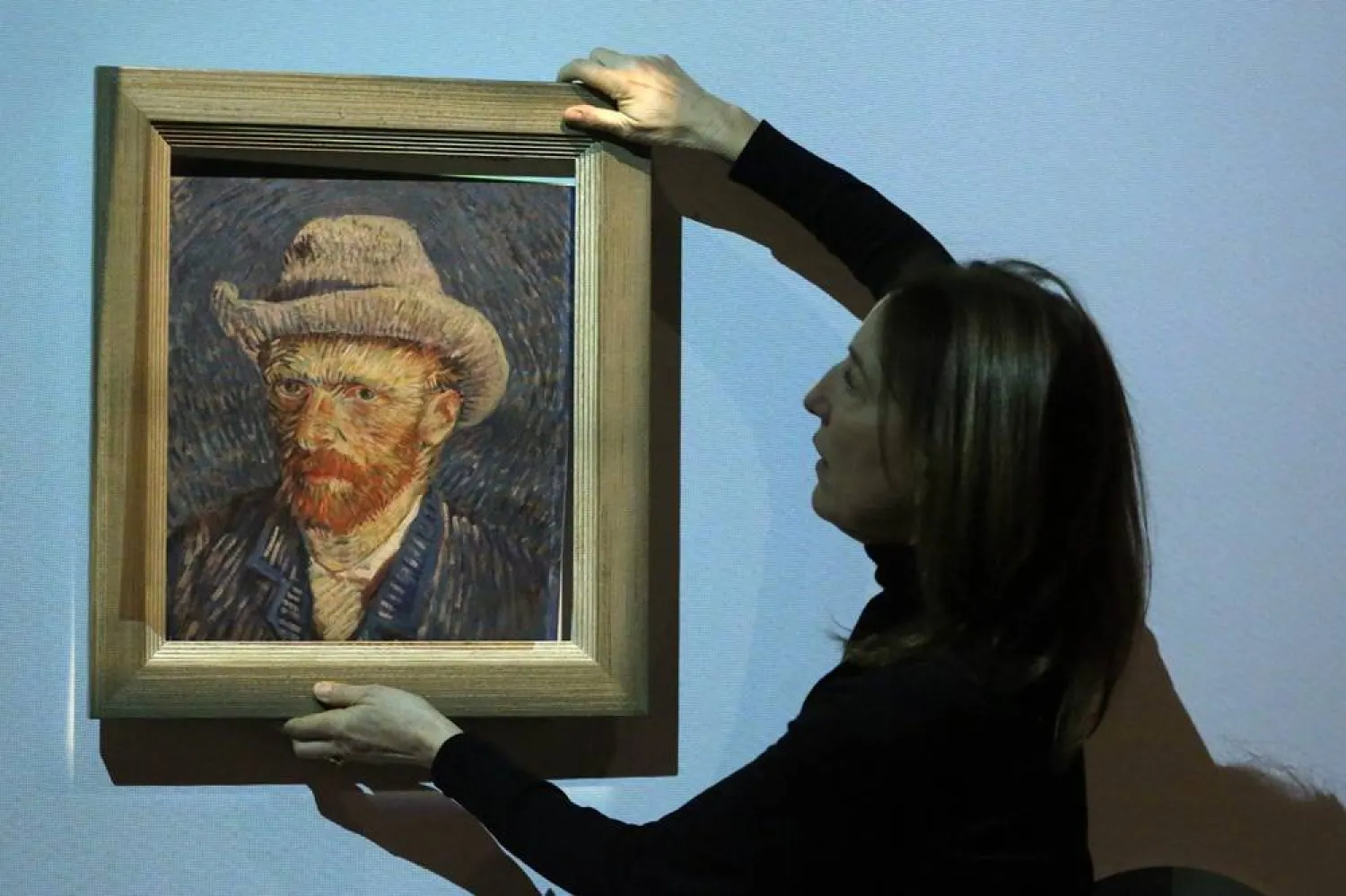
Emilie Gordenker, director of the Van Gogh Museum, removes the frame of a reproduction of the painting "Self-Portrait with Grey Felt Hat" by Vincent Van Gogh as part of an interactive section of the exhibition "Choosing Vincent - Portrait of a family history" at Van Gogh Museum in Amsterdam, on February 8, 2023. (Valeria Mongelli / AFP)
TT

Van Gogh Museum ‘Could Close’ Without More Help from Dutch Govt

Emilie Gordenker, director of the Van Gogh Museum, removes the frame of a reproduction of the painting "Self-Portrait with Grey Felt Hat" by Vincent Van Gogh as part of an interactive section of the exhibition "Choosing Vincent - Portrait of a family history" at Van Gogh Museum in Amsterdam, on February 8, 2023. (Valeria Mongelli / AFP)

The Van Museum in Amsterdam warned Wednesday that it faced closure without more state funding, saying a 104-million-euro ($120 million) renovation was vital to protect its masterpieces.

The museum -- which holds the world's biggest collection of the artist's work -- said the project could not go ahead unless the Dutch state honored a 1962 agreement with Vincent van Gogh's nephew by providing the necessary funds.

"The museum faces closure," it added "because it will not be able to guarantee the safety of the collection, visitors, and staff."

The Dutch ministry of culture rejected the warning, saying the museum already received a subsidy under the Dutch Heritage Act that was sufficient to cover maintenance.

It said its position was based on "comprehensive research" by independent experts.

But the museum has launched legal proceedings over the subsidy, with a court hearing scheduled for February 2026.

The museum houses more than 200 of the tortured Dutch artist's paintings, 500 of his drawings and almost all of his letters.

They were given by the artist's nephew Vincent Willem van Gogh in 1962 under a state-backed deal to build and maintain a museum.

"Managing, preserving, and exhibiting the collection was considered more important for the Netherlands at the time than financial consequences," the museum said.

The building, which opened in 1973, was no longer fit for purpose, it argued, after more than 50 years of heavy use.

A major overhaul called "Masterplan 2028" has been budgeted at 104 million, with the museum saying it would use its own resources to co-finance the works and cover an estimated 50 million euros in lost revenue during partial closures.

It said that an annual state subsidy of 11 million euros was needed, compared to the current one of 8.5 million.

Vincent van Gogh, who died in 1890 aged 37, produced more than 800 paintings and is regarded as one of the most influential figures in western art.

His works, including "Sunflowers" and "The Starry Night", are among the most loved paintings in the world.

The Van Gogh Museum is one of the Netherlands' most popular cultural institutions.

It drew a record 2.6 million visitors in 2017 and had welcomed almost 57 million since its opening.

It generates 85 percent of its income from visitors and private partnerships, a higher share than most national museums.



Saudi Coffee Utensils Reflect a Rich Heritage of Hospitality

The dallah, a traditional coffee pot used to serve coffee, is one of the most prominent symbols of Arab hospitality - SPA
TT

Saudi Coffee Utensils Reflect a Rich Heritage of Hospitality

The dallah, a traditional coffee pot used to serve coffee, is one of the most prominent symbols of Arab hospitality - SPA

Saudi coffee utensils form an integral set of tools associated with the various stages of coffee preparation and serving, from roasting the beans in the mehmasah, cooling them in the mibrada, and pounding them in the najr to boiling and serving the coffee in the dallah.

According to SPA, the mehmasah, traditionally made from iron or copper, is a utensil used to roast coffee beans over a fire or hot embers, while the mibrada is used to cool the roasted beans and prepare them for the next stage, and was traditionally made from local wood in various shapes and sizes.

The najr is used to pound and grind the roasted coffee beans, as well as cardamom and other ingredients. Its rhythmic sound has traditionally been associated with welcoming guests and signaling that coffee is being prepared in the gathering place.

The dallah, a traditional coffee pot used to serve coffee, is one of the most prominent symbols of Arab hospitality, and a strainer is used to remove coffee grounds and spices before serving.

Today, these utensils remain an important part of the tangible heritage of Saudi coffee, reflecting the craftsmanship of artisans who created practical tools for everyday use.


Security and History Dialogue 2026 Kicks Off in Riyadh with over 160 Speakers

The Security and History Dialogue 2026 conference begins Sunday in Riyadh with more than 160 speakers from within the Kingdom and abroad. (SPA)
TT

Security and History Dialogue 2026 Kicks Off in Riyadh with over 160 Speakers

The Security and History Dialogue 2026 conference begins Sunday in Riyadh with more than 160 speakers from within the Kingdom and abroad. (SPA)

Under the patronage of Minister of Interior Prince Abdulaziz bin Saud bin Naif bin Abdulaziz, the Security and History Dialogue 2026 conference begins Sunday in Riyadh with more than 160 speakers from within the Kingdom and abroad, the Saudi Press Agency reported.

The conference is organized by the Ministry of Interior and themed Our History and Our Future: Security and Growth.

Running through September 8, the conference, a national platform for dialogue and intellectual and historical exchange, will review Saudi Arabia's journey in the fields of security and growth.

It will explore the Kingdom's experience and transformations from various perspectives, including security, politics, economy, society, culture, national identity, awareness, international relations, and institution building.

The conference program includes more than 65 dialogue sessions and interactive meetings, with the participation of more than 30 entities. It is expected to attract more than 5,000 visitors.

The program will address a range of topics, including the history of the Kingdom and the roots of its security; the personality of Founding King Abdulaziz; citizenship, identity, and national heritage; the Kingdom's role in security and peace; the future of security capabilities and international partnerships; artificial intelligence and future security; and the role of women, family, citizens, media, and security sectors in promoting awareness and stability.

It will also review local and international experiences and perspectives related to the Kingdom's history and transformations.


Red Sea Museum Concludes Six-Month 'Sunken Treasures' Exhibition

The galleries showcased underwater archaeological discoveries and Saudi Arabia's ongoing efforts to protect and document submerged cultural assets - SPA
TT

Red Sea Museum Concludes Six-Month 'Sunken Treasures' Exhibition

The galleries showcased underwater archaeological discoveries and Saudi Arabia's ongoing efforts to protect and document submerged cultural assets - SPA

The "Sunken Treasures: The Maritime Heritage of the Red Sea" exhibition concluded its six-month run at the Red Sea Museum in Historic Jeddah, offering visitors an educational journey into centuries of maritime trade, navigation, and pilgrimage.

Housed at the historic Bab Al-Bunt building since February 25, the exhibition highlighted the Red Sea's historical role as a vital trade artery connecting the Arabian Peninsula with the Mediterranean, Africa, and Asia.

Structured across four thematic zones, the galleries showcased underwater archaeological discoveries and Saudi Arabia's ongoing efforts to protect and document submerged cultural assets, SPA reported.

Among the exhibition's centerpiece displays was the 18th-century Umluj shipwreck, discovered submerged 20 to 22 meters deep amid coral reefs. Its recovered cargo—including commercial containers, pottery, coins, ceramics, and daily shipboard tools alongside antique navigational instruments and nautical maps—illustrated the vibrant human exchange that traversed regional waters.

Organized in collaboration with the Heritage Commission and the Historic Jeddah Program, the exhibition was also part of the summer season's cultural offerings, combining interactive public programming with scientific research to bolster cultural tourism and raise awareness of the Kingdom's underwater heritage.