
Belgian Festival’s Decision to Cancel a Concert Led by an Israeli Conductor Draws Criticism

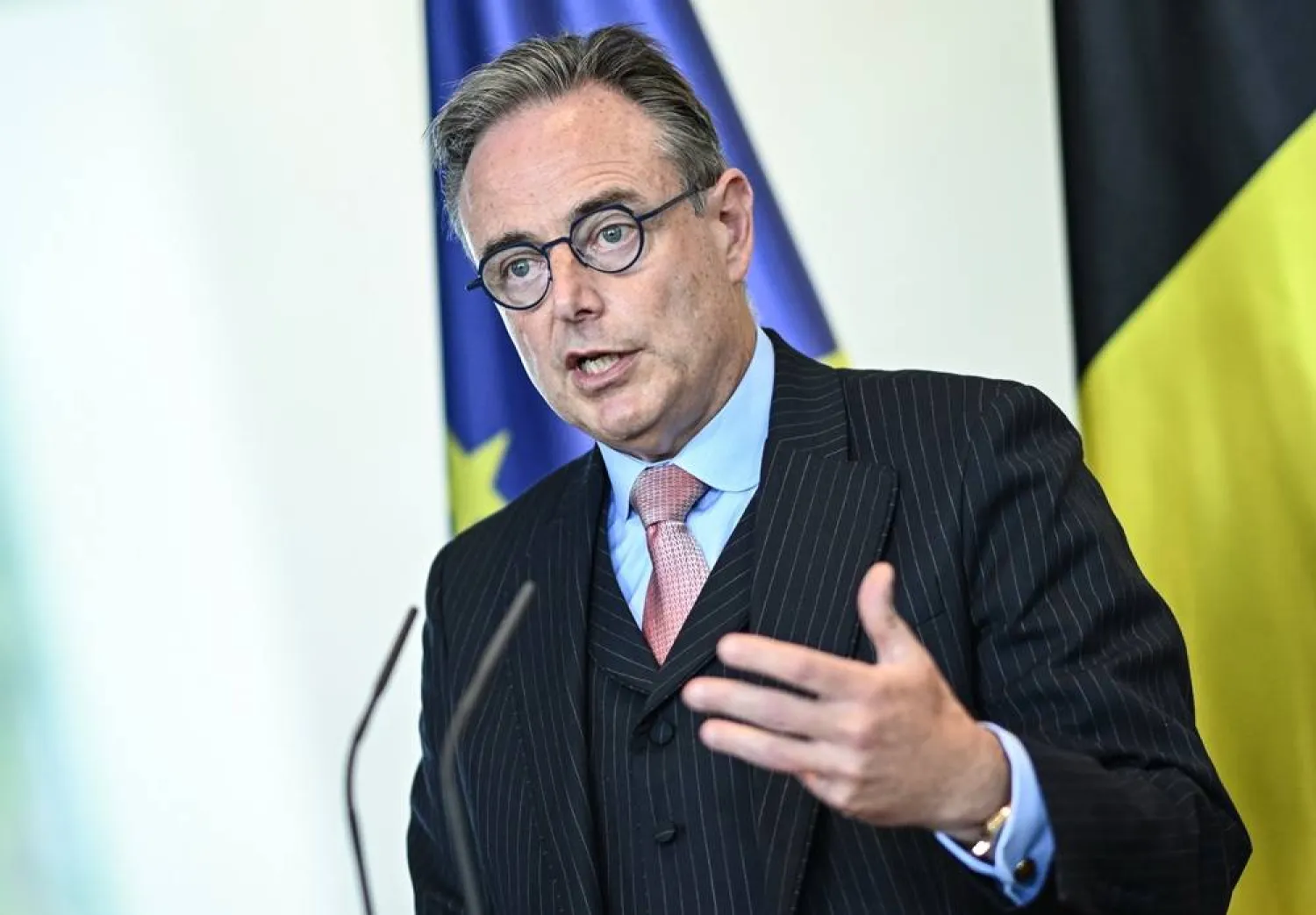
26 August 2025, Berlin: Belgian Prime Minister Bart De Wever speaks during a joint press conference with German Chancellor Friedrich Merz (not pictured). (dpa)
TT

Belgian Festival’s Decision to Cancel a Concert Led by an Israeli Conductor Draws Criticism

26 August 2025, Berlin: Belgian Prime Minister Bart De Wever speaks during a joint press conference with German Chancellor Friedrich Merz (not pictured). (dpa)

Belgium's prime minister traveled to neighboring Germany for a concert led by an Israeli conductor whose appearance was canceled by a Belgian festival, a gesture that added to strong criticism of the decision.

German Chancellor Friedrich Merz thanked Belgian Prime Minister Bart De Wever in a social media post Sunday for "his strong signal of solidarity” after he attended the concert given in Essen Saturday evening by the Munich Philharmonic and conducted by Lahav Shani, who is due to become the orchestra's chief conductor next year. Shani is also music director of the Israel Philharmonic Orchestra and currently chief conductor of the Rotterdam Philharmonic Orchestra.

On Wednesday, the Flanders Festival Ghent said it was canceling a concert by the Munich Philharmonic under Shani scheduled for Sept. 18.

It said in a statement that Shani “has spoken out in favor of peace and reconciliation several times in the past, but in the light of his role as the chief conductor of the Israel Philharmonic Orchestra, we are unable to provide sufficient clarity about his attitude to the genocidal regime in Tel Aviv."

Israel vehemently denies that it is committing genocide in Gaza, but has faced increasing isolation over its actions, including in the cultural sector.

Israel’s ambassador to Belgium, Idit Rosenzweig-Abu, wrote on social network X that “there are words to describe discriminating (against) a person based solely on his origin. Racism. And in a case of Jew, antisemitism.”

The decision to uninvite Shani and the Munich orchestra has drawn criticism in Germany. A music festival in Berlin invited them to perform at short notice on Monday.

De Wever posted a picture of himself with Shani on X and wrote that “there will never, ever be any room for racism and antisemitism” in Belgium. He added that he strongly condemns the cancellation of the Ghent concert “solely on the basis of the origin of conductor Lahav Shani.”

“I insisted on conveying this message to him personally and expressing my appreciation for his contribution to the power of music,” said the prime minister, who was joined by Germany's ambassador to Belgium.

In thanking De Wever for his gesture, Merz wrote that “we must give no space to this naked antisemitism.”

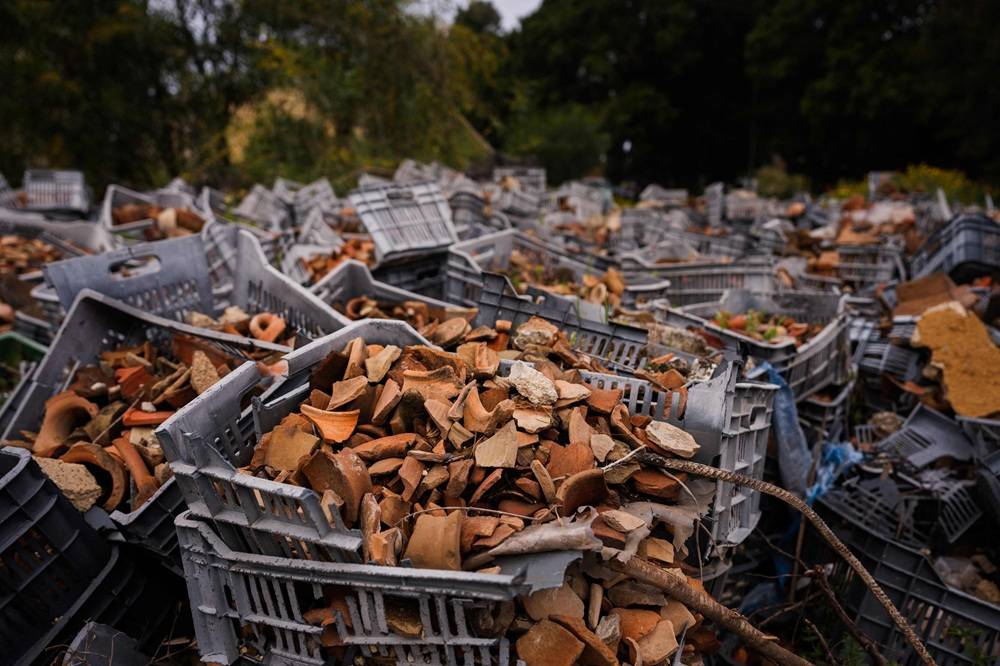
Italy Uncovers Basilica Designed by Vitruvius, the 'Father of Architecture'

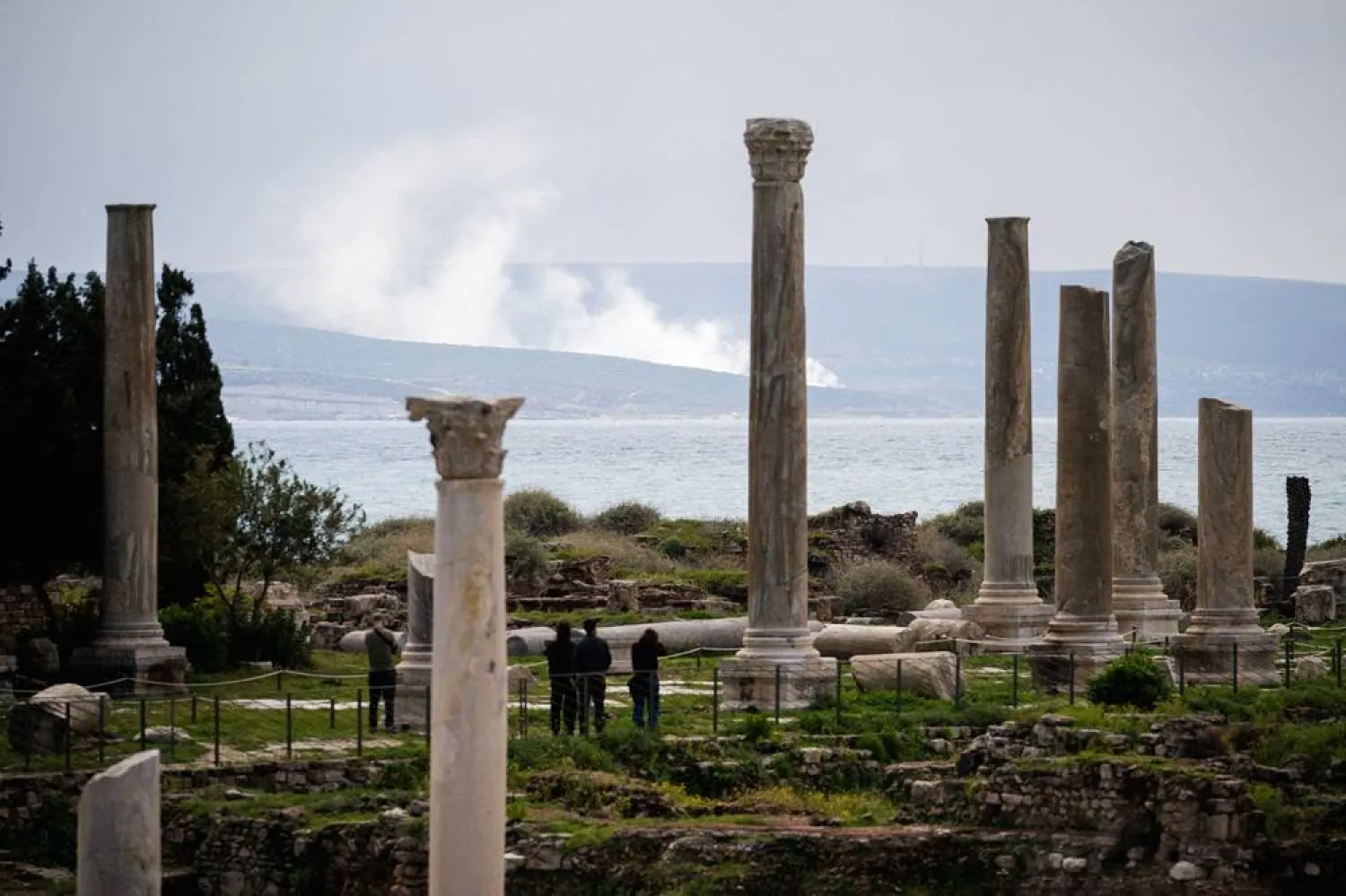
A handout photo made available by Regione Marche press office shows the excavations in Piazza Andrea Costa from which large columns emerge, remains believed of the Basilica of Vitruvius, in Fano, Italy, 19 January 2026. (EPA/Regione Marche press office)
TT

Italy Uncovers Basilica Designed by Vitruvius, the 'Father of Architecture'

A handout photo made available by Regione Marche press office shows the excavations in Piazza Andrea Costa from which large columns emerge, remains believed of the Basilica of Vitruvius, in Fano, Italy, 19 January 2026. (EPA/Regione Marche press office)

Italian officials on Monday hailed the discovery of a more than 2,000-year-old public building attributed to Vitruvius, the ancient Roman architect and engineer known as the "father of architecture."

"It is a sensational finding ... something that our grandchildren will be talking about," Italian Culture Minister Alessandro Giuli told a press conference.

Vitruvius, who lived in the ‌1st century BC, ‌is celebrated for having written "De architectura," ‌or ⁠The Ten ‌Books on Architecture, the oldest surviving treatise on the subject.

His teachings on the classical proportions of buildings have inspired artists over centuries, including Leonardo da Vinci, whose famous drawing of the human body is known as the "Vitruvian Man."

Archaeologists believe they have found ⁠the remains of an ancient basilica, or public building, in the central ‌Italian city of Fano northeast of ‍Rome, that was created ‍by Vitruvius.

"I feel like this is the discovery ‍of the century, because scientists and researchers have been searching for this basilica for over 500 years," said the Mayor of Fano Luca Serfilippi.

"We have absolute match" between what was discovered and the descriptions given by Vitruvius in his books, regional archaeological superintendent Andrea Pessina told reporters.

The basilica had a rectangular layout, with 10 columns on the long side, and four on the short ones, Pessina said.

During excavation, when traces of four columns emerged, archaeologists used Vitruvius' descriptions to calculate where the top right column should be. When they started digging, they found it immediately, Pessina said.

"The are few certainties in archaeology ... but we were impressed by the precision" of the match, he added.

Further digging will determine whether more of the ‌basilica lies underground and if the site can be shown to the public, the superintendent said.


French TV Broadcasts Louvre Robbery Images

People wait for the Louvre museum to open as employees at the Louvre Museum vote to extend a strike that has disrupted operations at the world's most visited museum, Thursday, Dec. 18, 2025 in Paris. (AP)
TT

French TV Broadcasts Louvre Robbery Images

People wait for the Louvre museum to open as employees at the Louvre Museum vote to extend a strike that has disrupted operations at the world's most visited museum, Thursday, Dec. 18, 2025 in Paris. (AP)

Footage of the spectacular robbery at the Louvre Museum has been broadcast for the first time on French television, showing the brazen jewel thieves breaking into display cases.

The images, filmed by surveillance cameras, were shown by the TF1 and public France Televisions channels on Sunday evening, three months after the hugely embarrassing break-in in October.

They show the two burglars, one wearing a black balaclava and a yellow high-visibility jacket, the other dressed in black with a motorcycle helmet, as they force their way into the Apollo Gallery.

After breaking in through a reinforced window with a high-powered disk cutters, they begin slicing into display cases under the eyes of several staff members who do not intervene.

Managers at the Louvre have stressed that staff are not trained to confront thieves and are asked to prioritize the evacuation of visitors.

During the roughly four minutes that the two men were inside the gallery, one staff member can be seen holding a bollard used to orient visitor through the gallery, according to France Televisions.

The images form a key part of the ongoing criminal investigation into the October 19 heist.

Details of the footage have been reported in French newspapers, including Le Parisien.

Four suspects are in police custody, including the two suspected thieves, but the eight stolen items of French crown jewels worth an estimated $102 million have not been found.

The security failures highlighted by the break-in on a Sunday morning in broad daylight have lead to major pressure on director Laurence des Cars, who has apologized.

Metal bars have since been installed over the windows of the Apollo Gallery.


Cultural Development Fund Highlights Economic Value of Saudi Culture in Davos

The Cultural Development Fund (CDF) logo
TT

Cultural Development Fund Highlights Economic Value of Saudi Culture in Davos

The Cultural Development Fund (CDF) logo

The Cultural Development Fund (CDF) is participating in the Saudi House pavilion initiative, led by the Ministry of Economy and Planning, during the Annual Meeting of the World Economic Forum 2026, held in Davos, Switzerland, from January 19 to 23.

Through this participation, CDF aims to showcase the economic value of Saudi culture, highlight its role in diversifying the national economy and enhancing quality of life, attract international investment in the cultural sector, and spotlight Saudi cultural entrepreneurship.

According to a statement from the fund, the CDF’s participation includes a networking breakfast bringing together global economic leaders and investors from various countries, with the aim of raising awareness of Saudi culture as an economic force and a key pillar of Saudi Vision 2030.

The event will also provide a platform for exchanging perspectives and opportunities with international investors and financial institutions, while offering a closer look at the enablers of the Saudi cultural sector and its investment opportunities.

As part of the event, the CDF will host a panel discussion titled “Investing in Culture as an Economic Engine” that will feature CEO of the Cultural Development Fund Majed bin Abdulmohsen Al-Hugail, alongside Deputy Minister of Cultural Strategies and Policies at the Ministry of Culture Albara Al-Auhali.

The discussion will address the economic value of culture globally and locally, highlighting the CDF’s role in providing financial solutions that support cultural enterprises and enable their contribution to GDP growth and quality of life. The session will also explore cultural policies and their impact on strengthening the sector’s economic and investment potential.

Within the NextOn dialogue series organized by the Saudi House in Davos, the Cultural Development Fund will enable supported cultural projects to share their success stories and highlight their role in enhancing cultural production and increasing its economic value.

Participating entrepreneurs include Co-Founder of AlMashtal Creative Incubator Princess Noura bint Saud bin Naif, and CEO of Arabian Housing and Building company (AHB) Khalid Henaidy, who will speak about the role of entrepreneurship in shaping the future of the Kingdom’s cultural economy.

‏This participation underscores the CDF’s role as a center of excellence and financial enabler for the cultural sector in the Kingdom, and forms part of its efforts to strengthen the presence of Saudi cultural dynamism on the global stage. It aligns with the CDF’s objectives to maximize the cultural sector’s economic and social impact, increase its contribution to GDP, quality of life, and advance the goals of Saudi Vision 2030.