


Hungarian Master of Absurdist Excess László Krasznahorkai Wins Nobel Literature Prize

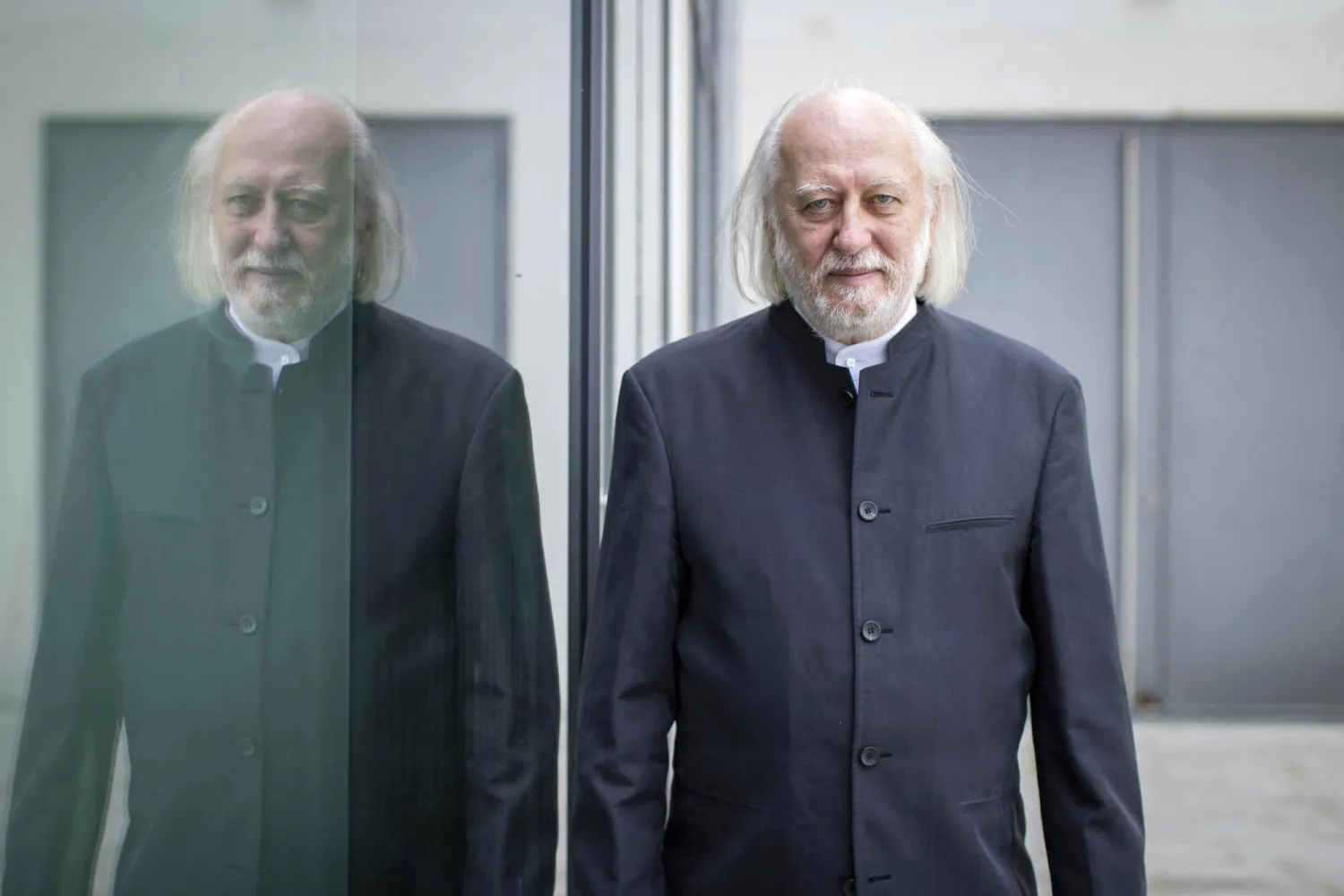
This photo taken on July 26, 2021 shows Hungarian writer Laszlo Krasznahorkai posing for a photo in Salzburg, on the occasion of the presentation of the Austrian State Prize for European Literature 2021. (Photo by Leo NEUMAYR / APA / AFP) / Austria OUT
TT

Hungarian Master of Absurdist Excess László Krasznahorkai Wins Nobel Literature Prize

This photo taken on July 26, 2021 shows Hungarian writer Laszlo Krasznahorkai posing for a photo in Salzburg, on the occasion of the presentation of the Austrian State Prize for European Literature 2021. (Photo by Leo NEUMAYR / APA / AFP) / Austria OUT

Hungarian writer László Krasznahorkai, whose surreal and anarchic novels combine a bleak world view with mordant humor, won the Nobel Prize in literature Thursday for work the judges said upholds the power of art in the midst of “apocalyptic terror.”

The Nobel judges said the 71-year-old author, whose novels sometimes consist of just one long sentence, is “a great epic writer” whose work “is characterized by absurdism and grotesque excess.”

He’s the first Nobel literature winner from Hungary since Imre Kertesz in 2002 and joins a list of laureates that includes Ernest Hemingway, Toni Morrison and Kazuo Ishiguro.

“I am calm and very nervous,” Krasznahorkai told Radio Sweden after getting news of the prize, which comes with an award of more than $1 million. “This is the first day in my life when I got a Nobel Prize. I don't know what's coming in the future.”

The work that won the Nobel Prize in literature The American writer and critic Susan Sontag once described Krasznahorkai as the “contemporary master of the Apocalypse.” His work has echoes of other European writers who explored the absurd tragicomedy of existence, including Franz Kafka and Samuel Beckett, The Associated Press said.

Zsuzsanna Varga, a Hungarian literature expert at the University of Glasgow, said Krasznahorkai’s novels probe the “utter hopelessness” of human existence, while also being “incredibly funny.”

Krasznahorkai’s near-endless sentences made his work the “Hotel California” of literature — once readers get into it, “you can never leave,” she said.

Varga suggested readers new to Krasznahorkai’s work start with “Satantango,” his 1985 debut, which centered around the few remaining residents of a dying collective farm and set the tone for what was to follow.

Krasznahorkai has since written more than 20 books, including “The Melancholy of Resistance,” a surreal, disturbing tale involving a traveling circus and a stuffed whale, and “Baron Wenckheim’s Homecoming,” the sprawling saga of a gambling-addicted aristocrat.

“Herscht 07769,” from 2021, is set in a German town riven with unrest. Written as a series of letters to then-German Chancellor Angela Merkel, it has just one period in its 400 pages.

Several works, including “Satantango,” and “The Melancholy of Resistance” were turned into films by Hungarian director Béla Tarr.

Krasznahorkai also wrote several books inspired by his travels to China and Japan, including “A Mountain to the North, a Lake to the South, Paths to the West, a River to the East,” published in Hungarian in 2003.

How Krasznahorkai came to win Krasznahorkai had been on the Nobel radar for some time, committee member Steve Sem-Sandberg said, calling his literary output “almost half a century of pure excellence.”

The writer was born in the southeastern Hungarian city of Gyula, near the border with Romania, and studied law at universities in Szeged and Budapest before shifting his focus to literature.

Varga, the academic, said Krasznahorkai developed a cult following among young Hungarians during the twilight of Communism in the 1980s, when “authors were pretty much like pop stars.”

János Szegő, Krasznahorkai’s editor at the Budapest-based Magvető publishing house, said that the author’s works deal with “life on the periphery,” and are interested in “the techniques of power.”

“All the populist tendencies of our time can also be found in his novels — from barbarism to the manipulation of the masses,” Szegő said.

Krasznahorkai has been a critic of autocratic Hungarian Prime Minister Viktor Orbán, especially his government's lack of support for Ukraine after the Russian invasion.

In an interview with Swedish newspaper Svenska Dagbladet earlier this year, Krasznahorkai expressed criticism both of Orbán’s political system and the nationalism present in Hungarian society.

“There is no hope left in Hungary today and it is not only because of the Orbán regime,” he told the paper. “The problem is not only political, but also social.”

Orbán nonetheless congratulated the writer in a Facebook post, saying: “The pride of Hungary, the first Nobel Prize winner from Gyula, László Krasznahorkai.”

How Krasznahorkai and others reacted Krasznahorkai received the 2015 Man Booker International Prize for his body of work and the National Book Award for Translated Literature in the US in 2019 for “Baron Wenckheim’s Homecoming.”

He said none of his career was planned.

“I wanted at first to write only one book. And I didn’t want to be a writer,” he told Swedish radio, but rereading his first novel he discovered it wasn’t perfect.

“I started to write another one because I wanted to correct ‘Satantango,’” he said, and later “I tried to write a new book to correct the first two. ... My life is a permanent correction.”

The literature prize has been awarded by the Nobel committee of the Swedish Academy 117 times to a total of 121 winners. Last year's winner was South Korean author Han Kang. The 2023 winner was Norwegian writer Jon Fosse, whose work includes a seven-book epic made up of a single sentence.

The literature prize is the fourth to be announced this week, following the 2025 Nobels in medicine, physics and chemistry.

The winner of the Nobel Peace Prize will be announced Friday. The final Nobel, the Nobel Memorial Prize in Economic Sciences, will be announced Monday.

Nobel Prize award ceremonies are held on Dec. 10, the anniversary of Alfred Nobel’s death in 1896. Nobel was a wealthy Swedish industrialist and the inventor of dynamite who founded the prizes.

Each prize carries an award of 11 million Swedish kronor (nearly $1.2 million). Winners also receive an 18-carat gold medal and a diploma.

Desert X AlUla Unveils Acclaimed Lineup of Saudi and Global Artists in 2026 Edition

Running from January 16 to February 28, the exhibition will feature an exceptional selection of specially commissioned artworks. SPA
TT

Desert X AlUla Unveils Acclaimed Lineup of Saudi and Global Artists in 2026 Edition

Running from January 16 to February 28, the exhibition will feature an exceptional selection of specially commissioned artworks. SPA

Arts AlUla has announced the lineup of Saudi and international artists participating in the fourth edition of Desert X AlUla, the international open-air art exhibition held in collaboration with Desert X.

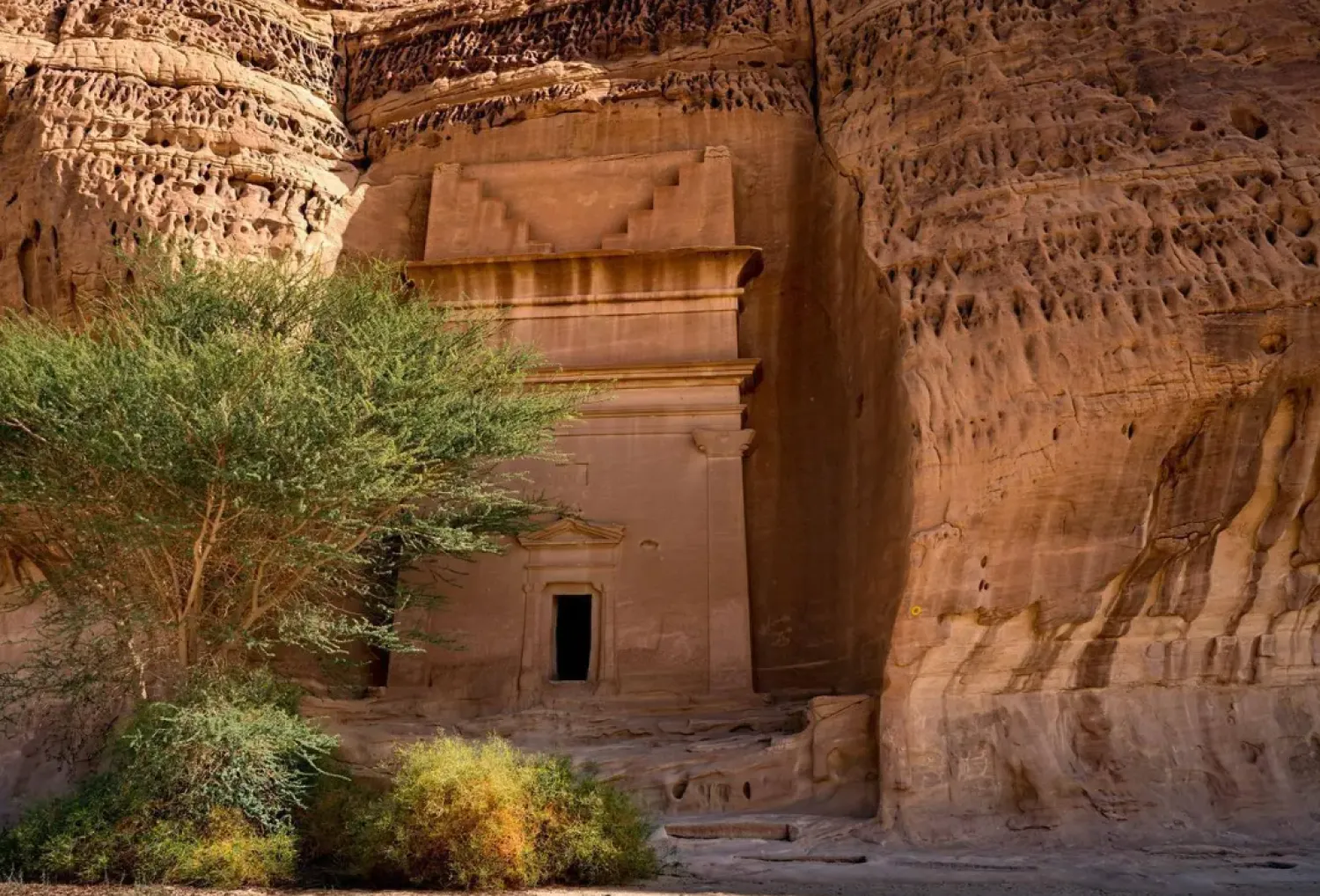
Running from January 16 to February 28, the exhibition will feature an exceptional selection of specially commissioned artworks, ranging from large-scale installations and sound pieces that stretch across and beneath the desert landscape, to kinetic works and immersive interactive experiences.

The showcase reflects a deep connection to AlUla’s unique environment, its dramatic natural landscapes, and rich cultural heritage.

Desert X AlUla, the region’s first public art biennial, will feature 11 artists presenting diverse perspectives, materials, and artistic traditions in their large-scale works in its 2026 edition.

The program offers a delightful mix of performances and interactive family activities, alongside dedicated programs that blend sound, movement, storytelling, and play.

Also, the visitor pavilion will host a live music program curated in collaboration with AlUla Music Hub, creating moments where art, nature, and community converge in a shared experience shaped by rhythm and a strong sense of place.

Arts AlUla confirmed that Desert X AlUla 2026 will be open to the public.


Saudi Heritage Commission Announces Discovery of 20 Rock Engravings in Soudah Peaks Project

The newly identified sites feature inscriptions and rock carvings estimated to be between 4,000 and 5,000 years old. (SPA)
TT

Saudi Heritage Commission Announces Discovery of 20 Rock Engravings in Soudah Peaks Project

The newly identified sites feature inscriptions and rock carvings estimated to be between 4,000 and 5,000 years old. (SPA)

Saudi Arabia’s Heritage Commission, in collaboration with Soudah Development, a Public Investment Fund company, announced on Tuesday the discovery of 20 ancient rock art sites within the Soudah Peaks area.

Spanning more than 636.5 square kilometers across Soudah and parts of Rijal Almaa, the project area is now recognized as home to some of the region’s oldest cultural landmarks. The newly identified sites feature inscriptions and rock carvings estimated to be between 4,000 and 5,000 years old, offering valuable insights into the region’s rich history.

The findings include Thamudic inscriptions, along with vivid depictions of ibex, hyenas, and ostriches, as well as scenes of hunters, dancers, palm trees, and weapons, reflecting the environmental and social practices of the ancient communities that once inhabited the area.

The survey forms part of a memorandum of understanding signed between the Heritage Commission and Soudah Development. Conducted in four scientific phases, the initiative began with data collection and site analysis, concluding with the documentation and classification of high-value archaeological sites in preparation for future development and preservation efforts.

Soudah Development remains committed to protecting and promoting the natural and cultural heritage of the project area. The company continues to work towards creating an integrated cultural and tourism experience that reflects the authenticity and historical richness of the region, in line with its vision to transform Soudah Peaks into a premier luxury mountain destination rooted in heritage.


Ancient Rome Meets Modern Technology as Tourists Visit Restored, Frescoed Home via Livestream Tours

 Colosseum Archeological Park guide Valentina uses a head-mounted device to livestream a guided tour for the press of the newly-restored underground House of Griffins, dated between the II and I century B.C., on the Palatine Hill next to the Colosseum, in Rome, Tuesday, Jan. 13, 2026. (AP)
Colosseum Archeological Park guide Valentina uses a head-mounted device to livestream a guided tour for the press of the newly-restored underground House of Griffins, dated between the II and I century B.C., on the Palatine Hill next to the Colosseum, in Rome, Tuesday, Jan. 13, 2026. (AP)
TT

Ancient Rome Meets Modern Technology as Tourists Visit Restored, Frescoed Home via Livestream Tours

 Colosseum Archeological Park guide Valentina uses a head-mounted device to livestream a guided tour for the press of the newly-restored underground House of Griffins, dated between the II and I century B.C., on the Palatine Hill next to the Colosseum, in Rome, Tuesday, Jan. 13, 2026. (AP)
Colosseum Archeological Park guide Valentina uses a head-mounted device to livestream a guided tour for the press of the newly-restored underground House of Griffins, dated between the II and I century B.C., on the Palatine Hill next to the Colosseum, in Rome, Tuesday, Jan. 13, 2026. (AP)

One of the best-preserved ancient Roman homes on the Palatine Hill is opening to the public for the first time, albeit via a livestreamed tour of its hard-to-reach underground frescoes and mosaics.

The House of the Griffins was first discovered during the excavations in the early 20th century of the Palatine Hill, the verdant hill that rises up from the Roman Forum and dominates views of central Rome today with its striking red brick ruins.

The hill, located just off the Colosseum, was the site of temples and homes of leading citizens during Rome’s Republican era, which is traditionally dated from 509 B.C. to 27 B.C. It became the aristocratic quarter during the Roman Empire that followed, when new palaces were built on top of the older homes.

The House of the Griffins is one of those earlier Republican-era homes, and was hidden to the world underground after the Emperor Domitian built his palace on top of it in the first century A.D.

Now for the first time, the general public can virtually visit the House of the Griffins and its newly restored frescoes, including the decoration that gives the home its name: An arched lunette fresco featuring two griffins — the half-eagle, half-lion mythological creatures.

Visitors won’t actually walk through the home’s intimate rooms, which are only accessible via a perilously steep staircase underground. Rather, visitors above ground will watch as a tour guide wearing a head-mounted smartphone descends into the domus and walks through its rooms, livestreaming the visit and narration.

The live, virtual tour serves multiple purposes: It allows visitors to “see” a domus that, because of its underground location, would otherwise be off-limits. And by limiting the number of people in its rooms, the livestreaming protects the delicate frescoes from too much humidity and carbon dioxide.

Project chief Federica Rinaldi said archaeologists don’t know much about the family who lived there, but said they were clearly well-off. The level of decoration recalls some of the elegant homes of the era in Pompeii: The frescoes feature richly colored faux marble designs, and floor mosaics of three-dimensional cubes.

“Its location at the highest point of the hill, its distribution over several levels that take advantage of the slopes of the Palatine Hill itself, and its preservation make it today an almost textbook reference," she said. “It was certainly a domus of the highest standard.”

Starting on March 3, the livestreamed tours will be held weekly, on Tuesdays, with one in Italian and one in English, though more are foreseen. Groups are limited to a dozen people and require reservations, as well as an additional ticket beyond the typical Colosseum-Palatine Hill entrance fee.

The restoration of the House of the Griffins is one of 10 projects funded by the European Union in the archaeological park and is part of an effort to spread tourists out beyond the must-see Colosseum and Forum, which often get overwhelmed with visitors.

“It’s a great occasion to value the full territory of the park,” said the head of the park, Simone Quilici.