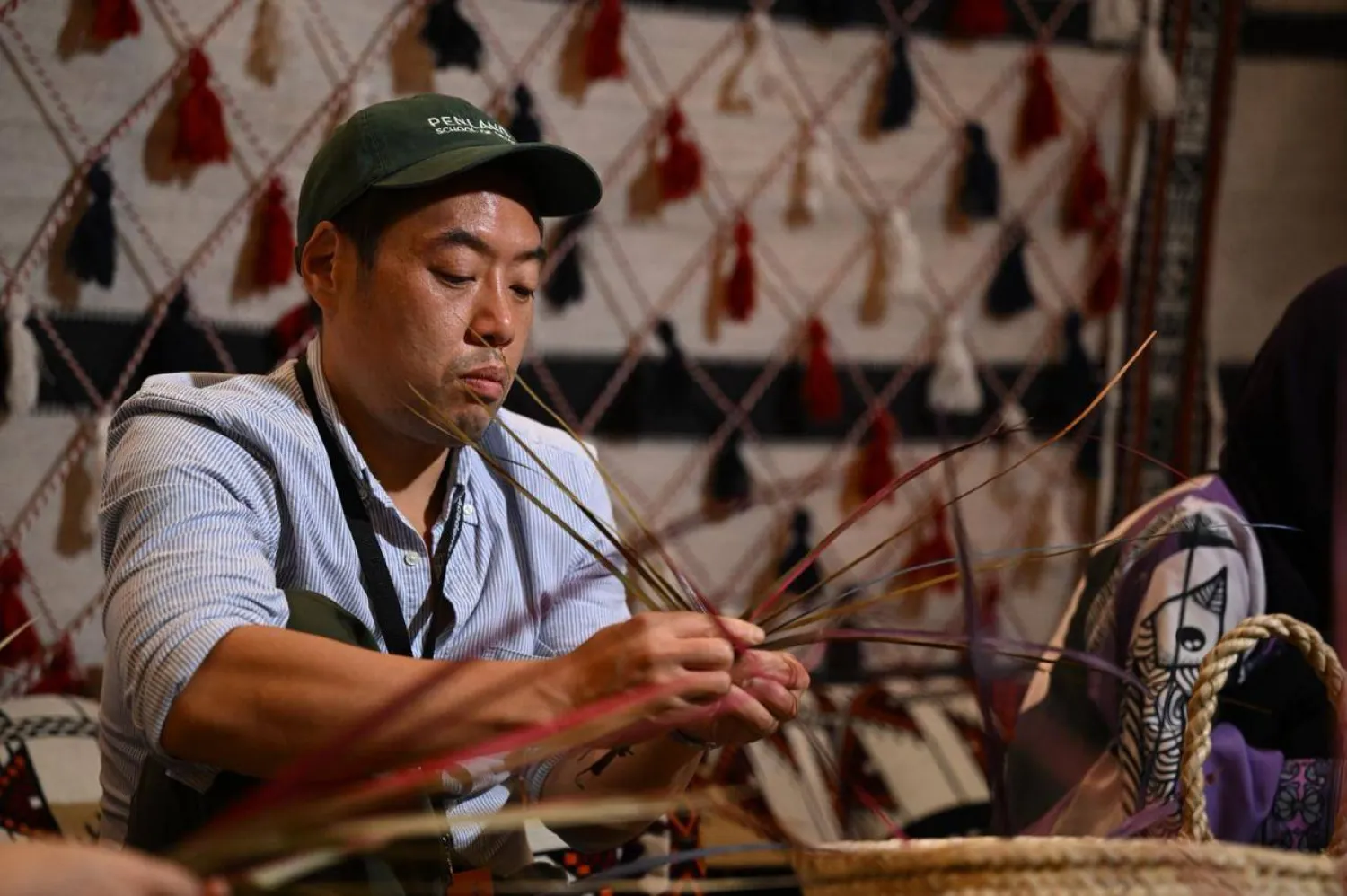

The King Abdulaziz Center for World Culture (Ithra) has concluded its transformative Khoos Residency, a 12-day program that brought together 10 designers, artists, and craftspeople from Saudi Arabia, the UAE, Bahrain, Chile, and South Korea. Held in Dhahran and Al Ahsa—home to the world’s second-largest oasis—the residency explored the traditional craft of Khoos, or palm frond weaving, as a medium for cultural exchange and contemporary design.
Guided by renowned architect and designer Abeer Seikaly, the residency unfolded through workshops, field visits, and reflective sessions that invited participants to explore both the natural and symbolic significance of the palm tree. Master artisans, including Masouma Hamdan—whose family has practiced palm weaving for generations—led hands-on sessions in dyeing, weaving, and structural building.
For South Korean sculptor Heechan Kim, the experience was deeply introspective. “Being immersed in the rhythm of the palm—its generosity, texture, and patience—allowed me to see making as both an act of listening and an act of thinking,” he shared. “Working alongside Masouma, I felt the power of shared silence—how understanding can flow through the movement of hands rather than words.”
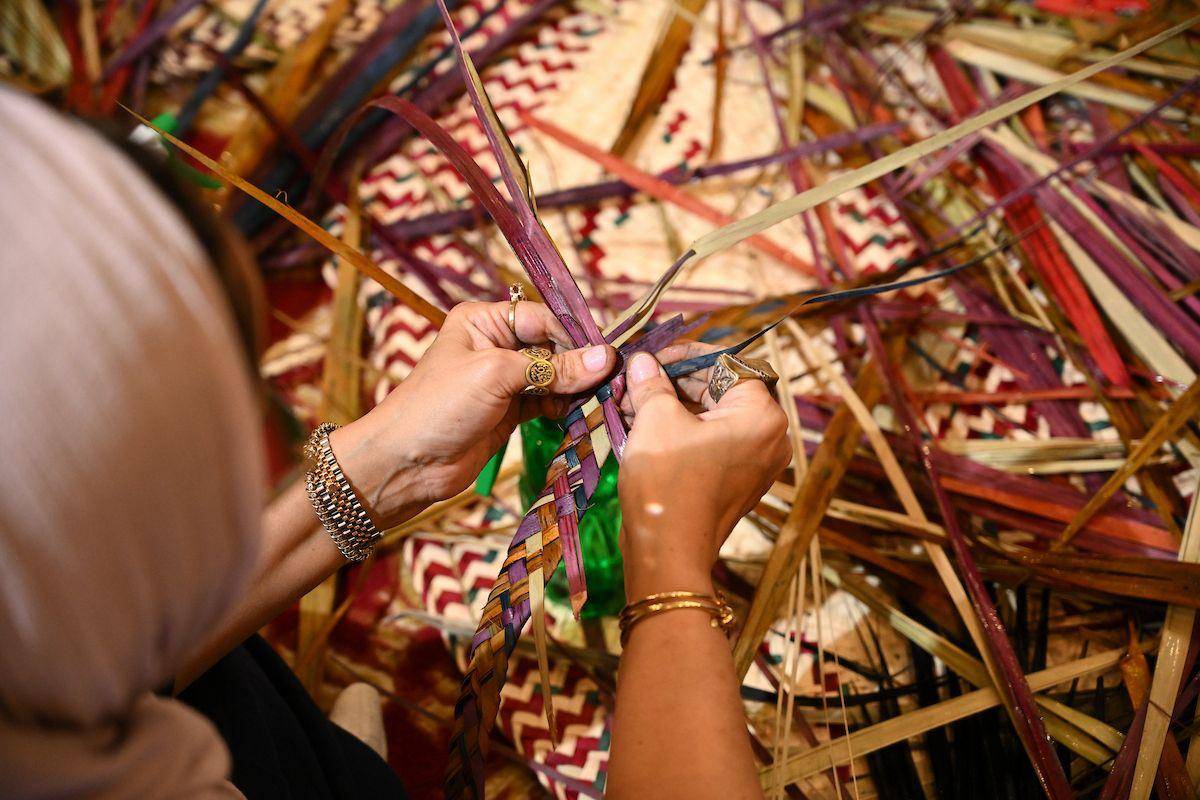
This sentiment resonated throughout the residency. Artists experimented with palm fronds as sculptural forms, while designers explored eco-printing, typography, and architecture. Saudi participant Bashaer Hawsawi reflected, “The craft dissolves barriers between cultures and calls on everyone to speak a shared language—the language of the hand, of patience, and of memory.”
Workshops such as The Mudhif as Embodiment by Iraqi architect Ola Znad, Palmscapes by Saudi artist Jana Malaikah, and Refarming Craft in Lifestyle by Abdurahman Alabed, founder of Qormuz, highlighted the intersection of palm weaving with architecture, fashion, and ecological design. These sessions revealed the palm’s story as a shared narrative across desert landscapes—from Mesopotamia to Morocco, and the Arabian Gulf to Latin America.
The residency’s second phase took participants to Al Ahsa, a UNESCO World Heritage Site, where they engaged with the environment that has nurtured palm weaving for centuries. Visits to Ibrahim Castle, Bayt Al Bay’ah, and Souq Al Qaisaria offered insights into the social and architectural lineage of the craft.
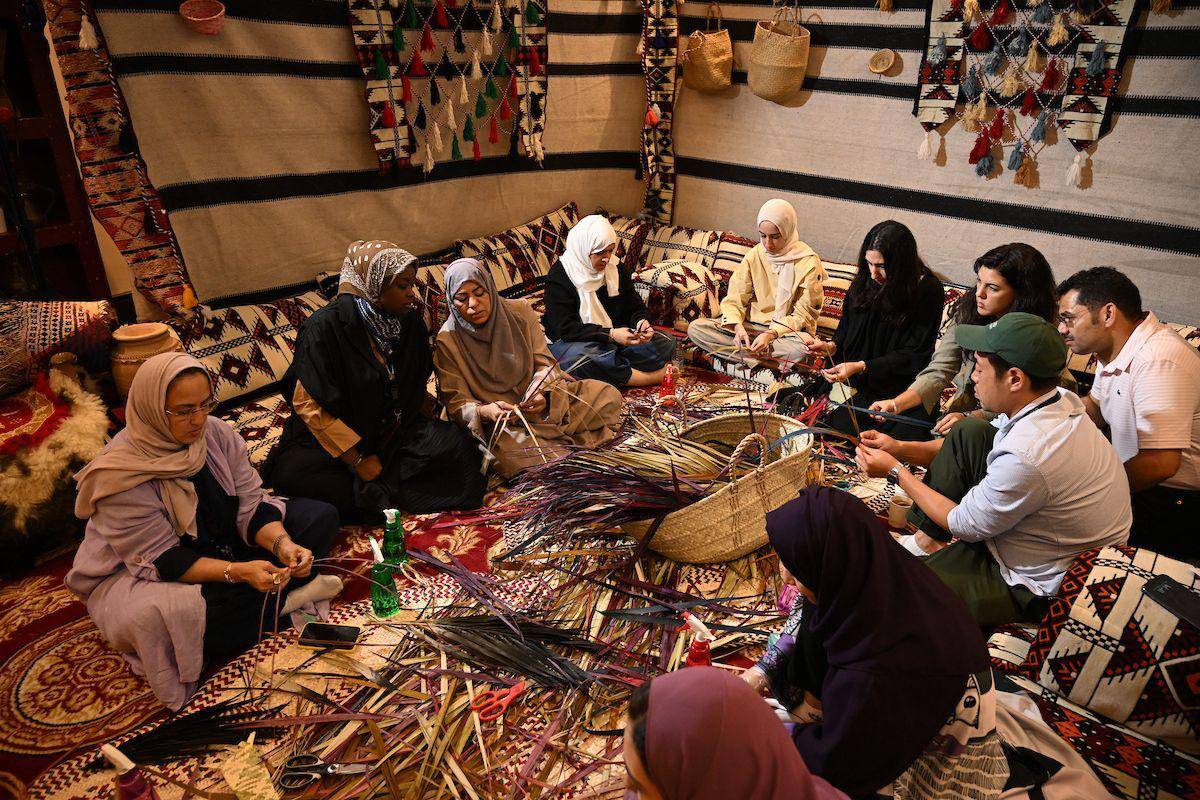
“The diversity of voices we encountered—designers, philosophers, and even farmers—was incredibly impactful,” said Kim. “Experiencing the palm tree through so many perspectives made this not just an educational process, but a self-reflective journey as an artist and as a human being.”
As the program concluded, participants developed personal projects—installations, objects, and performances—that embodied their shared experiences. What emerged was not just a renewed appreciation for a traditional craft, but a contemporary dialogue on sustainability, cultural continuity, and the tactile nature of design.
The Khoos Residency proved that craft is a universal language—one that connects people across geography and culture through gestures of care, repetition, and memory.