

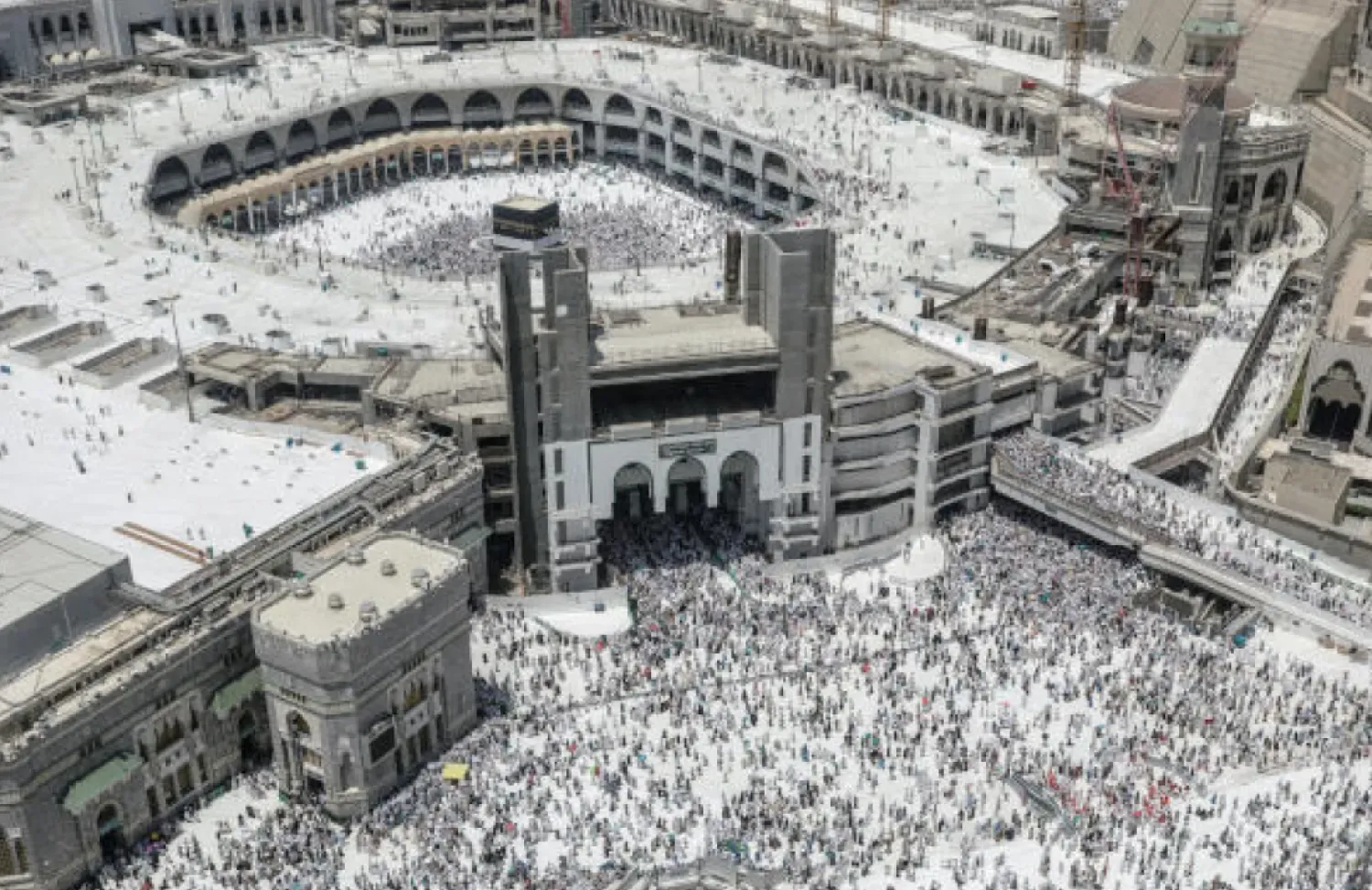

Darah Launches ‘History of Hajj and the Two Holy Mosques’ Forum

Muslim pilgrims walk out after the Friday prayer at the Grand mosque ahead of annual Hajj pilgrimage in the holy city of Makkah, Saudi Arabia August 17, 2018.REUTERS/Zohra Bensemra
TT

Darah Launches ‘History of Hajj and the Two Holy Mosques’ Forum

Muslim pilgrims walk out after the Friday prayer at the Grand mosque ahead of annual Hajj pilgrimage in the holy city of Makkah, Saudi Arabia August 17, 2018.REUTERS/Zohra Bensemra

King Abdulaziz Foundation for Research and Archives (Darah) launched Monday the “History of Hajj and the Two Holy Mosques” forum at the Hajj Conference and Exhibition, organized by the Ministry of Hajj and Umrah in collaboration with the “Pilgrim Experience Program”.

The forum aims to highlight the Kingdom’s historical and organizational efforts in serving the Two Holy Mosques, document the architectural and artistic transformations of the holy sites, and adopt the latest digital methods for studying the history of Hajj, SPA reported.

Secretary-General of the Muslim World League, Chairman of the Council of Muslim Scholars, and member of the Supreme Supervisory Committee for the Hajj and Two Holy Mosques History Project Sheikh Dr. Mohammed bin Abdulkarim Al-Issa delivered a speech underscoring the importance of preserving the history of Hajj and its landmarks. He emphasized the scholarly responsibility to document the Kingdom’s prominent role in serving pilgrims and caring for the Two Holy Mosques throughout history.

For his part, Minister of Hajj and Umrah Tawfig Al-Rabiah highlighted major advancements in the Hajj ecosystem, including administration, organization, and services. He stressed the importance of harnessing historical research and modern technologies to support decision-making, shape the future of Hajj and Umrah, and enhance the quality of services provided to pilgrims.

The forum aims to promote specialized scientific research in this field and translate its outcomes into educational and media content. It also seeks to shed light on the historical evolution of the Hajj in the Islamic world, reflecting the Kingdom’s deep commitment to documenting and preserving the legacy of Hajj and the Two Holy Mosques, two of Islam’s greatest rituals and enduring symbols of civilization.

The forum’s significance lies in its focus on Hajj as a pillar of Islamic identity and a manifestation of unity among Muslims. Through this platform, Darah seeks to transform research outputs into accessible cultural and educational content. Organized as part of the broader project on the history of Hajj and the Two Holy Mosques, the forum aligns with the Foundation’s mission to preserve and document the Kingdom’s history and that of its holiest sites.

It aspires to serve as a national and global reference for chronicling the Hajj ritual and promoting the Kingdom’s cultural and civilizational image, in line with Vision 2030 objectives in culture and tourism, through interactive scientific and digital content that showcases the historical depth of Hajj and the Two Holy Mosques.



Qasr Al-Shariah Mosque: An Architectural and Cultural Landmark

The Qasr Al-Shariah Mosque in Al-Haytham, Al-Kharj Governorate.(SPA)
TT

Qasr Al-Shariah Mosque: An Architectural and Cultural Landmark

The Qasr Al-Shariah Mosque in Al-Haytham, Al-Kharj Governorate.(SPA)

The Prince Mohammed bin Salman Project for Development of Historical Mosques focuses on preserving and restoring historical mosques across Saudi Arabia while enhancing their architectural integrity and highlighting their cultural and religious significance. The initiative aligns with Saudi Vision 2030 goals.

The Qasr Al-Shariah Mosque in Al-Haytham, Al-Kharj Governorate, exemplifies this effort. Closely tied to the governorate's history, it has served as a center for worship and community gatherings for decades, the Saudi Press Agency reported Sunday.

Built in 1338 AH during the reign of King Abdulaziz bin Abdulrahman, the mosque features traditional Najdi architecture, constructed from mud and stone with a roof made of tamarisk wood and palm fronds. Historically, it hosted Quranic classes and religious lessons.

Originally covering 314 square meters and accommodating around 90 worshippers, the mosque has been renovated to expand its area to 371 square meters and increase capacity to 150 worshippers, with the addition of essential facilities.

The project blends traditional building practices with modern techniques to ensure sustainability while preserving each mosque’s architectural identity. It also engages local heritage specialists under the supervision of Saudi engineers to achieve four key objectives: rehabilitating mosques for worship, restoring architectural authenticity, showcasing the Kingdom's civilizational heritage, and enhancing the cultural significance of historical mosques for future generations.


Royal Order Issued on Establishment of Riyadh University of Arts

Custodian of the Two Holy Mosques King Salman bin Abdulaziz. SPA
TT

Royal Order Issued on Establishment of Riyadh University of Arts

Custodian of the Two Holy Mosques King Salman bin Abdulaziz. SPA

A royal order has been issued approving the establishment of the Riyadh University of Arts, an independent educational institution headquartered in Riyadh under the supervision of the Ministry of Culture.

With legal personality and financial and administrative autonomy, the university is dedicated to specialized education in culture and the arts, aiming to cultivate national talent across creative disciplines through advanced academic programs aligned with global best practices and the objectives of Saudi Vision 2030.

The royal order authorizes the Minister of Culture to exercise the powers of the Board of Trustees until it is formally established, ensuring the swift completion of organizational procedures to begin operations.

To enhance its academic mission, the university will seek partnerships with prestigious international institutions to exchange expertise and develop high-level educational programs.

This initiative underscores the leadership's commitment to bolstering the Kingdom’s position as a regional cultural hub and fostering the growth of its creative industries.


Riyadh’s Markets Thrive as Men Prepare Traditional Attire for Eid Al-Fitr

Riyadh’s markets are experiencing a significant surge in activity - SPA
TT

Riyadh’s Markets Thrive as Men Prepare Traditional Attire for Eid Al-Fitr

Riyadh’s markets are experiencing a significant surge in activity - SPA

In preparation for Eid Al-Fitr, Riyadh’s markets are experiencing a significant surge in activity as men follow the Prophetic tradition of adorning themselves for the holiday, creating high demand for new thobes, bishts, and high-quality perfumes such as oud oil and incense, while tailoring shops and specialty retailers work at peak capacity to meet the community’s needs before the Eid morning celebrations, SPA reported.

The classic white thobe remains the most popular choice for Eid morning, often paired with a shemagh and a white bisht to symbolize cultural identity and elegance.

Beyond appearance, these preparations reflect deep-rooted social and religious values, emphasizing gratitude, family visits, and the strengthening of communal ties.