


Beloved Sheepskin-Sack Cheese Bosnia Wants to Protect 

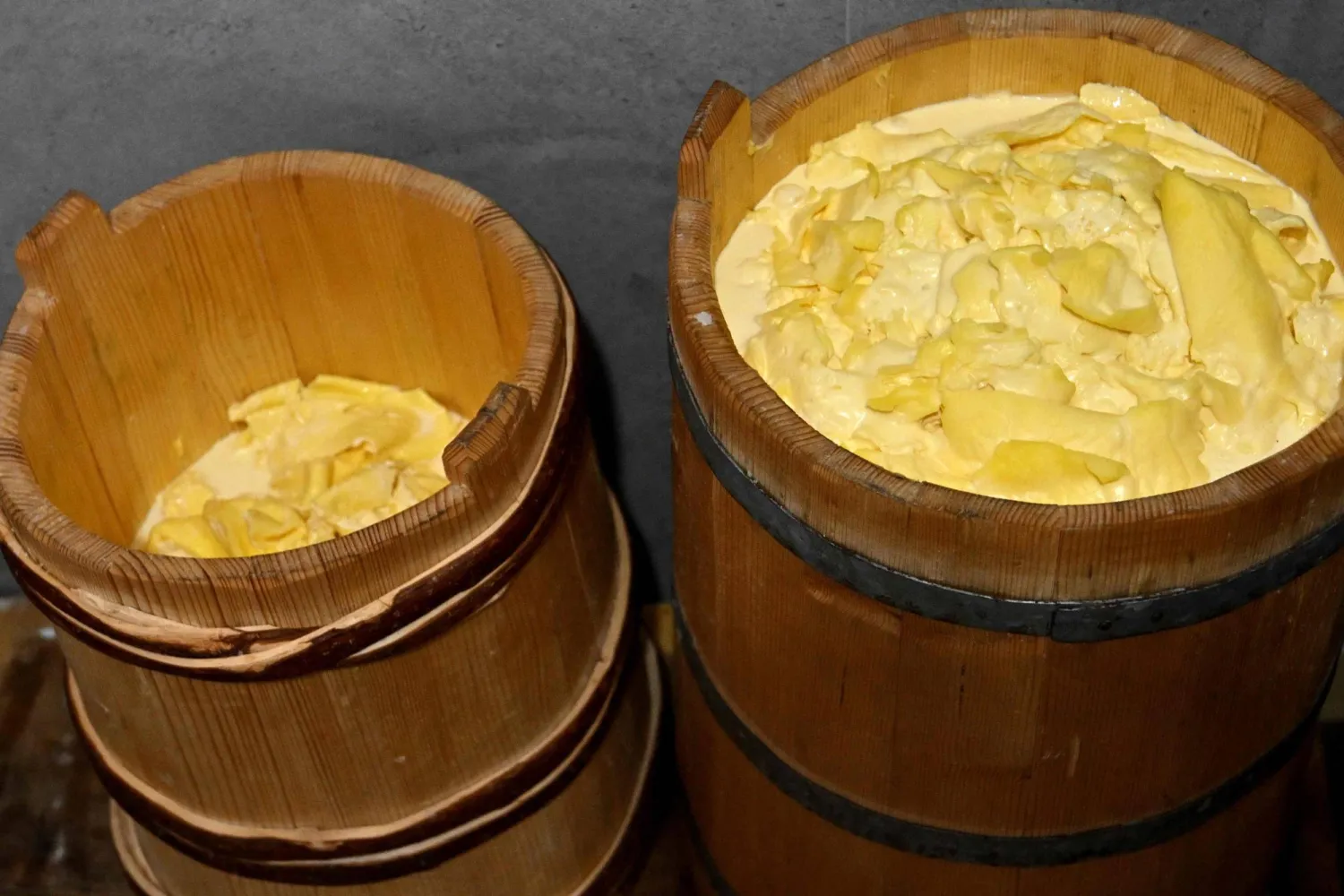
This photograph shows barrels filled with kajmak cheese at the workshop of Branka Buha in the hilly hamlet of Domrke, near the southern Bosnian town of Gacko on November 19, 2025. (AFP)
TT

Beloved Sheepskin-Sack Cheese Bosnia Wants to Protect 

This photograph shows barrels filled with kajmak cheese at the workshop of Branka Buha in the hilly hamlet of Domrke, near the southern Bosnian town of Gacko on November 19, 2025. (AFP)

High in the mountain meadows of southern Bosnia, farmer Branka Buha monitors her cows through a GPS signal on her husband's phone.

But when it comes to making her kajmak cheese, she sticks to the traditional method: ageing it in sheepskin sacks.

"It's a tradition passed down from my mother, from my mother-in-law. Now, I'm passing it on to my daughter-in-law," said 55-year-old Buha.

Her dairy is nestled in the hilly hamlet of Domrke, near Gacko.

At 1,200 meters (3,900 feet), and with lots of grass and wind, Buha says she has everything she needs to produce good "kajmak iz mjesine", a creamy cheese aged in animal hide -- typically sheep or lambskin around here.

Her eight cows freely wander the mountain pastures during the day, returning themselves in the evening to be milked, although one has a GPS collar in case they get lost or run into bears or wolves.

Her kajmak is a slightly crumblier, more flavorful cousin of the creamy "kaymak" people across the Balkans and Türkiye love to spread on their bread.

After milking her cows, Buha cooks the milk in a large pot before pouring it into enamel bowls or wooden containers.

"A day or two later, depending on the ambient temperature, we skim off the milk skin that forms on the surface of the milk," she said, scooping up a thick yellow layer with a spoon.

Salt is added and then it is left to rest in a wooden barrel for around 20 days, then wrapped in animal hide.

"The longer it stays in the skin, the more it matures and acquires the specific flavor of the skin. That is what makes it unique," Buha said.

Buha also makes the sheepskin bags. Once the skin is shaved off, the hide is dried over smoke.

When dry, "we wash it carefully and stuff it with kajmak, which is then aged in the skin for up to a month. But it can even stay there for a year," she added.

"It is an ancient preservation method. When there was no electricity or other modern means of preservation, the skin was used to preserve this cheese," said Dragana Milovic, head of the Gacko Kajmak Producers Association.

Much stronger than the traditional kajmak sold in local shops and markets, the cheese has notes of smoke and lamb that set it apart.

With her husband, Buha produces between 500 and 600 kilos (1,100 and 1,325 pounds) of kajmak each year.

They sell their cheese at their farm or to restaurants, where it is usually served with meat dishes.

It is also eaten on toast with honey, or added to "cicvara", a traditional cornmeal dish not unlike polenta.

In 2024, kajmak was granted national Protected Designation of Origin (PDO) status, raising its price per kilo from 40 convertible marks ($24) to 50 ($30).

This means the cheese can be made only with milk from cows that graze in the Gacko region. The cows must also be fed only with locally harvested hay.

The Gacko Kajmak Producers Association recently applied for PDO status at the EU level, said Milovic.

As a formal candidate for membership of the 27-nation bloc, Bosnia-Herzegovina has the right to protect its products there.

But with only small amounts of the sheepskin-sack kajmak being produced, it is more a matter of "prestige" than as an export earner, Milovic added.


Najran: Saudi Arabia’s Southern Tourist and Cultural Gem

Najran is an exceptional tourist destination, where stunning landscapes meet a rich historical heritage. (SPA)
TT

Najran: Saudi Arabia’s Southern Tourist and Cultural Gem

Najran is an exceptional tourist destination, where stunning landscapes meet a rich historical heritage. (SPA)

Najran is an exceptional tourist destination, where stunning landscapes meet a rich historical heritage. Visitors can experience towering mountains, vast plains, and enchanting deserts that leave a lasting impression.

The region has undergone significant development to enhance its urban landscape and quality of life. Approximately 25 projects, valued at over SAR711 million, have been completed or are underway, including stormwater drainage improvements and upgraded infrastructure, said the Saudi Press Agency.

These initiatives are part of a broader plan to strengthen road networks and improve the city’s readiness to meet environmental and service challenges, in line with Saudi Vision 2030.

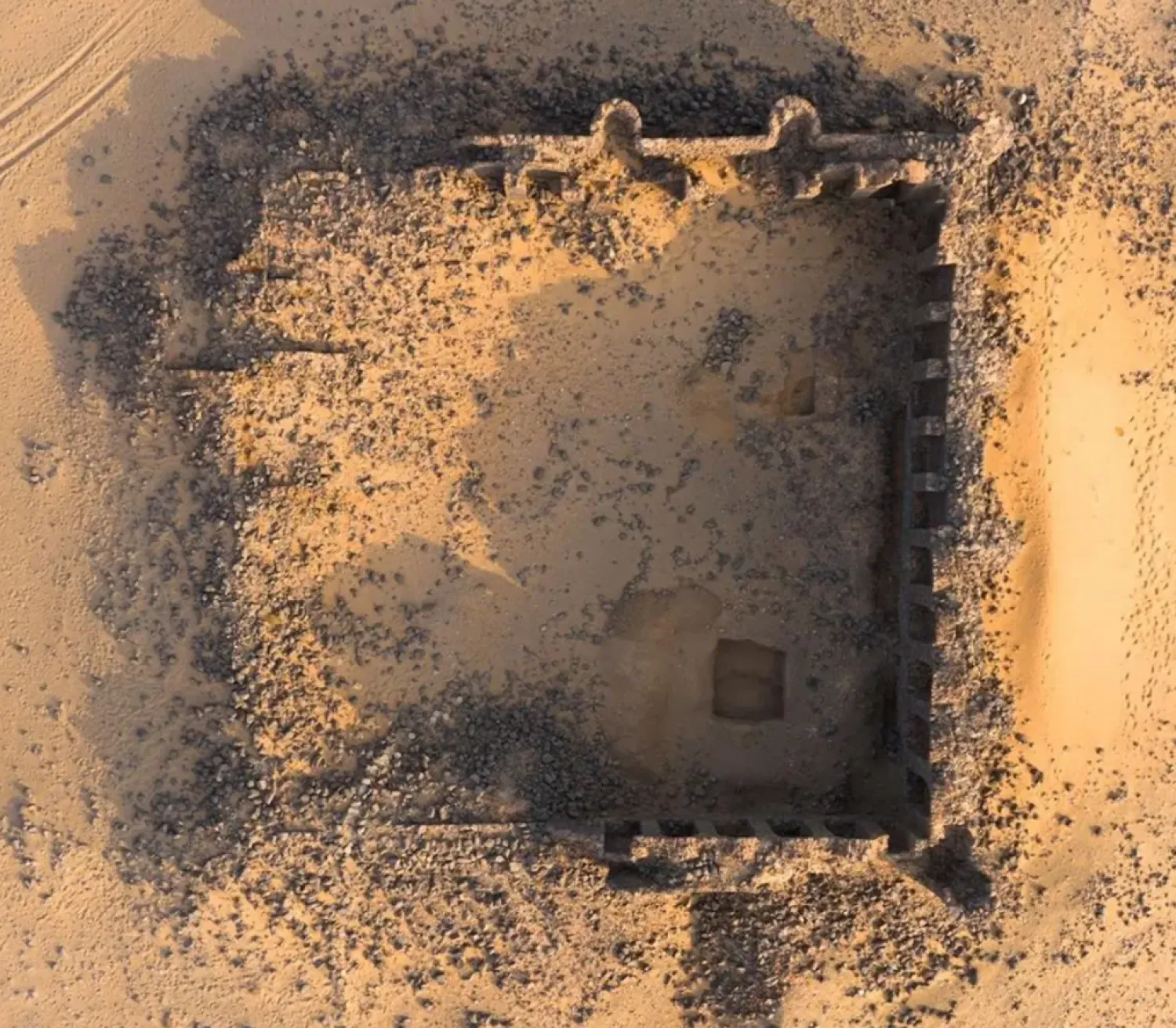
Najran is home to numerous archaeological sites that reflect its storied past. The historic city of Al-Ukhdood, dating back to the 4th and 5th centuries AD, serves today as a living, open-air museum attracting visitors from across the Kingdom and abroad.

The Hima Cultural Area, a UNESCO World Heritage Site, features over 5,500 rock carvings spanning different historical periods, offering valuable insights into the wildlife and culture of the Arabian Peninsula.

Najran also stands out as one of Saudi Arabia’s most important agricultural areas, with its unique climate allowing year-round cultivation of high-quality fruits and vegetables across more than 5,000 farms covering 27,000 hectares.

Its strategic location, natural resources, and advanced infrastructure make it a prime investment destination in southern Saudi Arabia. The region hosts around 90 factories and is rich in mineral resources, including gold, copper, iron, and copper-zinc reserves spanning over 70 square kilometers.

Foreign tourists have praised Najran for its seamless blend of history and natural beauty, noting that every corner tells the story of this ancient land and reflects a rich cultural heritage, making it a destination truly worth exploring.


Holy Quran Museum in Makkah Preserves, Showcases Rare Manuscripts

 The Museum of the Holy Quran is located in the Hira Cultural District of Makkah - File Photo/ SPA
The Museum of the Holy Quran is located in the Hira Cultural District of Makkah - File Photo/ SPA
TT

Holy Quran Museum in Makkah Preserves, Showcases Rare Manuscripts

 The Museum of the Holy Quran is located in the Hira Cultural District of Makkah - File Photo/ SPA
The Museum of the Holy Quran is located in the Hira Cultural District of Makkah - File Photo/ SPA

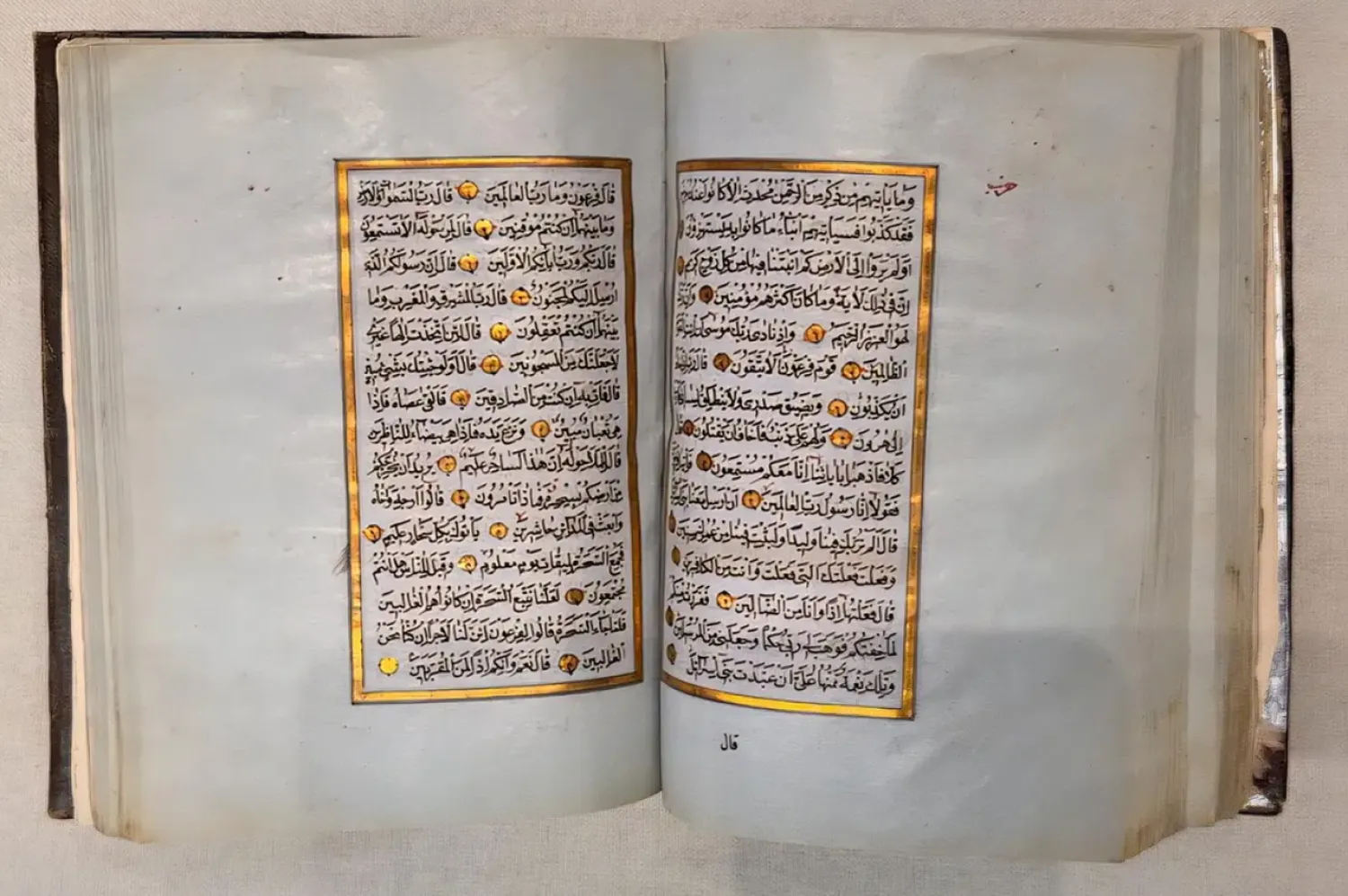
The Holy Quran Museum in the Hira Cultural District in Makkah continues to play a leading role in preserving and exhibiting rare copies of the Holy Quran, standing as a cultural landmark that reflects the revered status of the Quran in the conscience of the Islamic nation and documents the care devoted to it across different historical eras, SPA reported.

Through its collections, the museum highlights the value of Quranic endowments, which formed one of the most significant features of Islamic civilization and contributed to safeguarding Quran manuscripts, disseminating them, facilitating their recitation, and supporting their service in mosques and centers of learning.

The museum houses one endowed copy of the Holy Quran printed in 30 pages, endowed by Prince Abdulaziz bin Mishaal bin Abdulaziz.

This initiative reflects a deep connection to the Holy Quran and embodies the continuity of the charitable endowment tradition dedicated to serving and caring for the Holy Quran.

The display of this manuscript aligns with the museum’s mission to introduce visitors to the history of the Holy Quran, highlight the efforts of individuals and institutions to preserve and serve it, and raise awareness of the cultural and humanitarian significance of Quranic endowments.

The museum offers a comprehensive cultural and knowledge-based experience that connects visitors to the history and stature of the Holy Quran, starting from Makkah, the birthplace of revelation and the direction of prayer for Muslims.


Saudi Arabia: Craft Exhibition at Kidana Track in Makkah Draws over 32,000 Visitors

As part of the Year of Handicrafts 2025 and the Makkah winter season activities, the exhibition featured around 20 artisans. SPA
TT

Saudi Arabia: Craft Exhibition at Kidana Track in Makkah Draws over 32,000 Visitors

As part of the Year of Handicrafts 2025 and the Makkah winter season activities, the exhibition featured around 20 artisans. SPA

Kidana Development Company concluded its craft exhibition, held in cooperation with the Makkah Chamber at Kidana Track in Muzdalifah from December 17 to 20, where traditional crafts highlighting the authenticity of Saudi identity drew 32,362 visitors.

As part of the Year of Handicrafts 2025 and the Makkah winter season activities, the exhibition featured around 20 artisans showcasing handmade products such as embroidery, knitting, carving, and pottery.

It aimed to reinforce Saudi identity and promote traditional crafts as vital to cultural heritage, fostering values among community members and future generations.

The Kidana Track serves as a comprehensive destination for Makkah residents and visitors, offering various facilities, walking paths, seating areas, and community events promoting sustainability.