


An Archaeologist is Racing to Preserve Sudan's Heritage as War Threatens to Erase Its Cultural Past

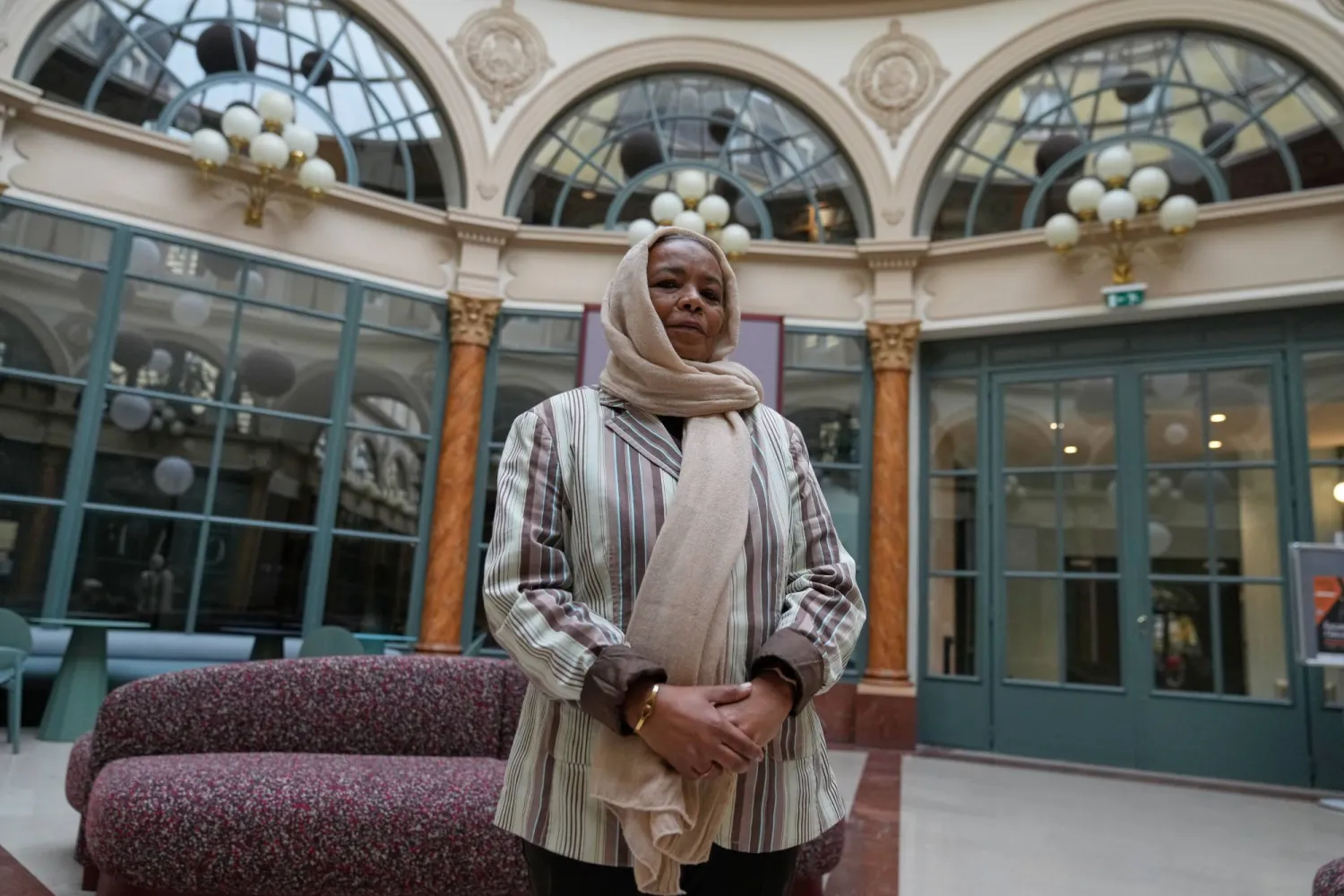
Archaeologist from Sudan's National Museum Dr Shadia Abdrabo, poses in the hall of the French National Institute for Art History (INHA) in Paris, Wednesday, Oct. 29, 2025. (AP Photo/Michel Euler)
TT

An Archaeologist is Racing to Preserve Sudan's Heritage as War Threatens to Erase Its Cultural Past

Archaeologist from Sudan's National Museum Dr Shadia Abdrabo, poses in the hall of the French National Institute for Art History (INHA) in Paris, Wednesday, Oct. 29, 2025. (AP Photo/Michel Euler)

In a dimly lit office in a corner of the French National Institute for Art History, Sudanese archaeologist Shadia Abdrabo studies a photograph of pottery made in her country around 7,000 B.C. She carefully types a description of the Neolithic artifact into a spreadsheet.

As the war between the Rapid Support Forces (RSF) and the Sudanese Armed Forces (SAF) rages on, the curator from Sudan’s National Corporation for Antiquities and Museums (NCAM) is on a yearlong research grant in France with one mission: to build an online database of the African nation’s archaeological sites, museum collections and historical archives.

Soon after the war in Sudan started, in April 2023, museums were looted and destroyed. It’s unclear what exactly went missing, but Abdrabo says her task is to find out — and time is of the essence.

“We have to work fast to secure our collections. We’ve already lost two museums and we don’t want to lose more,” Abdrabo told The Associated Press.

She says two regional museums in El Geneina and Nyala were almost completely destroyed, while in Khartoum, the National Museum — which held an estimated 100,000 objects before the war — was ransacked by militias who posted videos online of their fighters inside the storeroom.

The National Museum had pieces dating back to prehistoric times, including from the Kerma Kingdom and the Napatan era when Kushite kings ruled the region as well as from the Meroitic civilization that built Sudan’s pyramids. Other galleries displayed later Christian and Islamic objects.

Among its most valuable items were mummies dating back to 2,500 B.C., some of the oldest and most archaeologically significant in the world as well as royal Kushite treasures.

‘Entire archives vanished’ UNESCO raised the alarm on reports of plundering saying the “threat to culture appears to have reached an unprecedented level.”

“My heart was broken, you know? It’s not just objects that we lost. We lost research, we lost studies, we lost many things,” Abdrabo said.

Last month, hundreds of people were left dead and more than 80,000 others forced into displacement after the capture of North Darfur’s capital, El Fasher, by the RSF. For Abdrabo the work is deeply personal.

“I’m from Nubia, from the north, an area filled with monuments, archaeological sites and ancient life,” she said. The region was home to some of the world’s earliest kingdoms that rivaled ancient Egypt in power and wealth.

She was working at the national museum in the capital Khartoum when the war started.

“We thought it would finish soon ... but then life started getting really difficult: not just the bombing, but there was no electricity, no water,” she said. With her three sisters, she fled north — first to Atbara, then to Abri, and eventually to Port Sudan.

During that time, Abdrabo and her NCAM colleagues worked tirelessly to try and protect Sudan’s 11 museums and sites — some designated with UNESCO World Heritage status — moving pieces to safe rooms and secret locations.

But efforts to protect Sudan’s art were too slow, said Ali Nour, a Sudanese cultural heritage advocate.

“While applications were being drafted, sites were being emptied. While risk assessments were reviewed, entire archives vanished,” Nour wrote in an article for the UK-based International Institute for Conservation of Historic and Artistic Works.

Urgent recovery efforts UNESCO said it carried out inventories, trained police and customs officers to recognize stolen antiquities, while appealing to collectors “to refrain from acquiring or taking part in the import, export or transfer of ownership of cultural property from Sudan.”

But, unlike similar cultural emergencies that followed wars in Afghanistan and Iraq, "Sudan has not benefited from strong media coverage denouncing the degradation and plundering of its cultural heritage,'' according to researcher Meryam Amarir. ‘’This lack of visibility has reduced the international response.”

Ancient Sudan was connected, through trade and military activity, with Egypt, the Mediterranean world and Mesopotamia, and was the source of much of the gold available in the region, according to Geoff Emberling of the Kelsey Museum of Archaeology at the University of Michigan.

“If we’re interested in these ancient cultures, then we have to be interested in Sudan,” said Emberling, who is involved with the recently established Sudan Cultural Emergency Recovery Fund.

The task force, requested by NCAM, aims to unite institutions, scholars, and donors around the urgent recovery efforts of Sudan’s heritage.

“What Shadia Abdrabo is doing is urgently essential — establishing what’s missing,” Emberling told the AP. “And with a team of about 15 Sudanese now working in the museum in Khartoum to clean and restore what has been damaged, they will soon be able to compare what remains there now.”

‘I cry when I talk about this’ Abdrabo has funding until April 2026 to finish compiling the data and building a platform, but she worries it won’t be enough time.

The work is painstaking. Some datasets arrive as spreadsheets, others as handwritten inventories or photographs taken decades ago. Colleagues at the Louvre, the British Museum and others lend support but she works mostly alone.

“I’m trying to finish this database but it’s a lot. I’ve done about 20% of the work. Just for the national museums, I’ve recorded 1,080 objects so far ... and then I have to do other museums, sites, archives... I need to add pictures, ID numbers, coordinates ...”

As the winter settles over Paris, the crisis in Sudan drives Abdrabo.

“We are working on tracking what has been looted,” she said. “I cry when I talk about this. My only goal and message is to bring back as much as possible, to do as much as I can for Sudan, but it’s not easy for us.”

It’s not just the war itself, but the consequences of it that could affect the country’s heritage: “militias, people displaced... it’s not safe for the art to be in unsecure locations,” she added.

“Until the war finishes we just don’t know what is going to happen.”


Najran: Saudi Arabia’s Southern Tourist and Cultural Gem

Najran is an exceptional tourist destination, where stunning landscapes meet a rich historical heritage. (SPA)
TT

Najran: Saudi Arabia’s Southern Tourist and Cultural Gem

Najran is an exceptional tourist destination, where stunning landscapes meet a rich historical heritage. (SPA)

Najran is an exceptional tourist destination, where stunning landscapes meet a rich historical heritage. Visitors can experience towering mountains, vast plains, and enchanting deserts that leave a lasting impression.

The region has undergone significant development to enhance its urban landscape and quality of life. Approximately 25 projects, valued at over SAR711 million, have been completed or are underway, including stormwater drainage improvements and upgraded infrastructure, said the Saudi Press Agency.

These initiatives are part of a broader plan to strengthen road networks and improve the city’s readiness to meet environmental and service challenges, in line with Saudi Vision 2030.

Najran is home to numerous archaeological sites that reflect its storied past. The historic city of Al-Ukhdood, dating back to the 4th and 5th centuries AD, serves today as a living, open-air museum attracting visitors from across the Kingdom and abroad.

The Hima Cultural Area, a UNESCO World Heritage Site, features over 5,500 rock carvings spanning different historical periods, offering valuable insights into the wildlife and culture of the Arabian Peninsula.

Najran also stands out as one of Saudi Arabia’s most important agricultural areas, with its unique climate allowing year-round cultivation of high-quality fruits and vegetables across more than 5,000 farms covering 27,000 hectares.

Its strategic location, natural resources, and advanced infrastructure make it a prime investment destination in southern Saudi Arabia. The region hosts around 90 factories and is rich in mineral resources, including gold, copper, iron, and copper-zinc reserves spanning over 70 square kilometers.

Foreign tourists have praised Najran for its seamless blend of history and natural beauty, noting that every corner tells the story of this ancient land and reflects a rich cultural heritage, making it a destination truly worth exploring.


Holy Quran Museum in Makkah Preserves, Showcases Rare Manuscripts

 The Museum of the Holy Quran is located in the Hira Cultural District of Makkah - File Photo/ SPA
The Museum of the Holy Quran is located in the Hira Cultural District of Makkah - File Photo/ SPA
TT

Holy Quran Museum in Makkah Preserves, Showcases Rare Manuscripts

 The Museum of the Holy Quran is located in the Hira Cultural District of Makkah - File Photo/ SPA
The Museum of the Holy Quran is located in the Hira Cultural District of Makkah - File Photo/ SPA

The Holy Quran Museum in the Hira Cultural District in Makkah continues to play a leading role in preserving and exhibiting rare copies of the Holy Quran, standing as a cultural landmark that reflects the revered status of the Quran in the conscience of the Islamic nation and documents the care devoted to it across different historical eras, SPA reported.

Through its collections, the museum highlights the value of Quranic endowments, which formed one of the most significant features of Islamic civilization and contributed to safeguarding Quran manuscripts, disseminating them, facilitating their recitation, and supporting their service in mosques and centers of learning.

The museum houses one endowed copy of the Holy Quran printed in 30 pages, endowed by Prince Abdulaziz bin Mishaal bin Abdulaziz.

This initiative reflects a deep connection to the Holy Quran and embodies the continuity of the charitable endowment tradition dedicated to serving and caring for the Holy Quran.

The display of this manuscript aligns with the museum’s mission to introduce visitors to the history of the Holy Quran, highlight the efforts of individuals and institutions to preserve and serve it, and raise awareness of the cultural and humanitarian significance of Quranic endowments.

The museum offers a comprehensive cultural and knowledge-based experience that connects visitors to the history and stature of the Holy Quran, starting from Makkah, the birthplace of revelation and the direction of prayer for Muslims.


Saudi Arabia: Craft Exhibition at Kidana Track in Makkah Draws over 32,000 Visitors

As part of the Year of Handicrafts 2025 and the Makkah winter season activities, the exhibition featured around 20 artisans. SPA
TT

Saudi Arabia: Craft Exhibition at Kidana Track in Makkah Draws over 32,000 Visitors

As part of the Year of Handicrafts 2025 and the Makkah winter season activities, the exhibition featured around 20 artisans. SPA

Kidana Development Company concluded its craft exhibition, held in cooperation with the Makkah Chamber at Kidana Track in Muzdalifah from December 17 to 20, where traditional crafts highlighting the authenticity of Saudi identity drew 32,362 visitors.

As part of the Year of Handicrafts 2025 and the Makkah winter season activities, the exhibition featured around 20 artisans showcasing handmade products such as embroidery, knitting, carving, and pottery.

It aimed to reinforce Saudi identity and promote traditional crafts as vital to cultural heritage, fostering values among community members and future generations.

The Kidana Track serves as a comprehensive destination for Makkah residents and visitors, offering various facilities, walking paths, seating areas, and community events promoting sustainability.
