


Contemporary Art Museum in AlUla and Centre Pompidou Announce ‘Arduna’ Exhibition This February

The exhibition will feature more than 80 significant artworks by artists from Saudi Arabia, the Middle East and North Africa, and around the world. (SPA)
TT

Contemporary Art Museum in AlUla and Centre Pompidou Announce ‘Arduna’ Exhibition This February

The exhibition will feature more than 80 significant artworks by artists from Saudi Arabia, the Middle East and North Africa, and around the world. (SPA)

The exhibition Arduna will welcome visitors to the fifth edition of the AlUla Arts Festival from February 1 to April 15.

Presented by Arts AlUla and organized through a joint curatorial collaboration with Centre Pompidou, with the support of the French Agency for AlUla Development (AFALULA), the exhibition features more than 80 significant artworks by artists from Saudi Arabia, the Middle East and North Africa, and around the world.

Arduna offers visitors an early insight into the artistic vision of the Contemporary Art Museum in AlUla, envisioned as a global institution drawing inspiration from AlUla’s location and heritage as an ancient cultural oasis.

The exhibition is based on works drawn from a growing collection of the Royal Commission for AlUla, alongside important pieces from the collection of the Musée National d’Art Moderne at Centre Pompidou. The exhibition is overseen by co-curator Candida Pestana, with associate curator Ftoon AlThaedi from the Royal Commission for AlUla, and curator Anna Hiddleston with associate curator Noémie Fillon from Centre Pompidou.

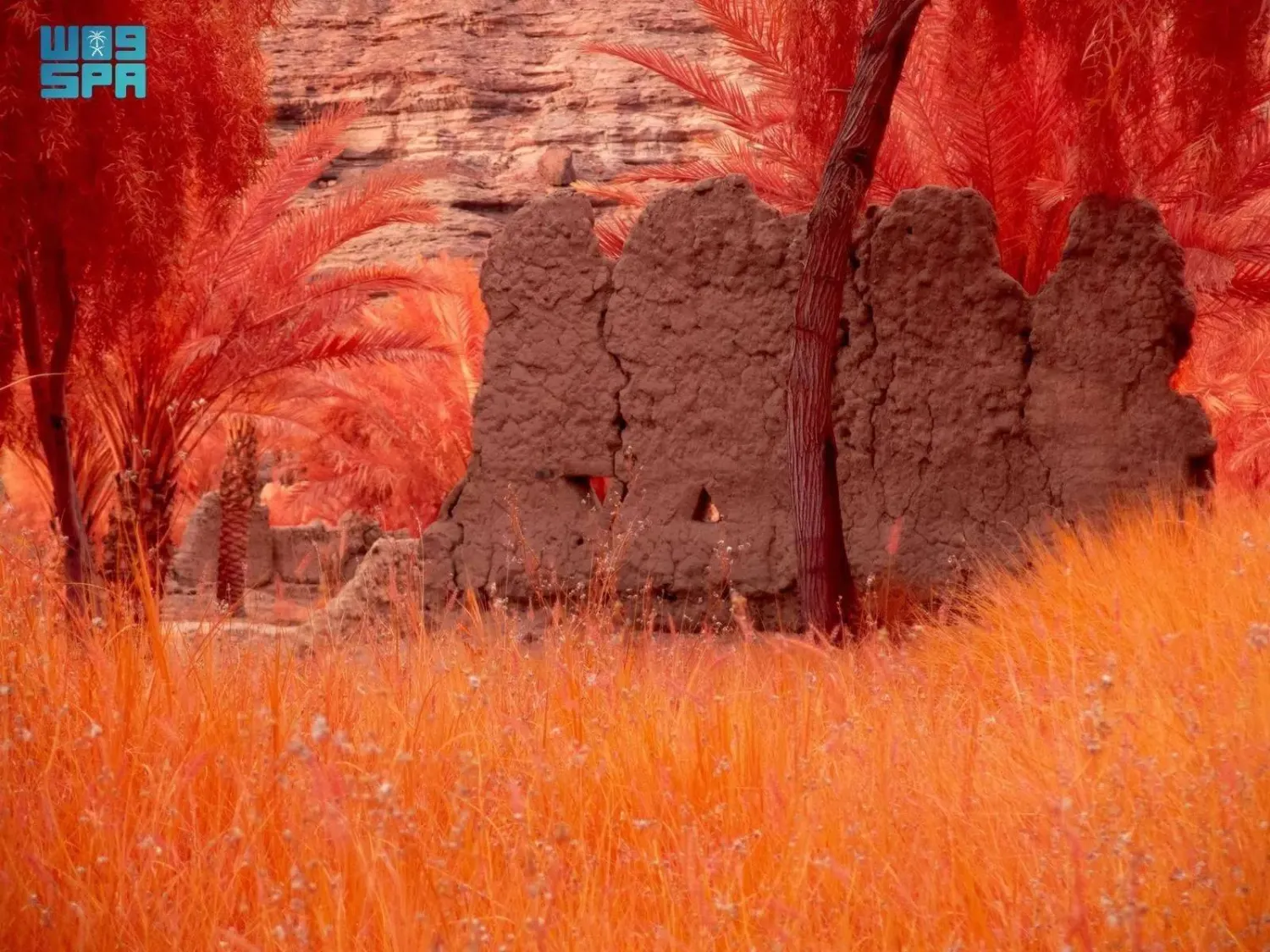
As an oasis located along the ancient Incense Trade Routes that connected India and the Arabian Gulf with the Levant and Europe, AlUla served as a safe haven for passing traders, offering protection and tranquility. It was a place where merchants entrusted their goods during their absence, and a space for rest, contemplation, and reflection - a living green garden set within the vast desert.

The exhibition takes the image of the garden as its starting point, drawing inspiration from the site of AlUla to explore how modern and contemporary artists examine the evolving relationship between humanity, nature, and the land.

Featuring more than 80 artworks across multiple disciplines, the exhibition brings together pioneers of modern art such as Pablo Picasso, David Hockney, Joan Mitchell, and Wassily Kandinsky, alongside leading contemporary artists including Saudi artists Ayman Zedani and Manal AlDowayan, as well as artists from the Arab world such as Imran Qureshi, Samia Halaby, and Etel Adnan.

The exhibition is divided into six chapters that explore the multiple manifestations of nature - real and imagined - through a journey that moves from gardens and orchards to deserts and their cosmic reflections.

Through the presentation of impactful and inspiring artworks, the exhibition highlights key global challenges, including the Anthropocene era, the threat of climate change, human displacement, and expanding urbanization.

As artists seek to unpack humanity’s complex and often strained relationship with the environment, the exhibition may be seen as an invitation to reimagine new ways of coexistence among all forms of life.

Arduna also presents a selection of newly commissioned artworks by the Contemporary Art Museum in AlUla, developed through close engagement with the region’s unique natural environment and rich cultural contexts. These include new works by Saudi artist Ayman Zedani and Lebanese artist Tarek Atoui, produced as part of the AlUla Artists Residency Program.

The exhibition further highlights new works that collectively reflect the museum’s central role in fostering artistic practices rooted in dynamic interaction between artists, curators, and local communities, contributing to the development of AlUla’s distinctive creative identity.

Director of Arts and Creative Industries at the Royal Commission for AlUla Hamad Alhomiedan stated that Arduna represents a pivotal moment in the journey of the AlUla Arts Festival and embodies Arts AlUla’s aspiration to position itself at the heart of global discussions on art, culture, and the environment.

He noted that the exhibition brings together exceptional works from Saudi Arabia, the region, and the world, engaging audiences through themes that reflect the collective relationship with nature and land.

Arduna presents bold artistic propositions and offers artists meaningful opportunities to engage with AlUla’s unique heritage and breathtaking landscapes, he added, describing the exhibition as an open celebration of creativity and a foundational step toward establishing AlUla as a sustainable hub for cultural innovation and artistic excellence.

President of Centre Pompidou Laurent Le Bon said the exhibition represents an important step in the partnership with the Royal Commission for AlUla, allowing the public to experience the first outcomes of Centre Pompidou’s strategic advisory role for the forthcoming Contemporary Art Museum in AlUla.

He underlined the shared mission of promoting cultural heritage and fostering long-term cross-cultural dialogue, expressing his anticipation of welcoming visitors, particularly young audiences, to explore this unique exhibition and the diverse artistic landscapes of Saudi Arabia, France, and beyond.

Arduna, which serves as a preparatory step toward the opening of the Contemporary Art Museum in AlUla, will be staged in the museum’s experimental pre-opening gallery spaces and will be accessible through ticketed entry.


Danish Warship Sunk by Nelson’s British Fleet Discovered After 225 Years

 Morten Johansen, head of maritime archaeology at Denmark's Viking Ship Museum, shows a metal insignia recovered from the wreck of Danish flagship "Dannebroge" that sank during the Battle of Copenhagen in 1801, in Copenhagen, Denmark, Tuesday, March 31, 2026. (AP)
Morten Johansen, head of maritime archaeology at Denmark's Viking Ship Museum, shows a metal insignia recovered from the wreck of Danish flagship "Dannebroge" that sank during the Battle of Copenhagen in 1801, in Copenhagen, Denmark, Tuesday, March 31, 2026. (AP)
TT

Danish Warship Sunk by Nelson’s British Fleet Discovered After 225 Years

 Morten Johansen, head of maritime archaeology at Denmark's Viking Ship Museum, shows a metal insignia recovered from the wreck of Danish flagship "Dannebroge" that sank during the Battle of Copenhagen in 1801, in Copenhagen, Denmark, Tuesday, March 31, 2026. (AP)
Morten Johansen, head of maritime archaeology at Denmark's Viking Ship Museum, shows a metal insignia recovered from the wreck of Danish flagship "Dannebroge" that sank during the Battle of Copenhagen in 1801, in Copenhagen, Denmark, Tuesday, March 31, 2026. (AP)

More than 200 years after being sunk by Adm. Horatio Nelson and the British fleet, a Danish warship has been discovered on the seabed of Copenhagen Harbor by marine archaeologists.

Working in thick sediment and almost zero visibility 15 meters (49 feet) beneath the waves, divers are in a race against time to unearth the 19th-century wreck of the "Dannebroge" before it becomes a construction site in a new housing district being built off the Danish coast.

Denmark’s Viking Ship Museum, which is leading the monthslong underwater excavations, announced its findings on Thursday, 225 years to the day since the Battle of Copenhagen in 1801.

“It’s a big part of the Danish national feeling,” said Morten Johansen, the museum’s head of maritime archaeology.

A great deal has been written about the battle “by very enthusiastic spectators, but we actually don’t know how it was to be onboard a ship being shot to pieces by English warships and some of that story we can probably learn from seeing the wreck,” Johansen said. The Associated Press was the only international outlet given access to the site.

In the Battle of Copenhagen, Nelson and the British fleet attacked and defeated Denmark’s navy as it formed a protective blockade outside the harbor.

Thousands were killed and wounded during the brutal hourslong naval clash, considered one of Nelson’s “great battles.” The intention was to force Denmark out of an alliance of Northern European powers, including Russia, Prussia and Sweden.

At the center of the fighting was the Danish flagship, the Dannebroge, commanded by Commodore Olfert Fischer.

The 48-meter (157-foot) Dannebroge was Nelson’s main target. Cannon fire tore through its upper deck before incendiary shells sparked a fire aboard.

“(It was) a nightmare to be on board one of these ships,” Johansen said. “When a cannonball hits a ship, it’s not the cannonball that does the most damage to the crew, it’s wooden splinters flying everywhere, very much like grenade debris.”

The battle also is believed to have inspired the phrase “to turn a blind eye.” After deciding to ignore a superior’s signal, Nelson, who had lost sight in his right eye, reportedly remarked: “I have only one eye, I have a right to be blind sometimes.”

Nelson eventually offered a truce and a ceasefire was later agreed with Denmark’s Crown Prince Frederik.

The stricken Dannebroge slowly drifted northward and exploded. Records say the sound created a deafening roar across Copenhagen.

Marine archaeologists have discovered two cannons, uniforms, insignia, shoes, bottles and even part of a sailor’s lower jaw, perhaps one of the 19 unaccounted-for crew members who likely lost their lives that day.

The dig site will soon be enveloped by construction work for Lynetteholm, a megaproject to build a new housing district in the middle of Copenhagen Harbor that is expected to be completed by 2070.

Marine archaeologists began surveying the area late last year, targeting a spot thought to match the flagship’s final position.

Experts say the sizes of the wooden parts found match old drawings. Dendrochronological dating, the method of using tree rings to establish the age of wood, match the year the ship was built. They also say the darkened dig site is full of cannonballs, a hazard for divers navigating waters darkened by clouds of silt stirred up from the seabed.

“Sometimes you can’t see anything, and then you really have to just feel your way, look with your fingers instead of with your eyes,” diver and maritime archaeologist Marie Jonsson said.

Chronicled in books and painted on canvases, the 1801 battle is deeply embedded in Denmark’s national story.

Archaeologists hope their discoveries may help reexamine the event that shaped the Scandinavian country and perhaps uncover personal stories of those who went into battle on that day 225 years ago.

“There are bottles, there are ceramics, and even pieces of basketry,” Jonsson said. “You get closer to the people onboard.”


Priceless Ancient Golden Helmet Stolen from Dutch Museum Is Recovered

A police officer stands by a stolen artifact from Romania, the 2,500-year-old Cotofenesti helmet, recovered in Netherlands, is shown during a press conference in Assen, Netherlands, Thursday, April 2, 2026. (AP Photo/Aleksandar Furtula)
TT

Priceless Ancient Golden Helmet Stolen from Dutch Museum Is Recovered

A police officer stands by a stolen artifact from Romania, the 2,500-year-old Cotofenesti helmet, recovered in Netherlands, is shown during a press conference in Assen, Netherlands, Thursday, April 2, 2026. (AP Photo/Aleksandar Furtula)

A priceless ancient golden helmet from Romania stolen last year from a museum in the Netherlands has been recovered, Dutch authorities announced Thursday.

Under the guard of heavily armed, balaclava-clad police, prosecutors unveiled the 2,500-year-old Cotofenesti helmet, one of Romania’s most revered national treasures from the Dacia civilization, during a news conference in the eastern Dutch city of Assen.

“We are incredibly pleased,” Corien Fahner of the prosecution service told reporters. “It has been a roller-coaster. Especially for Romania, but also for employees of the Drents Museum.”

The helmet was on display at the small museum in January 2025, the last weekend of a six-month-long exhibition, when thieves broke in and grabbed it, along with three golden wristbands.

There were fears the helmet may have been melted down because its fame and dramatic studded appearance made it virtually unsellable.

Two of three missing armbands were also recovered as part of a deal prosecutors reached with three men arrested for the heist shortly after it occurred. Their trial will begin later in April.

Fahner said the search for the remaining armband would continue.

The helmet did not return unscathed.

“The helmet is slightly dented, but there will be no permanent damage,” Drents Museum director Robert van Langh said during the news conference. “The armbands are in perfect condition.”

Thieves used a homemade firework bomb and sledgehammer to break into the museum. Grainy security video distributed by police after the raid appeared to show three people opening a museum door with a large crowbar, followed by an explosion.

The theft put a strain on relations between the Netherlands and Romania

Romanian Justice Minister Radu Marinescu last year called the incident a “crime against our state” and said recovering the artifacts “is an absolute priority.”


Traditional Arts Festival Reinforces National Identity, Highlights Performance Traditions

The Traditional Arts Festival 2026 is drawing strong crowds of visitors and tourists in Diriyah. (SPA)
TT

Traditional Arts Festival Reinforces National Identity, Highlights Performance Traditions

The Traditional Arts Festival 2026 is drawing strong crowds of visitors and tourists in Diriyah. (SPA)

The Traditional Arts Festival 2026, organized by the Ministry of Culture, is drawing strong crowds of visitors and tourists in Diriyah amid pleasant spring weather.

The festival, held from March 26 to April 8 and from 4 p.m. to 11 p.m., features a range of performing arts from across the Kingdom, the Saudi Press Agency reported on Thursday.

Live shows in a dedicated traditional performance arena allow visitors to explore those traditions and their varied forms, reflecting the depth and diversity of Saudi cultural heritage.

The event is part of the Ministry of Culture’s ongoing efforts to support the national cultural scene and highlight traditional performing arts as a core element of the Kingdom’s cultural identity. It also presents those arts as a form of expression tied to the occasions and events of Saudi society.