


Fragmentary Sculptures from the Umayyad Palace of Qasr al-Mshatta

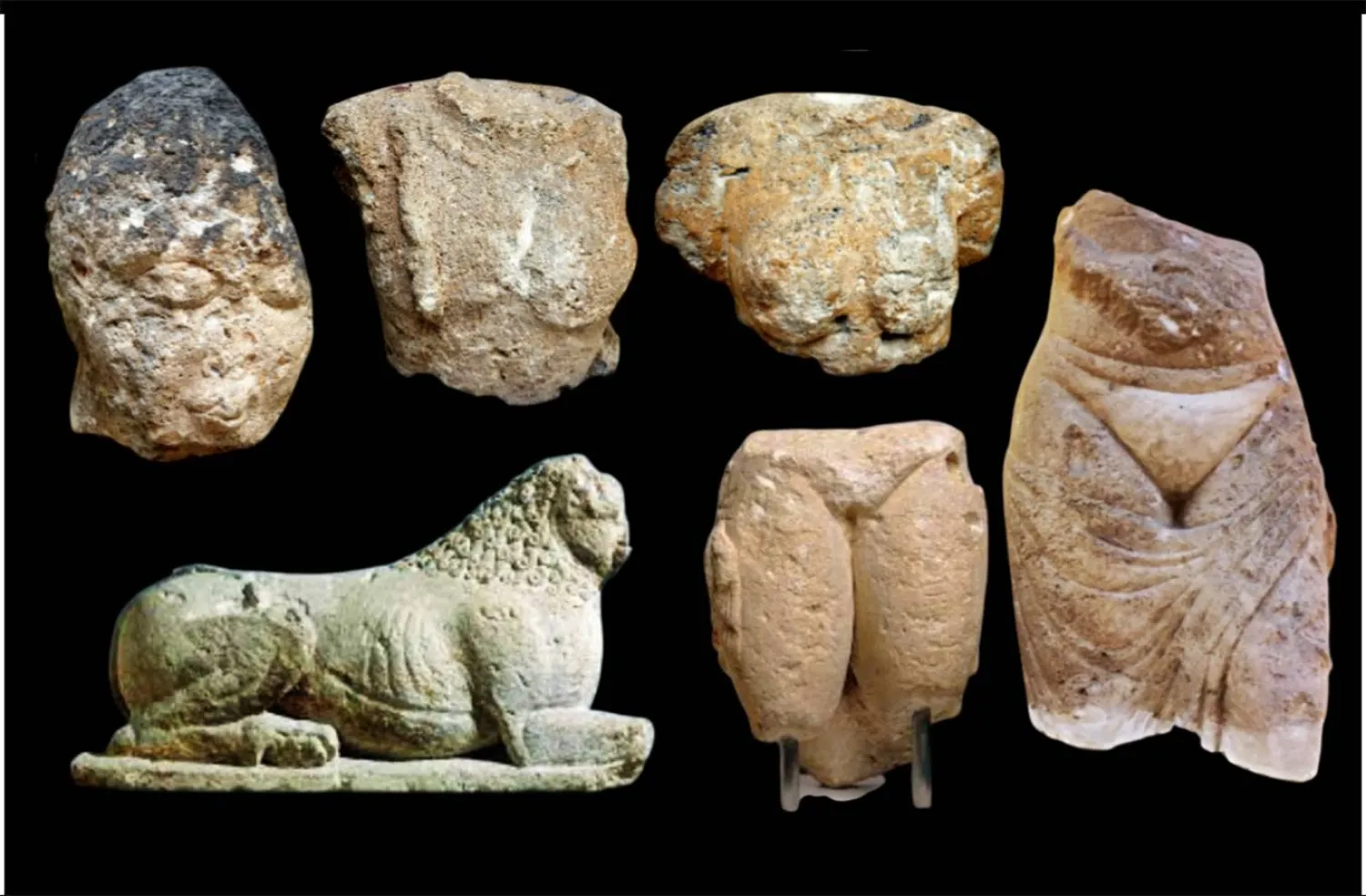
Five sculptures from Qasr al-Mshatta are preserved in the Museum of Islamic Art in Berlin, while a sixth sculpture is preserved in the Jordan Archaeological Museum in Amman.
TT

Fragmentary Sculptures from the Umayyad Palace of Qasr al-Mshatta

Five sculptures from Qasr al-Mshatta are preserved in the Museum of Islamic Art in Berlin, while a sixth sculpture is preserved in the Jordan Archaeological Museum in Amman.

by Mahmoud Zibawi

The Jordanian desert contains a series of Umayyad palaces, the largest of which is Qasr al-Mshatta, located in the Jiza District. Western Orientalist scholars first drew attention to this site in the late nineteenth century, and a German mission succeeded in transporting its massive southern facade to Berlin at the beginning of the twentieth century, after Sultan Abdulhamid II presented it as a gift to his ally, Kaiser Wilhelm II of Prussia.

The facade entered the Kaiser Friedrich Museum in 1903 and was later transferred to the Museum of Islamic Art in 1932. This museum is regarded as the oldest and largest institution dedicated exclusively to Islamic art in Europe and North America. The facade of Qasr al-Mshatta occupies the largest portion of this European complex, alongside a small, independent group of damaged sculptures that originally formed part of the palace’s furnishings. This group bears witness to a distinct Umayyad sculptural tradition, whose artistic identity became clearly defined through comparable assemblages discovered in other Umayyad palaces excavated during the 1930s.

The sculptures from Qasr al-Mshatta are displayed on white rectangular plinths in a corner of the gallery dedicated to the palace’s monumental facade at the Museum of Islamic Art in Berlin. At first glance, they resemble fragmented stone blocks positioned at the margins of this facade, which is adorned with limestone relief carvings that have largely preserved their original features. In this corner, one piece stands out for having retained most of its original form: a carved and polished block of limestone depicting a lion crouching on a white base, measuring 72 centimeters in length and 122 centimeters in width.

The lion appears firmly grounded on its folded hind legs atop a thin rectangular base devoid of ornament, with its front legs extended forward. Despite the loss of most of the head and the extremities of the forelegs, the sculptural composition remains clear and legible. The facial features have largely disappeared, making them difficult to reconstruct; however, the posture suggests an upright head pressed close to the chest, encircled by a dense mane composed of compact, parallel locks of hair that extend to include the beard, together forming a collar encircling the oval mass of the chin.

The body is elongated and smooth, with limbs clearly articulated in a manner that approaches naturalistic realism, as evidenced by the precise modeling of the joints. This approach is especially apparent in the treatment of the hind legs and is further emphasized by the pronounced protrusion of the claws marking their extremities. It is worth noting the existence of a small carved fragment originating from Qasr al-Mshatta in which these claws appear in a similar manner. It remains unclear whether this fragment originally belonged to the same sculpture or to a companion piece that formed a paired composition, in keeping with an artistic convention prevalent in the provinces of the Sasanian Empire. Although this empire came to an end with the Islamic conquest of Persia, its cultural legacy remained vibrant and left a profound imprint on Umayyad artistic production; the lion of Qasr al-Mshatta stands as compelling evidence of this cultural synthesis.

Facing this lion are several damaged sculptural fragments, each representing a small portion of a female figure whose original configuration is now difficult to reconstruct. One fragment preserves a head, retaining the wide eye sockets, the lower portion of the nose, and lips closed in a subtle smile. The cheeks are broad, suggesting that this youthful face belonged to a woman crowned by a voluminous mass of thick hair, whose upper surface is approximately twice the area of the face itself. By contrast, two additional fragments reveal a full and fleshy female torso.

A third fragment preserves the thighs of two closely set legs, which share the same robust character. This piece has retained its polished surface and is of medium scale, measuring 70 centimeters in height and 50 centimeters in width, indicating that it belonged to a statue conceived on a near life-size scale. This three-dimensional form preserves fine details of its execution, revealing a thin garment slipping away from the buttocks, with its edge still visible at the upper part of the left thigh. On this thigh appear traces of an inscription carved in Kufic script, running from top to bottom. Unfortunately, specialists have been unable to decipher the text, though one hypothetical reading suggests that it records the name of the woman represented by the statue.

The Jordan Archaeological Museum houses a comparable fragment uncovered during restoration and cleaning campaigns conducted by the Department of Antiquities in 1962 at Qasr al-Mshatta. This piece, likewise executed at near life size, measures 75 centimeters in height and 52 centimeters in width and represents the pelvis and upper portions of the legs. Here, the garment drapes over the right thigh, revealing the left thigh beneath, with sharply defined folds executed in accordance with the classical Greek style. The statue has lost its arms; however, the remaining lower portions indicate hands that once held objects whose identities can no longer be determined.

These sculptures attest to an Umayyad female sculptural ideal, whose formal characteristics first emerged through the study of the murals at an Umayyad desert site known as Qusayr ʿAmra, documented by the Czech scholar Alois Musil in a major two-volume publication issued in 1907. These characteristics were subsequently confirmed in the medium of sculpture through the discovery of similar female figures from an Umayyad palace located at Khirbat al-Mafjar, north of Jericho, during excavations conducted by a mission affiliated with the British Department of Antiquities in the mid-1930s.

This ideal is distinguished by a full, fleshy body inclined toward corpulence, as well as facial features that mirror this physical quality. The type recurs in multiple sculptural variants, and their study reveals the use of diverse hairstyles and ornamental schemes, forming a visual vocabulary that parallels the literary lexicon for which this remarkably productive period is renowned.



Saudi Arabia: Ship of Tolerance Initiative Promotes Cultural Dialogue in Jeddah

The Royal Institute of Traditional Arts (Wrth) will offer traditional craft workshops throughout Ramadan. SPA
TT

Saudi Arabia: Ship of Tolerance Initiative Promotes Cultural Dialogue in Jeddah

The Royal Institute of Traditional Arts (Wrth) will offer traditional craft workshops throughout Ramadan. SPA

The Saudi Ministry of Culture, in collaboration with the "Lenobadir" volunteer and community partnership program and the Athr Foundation, has launched the Ship of Tolerance initiative in Historic Jeddah during Ramadan.

The initiative aims to enhance shared human values through arts, and promote tolerance and coexistence among children and families. It provides an educational and cultural experience aligned with the area’s unique character as a UNESCO World Heritage site.

As part of this global art project, children will create artworks that represent acceptance and dialogue.

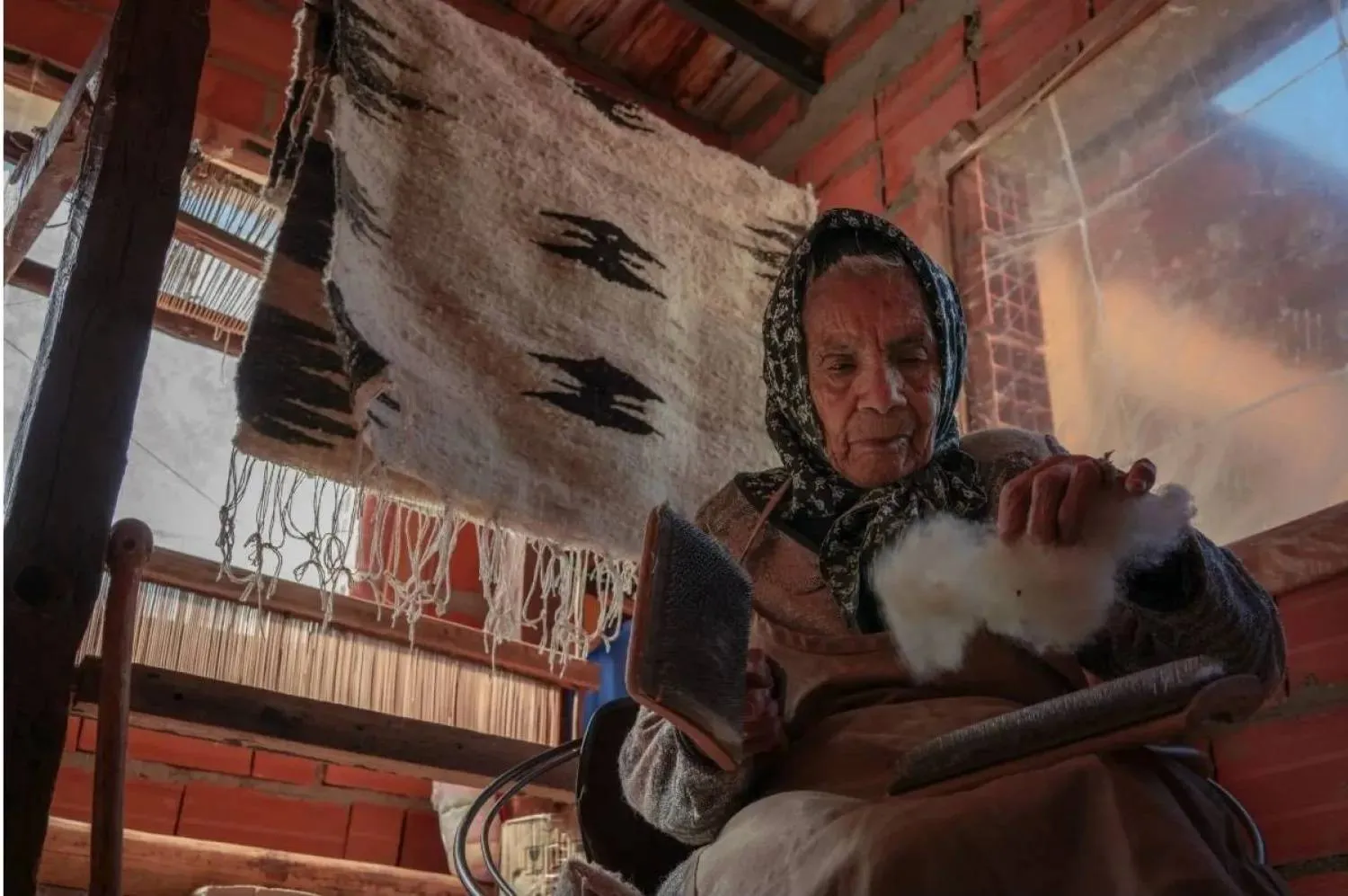
The Royal Institute of Traditional Arts (Wrth) will offer traditional craft workshops throughout Ramadan, linking the initiative's values with local heritage and enriching visitors' connection to the region's identity.

This effort supports cultural programs with educational and social dimensions in Historic Jeddah, activating local sites for experiences that combine art, crafts, and community participation. It aligns with the National Strategy for Culture under Saudi Vision 2030, focusing on heritage preservation and expanding culture's impact on daily life.


Oscar Contender ‘Hamnet’ Boosts Tourism at Shakespeare Heritage Sites 

A view of Shakespeare’s Birthplace, William Shakespeare's childhood home, in Stratford-upon-Avon, Britain, February 9, 2026. (Reuters)
TT

Oscar Contender ‘Hamnet’ Boosts Tourism at Shakespeare Heritage Sites 

A view of Shakespeare’s Birthplace, William Shakespeare's childhood home, in Stratford-upon-Avon, Britain, February 9, 2026. (Reuters)

On a cloudy winter's day, visitors stream into what was once William Shakespeare's childhood home in Stratford-upon-Avon and the nearby Anne Hathaway's cottage, family residence of the bard's wife.

Hathaway's cottage is one of the settings for the BAFTA and Oscar best film contender "Hamnet", and the movie's success is drawing a new wave of tourists to Shakespeare sites in the town in central England.

Shakespeare's Birthplace is the house the young William once lived in and where his father worked as a glove maker, while Hathaway's cottage is where he would have visited his future wife early in their relationship.

Typically, around 250,000 visitors, from the UK, Europe, the United States, China and elsewhere, walk through the locations each year, according to the Shakespeare Birthplace Trust. ‌The charity looks after ‌Shakespeare heritage sites, which also include Shakespeare's New Place, the site of ‌the ⁠Stratford home where the ⁠bard died in 1616.

Visitors are flocking in this year thanks to "Hamnet", the film based on Maggie O'Farrell's 2020 novel, which gives a fictional account of the relationship between Shakespeare and Hathaway, also known as Agnes, and the death of their 11-year-old son Hamnet in 1596.

"Visitor numbers have increased by about 15 to 20% across all sites since the film was released back in January. I think that will only continue as we go throughout the year," Richard Patterson, chief operating officer for the Shakespeare Birthplace Trust, said.

"They particularly want ⁠to look (at) Anne Hathaway's cottage and the specifics around how the family ‌engaged in the spaces and the landscape in and around ‌the cottage... you can see why he would have been inspired."

NEW ACCESS TO SHAKESPEARE

"Hamnet" has 11 nominations at ‌Sunday's British BAFTA awards, including best film and leading actress for Jessie Buckley, who plays Agnes. It ‌also has eight Oscar nominations, with Buckley seen as the frontrunner to win best actress.

"Hamnet" is set in Stratford-upon-Avon and London although it was not filmed in Stratford.

It sees Paul Mescal's young Shakespeare fall for Agnes while teaching Latin to pay off his father's debts. The drama, seen mainly through Agnes' eyes, focuses on their ‌life together and grief over Hamnet's death, leading Shakespeare to write "Hamlet".

"Shakespeare... is notoriously enigmatic. He writes about humanity, about feeling, about emotion, about conflict, ⁠but where do we understand ⁠who he is in that story?" said Charlotte Scott, a professor of Shakespeare studies and interim director of collections, learning and research at the Shakespeare Birthplace Trust.

"And that's driven people creative and otherwise for hundreds and hundreds of years. Where is Shakespeare's heart? And this is what the film I think has so beautifully opened up."

Little is known about how the couple met. Shakespeare was 18 and Hathaway 26 when they married in 1582. Daughter Susanna arrived in 1583 and twins Judith and Hamnet in 1585.

The film acknowledges the names Hamnet and Hamlet were interchangeable back then. While grief is a dominant theme, audiences also see Shakespeare in love and as a father.

"A lot of people will see this film not necessarily having... had any kind of relationship with Shakespeare," Scott said.

"So people will come to this film, I hope, and find a new way of accessing Shakespeare that is about creativity, that is about understanding storytelling as a constant process of regeneration, but also crucially, looking at it from that kind of emotive angle."


Culture Ministry Continues Preparations in Historic Jeddah to Welcome Visitors during Ramadan 

Historic Jeddah has emerged as a leading cultural tourism destination during Ramadan. (SPA)
TT

Culture Ministry Continues Preparations in Historic Jeddah to Welcome Visitors during Ramadan 

Historic Jeddah has emerged as a leading cultural tourism destination during Ramadan. (SPA)

The Saudi Ministry of Culture is continuing its efforts to revitalize Historic Jeddah in preparation for welcoming visitors during the holy month of Ramadan, offering cultural programs, events, and heritage experiences that reflect the authenticity of the past.

The district has emerged as a leading cultural tourism destination at this time of year as part of the “The Heart of Ramadan” campaign launched by the Saudi Tourism Authority.

Visitors are provided the opportunity to explore the district’s attractions, including archaeological sites located within the geographical boundaries of the UNESCO World Heritage-listed area, which represent a central component of the Kingdom’s urban and cultural heritage.

The area also features museums that serve as gateways to understanding the city’s rich heritage and cultural development, in addition to traditional markets that narrate historical stories through locally made products and Ramadan specialties that reflect authentic traditions.

These initiatives are part of the ministry’s ongoing efforts to revitalize Historic Jeddah in line with the objectives of Saudi Vision 2030 and aiming to transform it into a vibrant hub for arts, culture, and the creative economy, while preserving its tangible and intangible heritage.