


Saudi Culture Minister Inaugurates Kingdom's Pavilion as Guest of Honor at Damascus Book Fair

Saudi Culture Minister Inaugurates Kingdom's Pavilion as Guest of Honor at Damascus Book Fair
TT

Saudi Culture Minister Inaugurates Kingdom's Pavilion as Guest of Honor at Damascus Book Fair

Saudi Culture Minister Inaugurates Kingdom's Pavilion as Guest of Honor at Damascus Book Fair

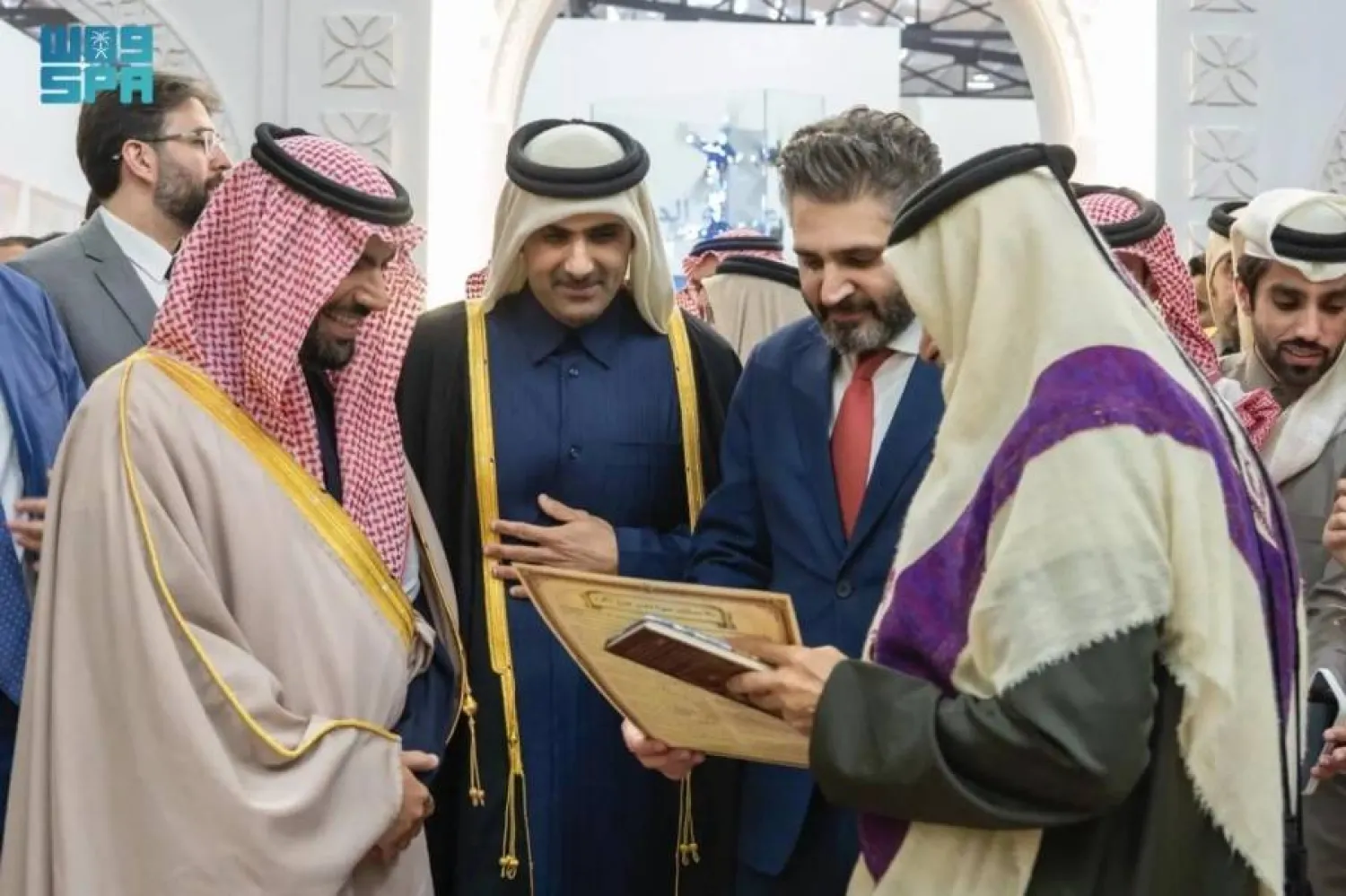
Saudi Minister of Culture Prince Badr bin Abdullah bin Farhan, who is the Literature, Publishing and Translation Commission Board Chairman, has inaugurated the Kingdom’s pavilion as guest of honor at the 2026 Damascus International Book Fair.

The inauguration took place on Thursday in the Syrian capital in the presence of Syrian Minister of Culture Mohammed Yassin Saleh and his Qatari counterpart, Sheikh Abdulrahman bin Hamad bin Jassim bin Hamad Al Thani.

The Kingdom's participation as guest of honor at the fair, which runs until February 16, stems from the role culture plays within Saudi Vision 2030.

Literature, Publishing, and Translation Commission Chief Executive Dr. Abdul Latif Al-Wasil affirmed that the Kingdom's presence as guest of honor at the fair reflects its leading role in the Arab cultural landscape and embodies its belief in the role of culture as a bridge for communication, a space for dialogue, and a tool for supporting joint cultural initiatives.

He explained that the Kingdom's presence in Damascus affirms the depth of Saudi-Syrian relations, based on partnership and mutual respect, and stems from the Kingdom's commitment to strengthening cultural exchange.

The Kingdom's pavilion showcases the cultural and creative diversity of the Saudi cultural and literary scene through a comprehensive cultural program that includes intellectual seminars, poetry evenings, a manuscripts exhibition, a Saudi fashion corner, a hospitality corner, and a corner displaying archaeological replicas, in addition to Saudi performing arts performances that express the depth of the Kingdom's cultural heritage.

The pavilion offers visitors to the exhibition the opportunity to explore aspects of Saudi culture in its literary, heritage, and human dimensions within a cultural experience presented in a unifying Arab spirit, affirming that culture remains one of the most effective means of fostering understanding and building shared meaning.

Syrian President Ahmed al-Sharaa met on Thursday with Prince Badr at the Conference Palace in Damascus.

The meeting was attended on the Saudi side by Advisor at the Royal Court Mohammed Al-Tuwaijri, along with other officials.



Saudi Arabia: King Abdulaziz Library to Launch 26th Free Reading Festival

The King Abdulaziz Public Library. SPA
TT

Saudi Arabia: King Abdulaziz Library to Launch 26th Free Reading Festival

The King Abdulaziz Public Library. SPA

The King Abdulaziz Public Library, in cooperation with the Riyadh Education Department, will launch its 26th annual Free Reading Festival for public school students on Sunday.

Running from May 10 to 14 in Riyadh, the festival will bring together more than 100 schools, over 1,550 students, and a number of educators and teachers.

It aims to foster a love of reading and learning, expand students’ literary, scientific, and cultural horizons, and encourage teachers to promote independent reading. It will also provide a platform to showcase student talents and strengthen Arabic language skills.

Through initiatives like this festival, the King Abdulaziz Public Library promotes reading through diverse programs and a wide range of books that foster pride in the Kingdom’s heritage.


Qassim's Monday Market Retains Heritage Role as Economic and Cultural Hub

The Monday market in the governorate of Uyun Al-Jiwa. (SPA)
TT

Qassim's Monday Market Retains Heritage Role as Economic and Cultural Hub

The Monday market in the governorate of Uyun Al-Jiwa. (SPA)

The Monday market in the governorate of Uyun Al-Jiwa, north of Qassim Region, stands as one of the oldest traditional weekly markets, enduring through changing times while maintaining its role as a vibrant economic and cultural hub.

The market draws a growing number of visitors from across Qassim and beyond, supported by the governorate’s strategic location.

During a field tour, the Saudi Press Agency observed lively activity throughout the market, with stalls displaying a diverse range of products. These include agricultural goods such as almonds and dried figs; animal products like ghee and milk, for which the region is renowned; as well as handicrafts and natural items such as henna and sidr.

Visitors noted that the market has retained its authentic character, continuing to serve as a vital source of income for small vendors and families working in the cottage industry, reinforcing its role as a key platform for preserving traditional culture while supporting the local rural economy.


Heritage Commission Revives Al-Nasb Heritage District as Abha Cultural Tourism Destination

The district’s significance lies in its unique architectural composition - SPA
TT

Heritage Commission Revives Al-Nasb Heritage District as Abha Cultural Tourism Destination

The district’s significance lies in its unique architectural composition - SPA

Al-Nasb Heritage District in Abha is one of the most prominent living examples of traditional architecture in Aseer Region, preserving its long history and architectural details that embody people’s connection to their local environment and document the social and cultural patterns that have shaped the identity of the place across generations.

The district’s significance lies in its unique architectural composition, where mud and stone buildings stand side by side in visual harmony. They were built using local materials such as stone, clay, and juniper trunks, while the narrow alleyways and closely set buildings give the district a cohesive social character that reflects the spirit of past communities in the region and the close relationship between people and place.

The Heritage Commission has revived the district through an integrated restoration and rehabilitation project aimed at preserving its original elements and enhancing its sustainability, as part of national efforts to protect urban heritage and highlight it as a cultural and tourism asset, SPA reported.

The site is also distinguished by its natural setting, as the district overlooks the banks of Abha Valley and surrounding farms, giving it a distinctive visual and aesthetic dimension. Its narrow passageways and closely set buildings illustrate a traditional urban pattern that strengthens ties among residents and captures the nature of social life in that era.

The district is now a growing destination for culture and tourism in Abha, attracting visitors and heritage enthusiasts who come to explore the details of authentic architecture and learn about the traditional ways of life that have shaped Aseer Region’s identity across generations. The project helps raise awareness of the importance of preserving archaeological sites as a key pillar in forming national memory.

The project is part of the Kingdom’s efforts to protect and effectively manage cultural heritage, in line with the targets of Saudi Vision 2030, which gives special attention to the cultural sector. It seeks to turn heritage sites into vibrant spaces that support cultural tourism and sustainable development while reconnecting society with its historical roots.