


Ancient Mughal Tradition of Pigeon-Rearing Thrives in India’s Capital

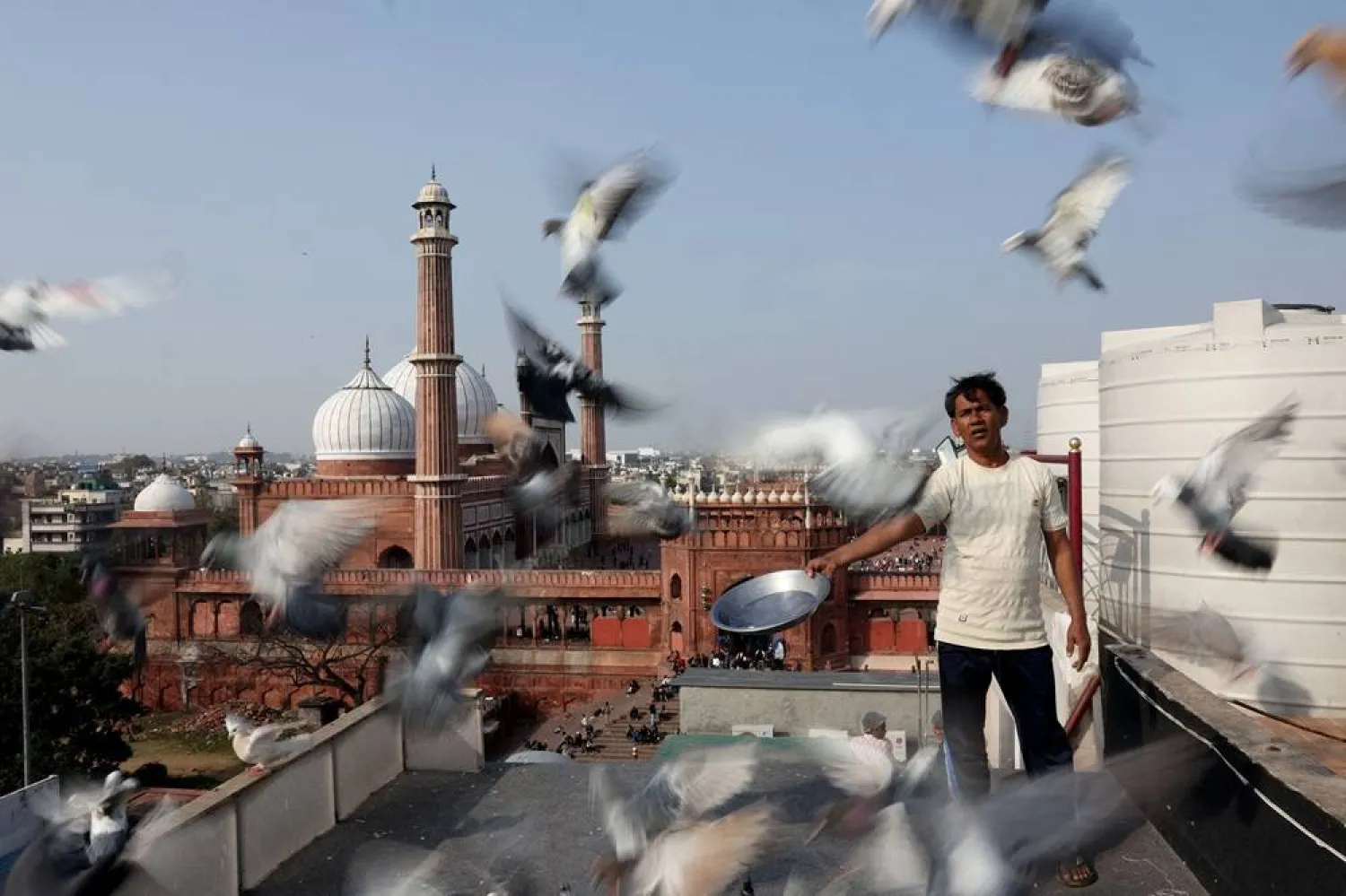
 Mohammed Rashid, alias "Rambo", a kabootarbaaz (pigeon keeper) feeds his pigeons as he trains them, on the rooftop of a restaurant in the old quarters of Delhi, India, January 24, 2026. (Reuters)
Mohammed Rashid, alias "Rambo", a kabootarbaaz (pigeon keeper) feeds his pigeons as he trains them, on the rooftop of a restaurant in the old quarters of Delhi, India, January 24, 2026. (Reuters)
TT

Ancient Mughal Tradition of Pigeon-Rearing Thrives in India’s Capital

 Mohammed Rashid, alias "Rambo", a kabootarbaaz (pigeon keeper) feeds his pigeons as he trains them, on the rooftop of a restaurant in the old quarters of Delhi, India, January 24, 2026. (Reuters)
Mohammed Rashid, alias "Rambo", a kabootarbaaz (pigeon keeper) feeds his pigeons as he trains them, on the rooftop of a restaurant in the old quarters of Delhi, India, January 24, 2026. (Reuters)

In the ‌heart of India's capital city New Delhi, a few men are practicing the ancient Mughal tradition of pigeon-rearing, training the birds to navigate long distances, as they preserve a skill passed on for generations.

Every day, among the packed lanes near the Jama Masjid, in the old part of the city and a few kilometers away from its toniest areas, Azhar Udeen, 30, gathers with his younger brother and friends at ‌his terrace, ‌letting more than 120 pigeons of various ‌breeds ⁠out of their ⁠cages.

The birds are then fed and trained to fly in different formations, and are sometimes raced, as men cheer them on.

"I saw my grandfather doing this when I was a child, and after I grew up, I watched and learned from ⁠my ustad (teacher)," Udeen told Reuters.

Kabootarbaazi, as the ‌tradition is known, comes ‌from the Hindi/Urdu word for pigeon, and was patronized by ‌the many Mughal kings who ruled in India, ‌when men kept a flock, taught them to fly in formation, and used them as messengers.

Training the birds how to fly straight against the wind and return after covering ‌a long distance takes nearly four months, and involves beating a whip against ⁠a ⁠hard surface to create loud sounds that will scare the birds into flying farther out, the trainers said.

For many, the rooftop gatherings are as important as the flying itself. Practitioners describe kabootarbaazi as a stress reliever that creates a pocket of calm and community in a crowded city.

"We sit with our friends and students, and all the tensions from our work or homes, all of it disappears and that’s what the main intention behind pigeon keeping is," Kahlifa Mohsin, another pigeon-keeper, said.



Saudi Heritage Commission Discovers Abbasid-Era Gold Jewelry in Qassim

The Saudi Heritage Commission logo
TT

Saudi Heritage Commission Discovers Abbasid-Era Gold Jewelry in Qassim

The Saudi Heritage Commission logo

Saudi Arabia’s Heritage Commission announced the discovery of a collection of Abbasid-era gold jewelry at the archaeological site of Diriyyah in Qassim Region during the fourth season of excavation and survey work.

The discovery includes 100 gold pieces adorned with floral and geometric motifs, along with architectural remains from the Abbasid period, including stone foundations, mud walls, pottery, and metal tools.

The findings indicate human settlement dating back to the late third century AH and highlight the site’s historical importance along pilgrimage and trade routes.

The discovery reflects the Heritage Commission’s ongoing efforts to document and preserve the Kingdom’s archaeological heritage, supporting cultural development goals aligned with Saudi Vision 2030.


Jeddah’s House of Islamic Arts Marks International Museum Day 2026

The House of Islamic Arts in Jeddah marked International Museum Day 2026 with a special exhibition offering visitors a cultural journey into the past. (SPA)
TT

Jeddah’s House of Islamic Arts Marks International Museum Day 2026

The House of Islamic Arts in Jeddah marked International Museum Day 2026 with a special exhibition offering visitors a cultural journey into the past. (SPA)

The House of Islamic Arts in Jeddah marked International Museum Day 2026 with a special exhibition offering visitors a cultural journey into the past.

The exhibition showcased aspects of traditional life and reflected the atmosphere of old homes through rare collectibles and personal items contributed by collectors and heritage enthusiasts from within the Kingdom and abroad, the Saudi Press Agency reported on Tuesday.

Through several interactive stations, the exhibition highlighted social life inside traditional homes, featuring settings inspired by majlis gatherings, evening social events, home interiors, and offices, alongside collectibles, furniture, and memorabilia associated with daily life and social traditions of the past.

The exhibition included collectibles representing diverse cultures and artistic styles, featuring rare Arab and European pieces, vintage devices, classic furniture, paintings, antiques, and personal household items displayed by their owners as reflections of the memories of people and places.

The exhibition is part of the events celebrating International Museum Day 2026, which aim to highlight the role of museums in preserving heritage and promoting cultural dialogue through interactive experiences that connect generations with their history and shared memory.


Private Museums in Jazan Offer a Window into the Region's Cultural Past

A number of private museum owners in Jazan stressed that these museums are no longer limited to preserving and displaying heritage collections - SPA
TT

Private Museums in Jazan Offer a Window into the Region's Cultural Past

A number of private museum owners in Jazan stressed that these museums are no longer limited to preserving and displaying heritage collections - SPA

Private museums in Jazan Region are reintroducing local memory through a contemporary cultural vision by preserving collections and artifacts documenting features of old life and bringing details of the past closer to new generations while also enhancing tourist attraction and enriching visitors’ knowledge experience.

As the world celebrates International Museum Day, observed on May 18 each year, these museums emerge as cultural spaces combining documentation and exhibition, allowing visitors to move through different eras, from daily life tools that shaped the details of old homes to collections associated with agriculture, the sea, crafts, and travel, reaching heritage artifacts and coins that reveal the depth of the relationship between humans and their environment throughout the ages, SPA reported.

A number of private museum owners in Jazan stressed that these museums are no longer limited to preserving and displaying heritage collections, but also enhance awareness of local heritage and convey details of old life to new generations through methods that are closer and more interactive. They noted that the increasing presence of heritage enthusiasts and visitors has contributed to transforming the museum into a space for learning and discovering the history of the place through its authentic collections.

With growing national interest in preserving cultural heritage and enhancing the presence of licensed museums within the cultural landscape, these destinations have become part of the tourism and knowledge movement in Jazan Region, receiving history enthusiasts, researchers, students, and visitors as windows overlooking a history that is not read in books alone, but seen in objects and collections that remained witnesses to the life of humans and place.