


Ancient Mughal Tradition of Pigeon-Rearing Thrives in India’s Capital

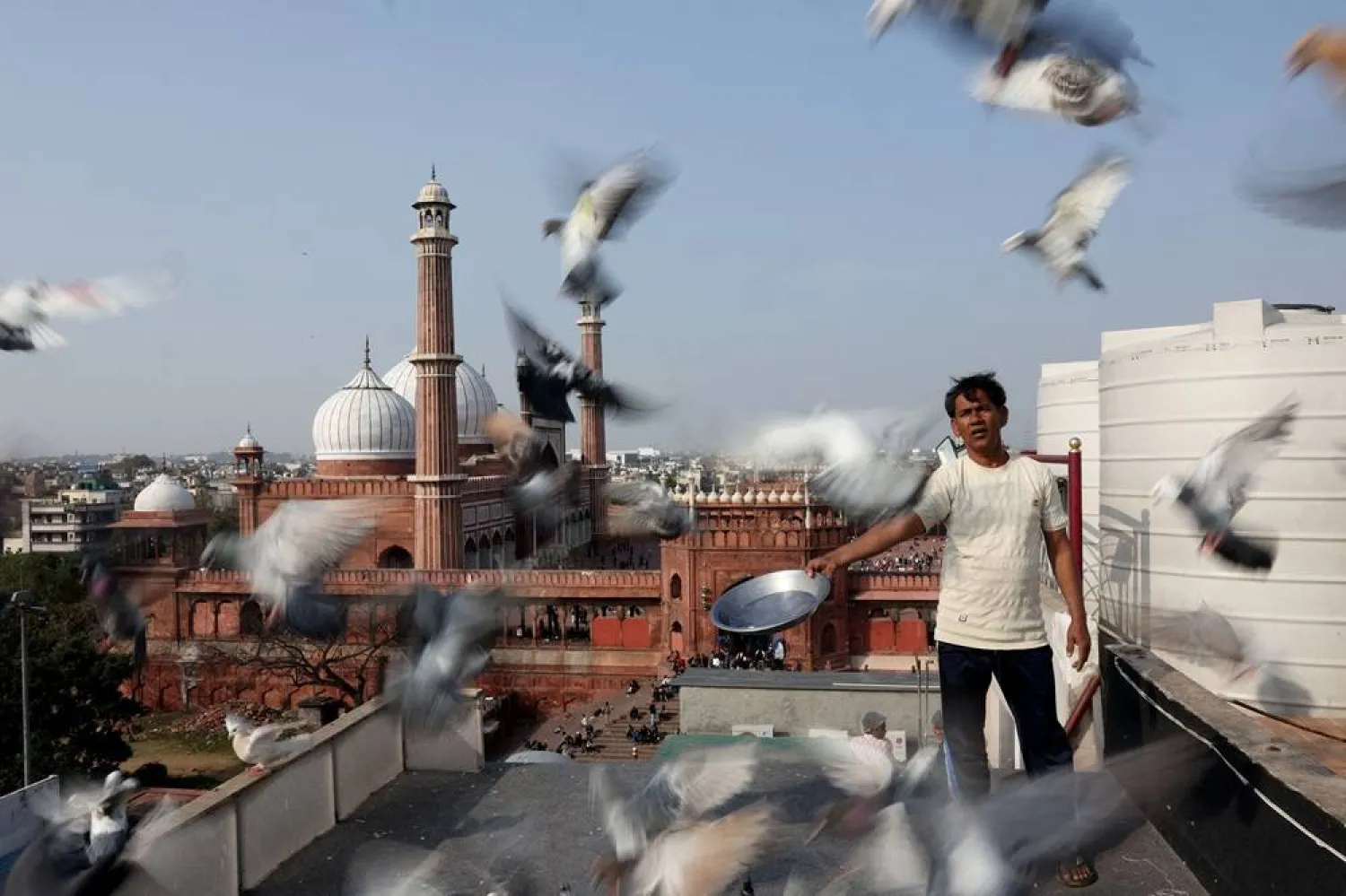
 Mohammed Rashid, alias "Rambo", a kabootarbaaz (pigeon keeper) feeds his pigeons as he trains them, on the rooftop of a restaurant in the old quarters of Delhi, India, January 24, 2026. (Reuters)
Mohammed Rashid, alias "Rambo", a kabootarbaaz (pigeon keeper) feeds his pigeons as he trains them, on the rooftop of a restaurant in the old quarters of Delhi, India, January 24, 2026. (Reuters)
TT

Ancient Mughal Tradition of Pigeon-Rearing Thrives in India’s Capital

 Mohammed Rashid, alias "Rambo", a kabootarbaaz (pigeon keeper) feeds his pigeons as he trains them, on the rooftop of a restaurant in the old quarters of Delhi, India, January 24, 2026. (Reuters)
Mohammed Rashid, alias "Rambo", a kabootarbaaz (pigeon keeper) feeds his pigeons as he trains them, on the rooftop of a restaurant in the old quarters of Delhi, India, January 24, 2026. (Reuters)

In the ‌heart of India's capital city New Delhi, a few men are practicing the ancient Mughal tradition of pigeon-rearing, training the birds to navigate long distances, as they preserve a skill passed on for generations.

Every day, among the packed lanes near the Jama Masjid, in the old part of the city and a few kilometers away from its toniest areas, Azhar Udeen, 30, gathers with his younger brother and friends at ‌his terrace, ‌letting more than 120 pigeons of various ‌breeds ⁠out of their ⁠cages.

The birds are then fed and trained to fly in different formations, and are sometimes raced, as men cheer them on.

"I saw my grandfather doing this when I was a child, and after I grew up, I watched and learned from ⁠my ustad (teacher)," Udeen told Reuters.

Kabootarbaazi, as the ‌tradition is known, comes ‌from the Hindi/Urdu word for pigeon, and was patronized by ‌the many Mughal kings who ruled in India, ‌when men kept a flock, taught them to fly in formation, and used them as messengers.

Training the birds how to fly straight against the wind and return after covering ‌a long distance takes nearly four months, and involves beating a whip against ⁠a ⁠hard surface to create loud sounds that will scare the birds into flying farther out, the trainers said.

For many, the rooftop gatherings are as important as the flying itself. Practitioners describe kabootarbaazi as a stress reliever that creates a pocket of calm and community in a crowded city.

"We sit with our friends and students, and all the tensions from our work or homes, all of it disappears and that’s what the main intention behind pigeon keeping is," Kahlifa Mohsin, another pigeon-keeper, said.




Saudi Coffee Celebrates Its Cultural Heritage on International Coffee Day

These efforts contribute to preserving this heritage and strengthening its economic and cultural presence - SPA
TT

Saudi Coffee Celebrates Its Cultural Heritage on International Coffee Day

These efforts contribute to preserving this heritage and strengthening its economic and cultural presence - SPA

Saudi Arabia commemorated its cultural heritage as Saudi coffee renewed its authenticity on International Coffee Day, observed worldwide on October 1 each year, reflecting customs and traditions, as well as the values of generosity and hospitality.

Saudi Arabia is among the world's highest coffee consumers, with Saudi coffee served as a cultural element symbolizing the noble values that characterize the Saudi people, including generosity and warm hospitality, according to SPA.

Coffee cultivation and production in Saudi Arabia are receiving growing attention as part of efforts to develop the agricultural sector, promote local products, support farmers, and improve production quality.

These efforts contribute to preserving this heritage and strengthening its economic and cultural presence.

They also promote coffee at events and festivals, highlighting local crops and the experiences of farmers and producers, enhancing communication between producers and consumers, and introducing Saudi coffee to younger generations as part of the cultural heritage.


Royal Institute of Traditional Arts Launches Third Edition of Wrth Camp in Aseer

The camp offers three training tracks: traditional stone building, traditional hand embroidery, and metal art - SPA
TT

Royal Institute of Traditional Arts Launches Third Edition of Wrth Camp in Aseer

The camp offers three training tracks: traditional stone building, traditional hand embroidery, and metal art - SPA

The Royal Institute of Traditional Arts (Wrth) has launched the third edition of Wrth Camp in Aseer Region, running from October 1 to 31, with the participation of 50 trainees from across the Kingdom.

The camp offers three training tracks: traditional stone building, traditional hand embroidery, and metal art.

Participants will learn the fundamentals and techniques of each craft, culminating in three collective artworks inspired by the region's architecture and heritage, and receive an accredited certificate from the institute upon completion.

This edition follows previous camps held in Madinah and Al-Ahsa, reflecting the institute's commitment to diversifying locations across the Kingdom and strengthening trainees' connection to each region's cultural identity.

Founded in 2021, Wrth qualifies national cadres in traditional arts, supporting the sustainability and preservation of Saudi cultural heritage.


Saudi Ambassador Inaugurates Cultural Mission Headquarters in Cairo

Saudi Ambassador to Egypt Saleh Al-Husseini and Secretary-General of the Cultural Missions at the Ministry of Education Abdulaziz Al-Shehri. (SPA)
TT

Saudi Ambassador Inaugurates Cultural Mission Headquarters in Cairo

Saudi Ambassador to Egypt Saleh Al-Husseini and Secretary-General of the Cultural Missions at the Ministry of Education Abdulaziz Al-Shehri. (SPA)

Saudi Ambassador to Egypt Saleh Al-Husseini and Secretary-General of the Cultural Missions at the Ministry of Education Abdulaziz Al-Shehri has opened the Saudi Cultural Mission’s headquarters in Cairo, the Saudi Press Agency reported Thursday.

Al-Husseini toured the headquarters and was briefed on the mission’s operations, services, and programs that support students and strengthen cultural and academic ties between Saudi Arabia and Egypt, SPA said.