


UN to List West Bank, Lebanon Sites as 'in Danger'

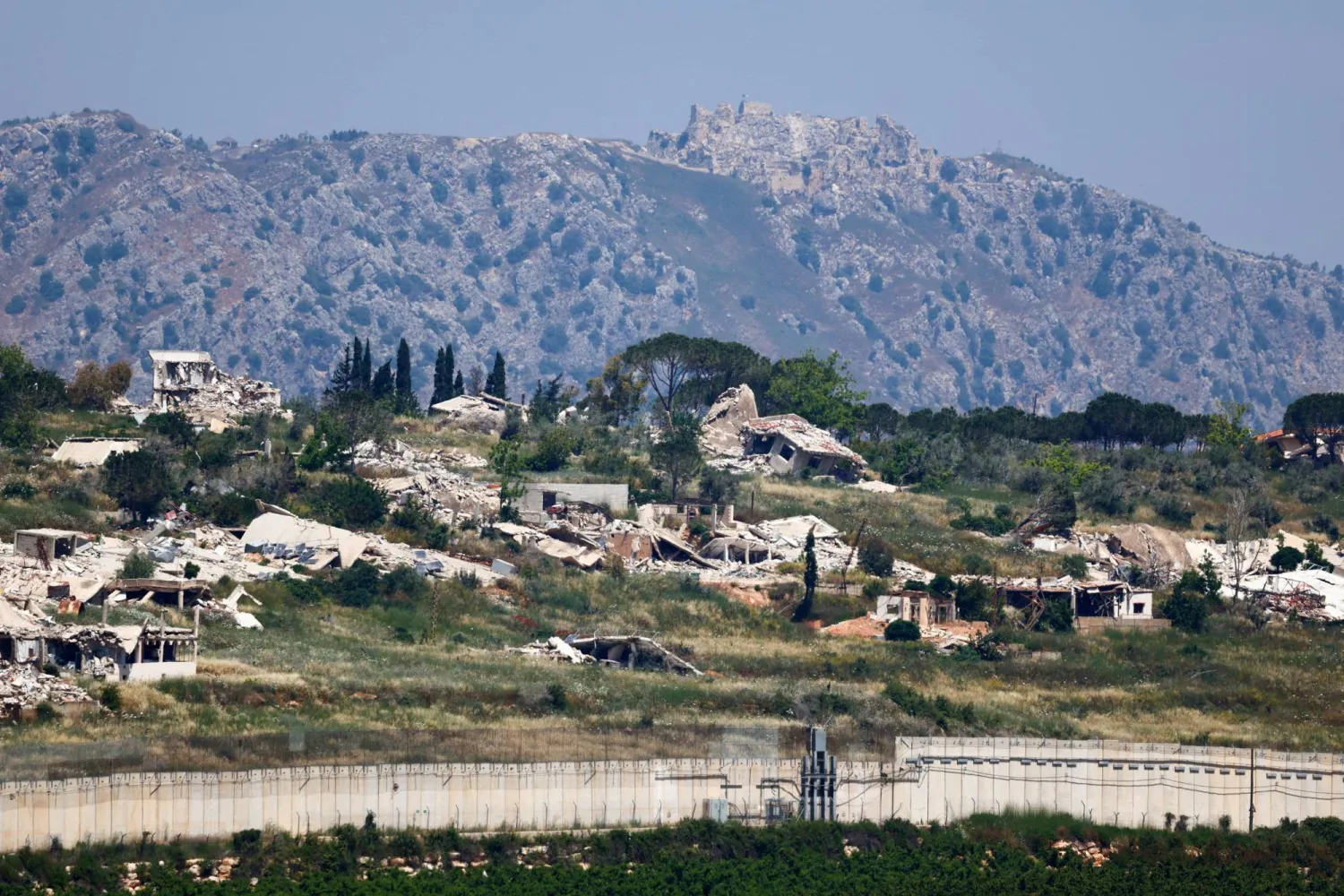
FILE PHOTO: Beaufort Castle in southern Lebanon, as seen from Metula in northern Israel, June 1, 2026. REUTERS/Amir Cohen/File Photo
TT

UN to List West Bank, Lebanon Sites as 'in Danger'

FILE PHOTO: Beaufort Castle in southern Lebanon, as seen from Metula in northern Israel, June 1, 2026. REUTERS/Amir Cohen/File Photo

The United Nations looks set to list a Biblical site, Lebanese castles, an antelope migration path and the world's deepest lake as world treasures under threat, including from war or climate change.

The 196 members states of the United Nations Educational, Scientific and Cultural Organization (UNESCO) are to cast votes from Friday next week on new additions to its World Heritage and World Heritage in Danger lists when they meet in Busan, South Korea.

"We may not have the means to deploy peacekeepers... but we can send a message to the entire world," the director of UNESCO's World Heritage Centre, Lazare Eloundou Assomo told AFP.

"These sites are important, and everything must be done to prevent their destruction."

Safeguarding "heritage allows communities that have been traumatized, victims of conflicts, to begin to come back and rebuild," he added.

Some 1,200 sites around the globe are listed as part of UNESCO World Heritage.

Making the heritage list often sparks a lucrative tourism drive, and can unlock funding for the preservation of sites that can face threats including pollution, war and negligence.

A site being qualified as heritage in danger, Assomo said, was not a reprimand but a measure meant to help states "find funding, partners and attention" to better preserve it.

Three sites, so far unlisted, are expected to be fast-tracked and voted straight onto the list of endangered places.

These could include the archaeological site of Sebastia, identified as being Biblical Samaria, in the Israeli-occupied Palestinian territory of the West Bank.

The site itself is in an area of the West Bank under Israeli control.

But Palestinians in the adjacent village, which is under dual Israeli-Palestinian control, have long depended on tourist visits to the ruins for their income and fear Israel could completely cut off access.

Israel left UNESCO in 2017, but remains a member of the World Heritage Committee, which has the final say on which sites are inscribed on each list.

Also to be given priority are five castles in south Lebanon, an area under fire from Israel, one of which -- the Crusader fortress of Qalaat al-Chakif or Beaufort Castle -- Israeli troops captured in May.

UNESCO members are also to vote on directly listing the Boma-Badingilo grassland and woodland savannahs in South Sudan the as under threat from both war and climate change.

One million animals -- including antelopes and gazelles -- migrate through the vast wilderness located between the White Nile and the Ethiopian border every year, leaving scars on the grasslands that are visible from the sky.

Beyond these priority cases, some sites already listed as heritage spots could now further be labelled as endangered.

These include the remains of Roman baths and a second-century triumphal arch and hippodrome in the southern Lebanese city of Tyre, which has come under heavy Israeli bombardment in recent months.

Also a potential candidate is the ancient Greek settlement of Tauric Chersonese in the Crimea peninsula that Russia unilaterally annexed from Ukraine in 2014.

Ukraine argues it is under threat from unauthorized excavations, large-scale construction projects, and the relocation of artifacts after Russia's invasion of Crimea.

In Russia, the world's deepest lake -- Lake Baikal -- could also be labelled in danger as authorities struggle to contain damage from pollution, mass tourism, large-scale logging and lower water levels due to a dam upstream in Mongolia.

The vast Siberian lake contains 20 percent of the world's total unfrozen freshwater reserve, according to Russia. Known as the "Galapagos of Russia", it is home to a huge variety of flora and fauna.

But in a 2023 report, the UN agency warned that if the "unfolding ecological degradation of Lake Baikal" was not urgently stopped and reversed, it would be classified as in danger.

"Some actions are being implemented to address this," it added, but "the mission considers that they are not sufficient".

Other sites are also vying for a simple listing.

In France, the Normandy beaches on which the Allies landed on June 6, 1944 during World War II could finally receive UNESCO recognition.

Two theatres built in the Amazon forest in Brazil and the Tunisian village of Sidi Bou Said might also be listed.


Mount Olympus, Home of Ancient Greek Gods, is a Candidate for UNESCO World Heritage List

Snow patches remain on the upper slopes of Mount Olympus in northern Greece, Tuesday, July 14, 2026. (AP Photo/Petros Giannakouris)
TT

Mount Olympus, Home of Ancient Greek Gods, is a Candidate for UNESCO World Heritage List

Snow patches remain on the upper slopes of Mount Olympus in northern Greece, Tuesday, July 14, 2026. (AP Photo/Petros Giannakouris)

Snow-capped for much of the year, Mount Olympus, mythological home of ancient Greece’s 12 Olympian gods, has captured the imagination through the millennia. Rising to 2,918 meters (9,573 feet) from a base practically at sea level, the ancient Greeks believed the throne of Zeus, king of the gods, stood on the highest of its craggy, often mist-shrouded peaks.

Now, modern-day Greeks hope their tallest mountain will be inducted into UNESCO’s World Heritage List as a mixed cultural and natural site. The nomination is to be discussed when the World Heritage Committee meets in Busan, South Korea from Sunday through July 29.

“Olympus is our life. It is the place we grew up in,” said Evagelos Geroliolios, mayor of Dion-Olympus, based in Litochoro, the mountain’s main town. “It is the place we see every day, but at the same time, it is also a place which carries with it myth, history, biodiversity, extraordinary beauty and a very great cultural weight.”

Few locations are as central to ancient Greek mythology as Mount Olympus. It was here that Zeus was said to have established his court after overthrowing his father, Cronus, in a 10-year war that ended the reign of the Titans.

Interest in Olympus may receive another boost with the theatrical release this week of Christopher Nolan’s “The Odyssey,” a new adaptation of Homer’s epic, in which the mountain serves as the home of Zeus and the Olympian gods who influence Odysseus’ journey.

On one of Olympus’s lower peaks, excavations have uncovered an open-air sanctuary, with the oldest finds dating to the Hellenistic period, which ran from 323 B.C. to 30 B.C. According to Greece’s original UNESCO nomination, the sanctuary is believed to have been one mentioned by the ancient philosopher and historian Plutarch, who in the 2nd century wrote of processions to one of Olympus’s peaks for animal sacrifices to Zeus.

The mountain retained religious significance into the Christian era. Α chapel on the peak of Prophet Elias, at 2,803 meters, is believed to be the highest altitude chapel in the Christian Orthodox world. The mountain’s Enipeas Gorge holds the remains of a monastery founded in 1542, while a roughly 20-minute walk from there leads to the Holy Cave of St. Dionysios, a chapel built into a cave from where a small spring flows, believed to carry holy water.

The mountain’s slopes, which reach practically to the sea, also host a wealth of flora and fauna, including endemic species. It is this blending of culture, myth, natural beauty and biodiversity that locals hope will see their mountain declared a World Heritage site, The Associated Press reported.

Sunflowers bloom in Kalyvia Varikou, near Litochoro in northern Greece, backdropped by Mount Olympus, Wednesday, July 15, 2026. (AP Photo/Petros Giannakouris)

“It is a place we love. It is a place that many people from all over the world visit to see, to live, to experience. We want to protect it,” Geroliolios said. Its inclusion on UNESCO’s list would be “something very big that goes beyond not just local boundaries, but national boundaries. It is something that concerns the entire world. It is very important.”

Greece began the process to have Mount Olympus recognized as a World Heritage site in 2014, inscribing it on its Tentative List — the mandatory first step in any nomination. The Tentative List is where countries include sites they can then formally nominate over the next five to 10 years.

The nomination process includes a preliminary assessment followed by submission of a full nomination file, which is then evaluated over 14 months by advisory bodies, including the International Council on Monuments and Sites, ICOMOS, and the International Union for Conservation of Nature.

Recommendations by the advisory bodies are then discussed during the World Heritage Committee’s annual meeting, where representatives of 21 countries vote on nominated sites.

Greece's Mount Olympus nomination is far from certain. A draft of the Busan meeting's agenda indicates the committee will refer the nomination back to Greece and request further details.

A statue of Alexander the Great holding Nike, the Greek goddess of victory, stands near Litochoro in northern Greece, Tuesday, July 14, 2026, backdropped by Mount Olympus' highest peaks, Mytikas and Stefani. (AP Photo/Petros Giannakouris)

Still, locals hope the mountain’s cultural and natural wonders will secure it a place and will play a role in securing more protection for the mountain.

The need for protection The mayor, Geroliolios, said inclusion on the World Heritage list “places some greater obligations on our part to protect this environment.”

Environmental protection is also foremost in the mind of mountain guide Babis Marinidis, president of the Alpine Club of Litochoro.

Including Olympus on UNESCO’s World Heritage list would likely attract more people to the mountain and the surrounding area, Marinidis said. “How many people can this mountain, this ecosystem, bear?” he asked.

Although much of Olympus was designated a national park decades ago and there are regulations in place, many are openly flouted, with Marinidis saying visitors regularly ignore “no swimming” or “no camping” signs.

The ever-growing number of visitors had led local authorities to consider imposing entrance fees and registering visitor numbers. “I used to be against that,” Marinidis said. “But now with so many people, I believe some limit must be imposed.”


Rare 19th-Century Panel Displayed at Red Sea Museum Features Complete Quranic Text

The meticulously crafted script begins with Surah Al-Fatihah at the top - SPA
TT

Rare 19th-Century Panel Displayed at Red Sea Museum Features Complete Quranic Text

The meticulously crafted script begins with Surah Al-Fatihah at the top - SPA

A rare 19th-century Quranic calligraphy panel is on display at the Red Sea Museum in Historic Jeddah.

Created around 1859–1860 CE by Ghouth Mahboob Ghalib in Mysore, India, the single-page artwork features the entire text of the Holy Quran arranged within a detailed illustration of the Grand Mosque in Makkah.

Written in Diwani script using black ink and gilding, the manuscript places the Kaaba at its center, SPA reported.

The meticulously crafted script begins with Surah Al-Fatihah at the top, weaves through the architectural details of the mosque, and concludes with Surah An-Nas.

The artifact highlights the historical and spiritual journeys of pilgrims who traveled across the Red Sea to Makkah, carrying works of art that documented the cultural heritage and history of the Hajj.


Saving Gaza's Past, One Artifact at a Time

Palestinian curators working to restore ancient artifacts amid the ruins of war-devastated Gaza. (AFP)
TT

Saving Gaza's Past, One Artifact at a Time

Palestinian curators working to restore ancient artifacts amid the ruins of war-devastated Gaza. (AFP)

Armed with paintbrushes and wearing surgical gloves, volunteers inside a large tent in Gaza delicately brushed dust from a stone mosaic before placing it into storage, part of an effort to preserve cultural heritage hit by war.

More than 160 historic and cultural sites across the Palestinian territory have been damaged during the conflict between Israel and Hamas, according to the United Nations.

Many of these artifacts date back thousands of years.

"Several mosaic artworks have been lost or destroyed, either completely or partially," said Mohammed Abu Lahia, a Palestinian visual artist taking part in the preservation efforts in the south Gaza city of Khan Yunis.

"It is important that we work to revive this art, remind our children and our community, and send a message to the world that we are committed to our heritage and our Palestinian cause."

Beyond archaeological treasures, more recent cultural artifacts are also at risk of being damaged or buried beneath rubble from shelling and airstrikes.

More than 90 percent of Gaza's buildings have been damaged or destroyed during the conflict, according to the UN.

Over the centuries, Persians, Greeks, Romans, Byzantines and Ottomans all left their mark on Gaza, creating a rich historical landscape of churches, mosques, ports and artifacts, many of which have suffered damage during the conflict.

"This stone is a piece called a mortar, and it was used for grinding grains and herbs. It is approximately 5,000 years old," said Muhannad Abu Lahia, a cultural heritage guide with the Mayasem Association for Culture and Arts, the NGO leading the preservation efforts.

Behind him, artifacts already catalogued for safekeeping were stacked on wooden shelves inside weatherproof plastic containers.

- Preserving the past -

With Israel maintaining tight controls over goods entering the Gaza Strip -- restrictions that have at times contributed to severe shortages of food and other supplies -- volunteers have had to work without professional conservation equipment.

Instead, they gently removed dust from mosaics using ordinary paintbrushes and built a makeshift scanning station by mounting a camera above a box lined with black craft paper.

The improvised scanner allowed volunteers to digitize old photographs and paper documents, which were then uploaded to a computer for preservation.

Not everything entering storage is ancient.

Many items date from the 20th century, including the late Ottoman period, the British Mandate and the Egyptian administration. Their owners sought to save them from destruction or loss after being displaced.

"This is a paper archive containing maps of Khan Yunis and structural maps of the Khan Yunis area from the time of the British Mandate," said 29-year-old volunteer Taghreed Hajjari.

At one table, three women painstakingly rearranged hundreds of fragments to recreate a contemporary mosaic, using a printed copy of the original artwork as a guide and trimming excess stone with carpenter's pincers.

Many artifacts, however, remain beyond the so-called "Yellow Line", which separates territory under Hamas control from areas held by the Israeli forces.

Israel says it now controls more than 60 percent of the Gaza Strip, up from about half when the ceasefire took effect in October last year.

Volunteers say retrieving artifacts from Israeli-controlled areas remains extremely difficult.

Meanwhile, Hajjari said efforts continue to preserve everything still within reach, including documents that chronicle centuries of Gaza's history.

"We also have newspapers and documents here from the British Mandate and the Egyptian era until the arrival of the Palestinian Authority," she said.

"They were collected through visits and conversations with elderly residents.

"We documented their oral histories so they can serve as a reference for future generations."