Ancient Lebanese City of Tyre Added to Heritage Danger List

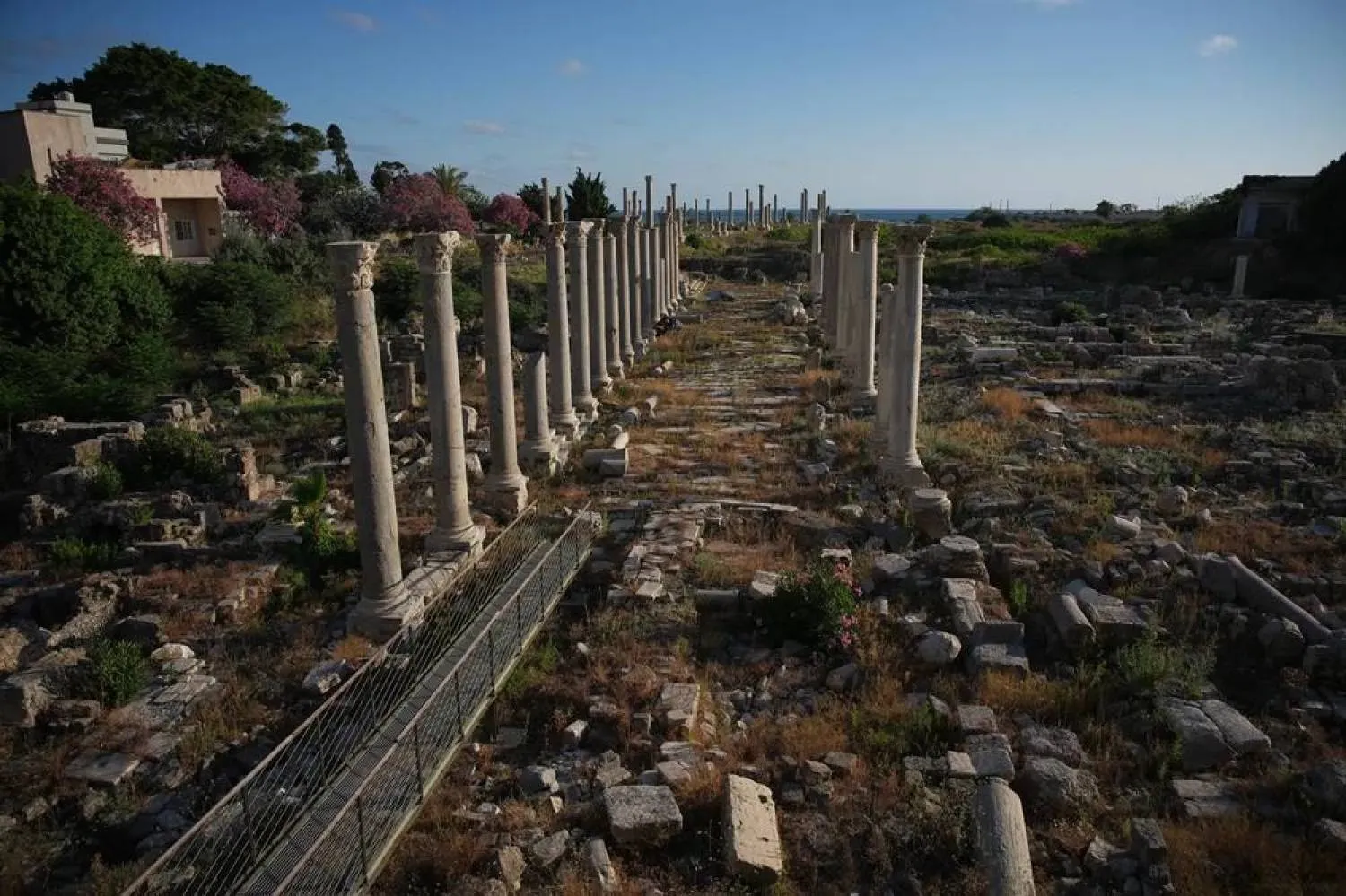
 Roman-era columns stand at an archaeological site, which was lightly damaged in an Israeli strike nearby, in the southern port city of Tyre, Lebanon, Thursday, June 18, 2026. (AP)
Roman-era columns stand at an archaeological site, which was lightly damaged in an Israeli strike nearby, in the southern port city of Tyre, Lebanon, Thursday, June 18, 2026. (AP)
TT

Ancient Lebanese City of Tyre Added to Heritage Danger List

 Roman-era columns stand at an archaeological site, which was lightly damaged in an Israeli strike nearby, in the southern port city of Tyre, Lebanon, Thursday, June 18, 2026. (AP)
Roman-era columns stand at an archaeological site, which was lightly damaged in an Israeli strike nearby, in the southern port city of Tyre, Lebanon, Thursday, June 18, 2026. (AP)

Tyre, an ancient Phoenician city in southern Lebanon bombarded by Israel over recent months, was added Tuesday to the UNESCO list of world heritage sites in danger.

"The site has been directly hit and has sustained damage. Furthermore, its state of conservation is a cause for growing concern, particularly given the possibility of further impacts," the organization said on X.

"Optimal conditions are no longer in place to ensure the conservation and protection of the property's outstanding universal value," said the UN body, adding that it was the Lebanese government that requested its inclusion on the list.

Tyre, 83 kilometers (50 miles) south of Beirut but barely 20 kilometers from the Israeli border, was placed on the UNESCO heritage list in 1984 and contains mainly Roman-era archaeological remains.

But the coastal city has become caught up in recent months in the conflict between Israel and Hezbollah, and most of its inhabitants have fled after the Israeli army issued evacuation orders covering districts, including some archaeological areas.

Hezbollah drew Lebanon into the Middle East conflict when it fired rockets at Israel to avenge the US-Israeli killing of Iran's supreme leader. Israel responded with heavy strikes and a ground invasion, killing more than 3,600 people.

The ancient city, founded some 4,700 years ago, is home to two protected sites listed as UNESCO World Heritage Sites, a Roman triumphal arch and a hippodrome dating from the second century.

One of the sites suffered a direct hit from an Israeli strike in June.

The city, one of the oldest in the Mediterranean, was variously Phoenician, Persian, Hellenistic, Roman, Byzantine and Ottoman.

Lebanese Minister of Culture Ghassan Salame earlier this year accused Israel of failing to comply with the Hague Convention, which since 1954 has required warring parties to protect cultural sites during armed conflict.

Salame also accused Israel of disregarding "blue shields", an internationally-recognized symbolic emblem which a UNESCO-linked committee established to protect cultural sites during armed conflict.

UNESCO's decision to inscribe Tyre on its danger list comes as the organization holds the 48th session of its World Heritage Committee in Busan, South Korea.



Wrth Signs MoU to Market Products of Artisans and Students

The MoU seeks to leverage the craft knowledge of Wrth’s artisans and students in the cultural products market - SPA
TT

Wrth Signs MoU to Market Products of Artisans and Students

The MoU seeks to leverage the craft knowledge of Wrth’s artisans and students in the cultural products market - SPA

The Royal Institute of Traditional Arts (Wrth) signed a memorandum of understanding (MoU) with T2 Company for Business Research and Development to enable artisans and students to display and sell their products and expand their marketing opportunities.

Areas of cooperation include developing a digital platform to display and sell handicraft products, establishing product quality standards, and organizing an exhibition at Wrth’s headquarters to showcase products made by its artisans and students. Cooperation also includes participating in external events and marketing the products to entities and specialized projects, SPA reported.

The MoU seeks to leverage the craft knowledge of Wrth’s artisans and students in the cultural products market.

It aims to enhance the quality of Saudi handicraft products, expand their reach to the public and interested entities, and transform craft skills into sustainable economic opportunities.


Saudi Theater Commission Concludes First Leg of Public Performing Arts Program in Riyadh

The event in Riyadh featured roaming folk arts, circus, and puppet shows, along with interactive experiences for families and children. SPA
TT

Saudi Theater Commission Concludes First Leg of Public Performing Arts Program in Riyadh

The event in Riyadh featured roaming folk arts, circus, and puppet shows, along with interactive experiences for families and children. SPA

The Theater and Performing Arts Commission concluded the first leg of its public performing arts program in Riyadh on Saturday, after three days of theatrical shows, live performances, and interactive experiences in public spaces.

The event in Riyadh featured roaming folk arts, circus, and puppet shows, along with interactive experiences for families and children.

The program's second leg will be held at the Cultural House in Dammam from November 18 to 21. The program covers six cities: Riyadh, Dammam, Buraidah, Hail, Taif, and Jeddah, and runs until December 19.


Saudi Heritage Commission Unveils Evidence of Human Activity Dating Back 125,000 Years at Mundafan Palaeolake

Saudi Heritage Commission Unveils Evidence of Human Activity Dating Back 125,000 Years at Mundafan Palaeolake
TT

Saudi Heritage Commission Unveils Evidence of Human Activity Dating Back 125,000 Years at Mundafan Palaeolake

Saudi Heritage Commission Unveils Evidence of Human Activity Dating Back 125,000 Years at Mundafan Palaeolake

Saudi Arabia’s Heritage Commission has unveiled the findings of an archaeological and environmental study conducted at the Uruq Al-Julaybah site, located along the shores of the ancient Mundafan Palaeolake in the Empty Quarter of Najran Region, reported the Saudi Press Agency on Friday.

Carried out in collaboration with Australia's Griffith University, King Abdullah University of Science and Technology (KAUST), and several national and international research institutions, the study revealed evidence of human activity dating back 125,000 years during a humid period in the Arabian Peninsula, evidenced by stone tools as well as animal and plant remains along the ancient shoreline.

Published in Science journal, the study indicates that Mundafan Palaeolake spanned approximately 340 square kilometers and reached a maximum depth of about 29 meters. Sedimentary and geomorphological data, alongside aquatic organism remains, point to a relatively stable freshwater body surrounded by open grasslands and vegetation that sustained diverse human and animal populations.

Across more than 130 locations at the site, researchers documented over 500 vertebrate and invertebrate fossils, including hippopotamuses, extinct long-horned buffalo, camels, Arabian oryx, gazelles, ostriches, mollusks, and freshwater crustaceans (ostracods), reflecting the rich ecological diversity of Mundafan Palaeolake during the humid periods of the Pleistocene epoch.

Researchers recovered 5,511 stone artifacts, each exceeding two centimeters in size, from the primary study area, more than 98% of which were crafted from flint. Analyses confirmed the use of the Levallois technique, an advanced core-preparation method characteristic of Middle Paleolithic toolmaking used to control the shape and size of resulting flakes and points, demonstrating that these implements were both manufactured and utilized on-site.

Despite surface erosion over time, the spatial distribution of the stone tools alongside fossil deposits and preserved organic remains indicates repeated, cumulative human habitation over an extended period. Microscopic, chemical, and use-wear analyses identified preserved organic residues, including plant fibers, wood, resins, fats, and collagen, as well as traces of palm and woody plant processing, pointing to diverse daily activities around the palaeolake.

Several stone points displayed impact fractures and traces of hafting onto handles. Chemical testing also detected plant-derived compounds associated with Acokanthera schimperi, a species traditionally used in hunting, suggesting the possible use of composite hunting technologies, though researchers noted that current evidence is insufficient to determine exact preparation methods, concentrations, or efficacy.

Director General of the Antiquities Sector at the Heritage Commission Dr. Ajab Alotaibi noted that fieldwork continued throughout the 2023 season under the commission's mandate to oversee and fund archaeological surveys and excavations. He underscored the commission's commitment to fostering multidisciplinary research partnerships bringing together Griffith University, KAUST, King Saud University, and specialized international centers.

Dr. Abdullah Alsharekh of the Department of Archaeology at King Saud University's College of Tourism and Archaeology affirmed that the shores of Mundafan Palaeolake provided an ideal habitat roughly 125,000 years ago, where the convergence of fresh water, wildlife, flora, and raw materials supported stone-tool production, hunting-gear preparation, resource processing, and fiber working.

Professor Michael Petraglia of Griffith University stated that the discovery significantly advances understanding of early human settlement across the Arabian Peninsula, highlighting the role of sites like Uruq Al-Julaybah in documenting human habitation during past humid phases.

Dr. Frans van Buchem of KAUST noted that collaboration across diverse scientific disciplines yielded a comprehensive portrait of ancient human behavior and prehistoric environments.

The research forms part of the Heritage Commission's broader efforts to leverage advanced scientific methodologies and global partnerships to illuminate the history of human settlement and environmental transformation in the Kingdom.