


UNESCO Adds West Bank Site and Lebanese Castles to World Heritage List Despite Israeli Objections

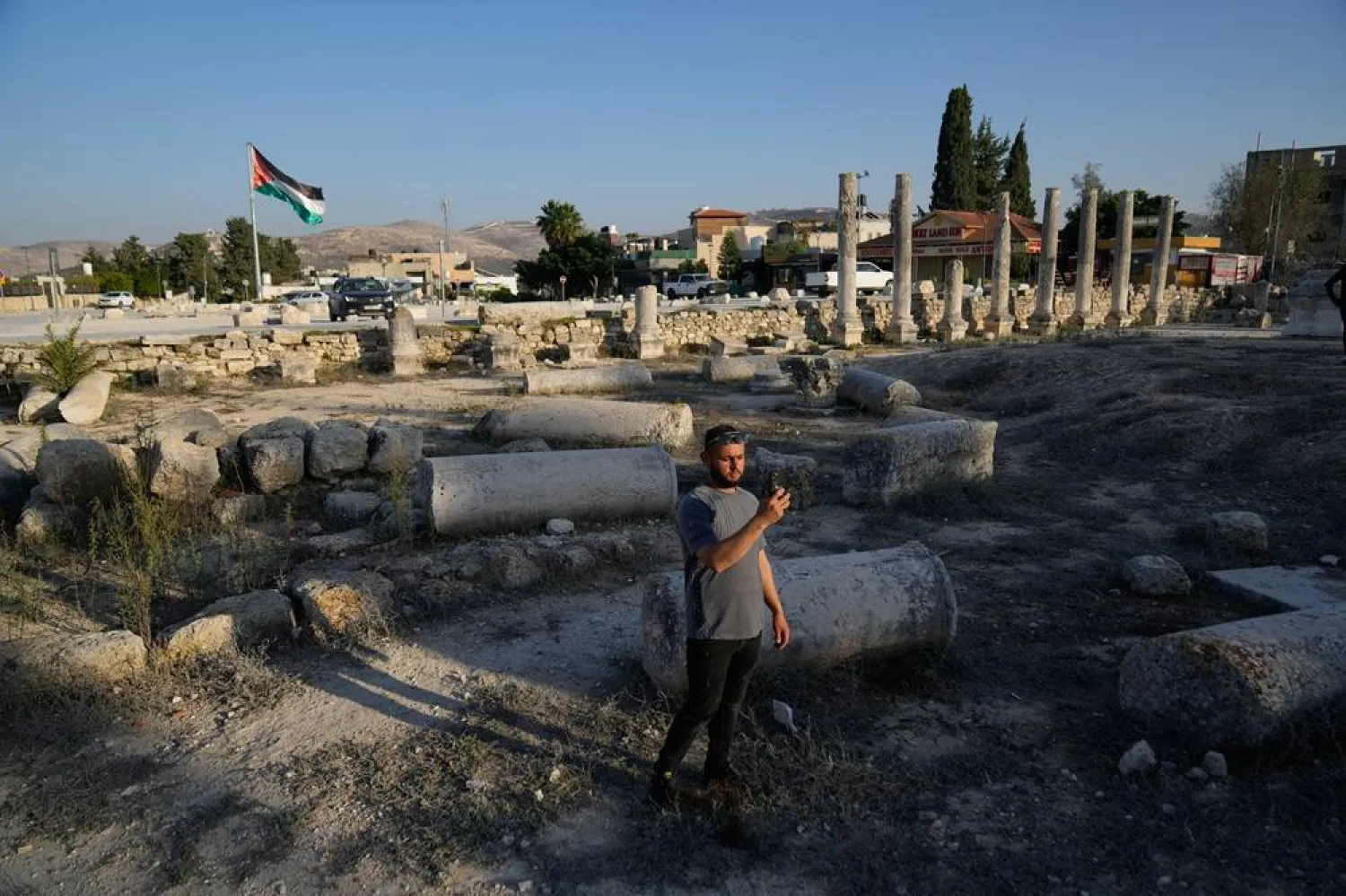
A Palestinian visitor takes a photo at the Roman historical site in the West Bank town of Sebastia, Thursday, Nov. 20, 2025. (AP)
TT

UNESCO Adds West Bank Site and Lebanese Castles to World Heritage List Despite Israeli Objections

A Palestinian visitor takes a photo at the Roman historical site in the West Bank town of Sebastia, Thursday, Nov. 20, 2025. (AP)

A United Nations committee voted Friday to inscribe a major archaeological site in the West Bank and a set of castles in southern Lebanon as World Heritage sites, despite objections from Israel, which had urged the committee to reject the bids.

The decision at a UN Educational, Scientific and Cultural Organization meeting in South Korea came days after Israel’s Foreign Ministry urged the committee to reject efforts to designate the small West Bank town of Sebastia and the Lebanese castles, calling the nominations a “weaponization of cultural heritage.”

At their meeting in Busan, members of the UNESCO committee decided to place Sebastia and five castles in Lebanon’s Mount Amel area on both the World Heritage List and the List of World Heritage in Danger after reviewing the nominations on an emergency basis.

Sebastia, a hilltop town about 10 kilometers (6 miles) northwest of Nablus in the Israeli-occupied West Bank, is identified by scholars as ancient Samara, capital of the biblical Kingdom of Israel. The area’s archaeological remains span the Iron Age, Roman, Byzantine and Islamic periods. Christian and Islamic tradition holds that John the Baptist was buried there, according to a UNESCO website.

Sebastia’s nomination, first submitted by the Palestinian delegation to UNESCO in 2012, argued that World Heritage status was needed to help preserve the site, saying it remains largely undeveloped under Israeli control and requires additional conservation despite attracting tourists.

The designation comes as Israel, which does not recognize a Palestinian state, moves to expropriate large swaths of land around the site, even as it faces pressure to crack down on violence by Israeli settlers in the Palestinian territory.

The five castles in the Mount Amel region are recognized for their layered architectural heritage, combining Crusader, Ayyubid, Mamluk and local influences, reflecting the evolution of fortified architecture over nearly nine centuries, according to a UNESCO description.

In Tuesday’s statement, Israel’s Foreign Ministry accused the Palestinian delegation of waging a “hostile, one-sided campaign” at UNESCO by falsely portraying Sebastia as an area facing an emergency, calling the effort a political attempt to “erase the site’s profound, well-documented Jewish and Christian history.”

Israel withdrew from UNESCO in 2019, accusing the organization of being biased against it and of downplaying its historical ties to the Holy Land.

Israel’s Foreign Ministry also took objection to efforts to list Beaufort Castle in southern Lebanon as a World Heritage site. The castle was part of the nomination covering five castles in the Mount Amel area.

The ministry said Iran-backed Hezbollah has turned Beaufort Castle into a military stronghold by building tunnels beneath the site and launching rockets from the area, and accused UNESCO of ignoring those developments.

UNESCO and the Lebanese embassy in South Korea declined to comment on the Israeli claims about Hezbollah.

The UNESCO committee on Wednesday placed another Lebanese site, Tyre, an ancient Phoenician city in the southern part of the country, on the list of world heritage sites in danger.



Istanbul Cymbals: From Ottoman Weapon of War to Pulse of Global Music

A worker hammers a cymbal at a workshop in Istanbul on July 30, 2026. (AFP)
TT

Istanbul Cymbals: From Ottoman Weapon of War to Pulse of Global Music

A worker hammers a cymbal at a workshop in Istanbul on July 30, 2026. (AFP)

The rhythmic clanging of hammers on bronze echoes through the Istanbul workshop where three craftsmen are landing blows with astonishing precision to transform featureless metal discs into highly prized handcrafted cymbals.

First used by Ottoman military "mehter" bands to frighten and demoralize the enemy, cymbals were a useful tool for an empire on the warpath.

But it would take the skill of a 17th-century Armenian alchemist called Avedis Zildjian to transform them into a percussion instrument whose exotic sound would first captivate Europe's classical composers and then shape the world of jazz.

Although cymbals existed long before Zildjian, he developed a unique alloy and special process for treating the metals that made them less fragile, winning plaudits in 1623 from the Ottoman sultan who let him set up a workshop.

"It's really hard to make good cymbals because they're consistently being crashed, so to make something that wasn't brittle which could withstand continuous use is quite an achievement," said ethnomusicologist Audrey Wozniak, who specializes in Turkish musical traditions.

The secret was passed down through the generations and although the original Zildjian operation left Istanbul for America in the dying days of the Ottoman Empire, others who learned from the Zildjian masters have continued the tradition.

Today, Istanbul remains the center of excellence for cymbals, where a handful of brands still produce hand-hammered bronze using techniques developed more than 400 years ago.

- 'A cymbal's soul' -

"We are producing 100-percent handmade cymbals with traditional methods, without using electricity or gas, only coal and wood," said Mehmet Ozturk, sales rep at Bosphorus Cymbals on Istanbul's northern outskirts, who said casting a cymbal takes up to a week.

First is the casting stage. Most cymbals are made of a copper and tin alloy that is melted into molten bronze which is poured into molds and cooled into disc-shaped blanks.

Moving swiftly, a worker using a long-handled peel places the blanks into the glowing furnace then removes others that are put through a rolling mill in a cycle repeated up to 15 times to compress and spread the metal which is then water tempered.

"Every stage is crucial," said master cymbalsmith Hasan Seker, a burly 56-year-old who co-founded Bosphorus Cymbals in 1996 and was sweating after hauling glowing blanks into and out of the furnace.

"We use copper and tin and one more ingredient which is secret. Even though it's in very small quantities, it gives the cymbal a different character in terms of consistency and sound," he told AFP.

After punching out the raised bell and cutting it to size, what looks like the now recognizable cymbal must undergo the all-important hammering process.

"Not a single blow is random," he said as a trio of craftsmen and their expert struck the cymbals to create the darker, more complex tones so prized by jazz drummers.

This is where a man's emotional state is poured into his work, said Seker, who began working in the trade aged 12 as a summer job.

"When someone is hammering, he might hit softly, then something comes to mind, he gets angry and hits harder. Those variations in the metal's surface, the reservations, the tension patterns diversify the sound. In a way, he gives the cymbal its soul."

Over the years, Seker has met countless grateful musicians, some of whom come on "a pilgrimage" to the workshop whose grubby walls are lined with ageing posters of jazz drummers like Jeff Hamilton, Stanton Moore and Ari Hoenig.

- 'Every one is different' -

Inside Nardis Jazz Club, a dimly lit venue with an intimate feel in the shadow of Istanbul's Galata Tower, a jazz trio is rehearsing ahead of an evening show with a singer.

For drummer Derin Bayhan, he would only ever use Istanbul-made cymbals because they're "100 percent handmade" and each one has a unique sound.

"Even if you bought two from the same series, the same weight and structure, the two cymbals wouldn't perfectly match. Because it's handmade, it's basically an adventure," the 42-year-old told AFP.

"So you search for one and when you find it, no one else will have it: that sound is yours."

As to why the Istanbul tradition remains so popular among jazz musicians despite the Zildjian family's move to America where they set up a factory, jazz historian Berk Ozler said it was the search for uniqueness.

"Mass production started when Zildjian went to the USA whereas the ones that stayed in Istanbul were handcrafted and still are. Jazz musicians chase after that uniqueness so that's why they are very valuable."


Saudi Heritage Commission Expands National Urban Heritage Register with 9,586 New Sites

The Saudi Heritage Commission logo
TT

Saudi Heritage Commission Expands National Urban Heritage Register with 9,586 New Sites

The Saudi Heritage Commission logo

The Heritage Commission announced the registration of 9,586 urban heritage sites in the National Urban Heritage Register in two consecutive phases.


The first phase included 3,000 sites, followed by an additional 6,586, bringing the total number of registered sites across Saudi Arabia’s regions to 59,586, SPA reported.

The registered sites in the two phases were distributed across several Saudi regions, including 169 sites in Riyadh Region, 1,755 in Makkah Region, 23 in Madinah Region, 13 in Qassim Region, 19 in Eastern Region, 4,363 in Aseer Region, two in Tabuk Region, 21 in Hail Region, one in Northern Borders Region, 673 in Najran Region, and 2,547 in Al-Baha Region.

The Heritage Commission urged citizens and residents to report unregistered urban heritage sites or any practices that may compromise their integrity through the archaeological report service, the commission’s official social media channels, by visiting one of its branches or offices across the Kingdom, or by contacting the Unified Security Operations Center at 911.


Red Sea Museum Transforms Learning into Experiences of Discovery and Creativity

The program’s educational dimension extends to archaeology, the environment, and the protection of underwater cultural heritage - SPA
TT

Red Sea Museum Transforms Learning into Experiences of Discovery and Creativity

The program’s educational dimension extends to archaeology, the environment, and the protection of underwater cultural heritage - SPA

The Red Sea Museum in Historic Jeddah takes visitors on a journey this August that goes beyond viewing its collections to engaging with the Red Sea as a space for discovery and learning.

The program offers a range of activities that take visitors from the screen to the depths of the sea. As part of the Sea Cinema program, the museum hosted a screening of Finding Nemo on August 7, offering a cinematic experience that evoked the wonder of the ocean and its adventures, SPA reported.

The program’s educational dimension extends to archaeology, the environment, and the protection of underwater cultural heritage through a panel discussion on August 15, addressing the relationship between preserving archaeological evidence and protecting the marine environment.

Moreover, the museum offers children a dedicated space for creativity through the “From Waste to Wonder” workshop, which encourages them to transform used items into new ideas and experiences.

The Red Sea Lab stands out as one of the key experiences in the August program, turning the museum into an interactive laboratory for children aged 10 to 14 from August 25 to 29.

The program brings together science, technology, engineering, and mathematics (STEM), allowing participants to explore the Red Sea from a scientific perspective, from its geological formation and biodiversity to coral reefs, ocean chemistry, and water quality, as well as exploration, mapping, and environmental conservation technologies.

The August program coincides with the final days of the “Sunken Treasures: The Maritime Heritage of the Red Sea” exhibition, which runs through August 15.