


Gdynia, Poland’s Interwar Modernist Port City, Wins UNESCO Heritage Status

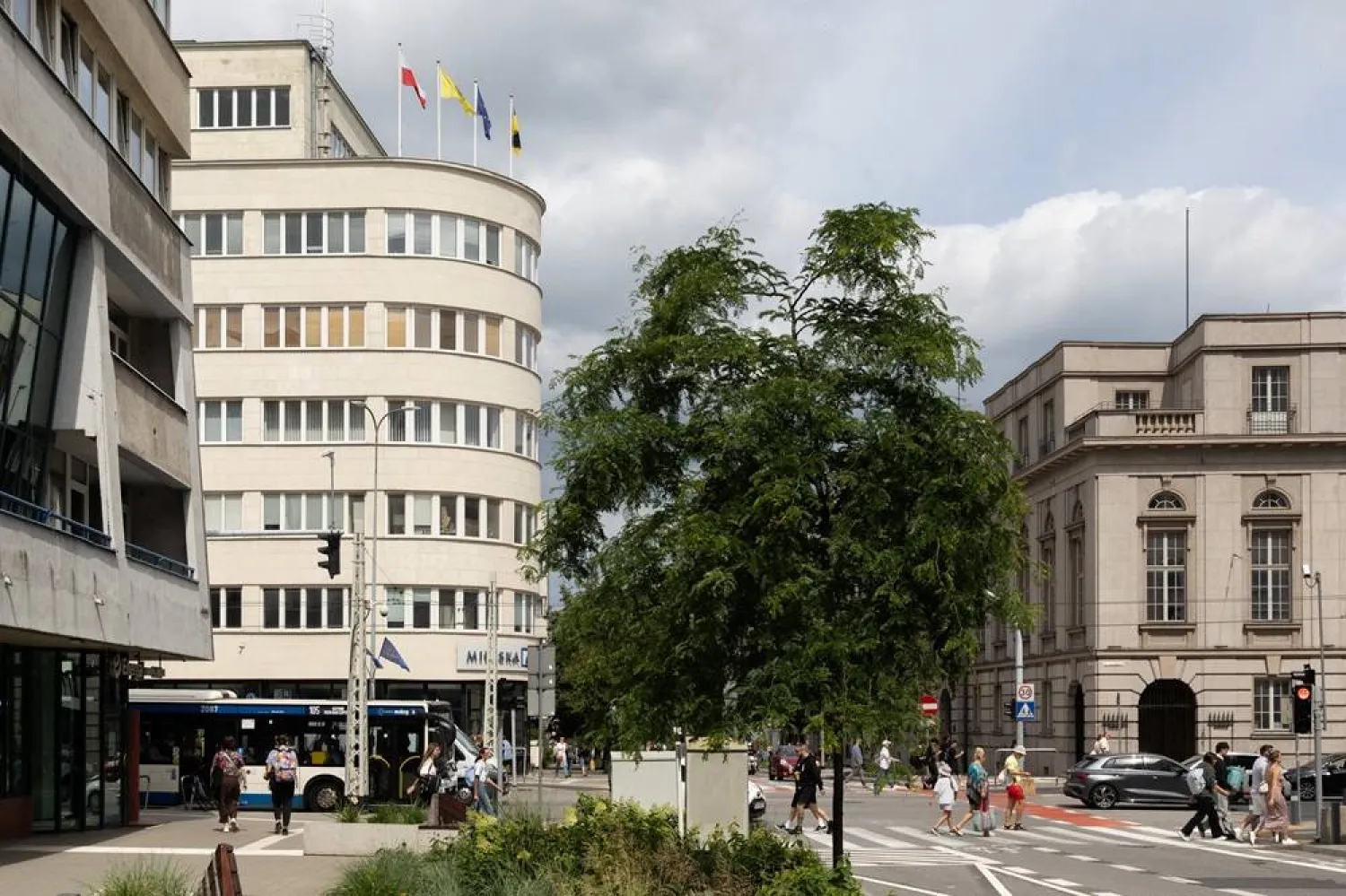
People walk past the former ZUS (Social Insurance Institution) building, a building on the Gdynia Modernism Trail, at the intersection of 10 Lutego Street and 3 Maja Street in Gdynia, Poland, July 25, 2026. (Reuters)
TT

Gdynia, Poland’s Interwar Modernist Port City, Wins UNESCO Heritage Status

People walk past the former ZUS (Social Insurance Institution) building, a building on the Gdynia Modernism Trail, at the intersection of 10 Lutego Street and 3 Maja Street in Gdynia, Poland, July 25, 2026. (Reuters)

The center of the modernist Baltic ‌port city of Gdynia, built almost from scratch during the two decades between World War One and World War Two, was added to UNESCO's World Heritage List on Monday as the city celebrates its centenary year.

Nestled north of the historic city of Gdansk, birthplace of Poland's Solidarity labor union movement, and the seaside resort of Sopot, Gdynia was long regarded locally as poor relation to those places, yet the UNESCO award adds it to a 1,273-strong list ranging from Australia's Great Barrier Reef to the Acropolis in Athens.

The UNESCO award is a landmark or area with legal protection for having special ‌cultural or natural ‌value to humanity.

Gdynia is one of the clearest ‌symbols ⁠of the ambitions ⁠of interwar Poland after it regained independence in 1918 following 123 years of partition between Russia, Prussia and Austria-Hungary.

FISHING VILLAGE BECOMES GATEWAY TO THE WORLD

"This is an honor for a city that did not look back, but instead boldly looked to the future — a city built of dreams, courage, and a belief that Poland is capable of creating extraordinary things," Culture Minister Marta ⁠Cienkowska wrote on social media platform X.

Gdynia also reflects the ‌challenges facing the new state, which emerged ‌with only a narrow stretch of Baltic coastline and no major seaport of ‌its own.

To secure access to the sea, Poland chose the fishing village ‌of Gdynia, home to just 1,200 residents in 1920, as the site of a new gateway to the world. By 1939, the population had increased 100 times as people from across the country flocked to the city in search of ‌opportunity and a fresh start.

Architecture historians often compare Gdynia to other cities shaped by interwar modernism and the functionalist districts built in cities including Rotterdam and Brno in the 1920s and 1930s.

Unlike those urban centers, however, Gdynia was constructed almost entirely from scratch around a new seaport, giving it an unusually coherent architectural character and making it one of Europe's most complete examples of a modernist city built in a single generation.

Its center is characterized by streamlined buildings with flat roofs, rounded corners, long horizontal windows and balconies resembling ocean liners, reflecting the city's maritime identity and the era's faith in technology and progress.

UNESCO's World Heritage Committee is composed of representatives of 21 countries. Other sites recently added to its Heritage list include the D-Day Landings beaches in Normandy.


Palestinian Artist Sliman Mansour Dies at 79

Painter and sculptor Sliman Mansour and his landmark 1973 painting, "Camel of Hardships". (Sliman Mansour on Instagram)
TT

Palestinian Artist Sliman Mansour Dies at 79

Painter and sculptor Sliman Mansour and his landmark 1973 painting, "Camel of Hardships". (Sliman Mansour on Instagram)

Painter and sculptor Sliman Mansour, one of the most prominent names in Palestinian art, has died at the age of 79, his family announced.

Mansour, whose vivid artwork depicted both Palestinian traditions and his people's struggles under Israeli occupation, died on Monday at his home in east Jerusalem, his family said.

"The final chapter has been written. With hearts gripped by sorrow beyond description, we announce that our dear father has left this world," the family said in a statement.

"For the world, he leaves behind a life filled with beauty and memories, and a legacy that will continue through everyone whose lives he touched. As for us, we have lost a father who was the source of our love, our strength and our refuge."

Mansour was born in Birzeit, north of Ramallah, in 1947 and studied art and design in Jerusalem, graduating in 1970.

The Palestinian Culture Ministry mourned Mansour, calling him "one of the most important pillars of contemporary Palestinian visual art, whose career over decades formed part of the Palestinian visual and national memory".

The ministry hailed his landmark 1973 painting, "Camel of Hardships", depicting an elderly Palestinian porter carrying the city of Jerusalem on his back, as "an artistic and national icon", adding that his work served "as witness to Palestinian history and guardian of identity".

Mansour was the recipient of numerous awards, among them the UNESCO-Sharjah Prize for Arab Culture in 2019.


Saudi Arabia Establishes Cultural Center in Paris

Saudi Arabia Establishes Cultural Center in Paris
TT

Saudi Arabia Establishes Cultural Center in Paris

Saudi Arabia Establishes Cultural Center in Paris

The Saudi Ministry of Culture announced on Monday the establishment of a Saudi cultural center in Paris on the sidelines of the visit of Prince Mohammed bin Salman bin Abdulaziz Al Saud, Crown Prince and Prime Minister, to France.

The center will serve as a platform for promoting Saudi culture and highlighting its historical depth and creative diversity through high-quality cultural programs and initiatives involving French practitioners, institutions and the public.

It will support the international presence of Saudi cultural practitioners, strengthen communication between intellectuals and creative professionals in the two countries, and build strategic partnerships between Saudi and French cultural institutions, facilitating the exchange of expertise and implementation of joint cultural initiatives.

The establishment of the center reflects the continued development of Saudi-French relations and underscores the Kingdom's commitment to strengthening its international cultural presence and presenting an authentic cultural image that introduces the world to its rich heritage and contemporary creative output.


Saudi-French Joint Ministerial Committee on AlUla Underlines Commitment to Deepen Partnership

Saudi Minister of Culture and Governor of the Royal Commission for AlUla Prince Badr bin Abdullah bin Farhan (third from left) and French Minister for Europe and Foreign Affairs Jean-Noel Barrot (third from right) during the meeting of the joint Saudi-French Ministerial Committee on AlUla on Monday. (SPA)
TT

Saudi-French Joint Ministerial Committee on AlUla Underlines Commitment to Deepen Partnership

Saudi Minister of Culture and Governor of the Royal Commission for AlUla Prince Badr bin Abdullah bin Farhan (third from left) and French Minister for Europe and Foreign Affairs Jean-Noel Barrot (third from right) during the meeting of the joint Saudi-French Ministerial Committee on AlUla on Monday. (SPA)

The joint Saudi-French Ministerial Committee on AlUla held a meeting in Paris on Monday, chaired by Saudi Minister of Culture and Governor of the Royal Commission for AlUla Prince Badr bin Abdullah bin Farhan and French Minister for Europe and Foreign Affairs Jean-Noel Barrot.

The meeting was attended by Saudi Minister of Foreign Affairs Prince Faisal bin Farhan bin Abdullah, Minister of Investment Fahad Al-Saif, and Chief Executive Officer of the Royal Commission for AlUla Abeer Al-Akel. Also present were French Minister of Culture Catherine Pegard, Minister of Economy, Finance and Industry Roland Lescure, and Chairman of the French Agency for AlUla Development (AFALULA) Jean-Yves Le Drian.

The officials welcomed the signing of an agreement to extend and amend the agreement concluded between the Saudi and French governments on the cultural, environmental, tourism, human, economic, and heritage development of AlUla Governorate.

They reviewed the partnership's achievements and discussed avenues for future cooperation, reflecting the strength of relations between the two countries and affirming AlUla's position as a meeting point of civilizations and a global destination for culture, creativity, and sustainable development.

They underlined their commitment to further deepening the partnership, which has become a global model for international cooperation based on the exchange of mutual benefits and knowledge, contributing to the achievement of comprehensive and sustainable development goals.

The meeting reviewed the scale of joint investments and areas of ongoing cooperation in the sectors of archaeology, arts, culture, sports, hospitality, and human-capital development.

The partnership reflects a shared commitment to sustainable development through strategic projects, such as the AlUla Tram and the Sharaan Resort, designed by Jean Nouvel, as well as investments in renewable energy, water, and mobility, supporting the objectives of Saudi Vision 2030 to attract one million visitors and global investments while preserving AlUla's cultural and natural heritage.
