


Is this Cave in Türkiye Where Homer Wrote 'The Odyssey'?

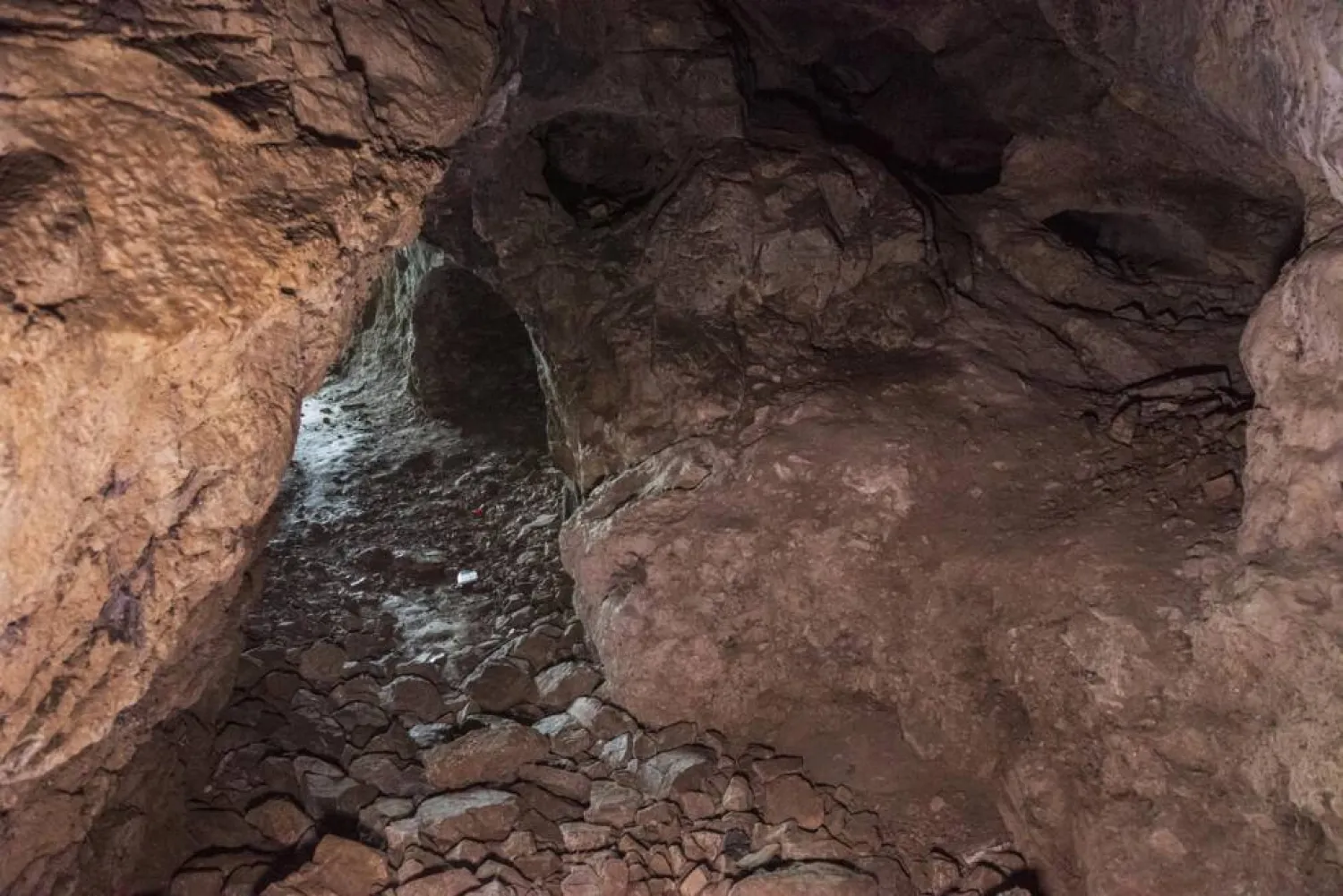
Access to the rock-strewn cave is not easy. Ahmet Ayberk Cimen / AFP
TT

Is this Cave in Türkiye Where Homer Wrote 'The Odyssey'?

Access to the rock-strewn cave is not easy. Ahmet Ayberk Cimen / AFP

On a Turkish hillside overlooking the olive-covered slopes outside Izmir is a cave known to generations of locals as the place where Homer penned "The Odyssey".

"This place was always called Homer's Valley by the locals. Travelers from all over the world would come and see the cave where Homer is said to have composed his poems," explained Turkish researcher Altan Altin, who has written a book on the subject.

In fact, nobody knows exactly where Homer wrote his epic poems and there is much mythology around the idea of his cave. Today, of course, the debate has become livelier and more immediate thanks to Christopher Nolan's blockbuster film "The Odyssey".

The poet has for a very long time been associated with the Izmir region of Türkiye’s Aegean coast, which for most of its history was known as ancient Smyrna.

"The Smyrnaeans have the river Meles, with its lovely water, and at its springs is the grotto, where they say Homer composed his poems," wrote the 2nd-century Greek chronicler and geographer Pausanias.

Those words have fueled a centuries-long debate, one that continues today, about Homer's life and the location of the river where he was thought to have been born in the year 8 BC.

- Remarkable precision -

Visiting the cave, which is filled with rocks, is not easy.

Inside, travelers have left Greek scrawled on the walls, although it is not clear how old the writing is.

Although other places, notably the Greek island of Chios, also lay claim to Homer's origins, ancient Smyrna and its hinterland -- where Bornova is located -- are closely associated with the poet.

"For me, there's no doubt, Homer is from Bornova. In any case, he is from Ionia, which includes Smyrna and Chios. He's from these lands," Altin told AFP. Ionia is the name of an ancient Greek region on Türkiye’s Aegean coast.

To support his thesis, Altin pointed to a 3rd-century BC frieze depicting the deification of Homer, which he says reproduced the Bornova cave with remarkable precision.

"This bas-relief was already known, but no one had ever noticed the identical details to those found in Homer's cave. This is the first time such a detailed geographical description came to light," he said.

Archaeological evidence from the area also suggests a link to Homer.

"The discoveries from the excavations, especially coins bearing Homer's likeness, show us that the inhabitants of ancient Smyrna considered the poet to be one of their own," archaeologist Mehmet Akif Erdem said.

"'The Iliad' and 'The Odyssey' were written in the (ancient Greek) dialects of Ionic and Aeolic, suggesting that ancient Smyrna and Bornova could be among Homer's native lands," he said.

- Homer everywhere -

Beyond the academic debate about his origins, Homer is everywhere in Bornova.

At Yesilova Hoyuk, a Neolithic site considered to be the oldest known prehistoric human settlement in Izmir, there is a bust of Homer with the inscription: "I compiled The Iliad and The Odyssey epics on this land. I lived in Bornova."

The town -- which already hosts a book fair dedicated to Homer and has a statue of Trojan War hero Hector in a local park -- is planning to refurbish the cave and open it to visitors to capitalize on the revival of interest in the ancient poet.

"Preserving Homer's legacy is a duty we owe to humanity. He is one of the founding fathers of literature," Bornova Mayor Omer Eski told AFP.

"The stories he tells are about this land. The question is not whether we should claim Homer or not. His story is also ours," he said.

But not everyone shares his vision.

In 2024, municipal officials from President Recep Tayyip Erdogan's ruling AKP party proposed renaming Homer's Valley after a Turkish fighter, saying the site should not have a Greek name.

"Erasing Homer's name would be one of the worst things we could do to Bornova," retorted the mayor, whose aim is to "make Homer known to the whole world as a person from Bornova" and to make the town a tourist attraction.

- 'Proud to be his compatriot' -

Mustafa Kocyigit, who runs the Gargantua bookshop in Izmir, said the success of Nolan's film has revived interest in Homer and boosted sales of the poem "The Odyssey".

"I knew Homer was from these lands, but I didn't know he was specifically from Izmir. We are incredibly lucky," said teacher Safak Tosun outside one of the city's cinemas where the film is showing.

"I feel proud, honored and deeply privileged to be his fellow countryman."

For the researcher Altin, there are clues in Homer's writing that he says shows the poet came from the area.

"When you dive into the Iliad, you really understand that Homer was an Anatolian. You find anecdotes and cultural references that are completely unknown elsewhere," he said.

He believes Homer's origins should not stir up rivalry between Türkiye and Greece.

"Homer is 2,800 years old, while the Turkish-Greek border is only a century old," he shrugs.

"Homer is Greek. Homer is Anatolian. None of us is older than he is, not even our countries."


AlUla Royal Commission, National Museum of Asian Art Strengthen Cooperation Through Residence Program

The initiative is part of the commission’s efforts to promote international cultural dialogue and highlight the region’s exceptional cultural heritage. (SPA)
TT

AlUla Royal Commission, National Museum of Asian Art Strengthen Cooperation Through Residence Program

The initiative is part of the commission’s efforts to promote international cultural dialogue and highlight the region’s exceptional cultural heritage. (SPA)

Saudi Arabia’s Royal Commission for AlUla has strengthened its cultural partnership with the National Museum of Asian Art, part of the Smithsonian Institution in Washington DC, by launching the “Rawi in Residence” program, with the participation of storytellers Atif AlBalawi and Wedad Yaseen.

The initiative is part of the commission’s efforts to promote international cultural dialogue and highlight the region’s exceptional cultural heritage, reported the Saudi Press Agency on Sunday.

The program is the first public-facing initiative under the partnership agreement between the commission and the museum. It was delivered through three interactive sessions involving museum visitors, families, curators, guides, and specialists in heritage and culture.

During the program, the two storytellers led a series of talks and interactive experiences highlighting AlUla’s cultural landscape and historical sites. They also highlighted its historical role as a major hub of cultural exchange along the Incense Route, drawing on storytelling and heritage interpretation techniques.

The initiative builds on field visits and the exchange of expertise between the commission and the museum, which contributed to shaping the “Rawi” concept and incorporating it into the museum’s summer program in Washington. This strengthened shared understanding of heritage interpretation methods and enhanced the visitor experience in line with the highest international standards.

The program is aligned with the Royal Commission for AlUla’s objectives of empowering AlUla’s young men and women and showcasing their capabilities at international forums. It builds on previous participation by storytellers at prominent global venues in Beijing, the UNESCO pavilion at the Venice Biennale, and the organization’s headquarters in Paris.

These efforts are in line with the objectives of Saudi Vision 2030 to celebrate Saudi national heritage and strengthen its cultural presence on the international stage.


Athens Is Cleaning Its All-Marble Olympic Stadium for the First Time in More Than a Century

A worker cleans the marble surfaces of the Panathenaic Stadium, also known as "Kallimarmaro," or beautiful marble, which hosted the first modern Olympic Games in 1896, using a high-pressure water hose during renovation work in Athens, Greece, Thursday, Aug. 13, 2026. (AP Photo/Thanassis Stavrakis)
TT

Athens Is Cleaning Its All-Marble Olympic Stadium for the First Time in More Than a Century

A worker cleans the marble surfaces of the Panathenaic Stadium, also known as "Kallimarmaro," or beautiful marble, which hosted the first modern Olympic Games in 1896, using a high-pressure water hose during renovation work in Athens, Greece, Thursday, Aug. 13, 2026. (AP Photo/Thanassis Stavrakis)

It has welcomed marathon runners, rock stars and the first modern Olympic athletes. Now it’s time for a monumental scrub.

Athens’ U-shaped Panathenaic Stadium — made entirely of white marble — is getting its first systematic cleaning in more than a century.

Rebuilt for the first modern Olympics in 1896, the site is the ceremonial send-off point for the Olympic flame, including for Los Angeles 2028.

A fresh look in Athens ahead of LA 2028 The stadium is made of the same glittering marble used on the Acropolis, making the cleanup job delicate.

The work is revealing a monument changed by time, weather and millions of visitors. Cleaners in white and blue overalls move across the stadium’s 47 steep tiers with thin spray lances, using clean water at carefully controlled, low pressure. Machines vacuum up the runoff as they go.

“The goal of cleaning is not to make everything white. It’s to remove the dirt and the first layers of organic material that are deposited on the surface,” said Dimitris Selemis, a senior conservator at the site.

“The idea is to clean all the material that (contains) dirt from the surface, so we have a better understanding of the monument,” he said, noting that there is more weed growth and dirt in areas that receive less direct sunlight.

Crews are also using steam to remove blotches of chewing gum, which have turned black over time. Stadium officials say chewing gum, high heels and soft-drink stains are among the main culprits that stain the marble.

Now slowly being revealed, the original gleaming look of the venue earned it the widely used Greek nickname “Kallimarmaro,” or beautiful marble.

“We call it Kallimarmaro because it is made of the finest marble, the best that was ever produced ... We are very proud of it,” Isidoros Kouvelos, president of the Hellenic Olympic Committee, told The Associated Press in an interview.

“It needed to be cleaned of everything that has accumulated over all these years," he said. "This way the Panathenaic Stadium will show all its brilliance and will once again be the foremost monument of humanity for the Olympic Movement.”

Built into a natural ravine, the stadium’s site was used for ancient Greek athletic contests and later Roman spectacles before falling into centuries of disuse.

An African celebration planned in Athens Since its 1896 revival, it has staged fashion shows, rock concerts, boxing matches and national celebrations — as well as lavish patriotic ceremonies ordered by a military dictatorship in the 1960s.

Today, it’s a popular draw for tourists. Apart from the cleanup, the Kallimarmaro is also getting a new track, upgraded lighting and fresh support facilities. The project is privately funded by a shipping company and overseen by the Hellenic Olympic Committee with guidance from Culture Ministry experts.

The work will continue through 2026 but is currently concentrated on the stadium’s “sling,” or curved end, in time for the next torch-passing ceremony on Sept. 10.

That will be for the Dakar Youth Olympics, scheduled for Oct. 31-Nov. 13 in Senegal, which will be the first Olympic competition ever hosted in Africa.

IOC President Kirsty Coventry, a swimming gold medal winner from Zimbabwe, is due to attend the Sept. 10 ceremony, Kouvelos said.


Italian Police Recover Stolen Renoir, Cezanne and Matisse Worth 9 mn Euros

Carabinieri officers pose with three paintings by Paul Cezanne, Henri Matisse and Pierre-Auguste Renoir recovered after they were stolen from the Magnani Rocca Foundation in Mamiano, Italy, in this handout image released on August 14, 2026. Carabinieri/Handout via REUTERS
TT

Italian Police Recover Stolen Renoir, Cezanne and Matisse Worth 9 mn Euros

Carabinieri officers pose with three paintings by Paul Cezanne, Henri Matisse and Pierre-Auguste Renoir recovered after they were stolen from the Magnani Rocca Foundation in Mamiano, Italy, in this handout image released on August 14, 2026. Carabinieri/Handout via REUTERS

Paintings by Renoir, Cezanne and Matisse worth over nine million euros which were stolen from a museum in Italy in March have been recovered, Italian police said Friday.

The paintings were taken by masked thieves from the villa of the Magnani Rocca Foundation, near Parma in northern Italy, in a heist that lasted under three minutes.

Video footage released by the police showed two thieves wearing headlamps and with their faces covered entering the villa by breaking through a window, Reuters reported.

They headed straight into the room where the three paintings hung and took them off the wall, before heading back to the window and passing them through to an accomplice waiting outside.

They made off with "Fish" by Auguste Renoir, "Still Life with Cherries" by Paul Cezanne, and "Odalisque on the Terrace" by Henri Matisse.

The Renoir is worth six million euros, the Cezanne three million and the Matisse some 20,000 euros, police said.

The Magnani Rocca Foundation -- 20 kilometres (12 miles) from Parma -- houses the collection of art historian Luigi Magnani, which also includes works by Durer, Rubens, Van Dyck, Goya and Monet.

The theft is the latest in a series of robberies targeting major museums in Europe.

Last October, thieves broke into the Louvre in Paris -- the most visited museum in the world -- in broad daylight, escaping in less than eight minutes with jewellery worth $102 million.
