
Is this Cave in Türkiye Where Homer Wrote 'The Odyssey'?

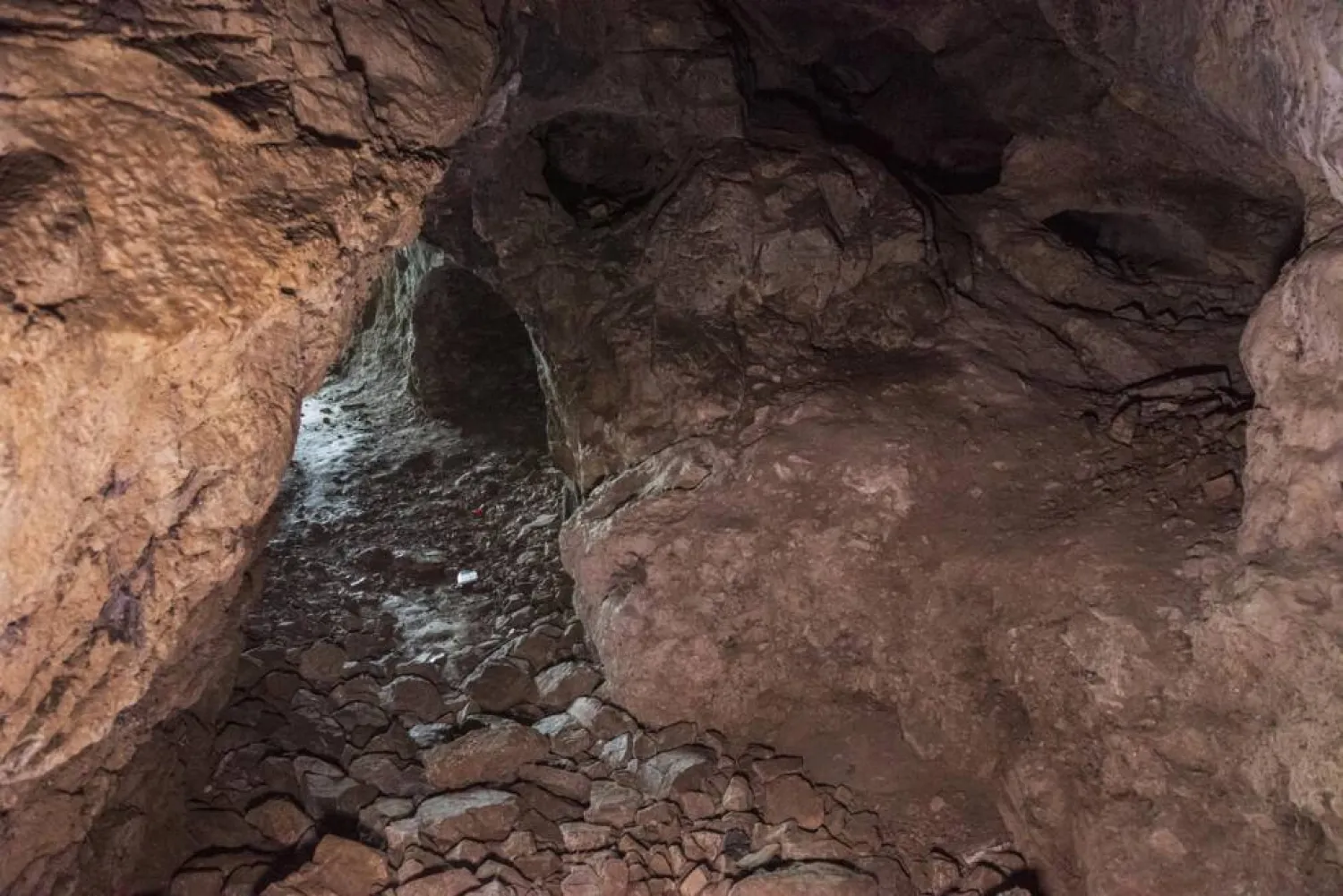
Access to the rock-strewn cave is not easy. Ahmet Ayberk Cimen / AFP
TT

Is this Cave in Türkiye Where Homer Wrote 'The Odyssey'?

Access to the rock-strewn cave is not easy. Ahmet Ayberk Cimen / AFP

On a Turkish hillside overlooking the olive-covered slopes outside Izmir is a cave known to generations of locals as the place where Homer penned "The Odyssey".

"This place was always called Homer's Valley by the locals. Travelers from all over the world would come and see the cave where Homer is said to have composed his poems," explained Turkish researcher Altan Altin, who has written a book on the subject.

In fact, nobody knows exactly where Homer wrote his epic poems and there is much mythology around the idea of his cave. Today, of course, the debate has become livelier and more immediate thanks to Christopher Nolan's blockbuster film "The Odyssey".

The poet has for a very long time been associated with the Izmir region of Türkiye’s Aegean coast, which for most of its history was known as ancient Smyrna.

"The Smyrnaeans have the river Meles, with its lovely water, and at its springs is the grotto, where they say Homer composed his poems," wrote the 2nd-century Greek chronicler and geographer Pausanias.

Those words have fueled a centuries-long debate, one that continues today, about Homer's life and the location of the river where he was thought to have been born in the year 8 BC.

- Remarkable precision -

Visiting the cave, which is filled with rocks, is not easy.

Inside, travelers have left Greek scrawled on the walls, although it is not clear how old the writing is.

Although other places, notably the Greek island of Chios, also lay claim to Homer's origins, ancient Smyrna and its hinterland -- where Bornova is located -- are closely associated with the poet.

"For me, there's no doubt, Homer is from Bornova. In any case, he is from Ionia, which includes Smyrna and Chios. He's from these lands," Altin told AFP. Ionia is the name of an ancient Greek region on Türkiye’s Aegean coast.

To support his thesis, Altin pointed to a 3rd-century BC frieze depicting the deification of Homer, which he says reproduced the Bornova cave with remarkable precision.

"This bas-relief was already known, but no one had ever noticed the identical details to those found in Homer's cave. This is the first time such a detailed geographical description came to light," he said.

Archaeological evidence from the area also suggests a link to Homer.

"The discoveries from the excavations, especially coins bearing Homer's likeness, show us that the inhabitants of ancient Smyrna considered the poet to be one of their own," archaeologist Mehmet Akif Erdem said.

"'The Iliad' and 'The Odyssey' were written in the (ancient Greek) dialects of Ionic and Aeolic, suggesting that ancient Smyrna and Bornova could be among Homer's native lands," he said.

- Homer everywhere -

Beyond the academic debate about his origins, Homer is everywhere in Bornova.

At Yesilova Hoyuk, a Neolithic site considered to be the oldest known prehistoric human settlement in Izmir, there is a bust of Homer with the inscription: "I compiled The Iliad and The Odyssey epics on this land. I lived in Bornova."

The town -- which already hosts a book fair dedicated to Homer and has a statue of Trojan War hero Hector in a local park -- is planning to refurbish the cave and open it to visitors to capitalize on the revival of interest in the ancient poet.

"Preserving Homer's legacy is a duty we owe to humanity. He is one of the founding fathers of literature," Bornova Mayor Omer Eski told AFP.

"The stories he tells are about this land. The question is not whether we should claim Homer or not. His story is also ours," he said.

But not everyone shares his vision.

In 2024, municipal officials from President Recep Tayyip Erdogan's ruling AKP party proposed renaming Homer's Valley after a Turkish fighter, saying the site should not have a Greek name.

"Erasing Homer's name would be one of the worst things we could do to Bornova," retorted the mayor, whose aim is to "make Homer known to the whole world as a person from Bornova" and to make the town a tourist attraction.

- 'Proud to be his compatriot' -

Mustafa Kocyigit, who runs the Gargantua bookshop in Izmir, said the success of Nolan's film has revived interest in Homer and boosted sales of the poem "The Odyssey".

"I knew Homer was from these lands, but I didn't know he was specifically from Izmir. We are incredibly lucky," said teacher Safak Tosun outside one of the city's cinemas where the film is showing.

"I feel proud, honored and deeply privileged to be his fellow countryman."

For the researcher Altin, there are clues in Homer's writing that he says shows the poet came from the area.

"When you dive into the Iliad, you really understand that Homer was an Anatolian. You find anecdotes and cultural references that are completely unknown elsewhere," he said.

He believes Homer's origins should not stir up rivalry between Türkiye and Greece.

"Homer is 2,800 years old, while the Turkish-Greek border is only a century old," he shrugs.

"Homer is Greek. Homer is Anatolian. None of us is older than he is, not even our countries."


Diriyah Art Futures Opens Second Edition of 'CONTINUUM' Exhibition

Diriyah Art Futures (DAF) launched its latest exhibition CONTINUUM ’26 on Thursday, showcasing the works of its second cohort of emerging artists and the program’s mentors. (SPA)
TT

Diriyah Art Futures Opens Second Edition of 'CONTINUUM' Exhibition

Diriyah Art Futures (DAF) launched its latest exhibition CONTINUUM ’26 on Thursday, showcasing the works of its second cohort of emerging artists and the program’s mentors. (SPA)

Diriyah Art Futures (DAF), the first center for New Media Arts in the Middle East and North Africa, launched its latest exhibition CONTINUUM ’26 on Thursday, showcasing the works of its second cohort of emerging artists and the program’s mentors.

Visitors explored a diverse range of cutting-edge technological media, including immersive and multimedia installations, light, sound, moving image, virtual reality, mixed reality, and AI-generated projects, the Saudi Press Agency reported.

CONTINUUM ’26 features artworks produced by 16 emerging artists and two mentors during DAF’s year-long Emerging New Media Artists Program. Curated by Irini Papadimitriou and Bushra Alghamdi, Assistant Curator, the exhibition explores questions surrounding memory, identity, place, belonging, repetition, and interspecies relationships.

Developed under the mentorship of artists Louis-Philippe Demers and Rick Treweek, the artworks explore the boundaries between the real and the artificial, human and artificial intelligence, the organic and synthetic.

Speaking at the exhibition launch, CEO of the Museums Commission Eng. Abdullah bin Abdulaziz Al-Hammad said: “Programs like the Emerging New Media Artists Program represent the long-term, deliberate investment needed to shape the future of the Kingdom's museum sector.

“By providing our artists with world-class facilities, mentorship, and the dedicated time to refine their craft, we are fueling innovation and sparking vital cultural conversations. CONTINUUM 26 brings a full year of that dedication into the public eye.”

The opening program kicked off with a panel conversation between exhibition artists Noel Apitta, Njood Albwardi, Badriya Alsalem, and Harpreet Sareen, in conversation with Bushra Alghamdi about the ideas behind their works in CONTINUUM '26.

The artists discussed the exhibition's themes – the power of artificial intelligence; memory and time; and embodied perception – exploring how each artist navigated their creative process and what questions drove them.

CONTINUUM ’26 is the second installment in a series of exhibitions at DAF, spotlighting diverse voices shaping the future of New Media Art in the region and beyond.

Developed in collaboration with Le Fresnoy – Studio national des arts contemporains in France, the Emerging New Media Artists Program gives emerging artists access to cutting-edge professional equipment and a production budget, as well as a wide range of multidisciplinary learning opportunities.

CONTINUUM ’26 is open to the public at Diriyah Art Futures and runs until November 7. The exhibition is accompanied by a public program of workshops, talks and other activities spanning AI, VR, digital photography, and much more.

Meet the Artists: an invitation to encounter the works of CONTINUUM '26 through the perspectives of the artists who made them. Over the opening weekend, artists will discuss the ideas and processes behind their works with visitors.


US Hands Over Ancient Sarcophagus Fragments to Lebanon

This New York City Police Department photo shows one of three ancient sarcophagi fragments that the FBI Art Crime Team returned to the government of Lebanon during a September 2, 2026, ceremony in New York. (New York City Police Department)
TT

US Hands Over Ancient Sarcophagus Fragments to Lebanon

This New York City Police Department photo shows one of three ancient sarcophagi fragments that the FBI Art Crime Team returned to the government of Lebanon during a September 2, 2026, ceremony in New York. (New York City Police Department)

The United States on Thursday announced the return of Roman-era sarcophagus fragments to Lebanon that were looted from the southern city of Tyre and recovered by an FBI investigation.

The decorative, lead fragments were returned to the Lebanese consulate in New York on Wednesday, ahead of their repatriation, the US embassy in Lebanon said.

The recovery "reflects the strong US-Lebanon partnership in the fight against illicit trafficking of cultural property", the embassy said.

Lebanese Culture Minister Ghassan Salame said the fragments "were unearthed in the Tyre area during illegal excavations".

"The fragments bear distinctive artistic, decorative and technical characteristics typical of workshops that produced lead sarcophagus in Tyre, which were among the city's active and prolific workshops in antiquity."

According to the FBI, the antiquities "were stolen from illicit excavations in or around Tyre and were exported outside of Lebanon's borders".

The trade in looted antiquities is widespread in the Middle East. New York, one of the world's art capitals, is home to many wealthy collectors, galleries, and auction houses.

In December 2017, three ancient artifacts were returned to Lebanon, including a bull's head of Greek origin that had been exhibited at the Met Gala, valued at $1.2 million.

Salame said the Tyre region "is exceptionally rich in archaeological heritage" and "has recently suffered severe destruction" due to heavy Israeli strikes during the latest war between Israel and Iran-backed Hezbollah.

UNESCO, the United Nations cultural agency, added Tyre to its World Heritage in Danger list in July.


Saudi Pavilion Inaugurated at Moscow International Book Fair 2026

A visitor at the Saudi pavilion at the Moscow International Book Fair 2026. (SPA)
TT

Saudi Pavilion Inaugurated at Moscow International Book Fair 2026

A visitor at the Saudi pavilion at the Moscow International Book Fair 2026. (SPA)

Saudi Arabia’s Literature, Publishing, and Translation Commission today inaugurated the Saudi pavilion participating in the Moscow International Book Fair 2026, running from September 2 to 6.

The Saudi pavilion brings together various government entities and cultural organizations to highlight the Kingdom’s cultural scene.

The commission has prepared an accompanying cultural program featuring a series of dialogue sessions and poetry evenings, with the participation of a distinguished group of Saudi writers and intellectuals.

The program addresses issues related to literature, publishing, and translation, while highlighting Saudi cultural achievements and their impact on the international cultural sphere.