
Lebanon Archaeological Finds Showcase Rich Heritage Despite War Woes

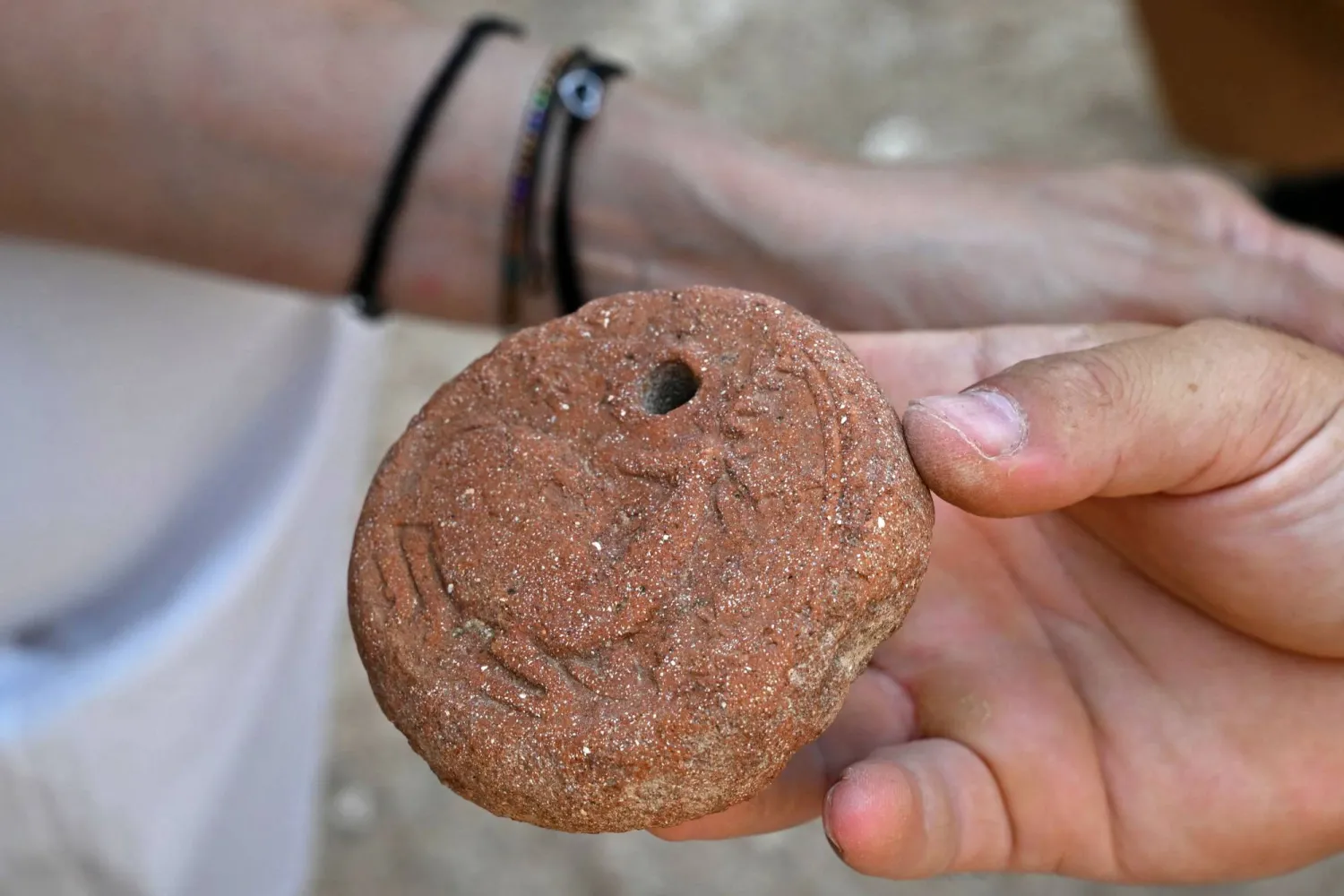
An archaeologist displays an artifact found from an archaeological site in the northern coastal Lebanese town of Batroun on August 14, 2026. (AFP)
TT

Lebanon Archaeological Finds Showcase Rich Heritage Despite War Woes

An archaeologist displays an artifact found from an archaeological site in the northern coastal Lebanese town of Batroun on August 14, 2026. (AFP)

From a Roman temple to ancient olive presses, Lebanon keeps turning up archaeological treasures even as the latest Israel-Hezbollah war has caused excavations to grind to a halt at precious heritage sites in the country's south.

Important discoveries in recent years include the remains of columns and bases from a Roman temple in Maasser al-Shouf in the mountains southeast of Beirut, nestled next to a millennia-old cedar forest.

"A whole system was built around this temple," which dates to between the first century BC and the second century AD, said Myriam Ziade, regional antiquities official with the culture ministry.

She said the site was turned into a Crusader fortress between the 12th and 13th centuries.

The local municipality reported finding huge stone blocks on the hill in 2017, and excavations began five years later with a team from an Italian university, with the dig revealing the ruins of the large temple, she told AFP.

Archaeologists are to soon resume work at the site, located "on a network of roads leading from the Mediterranean coast to the Bekaa valley" in the country's east, she said.

The eastern city of Baalbek has one of Lebanon's best-known landmarks: a stunningly well-preserved Roman temple complex set against the mountainous border with Syria.

- Protecting heritage -

Lebanon is brimming with archaeological finds showcasing its rich history over thousands of years, from the Phoenician, Persian, Roman and Byzantine periods, the Crusades, and Arab and Islamic sultanates and empires.

After Iran-backed Hezbollah drew Lebanon into the Middle East war in March, triggering heavy Israeli airstrikes and a ground invasion in the south, the United Nations cultural agency UNESCO last month added several Lebanese sites to its World Heritage in Danger list.
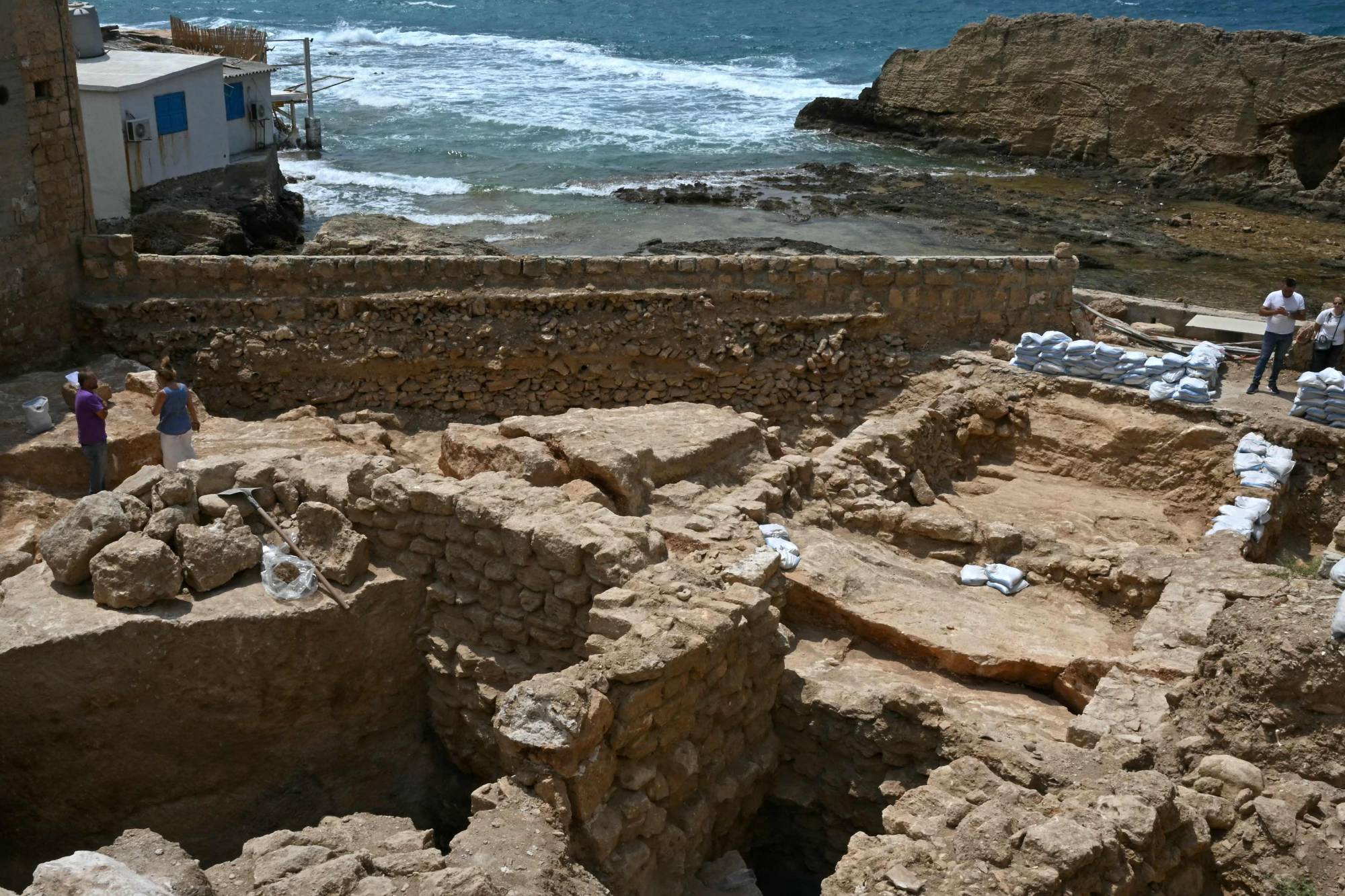
Members from the team of archaeologists work at an archaeological site in the northern coastal Lebanese town of Batroun on August 14, 2026. (AFP)

They include the southern coastal city of Tyre, home to a Roman triumphal arch and a second-century hippodrome.

The list also includes five castles in south Lebanon's Jabal Amel area, among them the Crusader-era Beaufort fortress, which Israeli forces have been occupying since May.

Sarkis Khoury, head of antiquities at Lebanon's culture ministry, told AFP the war had forced archaeologists to switch tack.

We are "now focused on protecting endangered heritage in southern Lebanon and in the Bekaa, particularly in the Baalbek region", he said.

"Excavations in dangerous areas have come to a halt, and archaeological missions are going through a period of minimal activity throughout Lebanon, especially in the southern regions."

He said foreign archaeological teams had stopped going to Lebanon.

- Ancient port city -

Still, some work continues.

In Batroun, a northern coastal city home to the ruins of a small Roman amphitheater, an archaeologist was surrounded by tools and papers, documenting the latest finds as waves lapped rocks nearby.

Samar Karam, in charge of archaeological sites in north Lebanon, said a Roman-era olive press was found on private property along with pottery weights and items for textile production.

On another nearby property overlooking an ancient sea wall, excavations revealed two stone quarries "one Roman and the other Phoenician", she said.

The ruins of rooms from Phoenician, Persian and Roman periods have been uncovered, their pink or grey flooring helping to distinguish them.

Archaeologists have found pieces of Greek pottery, as well as rooms and large jars for storing goods from the harbor, discoveries that Karam said showed the ancient city's "lively commercial activity".

Tombs in the city date to a variety of historical periods, she added.
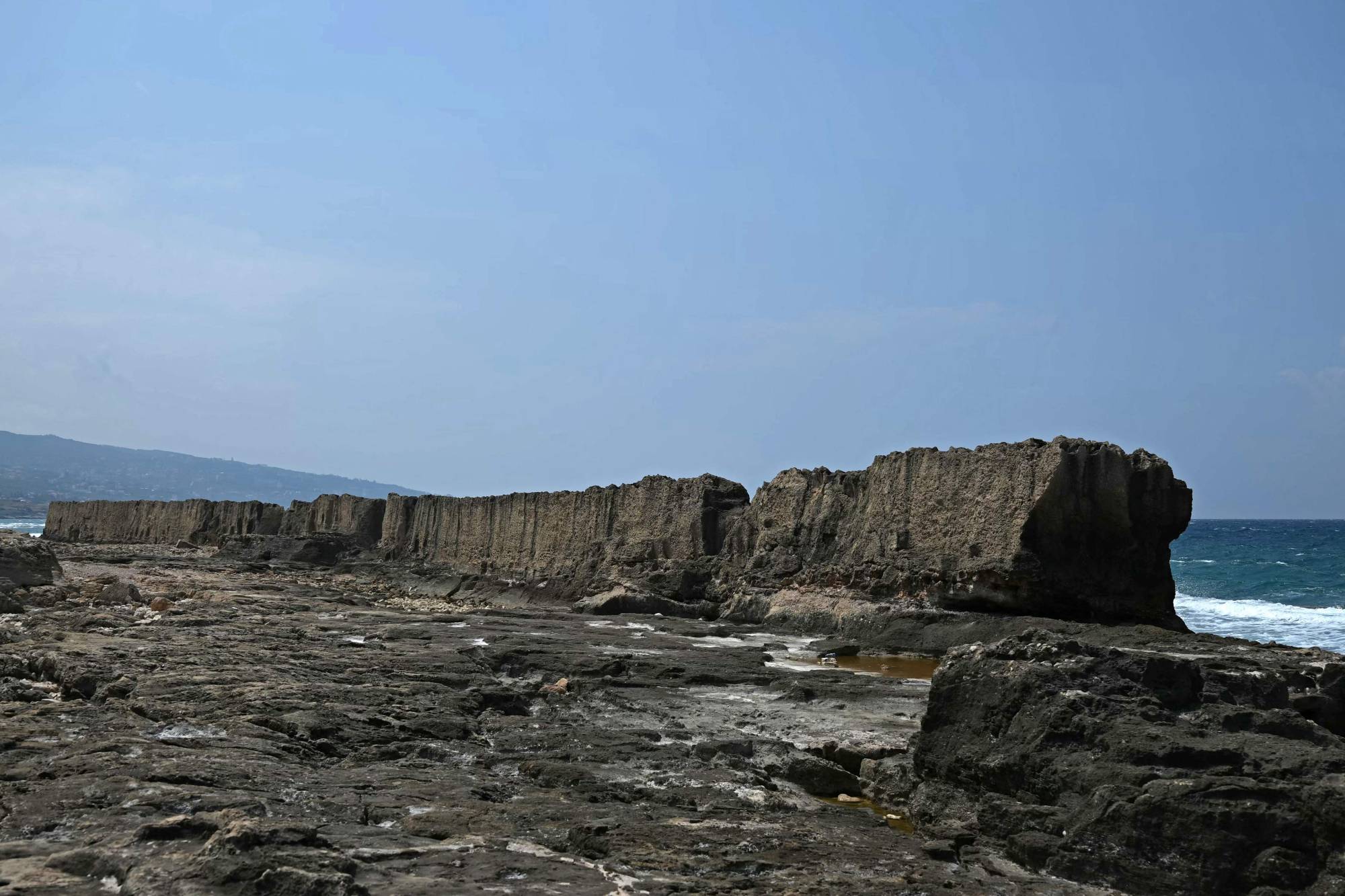
A view of the Phoenician wall is pictured in the northern coastal Lebanese town of Batroun on August 14, 2026. (AFP)

- Hippodrome search -

In Beirut, whose history spans over 5,000 years, Laure Salloum oversees archaeological excavations in the chaotic modern city.

She said current digs were "really construction projects" where workers had stumbled across historical treasures.

A recent discovery uncovered the remains of a Roman-era olive press, while work was ongoing in central Beirut in search of "the remaining part" of a Roman hippodrome, Salloum said.

The hippodrome was initially unearthed years ago when excavations began for a commercial and residential complex.

Other accidental discoveries in the city have included a 2,000-year-old Roman bathhouse.

Such finds often cause development plans to grind to a halt.

"We're constantly making new discoveries," Khoury said.

"Lebanon is at the crossroads of a region that has been full of crises for thousands of years."


Historic Linah Marks Saudi National Day with Heritage Events, International Performances

Linah is one of the most prominent historical sites in northern Saudi Arabia - SPA
TT

Historic Linah Marks Saudi National Day with Heritage Events, International Performances

Linah is one of the most prominent historical sites in northern Saudi Arabia - SPA

Historic Linah, located south of Rafha in Northern Borders Region, will celebrate Saudi National Day with a series of national and heritage events at the Historic Linah Market.

The program features performances by local and international artistic groups, along with a variety of artistic segments, solo musical performances, and equestrian and camel-riding displays, SPA reported.

The festivities will also include puppet shows, children’s competitions, and a musical evening showcasing traditional songs.

The Historic Linah Municipality has completed preparations across sites, parks, and roads, decorating streets with national flags and festive lighting to welcome visitors and create a celebratory atmosphere that reflects national pride.

Linah is one of the most prominent historical sites in northern Saudi Arabia.

Once a key stop along ancient caravan routes, the town’s historic palaces and market continue to stand as enduring witnesses to the region’s collective memory.


Germans Arrested for Louvre Stunt in Mona Lisa Hall

 A person photographs Leonardo da Vinci's painting Mona Lisa at the Louvre museum, Aug. 31, 2025, in Paris. (AP)
A person photographs Leonardo da Vinci's painting Mona Lisa at the Louvre museum, Aug. 31, 2025, in Paris. (AP)
TT

Germans Arrested for Louvre Stunt in Mona Lisa Hall

 A person photographs Leonardo da Vinci's painting Mona Lisa at the Louvre museum, Aug. 31, 2025, in Paris. (AP)
A person photographs Leonardo da Vinci's painting Mona Lisa at the Louvre museum, Aug. 31, 2025, in Paris. (AP)

Two Germans were arrested Saturday after they stuck two paintings on a wall of the hall that hosts the Mona Lisa in Paris's Louvre museum, police sources said.

The two men used sticky tape to stick the two paintings -- measuring 30 by 40 cm -- in the hall where visitors flock to see Leonardo Da Vinci's masterpiece.

One showed one of the two men wearing armor, while the other was a portrait of the two men accompanied by a woman.

Security officers at the museum detained the two men and called the police, who arrested them for minor damage to the wall. Interviewed by police, they said they had done it for fun.

The two men will be summoned to appear in court once the museum files a formal complaint for the damage, said the police sources.

The Mona Lisa itself, now behind a thick layer of protective glass, suffered no damage in the incident.

Museum officials are more than usually alert these days after a spate of heists at French museums and galleries, which have highlighted inadequate security in some cases and led to questions about whether criminal gangs see them as soft targets.

The Louvre itself was targeted last October when eight items of jewelry worth millions of dollars were stolen during a daylight heist.

Even though four suspects have been arrested, the stolen items have still not been found despite extensive searches by French investigators.

The burglary stunned the world, embarrassed France and revealed a series of security lapses, including the museum's old-fashioned CCTV system.

Many of the museum's security flaws had already been highlighted in a 2019 audit ordered by the museum, the findings of which were never acted on.

The Louvre welcomed around nine million visitors last year, far above its intended capacity, which has led to overcrowding problems.

In May, French President Emmanuel Macron announced a major overhaul of the museum, which will include a new space for the Mona Lisa and a new museum entrance.


Saudi Culture Ministry, ALECSO Sign Executive Program for Intangible Cultural Heritage

The agreement focuses on organizing a specialized symposium to exchange expertise on safeguarding policies, methodologies, and practices. SPA
TT

Saudi Culture Ministry, ALECSO Sign Executive Program for Intangible Cultural Heritage

The agreement focuses on organizing a specialized symposium to exchange expertise on safeguarding policies, methodologies, and practices. SPA

The Ministry of Culture has signed an executive program with the Arab League Educational, Cultural and Scientific Organization (ALECSO) to establish a cooperative framework to safeguard intangible cultural heritage and advance shared Arab cultural goals.

Thursday’s agreement focuses on organizing a specialized symposium to exchange expertise on safeguarding policies, methodologies, and practices.

It also includes formulating recommendations for bilateral and multilateral cooperation and showcasing living Arab heritage practices on the international stage to unify regional preservation efforts.

Building upon a 2022 memorandum of understanding between the ministry and ALECSO, the executive program underscores both parties' commitment to broadening institutional partnerships that ensure the long-term protection and sustainability of intangible cultural heritage.