


US Hands Over Ancient Sarcophagus Fragments to Lebanon

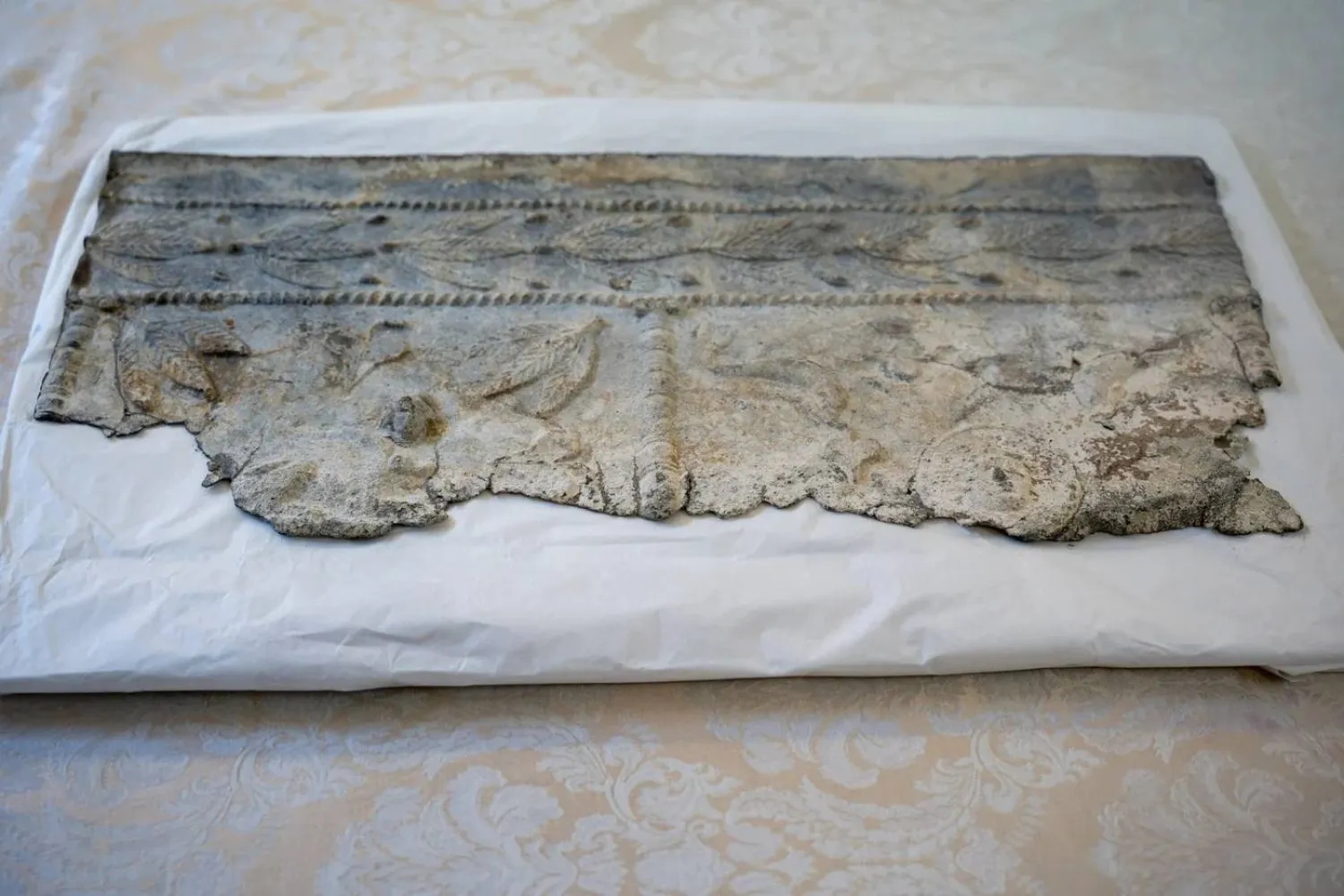
This New York City Police Department photo shows one of three ancient sarcophagi fragments that the FBI Art Crime Team returned to the government of Lebanon during a September 2, 2026, ceremony in New York. (New York City Police Department)
TT

US Hands Over Ancient Sarcophagus Fragments to Lebanon

This New York City Police Department photo shows one of three ancient sarcophagi fragments that the FBI Art Crime Team returned to the government of Lebanon during a September 2, 2026, ceremony in New York. (New York City Police Department)

The United States on Thursday announced the return of Roman-era sarcophagus fragments to Lebanon that were looted from the southern city of Tyre and recovered by an FBI investigation.

The decorative, lead fragments were returned to the Lebanese consulate in New York on Wednesday, ahead of their repatriation, the US embassy in Lebanon said.

The recovery "reflects the strong US-Lebanon partnership in the fight against illicit trafficking of cultural property", the embassy said.

Lebanese Culture Minister Ghassan Salame said the fragments "were unearthed in the Tyre area during illegal excavations".

"The fragments bear distinctive artistic, decorative and technical characteristics typical of workshops that produced lead sarcophagus in Tyre, which were among the city's active and prolific workshops in antiquity."

According to the FBI, the antiquities "were stolen from illicit excavations in or around Tyre and were exported outside of Lebanon's borders".

The trade in looted antiquities is widespread in the Middle East. New York, one of the world's art capitals, is home to many wealthy collectors, galleries, and auction houses.

In December 2017, three ancient artifacts were returned to Lebanon, including a bull's head of Greek origin that had been exhibited at the Met Gala, valued at $1.2 million.

Salame said the Tyre region "is exceptionally rich in archaeological heritage" and "has recently suffered severe destruction" due to heavy Israeli strikes during the latest war between Israel and Iran-backed Hezbollah.

UNESCO, the United Nations cultural agency, added Tyre to its World Heritage in Danger list in July.



Saudi Pavilion Inaugurated at Moscow International Book Fair 2026

A visitor at the Saudi pavilion at the Moscow International Book Fair 2026. (SPA)
TT

Saudi Pavilion Inaugurated at Moscow International Book Fair 2026

A visitor at the Saudi pavilion at the Moscow International Book Fair 2026. (SPA)

Saudi Arabia’s Literature, Publishing, and Translation Commission today inaugurated the Saudi pavilion participating in the Moscow International Book Fair 2026, running from September 2 to 6.

The Saudi pavilion brings together various government entities and cultural organizations to highlight the Kingdom’s cultural scene.

The commission has prepared an accompanying cultural program featuring a series of dialogue sessions and poetry evenings, with the participation of a distinguished group of Saudi writers and intellectuals.

The program addresses issues related to literature, publishing, and translation, while highlighting Saudi cultural achievements and their impact on the international cultural sphere.


Ministry of Culture Participates in LEAP 2026

Ministry of Culture Participates in LEAP 2026
TT

Ministry of Culture Participates in LEAP 2026

Ministry of Culture Participates in LEAP 2026

The Ministry of Culture is participating in LEAP 2026 in Malham, north of Riyadh, with an interactive pavilion showcasing the convergence of cultural heritage and technological innovation.

The ministry is presenting 14 technologies and interactive experiences that integrate artificial intelligence, cultural content, digital interaction, and interactive media, offering visitors immersive and engaging ways to explore Saudi culture through cutting-edge technology, SPA reported.

The participation is part of the ministry's efforts to advance the digital transformation of the cultural sector and strengthen the Kingdom's position as a global hub for cultural creativity.

It also reflects its commitment to harnessing emerging technologies to highlight and promote Saudi culture.


Boat Builders Keep Pakistan’s Fishing Heritage Afloat

This photograph taken on July 8, 2026 shows traditional wooden boats at a yard in Ibrahim Hyderi in Karachi. (AFP)
TT

Boat Builders Keep Pakistan’s Fishing Heritage Afloat

This photograph taken on July 8, 2026 shows traditional wooden boats at a yard in Ibrahim Hyderi in Karachi. (AFP)

The rhythmic hammering of nails and the whine of saws echo around a coastal Karachi neighborhood, where small figures of men work atop massive wooden fishing hulls that loom beneath a pale summer sky.

Ibrahim Hyderi, a maritime town on the outskirts of the port city believed to date back centuries, is renowned for the construction of traditional fishing boats.

"This is the area that gave birth to Karachi, and that provided Karachi with its fishing sector," said Mehran Ali Shah of the Pakistan Fisherfolk Forum, which advocates for the local community.

Despite the rise of industrial shipbuilding, such practices -- where handcrafted vessels are assembled timber by timber -- have stood their ground.

Boat-builder Muhammad Asif, 22, learnt the craft from his father as a teenager, and is now proud that he can work on his own.

"I was drawn to this work, so I work at it with great dedication," Asif tells AFP as sawdust coats his face and sun-bleached hair.

"It has always been my passion, that is why I chose this line of work."

Asif, like other workers, starts at 7:00 am every day and heads home for dinner around 7:00 pm, only putting down his tools during a two-hour lunch break.

He earns up to 2,500 Pakistani rupees ($9) a day, working six days a week.

The workers brave the elements all year round, including the sweltering heat and humidity of summers and the soaking rains of the monsoon seasons.

The process begins with a fisherman selecting a boat design. A master craftsman drafts a template and the workers take it from there, drawing on their years of experience to painstakingly build the vessel.

The carpenters choose from different types of timber, such as local eucalyptus wood, or African teak for resilience against seawater.

The heavy blocks of wood are carefully cut using well-worn vertical and other saws, following hand-drawn pencil markings.

The boats are then assembled from the ground up, block by block and nail by nail, with the workers clambering up on rickety ladders as the hulls rise higher.

The time-consuming process means even a small boat measuring just several meters long could take up to three months to construct and cost one million Pakistani rupees ($3,600), Asif says.

Across the yard, the completed boats are given splashes of color by painter Muhammad Ismail.

The weather-beaten 38-year-old, his hands and nails tinged with blue, is painting petals on the hull of a vessel -- one of many he has worked on over a decade.

"Most of our fishermen prefer floral designs rather than fish," he tells AFP, adding that he experiences "great satisfaction" when an owner appreciates his artwork.

"Some people ask me to create a design according to my own ideas, while others tell me exactly what they want."

At a nearby harbor, fisherman Qadir Bux sits in a small boat owned by his family for at least two decades as he mends fishing nets. The fisherman hopes to give the wooden vessel a facelift soon.

"It's like looking after something very precious, or even like caring for our own child," he says.