Study Shows Marvels of the Roman Empire’s Road Network

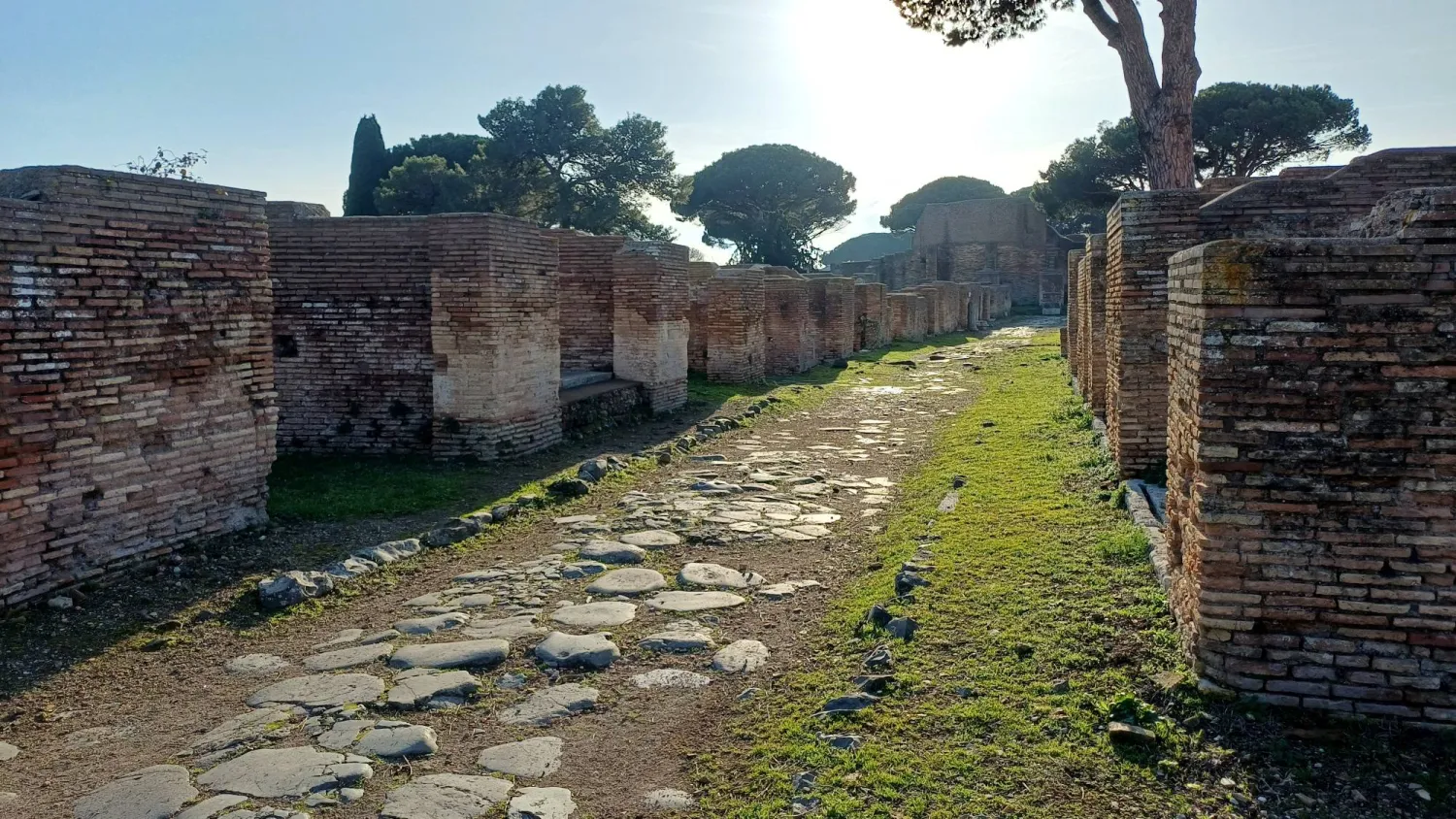
A street in Ostia, the ancient seaport of Rome, Italy, at the mouth of the river Tiber, is pictured in this photograph released on September 14, 2026. (Tom Brughmans/Handout via Reuters)
TT

Study Shows Marvels of the Roman Empire’s Road Network

A street in Ostia, the ancient seaport of Rome, Italy, at the mouth of the river Tiber, is pictured in this photograph released on September 14, 2026. (Tom Brughmans/Handout via Reuters)

Augustus, ancient Rome's first emperor, placed a gilded monument called the Milliarium Aureum, or Golden Milestone, in the Roman Forum in 20 BC to mark the symbolic starting point for all roads in the sprawling empire. These roads indeed were the backbone of the world's first continental-scale transportation system.

Now, researchers have conducted a detailed structural analysis of the empire's road network, spanning roughly 190,000 miles (300,000 km) of routes crisscrossing Europe, the Middle East and North Africa.

The study showed the old adage "all roads lead to Rome" was not exactly true, and the empire's later imperial capital Constantinople — present-day Istanbul — was a better fit for that maxim. While the Romans preferred building straight roads, difficult terrain sometimes frustrated that goal, it found.

The researchers also documented a correlation in many regions between the old Roman roads and modern highways.

The Romans, master engineers and builders, constructed roads stretching from the Moroccan and Arabian deserts in the south and east, all the way to Scotland and the Atlantic Ocean in the north and west. These roads were linked ‌to navigable rivers ‌and sea lanes to form a comprehensive transportation web.

"This infrastructure meant that a vast region became ‌more tightly ⁠integrated: it provided ⁠a continent-sized platform for people, animals, pathogens, goods and ideas to spread," said classical archaeologist Tom Brughmans of Aarhus University in Denmark, who helped lead the study published on Tuesday in the journal Nature Communications.

"The Roman legions marched over roads to respond to threats, relieve colleagues and colonize new territories. Radical new ideas like early Christianity moved with people over land and sea. But the roads themselves were most used for the frequent commutes between farm and field, or to local markets for selling produce," Brughmans said.

Some roads were very durable, constructed with a combination of materials including crushed stone, lime cement, gravel and paving stones. Traffic consisted mostly of people walking and riding on animals including horses, donkeys, mules and camels, as well as pack ⁠animals and animal-drawn carts and carriages.

Road distances from Rome were measured from the Milliarium Aureum. But ‌was this ancient megalopolis really the center of the network?

"All roads lead to Rome? Not ‌really," Brughmans said. "Rome is centrally located for Mediterranean shipping, but not particularly central in the Roman road system. We found that provincial capitals were exceptionally well ‌located on the roads in their province, facilitating effective provincial administration and tax collection."

Some of these provincial capitals included Ankara in Turkey, London ‌in Britain and Corinth in Greece.

"Rome itself was centrally located on the roads on the Tyrrhenian coast of Italy. But when we consider all movement within the entire Italian peninsula, we were shocked to discover that the most central road actually follows the opposite Adriatic coastline, bypassing Rome altogether," Brughmans said.

A NEW CAPITAL

In the early fourth century AD, the Emperor Constantine moved the capital to Constantinople.

"This new capital was strategically located where Europe and Asia meet, and our ‌research has revealed that it was exceptionally central for empire-wide overland travel — way more so than Rome," Brughmans said. "It's on the Bosporus, and we know of ferries that crossed this strait in ⁠antiquity, effectively connecting European and Asian road ⁠traffic."

Roman engineers used tools and techniques to make roads as straight as possible, with the Via Appia south of Rome a prime example.

"But even the Romans had to bow to nature. We found that Roman roads tend to be straight only if the local topography allows for it, such as in the rather flat areas of Belgium, northern France or the Po Valley in Italy. On the whole, they did not move mountains just to build a road," Brughmans said.

These ancient roads structured interactions among hundreds of millions of people for more than two millennia, given the continued use of many long after the Western Roman Empire fell in 476 AD and the Eastern Roman Empire, also called the Byzantine Empire, succumbed in 1453.

"The persistency of the Roman road network can be demonstrated for many regions, from Britain to the Near East," said Adam Pazout, a postdoctoral fellow at the Autonomous University of Barcelona who helped lead the study. "And these roads in many places served as the main communications throughout the medieval period until development of the railroads in the 19th century and highways in the 20th century."

Many modern highways trace ancient roads.

"A great example is the Via Augusta, which goes from Cadiz in the south of Spain to the Pyrenees. The road passes under a triumphal arch called the Arc de Bera between Tarragona and Barcelona, where you can clearly see it has the same course as the modern N-340 motorway," Brughmans said.

Bones from Iraqi Cave Hint at Violence and Compassion in Neanderthals

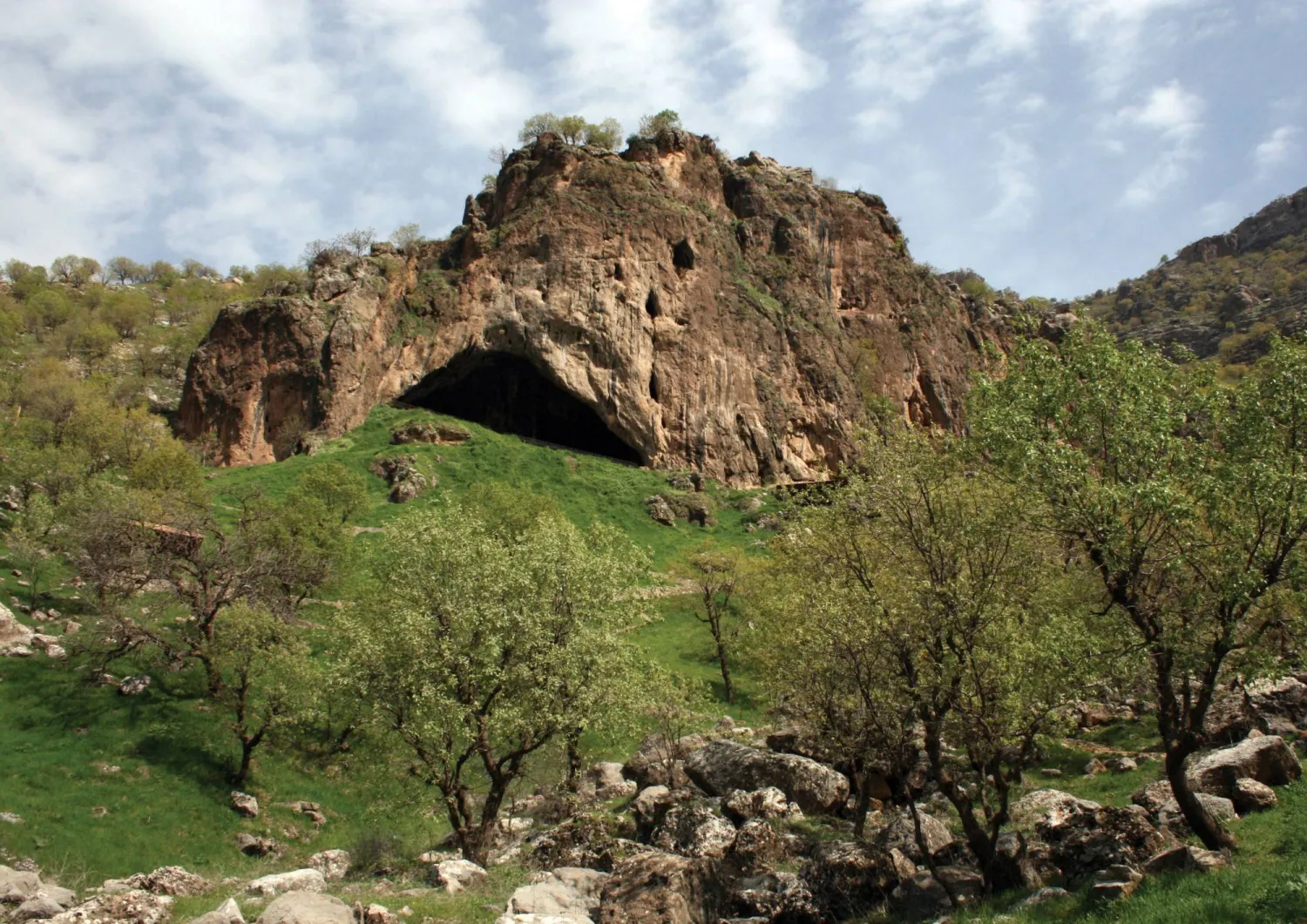
The entrance to Shanidar Cave in Iraq's Kurdistan region, a site of important Neanderthal remains, is seen in an undated photograph released on October 15, 2026. Prof Graeme Barker/Handout via REUTERS
TT

Bones from Iraqi Cave Hint at Violence and Compassion in Neanderthals

The entrance to Shanidar Cave in Iraq's Kurdistan region, a site of important Neanderthal remains, is seen in an undated photograph released on October 15, 2026. Prof Graeme Barker/Handout via REUTERS

The bones of a Neanderthal from a cave in Iraq's Kurdistan region are offering evidence of both violence and compassion in the closest evolutionary cousins of our species, exhibiting a wound apparently from a fatal spear attack as well as signs of an earlier nonfatal injury that may have elicited kindly care.

Researchers have discovered at Shanidar Cave in the Zagros Mountains of northern Iraq a partial skeleton of a Neanderthal, aged in the mid-40s, that included a left shoulder blade, or scapula, with a circular hole six-tenths of an inch (15 mm) wide indicative of a deeply penetrating stab.

The bones of this individual, who they call Shanidar A, were unearthed from under about 25 feet (7.5 meters) of rocks and sediment inside the cave and date to about 75,000 years ago.

The researchers were unable to determine Shanidar A's sex.

According to Reuters, the researchers said the injury's shape suggests it was caused by a forceful thrust using a sharpened wooden spear, a type of weapon Neanderthals are known to have used, rather than a spear with a stone tip. It was a weapon employed in hunting large mammals that were an important food source.

"The ⁠spear would have ⁠gone through the skin and major muscles, especially the pectoralis, as well as the ribcage and muscles between the ribs, and the lung," said biological anthropologist Emma Pomeroy of the University of Cambridge in England, lead author of the study published on Thursday in the journal Scientific Reports.

"The location could be like the kind of 'heart shot' hunters use to kill animals quickly by puncturing the heart, but that is a bit speculative. We do see heart shots as a hunting strategy both today and in the archaeological record. Neanderthals would have known this would lead to a quick death," Pomeroy said.

University of Cambridge archaeologist and study co-author Graeme Barker, who has led Shanidar Cave excavations since 2015, said the likeliest scenario ⁠is interpersonal violence.

The researchers said the violence probably occurred either between members of a particular Neanderthal group or between members of rival Neanderthal groups, calling a Homo sapiens attack or an accidental injury less likely.

The researchers found shards of bone displaced by the weapon. The injury indicated that the spear entered from above with a downward trajectory, penetrating the left chest cavity from the front and traveling through the body before punching the hole in the scapula, causing quick death.

In addition to the scapula, the researchers found some ribs, a nearly complete right hand and seven teeth, mostly from the front of the lower jaw, belonging to Shanidar A. The teeth bore evidence that this Neanderthal had survived brutal injury at least a year before death — a blow to the face resulting in front teeth being smashed and lost. One tooth was split, with half remaining rotated in the mouth and others pushed out of position.

"The pain would have been extreme, and basic needs like eating and drinking would have been difficult, perhaps meaning Shanidar A needed food mashing and being able ⁠to rest. It's likely that Shanidar ⁠A did need some care from members of the group for some basic needs during recovery," Pomeroy said.

Shanidar A was one of five Neanderthals, four adults and one infant, whose bodies were carefully tucked behind a rock pillar in the cave in a burial cluster within a generation or so of each other. The cave was occupied by Neanderthals for tens of thousands of years as a seasonal campsite, and later by Homo sapiens.

Neanderthals were more robustly built than Homo sapiens, with larger brows. They lived as hunter-gatherers and inhabited Eurasia from the Atlantic coast to the Ural Mountains from about 400,000 years ago until a bit after 40,000 years ago, disappearing after Homo sapiens became established in the region.

The two species interbred, with modern non-African human populations bearing residual Neanderthal DNA.

The cave, overlooking the Great Zab river valley, has been a source of information about Neanderthals since the 1950s, with Shanidar A now offering new insight into their behavior.

"We see evidence of two contrasting facets of human nature – care and violence – juxtaposed in the same individual," Pomeroy said.

"We see evidence all around us today that violence and care are both aspects of how we humans behave, and we see this here in Shanidar A, too. Neanderthals were like us in many respects, both the good and the bad, and this find really highlights that, going against stereotypes of Neanderthals as unintelligent, uncaring cavemen and cavewomen," Pomeroy said.


Riyadh Art Program and Wrth Sign MoU to Strengthen Cooperation in Cultural and Creative Fields

The agreement aims to develop initiatives that bring together contemporary and traditional arts, serve the objectives of both parties, and enhance their cultural impact - SPA
TT

Riyadh Art Program and Wrth Sign MoU to Strengthen Cooperation in Cultural and Creative Fields

The agreement aims to develop initiatives that bring together contemporary and traditional arts, serve the objectives of both parties, and enhance their cultural impact - SPA

The Riyadh Art Program, one of the programs of the Royal Commission for Riyadh City, signed a memorandum of understanding (MoU) with the Royal Institute of Traditional Arts "Wrth" to strengthen cooperation in cultural and creative fields.

The agreement aims to develop initiatives that bring together contemporary and traditional arts, serve the objectives of both parties, and enhance their cultural impact, SPA reported.

The MoU covers the development of joint creative initiatives that bring together contemporary and traditional arts through the exchange of expertise, art residency programs, and seasonal events.

It also includes cooperation to enhance the presence of both parties' projects and programs at relevant international events and forums.


Van Gogh Work Unseen in Public for 60 Years on Show in Hong Kong

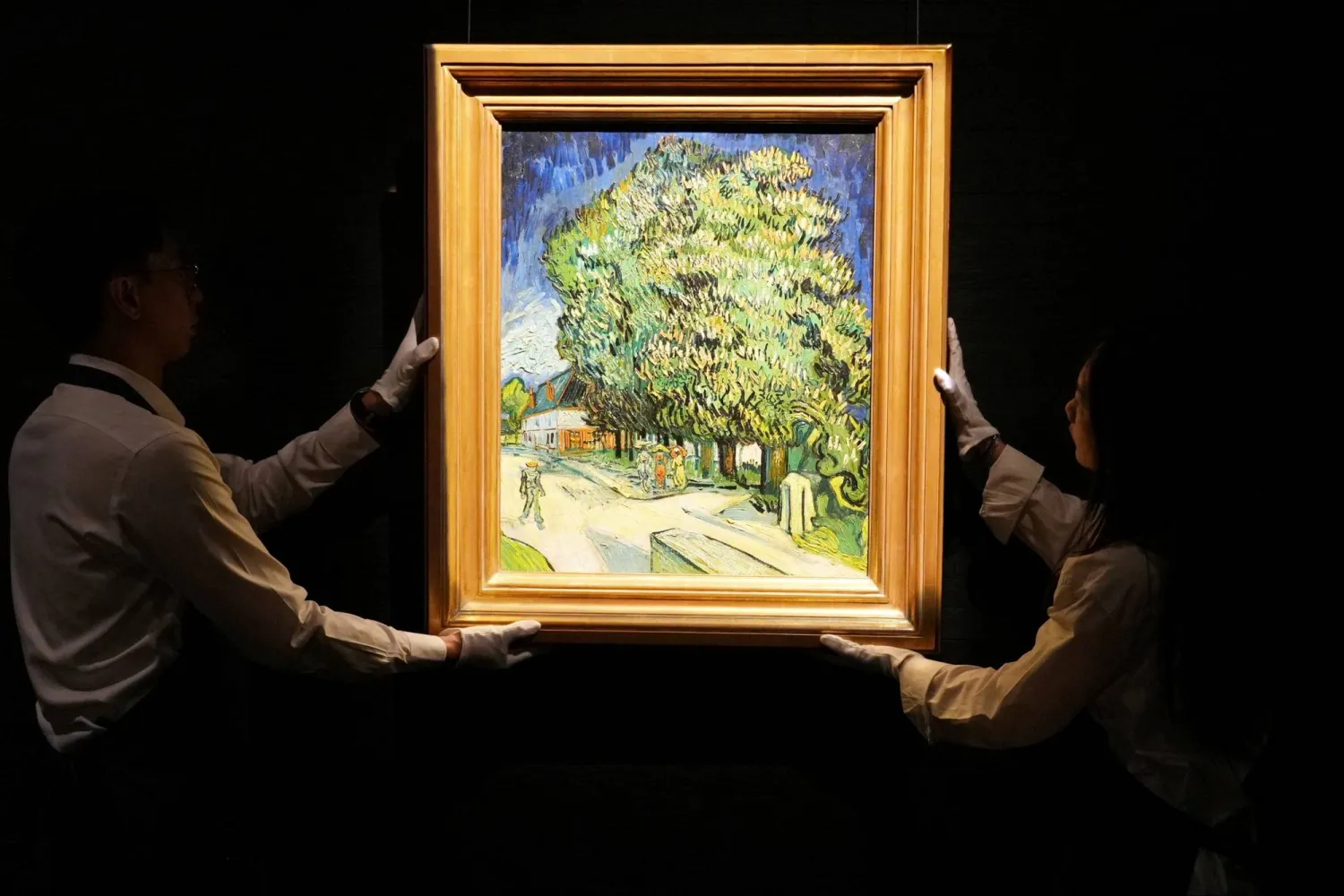
Staff members pose with Vincent van Gogh's "Chataigniers en fleurs" (Chestnut Trees in Blossom) at a media preview ahead of its auction in New York, at Sotheby's in Hong Kong, China, October 13, 2026. REUTERS/Joyce Zhou
TT

Van Gogh Work Unseen in Public for 60 Years on Show in Hong Kong

Staff members pose with Vincent van Gogh's "Chataigniers en fleurs" (Chestnut Trees in Blossom) at a media preview ahead of its auction in New York, at Sotheby's in Hong Kong, China, October 13, 2026. REUTERS/Joyce Zhou

Hundreds of people queued on Tuesday outside a Hong Kong gallery to see a Vincent van Gogh painting on public display for the first time in six decades.

The Dutch artist's "Chataigniers en fleurs" ("Chestnut Trees in Blossom") was on show in Hong Kong ahead of its November 18 auction in New York, where it is expected to smash records and fetch around $180 million, according to Sotheby's.

It was one of 12 works owned by late Argentine collectors Nelly Arrieta de Blaquier and Carlos Pedro Blaquier. Others by Claude Monet, Camille Pissarro and Paul Cezanne will also go under the hammer.

The van Gogh, which according to Sotheby's was unseen by the public for over 60 years, portrays a blossoming chestnut tree with a solitary man walking past three women in Japanese attire.

Completed in 1890, it is from the last two months of van Gogh's life.

"It's one of the last, most expressive and hopeful works by van Gogh in this final phase of his career," Scott Niichel, a vice chairman at Sotheby's, told AFP.

It is one of approximately 70 works van Gogh created after leaving the psychiatric asylum of Saint-Remy, where he had created his famous "The Starry Night.”

During these final days of his life, van Gogh was producing at a frantic rate -- averaging around one work a day.

He died shortly after at the age of 37, two days after shooting himself in the chest following well-documented mental health struggles.

"This manic frenzy of paint application suggests he has so much more to give, and he's just racing to put it to canvas," Niichel said, noting the thickness of the paint layers.

"Orchard with Cypresses" set the current record for a van Gogh price point, selling for $117.2 million in a 2022 auction.

Niichel said that "anything is possible" for who might claim the painting in November.

"Our revealing in Hong Kong suggests that Asia is certainly a possibility."