China’s Porcelain City Carries Centuries-old Heritage to New Generation

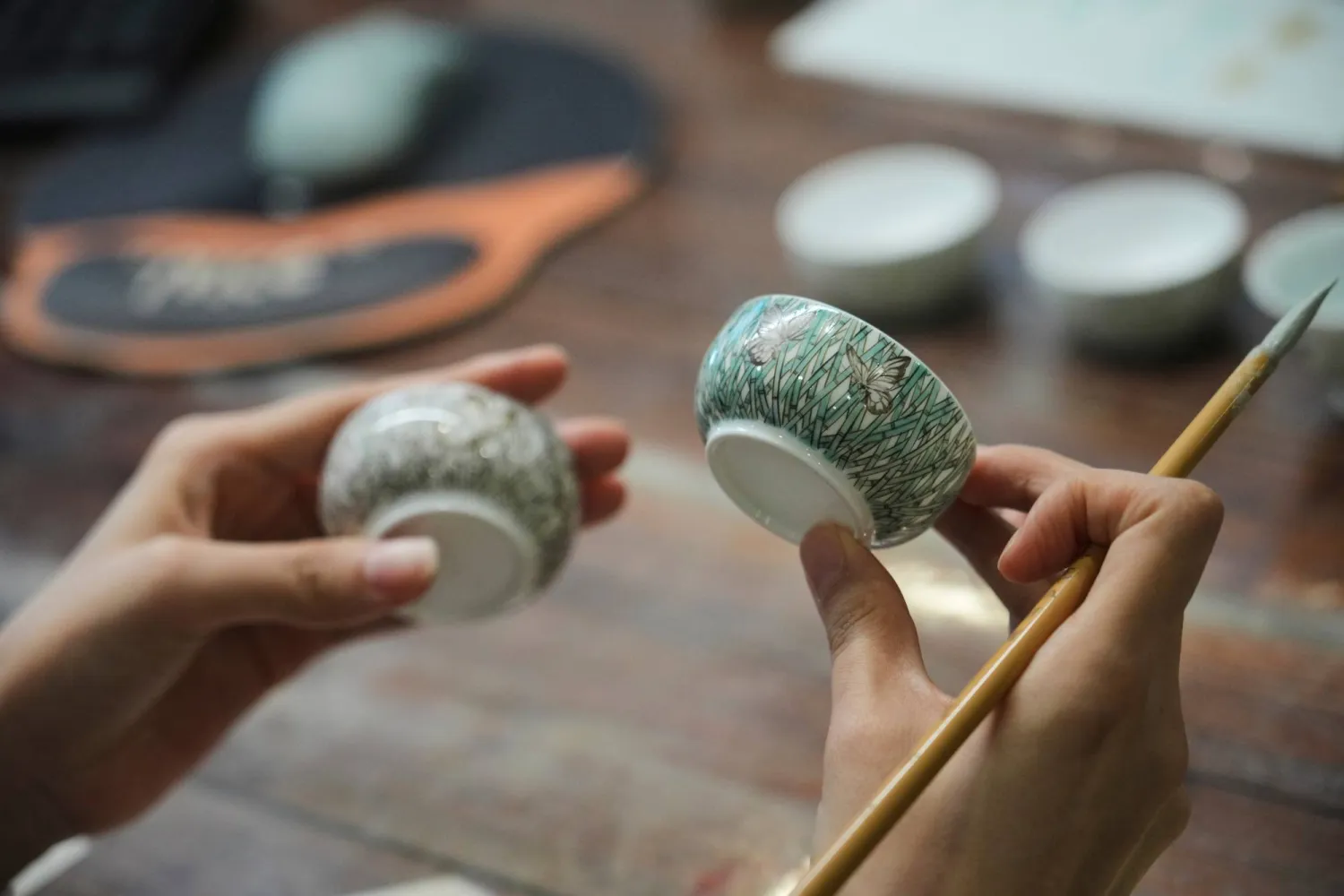
Chinese porcelain artist Chen Qing holds up two cups after painting them in Jingdezhen, known as China's "Porcelain Capital," in eastern China's Jiangxi province, Tuesday, Sept. 1, 2026. (AP Photo/Achmad Ibrahim)
TT

China’s Porcelain City Carries Centuries-old Heritage to New Generation

Chinese porcelain artist Chen Qing holds up two cups after painting them in Jingdezhen, known as China's "Porcelain Capital," in eastern China's Jiangxi province, Tuesday, Sept. 1, 2026. (AP Photo/Achmad Ibrahim)

Chinese porcelain artist Chen Qing has a vivid memory of her grandfather. It was the only time he wrote down the formula for her family’s distinctive red pigment.

He asked her mother to memorize it and burned the paper minutes later. The secret has since been passed down orally from one generation to the next.

“My mother did not reveal the formula to me until I was over 30,” Chen said.

Her family has practiced the craft since around 1860 in Jingdezhen, known as China’s “Porcelain Capital.” It is located in Jiangxi province, about 1,180 kilometers (735 miles) southeast of Beijing.
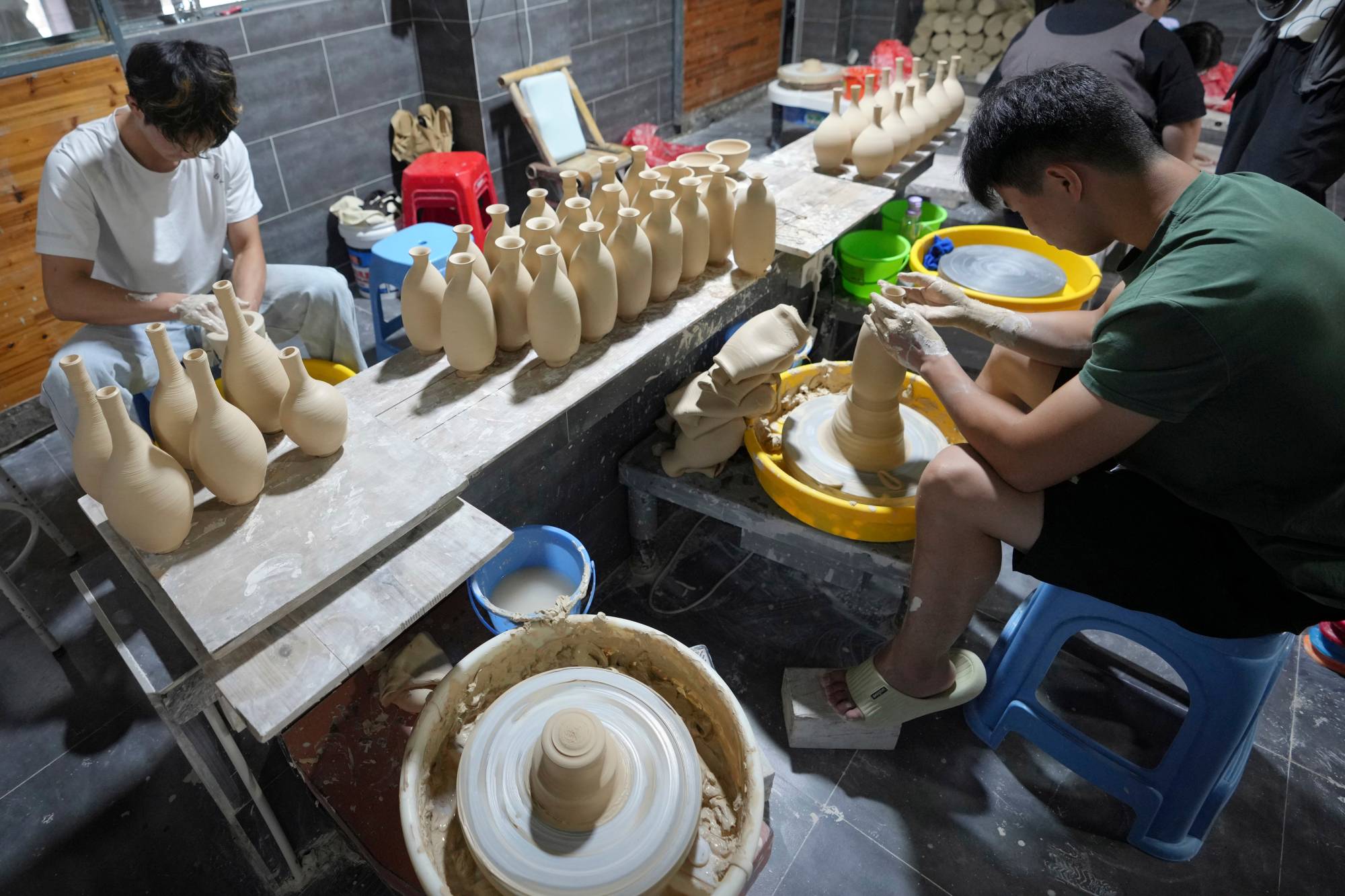
Students practice traditional ceramic craftsmanship at Zhan Shao Ceramic Arts Practice Base in Jingdezhen, known as China's "Porcelain Capital," in eastern China's Jiangxi province, Tuesday, Sept. 1, 2026. (AP Photo/Achmad Ibrahim)

Jingdezhen’s pottery-making history spans more than 2,000 years. It began during the Han Dynasty, and its porcelain sites were inscribed on UNESCO’s World Heritage List in 2026.

Small details take years to master Jingdezhen’s craftsmen have kept alive techniques once used to produce porcelain for the imperial court. That knowledge later spread to private artisans.

Chen’s ancestors adopted some of those traditions after the fall of the Qing Dynasty in 1912.

“The craft is very difficult for an outsider to master,” The Associated Press quoted Chen as saying. “A family might spend nearly a century developing a single technique.”

Two tables in her studio are covered with brushes, unfinished pieces and pigments. She works in silence, a lamp lighting her strokes.

Chen’s fingers never touch the porcelain’s surface. She steadies her hand against its outer edge, holding the brush firmly as she paints delicate, precise strokes.

Painting a porcelain teacup can take days to complete. A single particle of dust or sweat could ruin the piece and require her to start from scratch.

Landscapes are the most difficult scenes to paint because their boundaries are not clear. A mountain summit might be emerald green, gradually shifting to brown and other warmer colors farther down the slope.

“Mastering a craft is a lifelong process,” Chen said. “Few people are willing to spend more than 10 years learning such a painstaking craft.”

Fragments of porcelain reveal a spiritual past Artists like Chen work alongside archaeological sites and museums to preserve China’s porcelain heritage.
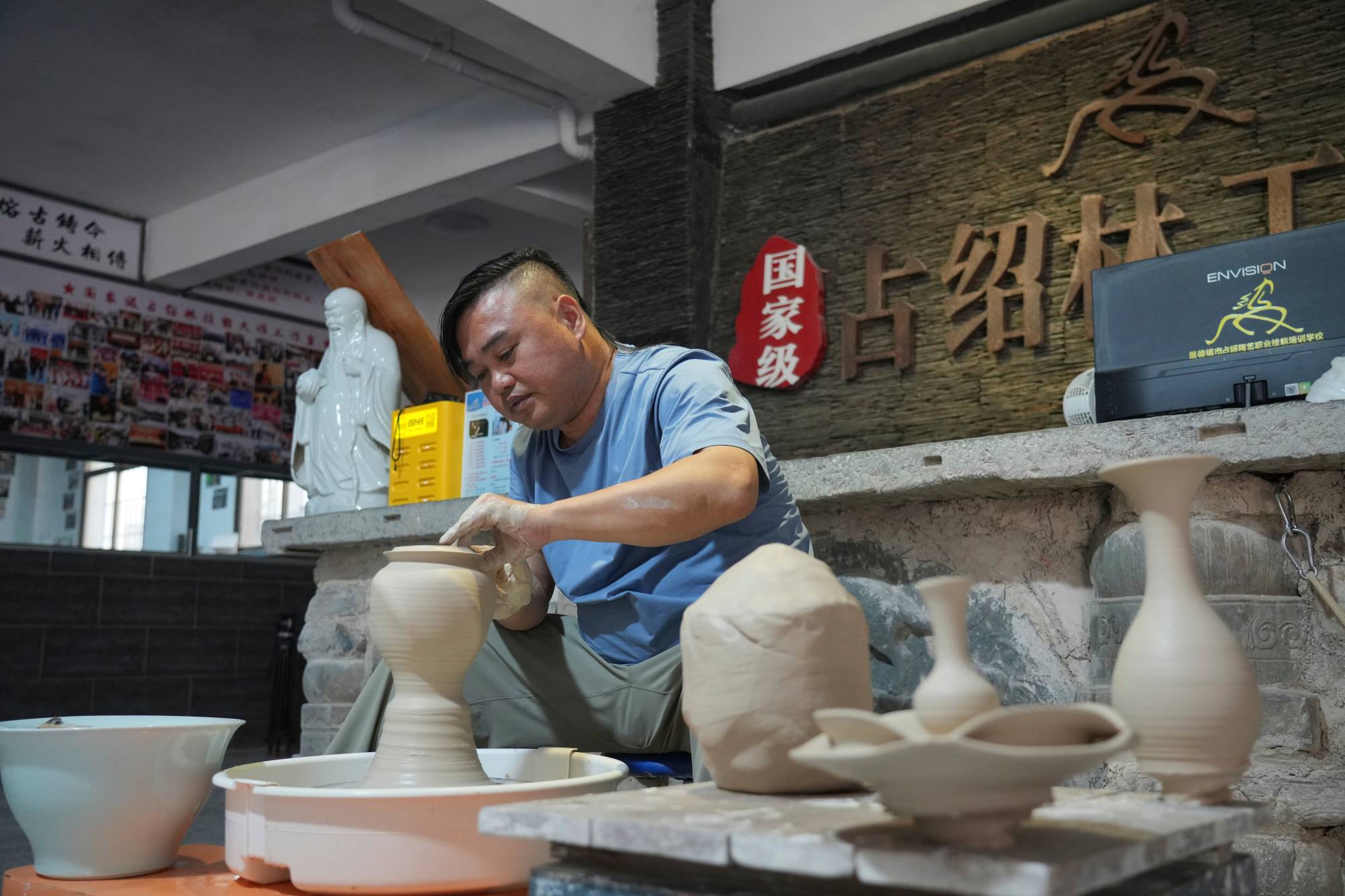
Chinese ceramic wheel-throwing artist Zhan Shaolin demonstrates his craft in Jingdezhen, known as China's "Porcelain Capital," in eastern China's Jiangxi province, Tuesday, Sept. 1, 2026. (AP Photo/Achmad Ibrahim)

Jingdezhen’s Imperial Kiln Institute researches and restores ceramics excavated from an adjacent complex, where pieces for emperors were crafted in kilns whose remains are still visible today.

The institute is incorporating new technologies into its work, including artificial intelligence, to help match and reconstruct ancient porcelain fragments.

“By the establishment of our ceramic gene bank, we can collect all kinds of information,” said the institute’s president, Weng Yanjun. “We hope that we can retrieve ancient technology with modern science.”

That research can also shed light on the culture and beliefs that surrounded porcelain-making centuries ago.

Among the tiles made at Jingdezhen’s imperial kilns were those used in the Bao’en Pagoda.

It was part of a Buddhist temple complex that was destroyed during a 19th-century rebellion in the city of Nanjing. Its exterior walls were covered with porcelain tiles, each bearing an image of the Buddha.

Traces of other religious traditions can also be found in porcelain studied by the institute, Weng said.

“Islam, Buddhism, Taoism and, later on, European Catholic Christianity harmoniously blend into the porcelain decorations,” he added.

Porcelain-making was surrounded by its own beliefs Within Jingdezhen’s imperial kiln complex stands a shrine commemorating Tong Bin, the protective spirit of ceramics.

Known as the “Immortal Master of Wind and Fire” or “Kiln God,” Tong was revered during the Qing dynasty for sacrificing himself in protest against the abuse of kiln workers, according to local tradition.

The shrine remains open today, with a statue honoring Tong inside alongside figures representing other traditional roles in porcelain-making.

“In ancient times, the technology was not as advanced as it is today, so, in many cases, people had to rely on their beliefs — their gods — to help bring good luck and better results,” Weng said.

How artisans today honor their craft varies widely Some Jingdezhen craftsmen say they hold no particular beliefs associated with porcelain-making. Others display figures of Budai — or the laughing Buddha — in their workshops as symbols of good fortune and prosperity.

For artisans like master Sun Lixin, however, the work retains a spiritual dimension. He is a fourth-generation practitioner who learned the trade from his father at age 13.

“Some traditional rituals have faded considerably,” Sun said. “Yet in the hearts of craftspeople, that reverence remains.”

Every time he paints or fires a piece, Sun is mindful of the hundreds of millions of years of geological history the white clay has undergone before reaching his hands.

He does not visit Jingdezhen’s shrine, but has a practice of his own. Sun instinctively bows to the Kiln God before a firing, wishing for it to be successful and for fine porcelain to emerge.

“If we do not care for it, paint it with devotion and treasure it, how could we possibly do it justice?” Sun said.

Artists from China and abroad find their way to Jingdezhen While Jingdezhen’s pottery-making continues to be passed down within families, universities and residency programs host new generations of Chinese and international practitioners.

Paola Masi is an Italian ceramic artist in a residency program through October.

She said Song dynasty porcelain shaped her early training. So coming to Jingdezhen feels like going back to the roots of her own path as an artist.

Chinese artist Huang Qi graduated from Jingdezhen Ceramic University in 2015 and left the city to work elsewhere. She eventually decided to come back and is also now an artist-in-residence.

“Jingdezhen is where my dream began,” Huang said. “More and more people are coming and the city is attracting growing attention.”

Encountering fellow craftspeople has allowed her to learn new techniques, while Jingdezhen’s inscription on UNESCO’s World Heritage List makes her optimistic about the future.

“It gives us confidence,” Huang said. “Things will continue to get better.”
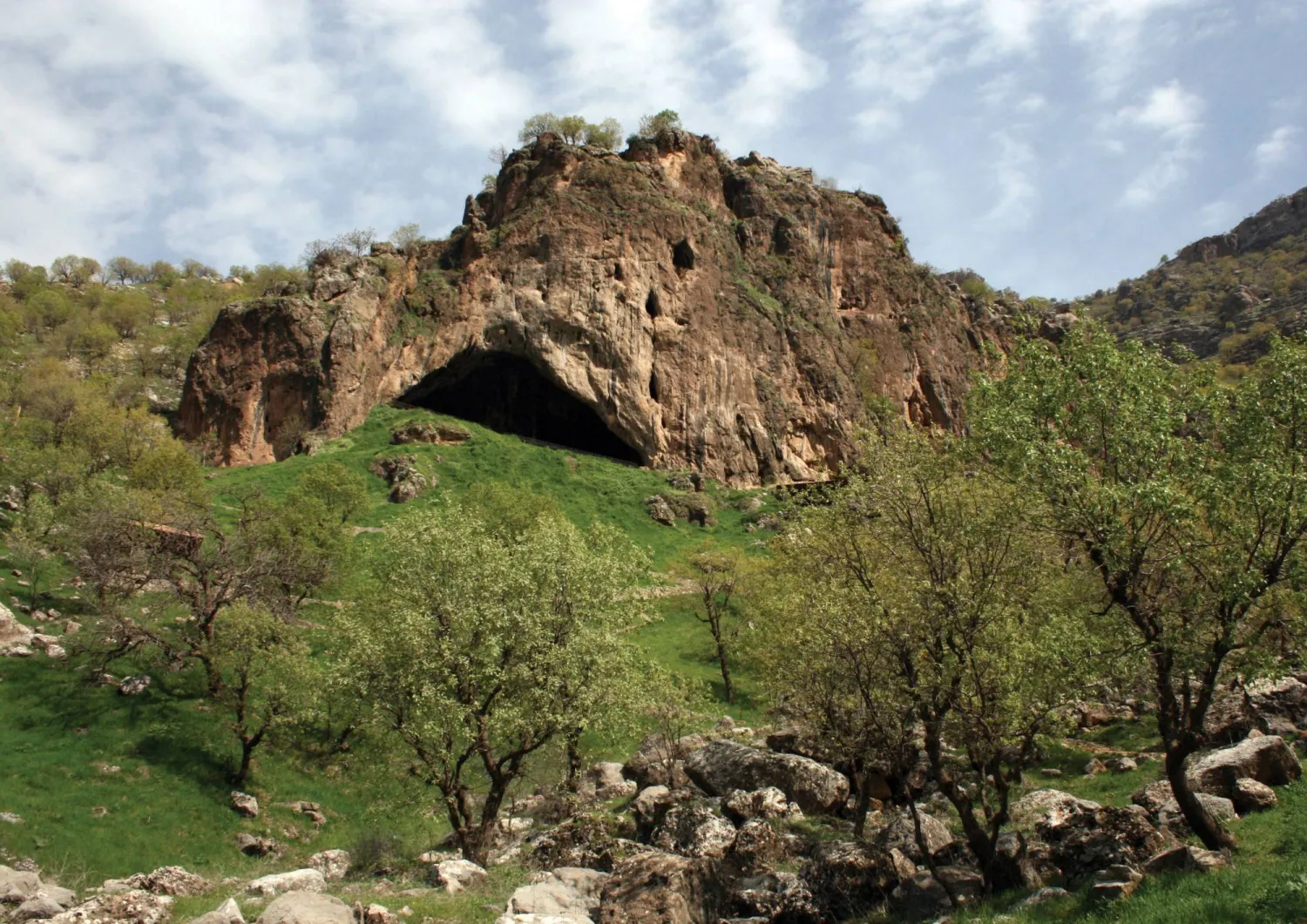


Bones from Iraqi Cave Hint at Violence and Compassion in Neanderthals

The entrance to Shanidar Cave in Iraq's Kurdistan region, a site of important Neanderthal remains, is seen in an undated photograph released on October 15, 2026. Prof Graeme Barker/Handout via REUTERS
TT

Bones from Iraqi Cave Hint at Violence and Compassion in Neanderthals

The entrance to Shanidar Cave in Iraq's Kurdistan region, a site of important Neanderthal remains, is seen in an undated photograph released on October 15, 2026. Prof Graeme Barker/Handout via REUTERS

The bones of a Neanderthal from a cave in Iraq's Kurdistan region are offering evidence of both violence and compassion in the closest evolutionary cousins of our species, exhibiting a wound apparently from a fatal spear attack as well as signs of an earlier nonfatal injury that may have elicited kindly care.

Researchers have discovered at Shanidar Cave in the Zagros Mountains of northern Iraq a partial skeleton of a Neanderthal, aged in the mid-40s, that included a left shoulder blade, or scapula, with a circular hole six-tenths of an inch (15 mm) wide indicative of a deeply penetrating stab.

The bones of this individual, who they call Shanidar A, were unearthed from under about 25 feet (7.5 meters) of rocks and sediment inside the cave and date to about 75,000 years ago.

The researchers were unable to determine Shanidar A's sex.

According to Reuters, the researchers said the injury's shape suggests it was caused by a forceful thrust using a sharpened wooden spear, a type of weapon Neanderthals are known to have used, rather than a spear with a stone tip. It was a weapon employed in hunting large mammals that were an important food source.

"The ⁠spear would have ⁠gone through the skin and major muscles, especially the pectoralis, as well as the ribcage and muscles between the ribs, and the lung," said biological anthropologist Emma Pomeroy of the University of Cambridge in England, lead author of the study published on Thursday in the journal Scientific Reports.

"The location could be like the kind of 'heart shot' hunters use to kill animals quickly by puncturing the heart, but that is a bit speculative. We do see heart shots as a hunting strategy both today and in the archaeological record. Neanderthals would have known this would lead to a quick death," Pomeroy said.

University of Cambridge archaeologist and study co-author Graeme Barker, who has led Shanidar Cave excavations since 2015, said the likeliest scenario ⁠is interpersonal violence.

The researchers said the violence probably occurred either between members of a particular Neanderthal group or between members of rival Neanderthal groups, calling a Homo sapiens attack or an accidental injury less likely.

The researchers found shards of bone displaced by the weapon. The injury indicated that the spear entered from above with a downward trajectory, penetrating the left chest cavity from the front and traveling through the body before punching the hole in the scapula, causing quick death.

In addition to the scapula, the researchers found some ribs, a nearly complete right hand and seven teeth, mostly from the front of the lower jaw, belonging to Shanidar A. The teeth bore evidence that this Neanderthal had survived brutal injury at least a year before death — a blow to the face resulting in front teeth being smashed and lost. One tooth was split, with half remaining rotated in the mouth and others pushed out of position.

"The pain would have been extreme, and basic needs like eating and drinking would have been difficult, perhaps meaning Shanidar A needed food mashing and being able ⁠to rest. It's likely that Shanidar ⁠A did need some care from members of the group for some basic needs during recovery," Pomeroy said.

Shanidar A was one of five Neanderthals, four adults and one infant, whose bodies were carefully tucked behind a rock pillar in the cave in a burial cluster within a generation or so of each other. The cave was occupied by Neanderthals for tens of thousands of years as a seasonal campsite, and later by Homo sapiens.

Neanderthals were more robustly built than Homo sapiens, with larger brows. They lived as hunter-gatherers and inhabited Eurasia from the Atlantic coast to the Ural Mountains from about 400,000 years ago until a bit after 40,000 years ago, disappearing after Homo sapiens became established in the region.

The two species interbred, with modern non-African human populations bearing residual Neanderthal DNA.

The cave, overlooking the Great Zab river valley, has been a source of information about Neanderthals since the 1950s, with Shanidar A now offering new insight into their behavior.

"We see evidence of two contrasting facets of human nature – care and violence – juxtaposed in the same individual," Pomeroy said.

"We see evidence all around us today that violence and care are both aspects of how we humans behave, and we see this here in Shanidar A, too. Neanderthals were like us in many respects, both the good and the bad, and this find really highlights that, going against stereotypes of Neanderthals as unintelligent, uncaring cavemen and cavewomen," Pomeroy said.


Riyadh Art Program and Wrth Sign MoU to Strengthen Cooperation in Cultural and Creative Fields

The agreement aims to develop initiatives that bring together contemporary and traditional arts, serve the objectives of both parties, and enhance their cultural impact - SPA
TT

Riyadh Art Program and Wrth Sign MoU to Strengthen Cooperation in Cultural and Creative Fields

The agreement aims to develop initiatives that bring together contemporary and traditional arts, serve the objectives of both parties, and enhance their cultural impact - SPA

The Riyadh Art Program, one of the programs of the Royal Commission for Riyadh City, signed a memorandum of understanding (MoU) with the Royal Institute of Traditional Arts "Wrth" to strengthen cooperation in cultural and creative fields.

The agreement aims to develop initiatives that bring together contemporary and traditional arts, serve the objectives of both parties, and enhance their cultural impact, SPA reported.

The MoU covers the development of joint creative initiatives that bring together contemporary and traditional arts through the exchange of expertise, art residency programs, and seasonal events.

It also includes cooperation to enhance the presence of both parties' projects and programs at relevant international events and forums.


Van Gogh Work Unseen in Public for 60 Years on Show in Hong Kong

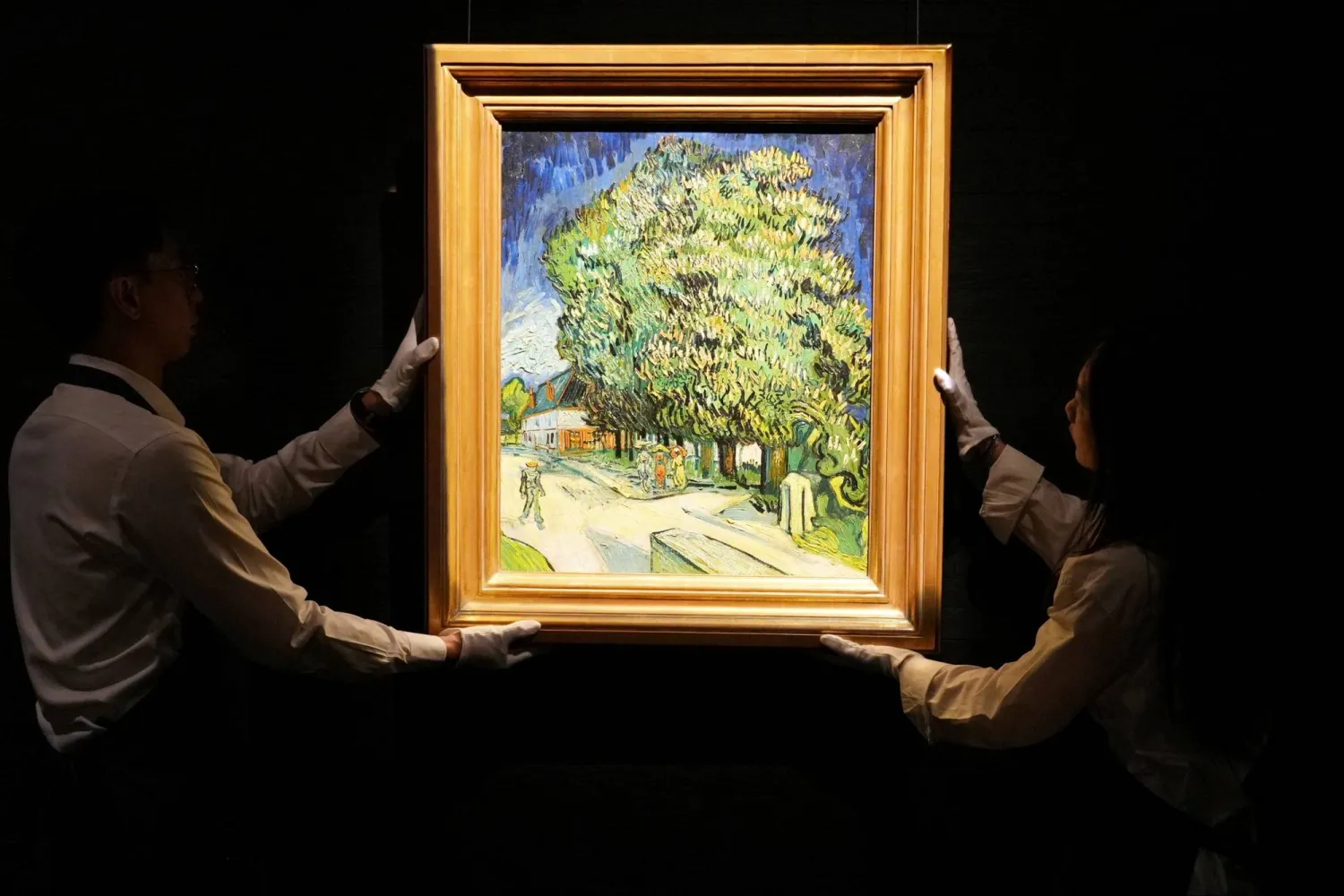
Staff members pose with Vincent van Gogh's "Chataigniers en fleurs" (Chestnut Trees in Blossom) at a media preview ahead of its auction in New York, at Sotheby's in Hong Kong, China, October 13, 2026. REUTERS/Joyce Zhou
TT

Van Gogh Work Unseen in Public for 60 Years on Show in Hong Kong

Staff members pose with Vincent van Gogh's "Chataigniers en fleurs" (Chestnut Trees in Blossom) at a media preview ahead of its auction in New York, at Sotheby's in Hong Kong, China, October 13, 2026. REUTERS/Joyce Zhou

Hundreds of people queued on Tuesday outside a Hong Kong gallery to see a Vincent van Gogh painting on public display for the first time in six decades.

The Dutch artist's "Chataigniers en fleurs" ("Chestnut Trees in Blossom") was on show in Hong Kong ahead of its November 18 auction in New York, where it is expected to smash records and fetch around $180 million, according to Sotheby's.

It was one of 12 works owned by late Argentine collectors Nelly Arrieta de Blaquier and Carlos Pedro Blaquier. Others by Claude Monet, Camille Pissarro and Paul Cezanne will also go under the hammer.

The van Gogh, which according to Sotheby's was unseen by the public for over 60 years, portrays a blossoming chestnut tree with a solitary man walking past three women in Japanese attire.

Completed in 1890, it is from the last two months of van Gogh's life.

"It's one of the last, most expressive and hopeful works by van Gogh in this final phase of his career," Scott Niichel, a vice chairman at Sotheby's, told AFP.

It is one of approximately 70 works van Gogh created after leaving the psychiatric asylum of Saint-Remy, where he had created his famous "The Starry Night.”

During these final days of his life, van Gogh was producing at a frantic rate -- averaging around one work a day.

He died shortly after at the age of 37, two days after shooting himself in the chest following well-documented mental health struggles.

"This manic frenzy of paint application suggests he has so much more to give, and he's just racing to put it to canvas," Niichel said, noting the thickness of the paint layers.

"Orchard with Cypresses" set the current record for a van Gogh price point, selling for $117.2 million in a 2022 auction.

Niichel said that "anything is possible" for who might claim the painting in November.

"Our revealing in Hong Kong suggests that Asia is certainly a possibility."