Zawiya 97 Celebrates Saudi National Day with Craft, Artistic Experiences in Historic Jeddah

The craft workshops drew on elements of Saudi identity and heritage - SPA
TT

Zawiya 97 Celebrates Saudi National Day with Craft, Artistic Experiences in Historic Jeddah

The craft workshops drew on elements of Saudi identity and heritage - SPA

Zawiya 97 in Historic Jeddah celebrated Saudi National Day through a range of craft and artistic experiences and interactive activities inspired by local heritage and national identity, in an atmosphere combining the authenticity of the place with artisans' creativity.

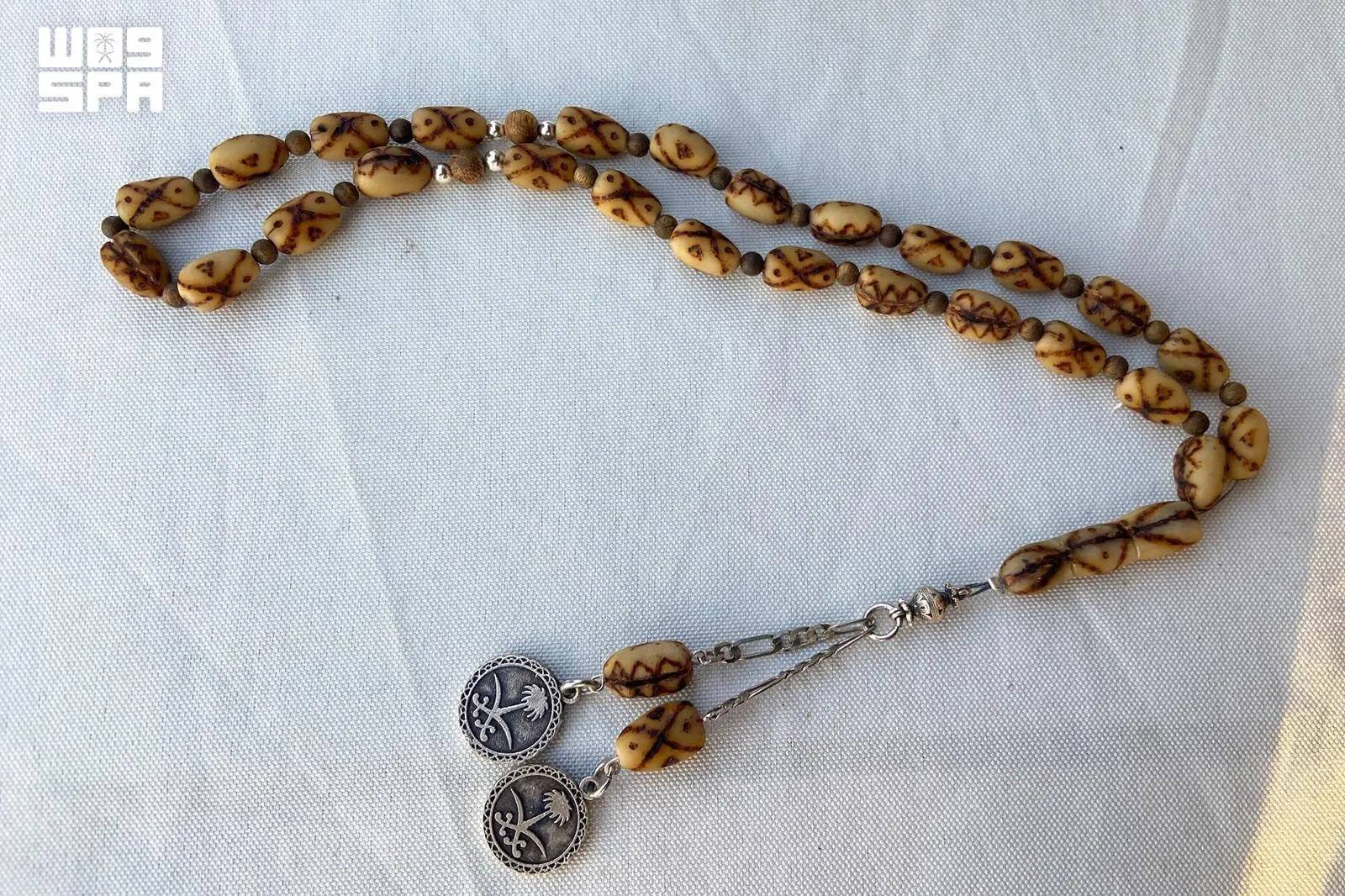
The events featured short craft experiences that allowed visitors to practice a range of crafts and arts, including screen printing on fabrics, plaster engraving, drawing a map of Saudi Arabia on coffee cups, and clay shaping to make prayer beads and bracelets, SPA reported.

The activities also included live demonstrations of woodturning and plant distillation, along with experiences for assembling the "Manjour," inspired by the traditional architecture of Historic Jeddah. National musical performances and a photography corner added to the interactive atmosphere.

The craft workshops drew on elements of Saudi identity and heritage, including handmade clay construction, shaping a pottery plate inspired by the palm tree, and making a candle inspired by the Saudi coffee cup, decorated with details from local heritage.


Visual Artists Mark Saudi National Day with Vision 2030 Mural in Al-Ahsa

Visual Artists Mark Saudi National Day with Vision 2030 Mural in Al-Ahsa
TT

Visual Artists Mark Saudi National Day with Vision 2030 Mural in Al-Ahsa

Visual Artists Mark Saudi National Day with Vision 2030 Mural in Al-Ahsa

A local culture and arts association in Al-Ahsa Governorate created an art mural on Saudi Arabia's journey under Saudi Vision 2030, as part of Saudi National Day celebrations in Al-Ahsa Governorate.

The event included creating artworks on two obelisks the same height as the mural, with 25 artists involved, SPA reported.

The participation is part of an exhibition of a number of visual artworks, as well as live painting sessions in front of visitors, contributing to enriching the artistic scene accompanying the Saudi National Day celebrations.


US Returns Stolen Antiquities Worth $5 Million to Syria

The Palmyran stone was removed from the UNESCO World Heritage site Palmyra before ISIS members destroyed much of the city from 2015 to 2017. (Reuters)
TT

US Returns Stolen Antiquities Worth $5 Million to Syria

The Palmyran stone was removed from the UNESCO World Heritage site Palmyra before ISIS members destroyed much of the city from 2015 to 2017. (Reuters)

US officials announced Wednesday the return of 36 stolen antiquities to Syria, including a stone trafficked during the ISIS group's destruction of the ancient site of Palmyra.

Authorities seized the items, collectively valued at more than $5 million, from New York's Metropolitan Museum of Art and several ancient art collectors.

"Repatriation ceremonies are a powerful reminder that preserving cultural heritage transcends any border or nationality," said Manhattan District Attorney Alvin Bragg.

The Palmyran stone was removed from the UNESCO World Heritage site Palmyra before ISIS members destroyed much of the city from 2015 to 2017, according to a press release.

Weighing more than 450 kilograms, the carved limestone sculpture depicts a reclining male surrounded by a woman and three children.

The United States has returned looted antiquities over the years to several countries, including China, Greece and Italy.

Mohammad Kanatri, Syria's charge d'affaires in Washington, said the transfer demonstrates how "a shared commitment to protecting cultural heritage can build lasting bridges between our two countries."

"Through Syrian-American cooperation, a part of Syria's history is finally returning home thanks to the efforts of the Manhattan District Attorney's Office," he said in a statement.

Four of the antiquities were seized from American collector Michael Steinhardt, who in 2021 returned about 180 items stolen from around the world as part of a deal with the US government. The pieces had a total value of $70 million.

The Manhattan District Attorney's office said the 13 items seized from the Met were among 402 antiquities valued at $98.7 million that it has taken from the cultural institution since 2017.


Ministry: Archeological 'Breakthrough' Could Confirm Origins of Paris

Paris Mayor Emmanuel Gregoire visits an archaeological site following the discovery of a Gallo-Roman era wall of Lutetia under the Hotel-Dieu hospital on the Ile de la Cite in central Paris, on September 22, 2026. (Photo by SIMON WOHLFAHRT / AFP)
TT

Ministry: Archeological 'Breakthrough' Could Confirm Origins of Paris

Paris Mayor Emmanuel Gregoire visits an archaeological site following the discovery of a Gallo-Roman era wall of Lutetia under the Hotel-Dieu hospital on the Ile de la Cite in central Paris, on September 22, 2026. (Photo by SIMON WOHLFAHRT / AFP)

An ancient wall discovered beneath Paris was described as a "major breakthrough" on Wednesday by France's culture ministry, with the archaeological find possibly confirming the location of the city's original settlement.

A roughly 20-meter (65-foot) wall dating from the Gallo-Roman period was discovered in Paris this summer beneath a hotel on the Ile de la Cite, a stone's throw from Notre Dame Cathedral in the heart of the City of Light.

The stone-and-wood find is thought to be a fragment of the ramparts of Lutetia -- the ancient name for Paris -- built by the Gallic Parisii tribe which lived along the river Seine in the Iron Age.

The Ile de la Cite has traditionally been regarded as the center of Lutetia, but a rival theory, backed by archaeological research, contends that it was in Nanterre, a suburb to the west.

"We may be looking at one of the most important remains ever discovered for understanding Gallic Lutetia," Culture Minister Catherine Pegard said in a statement from her ministry which was sent to AFP.

"Scientific caution still requires that we verify its function and its chronology, but the convergence of evidence is particularly remarkable at this stage."

Lutetia was first mentioned in book seven of Roman leader Julius Caesar's "Gallic Wars" series, where it was said to be on an island in the river Seine -- a vague description that has given rise to many theories about its location.

The wall, uncovered in the course of excavations beneath the Hotel-Dieu, also bears traces of fire, which may correspond to Caesar's account that the Gauls set fire to their town before the Battle of Lutetia against the Romans.

Through carbon dating technology, the charred evidence is estimated to date from 10-200 BC, the ministry said in its statement -- a timeframe that includes the Battle of Lutetia in 52 BC.

The Ile de la Cite, home to Notre Dame cathedral, is the largest island in the river Seine in the Paris region and became the center of the Roman settlement of Lutetia.