KSGAAL Signs MoU with Jordan Academy of Arabic

KSGAAL Signs MoU with Jordan Academy of Arabic
TT

KSGAAL Signs MoU with Jordan Academy of Arabic

KSGAAL Signs MoU with Jordan Academy of Arabic

As part of its fifth annual international conference, themed "Arabic Language and Culture: Intersections and Dimensions," King Salman Global Academy for Arabic Language (KSGAAL) signed a memorandum of understanding (MoU) with the Jordan Academy of Arabic.

The agreement aims to foster cooperation in serving the Arabic language and its associated disciplines. It also establishes a framework for joint action to facilitate the exchange of expertise and integration of capabilities between the two academies.

KSGAAL was represented at the signing by its Secretary-General Dr. Abdullah bin Saleh Al-Washmi, while the Jordan Academy of Arabic was represented by its President Dr. Mohammad Adnan Al-Bakhit. The MoU was signed remotely.

The agreement outlines areas of cooperation, including research, studies, and scholarly projects related to the Arabic language and its sciences. It also covers the publication, translation, and printing of studies and the implementation of specialized training programs in linguistic sciences, SPA reported.

The MoU also covers the administration of the "Hamza" academic Arabic proficiency test for non-native speakers and the development of digital dictionaries and linguistic corpora. These resources will be made accessible through the "SIWAR" Linguistic Lexicon platform and the "FALAK" Linguistic Corpus platform. The two academies will also exchange linguistic and cultural data.

The memorandum provides for World Arabic Language Day celebrations and the organization of exhibitions, linguistic competitions, events, academic programs, seminars, training courses, and panel discussions. These activities aim to serve the Arabic language and enhance its presence, along with other areas agreed upon by both parties.

Museum Sold Kandinsky for $62,000. It May Fetch $80 Million At Auction

“Betonte Ecken” is guaranteed to set an auction record for Kandinsky's work when it goes on sale at Christie's later this month. (Christie's) 
TT

Museum Sold Kandinsky for $62,000. It May Fetch $80 Million At Auction

“Betonte Ecken” is guaranteed to set an auction record for Kandinsky's work when it goes on sale at Christie's later this month. (Christie's) 

Some 15 years after Solomon R. Guggenheim died, the foundation managing his extensive art collection concluded that it owned more Wassily Kandinsky paintings than it knew what to do with.

The late American businessman had been among the Russian painter’s most prominent and dedicated patrons.

But in 1964, despite operating its namesake museum in Manhattan, Guggenheim’s foundation placed 50 of its 170 Kandinsky works — characteristically colorful, geometric takes on abstraction — on sale “for want of space,” according to CNN.

Announcing the decision, his nephew, Harry F Guggenheim, said trustees feared the art would otherwise remain hidden away “in our vaults,” according to reports at the time. “We have concluded that this should not be the fate of these paintings,” he added.

It was a noble sentiment but perhaps, in hindsight, a costly one.

At a London auction later that year, the 50 paintings fetched a combined £536,580, then equivalent to around $1.5 million.

Many of them have since reappeared on the market at significantly higher prices.

And now one of the works — “Betonte Ecken,” which in 1964 attracted a winning bid of just £22,000 (then around $62,000, or $540,000 in today’s money) from a New York art dealer — is returning to auction with an estimate of $60 million to $80 million.

“The Guggenheim had such an embarrassment of riches back then,” said Max Carter, global chairman of 20th and 21st century art at Christie’s, the auction house behind this month’s sale.

The foundation “sold tremendous masterpieces, which would be unthinkable to sell today,” he added, speaking over the phone from New York.

“Betonte Ecken” is not just poised to break the auction record for Kandinsky’s work — it is certain to do so. Christie’s said a guarantor has confirmed an offer exceeding the record £37.2 million ($44.55 million) paid for his painting “Murnau mit Kirche II” in 2023.

The dramatic appreciation in the value of Kandinsky’s work is a testament to his status in today’s art market. While his reputation was well-established by the time of the Guggenheim sale (at which point he had already been dead for two decades), “Betonte Ecken” was, then, “still very forward-looking,” Carter said.

“Now it’s become canonical,” he added, calling the painting “quintessential” Kandinsky.

“If you were to go on the street and ask the first 10 people who’d heard of Kandinsky to close their eyes and describe what one of his masterpieces looked like, it would be this.”


Makkah Heritage Returns to Home Designs with Traditional Architectural Details and a Modern Touch

Some contemporary designs are also reviving the internal courtyard, a key feature of traditional Makkah homes - SPA
TT

Makkah Heritage Returns to Home Designs with Traditional Architectural Details and a Modern Touch

Some contemporary designs are also reviving the internal courtyard, a key feature of traditional Makkah homes - SPA

More Makkah residents are turning to the city’s traditional architectural style for inspiration when designing homes and villas, reflecting the community’s enduring connection to its architectural heritage.

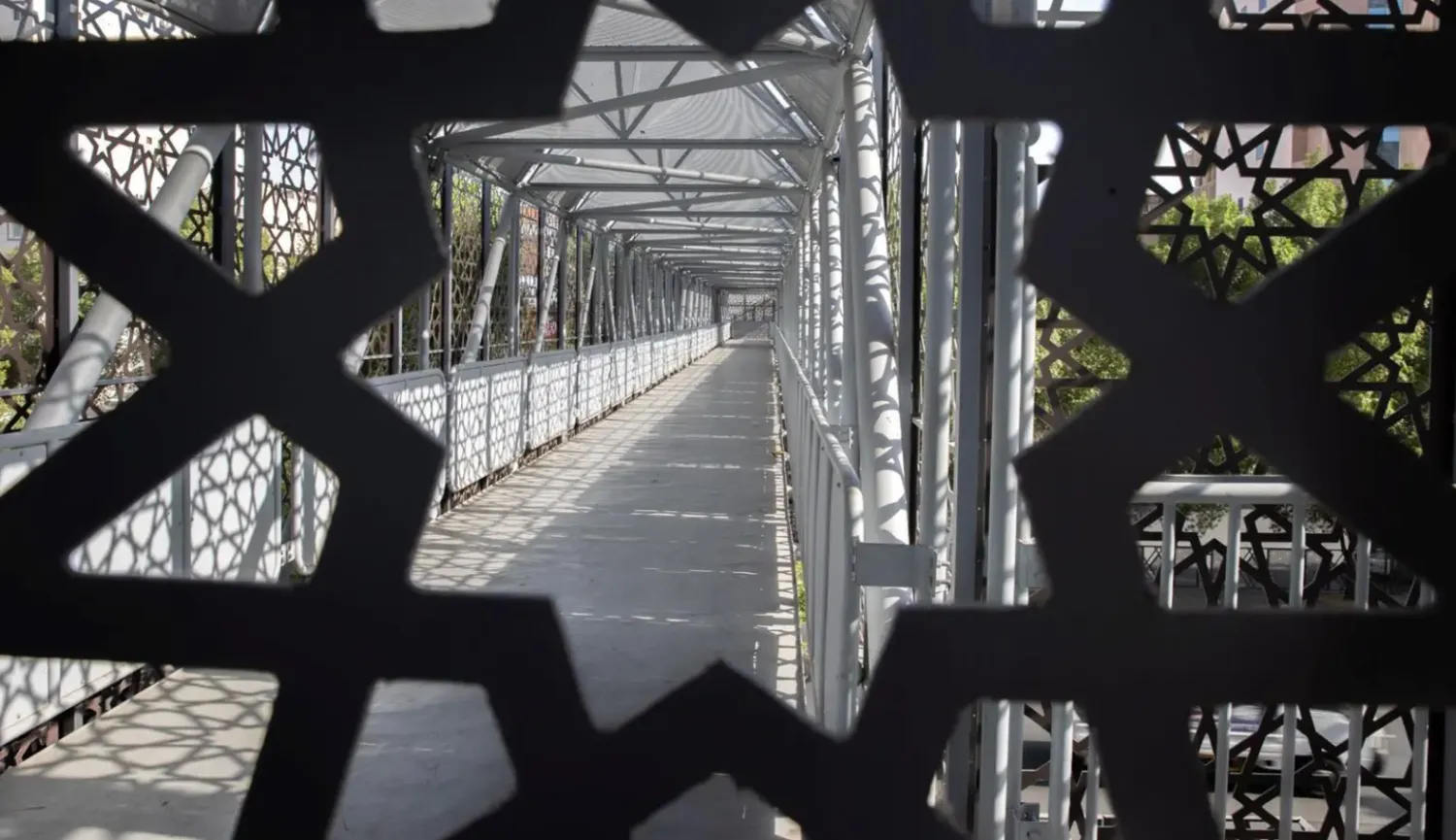
Features of traditional Makkah architecture are becoming increasingly prominent in modern home designs. These include wooden rawashin (ornate bay windows) featuring geometric patterns, architectural arches, ornate wooden doors, mashrabiyas (projected wooden balconies), and internal courtyards, SPA reported.

Some contemporary designs are also reviving the internal courtyard, a key feature of traditional Makkah homes. It provides an open family space at the center of the house, balancing privacy with natural ventilation.

In this context, some architecture enthusiasts are combining heritage elements with modern technologies by preserving exterior designs inspired by old Makkah houses while incorporating contemporary engineering solutions for space planning, lighting, thermal insulation, and air conditioning systems. This approach meets modern comfort and sustainability requirements without compromising the building’s visual identity.

Architecture and heritage enthusiasts believe reviving the Makkah architectural style is one way to preserve the city’s urban identity, particularly amid rapid urban expansion and the growing diversity of modern construction styles.


Jazan Cinema Club Launches Film Accelerator to Support Filmmakers

The initiative targets films that have completed filming or are nearing completion - SPA
TT

Jazan Cinema Club Launches Film Accelerator to Support Filmmakers

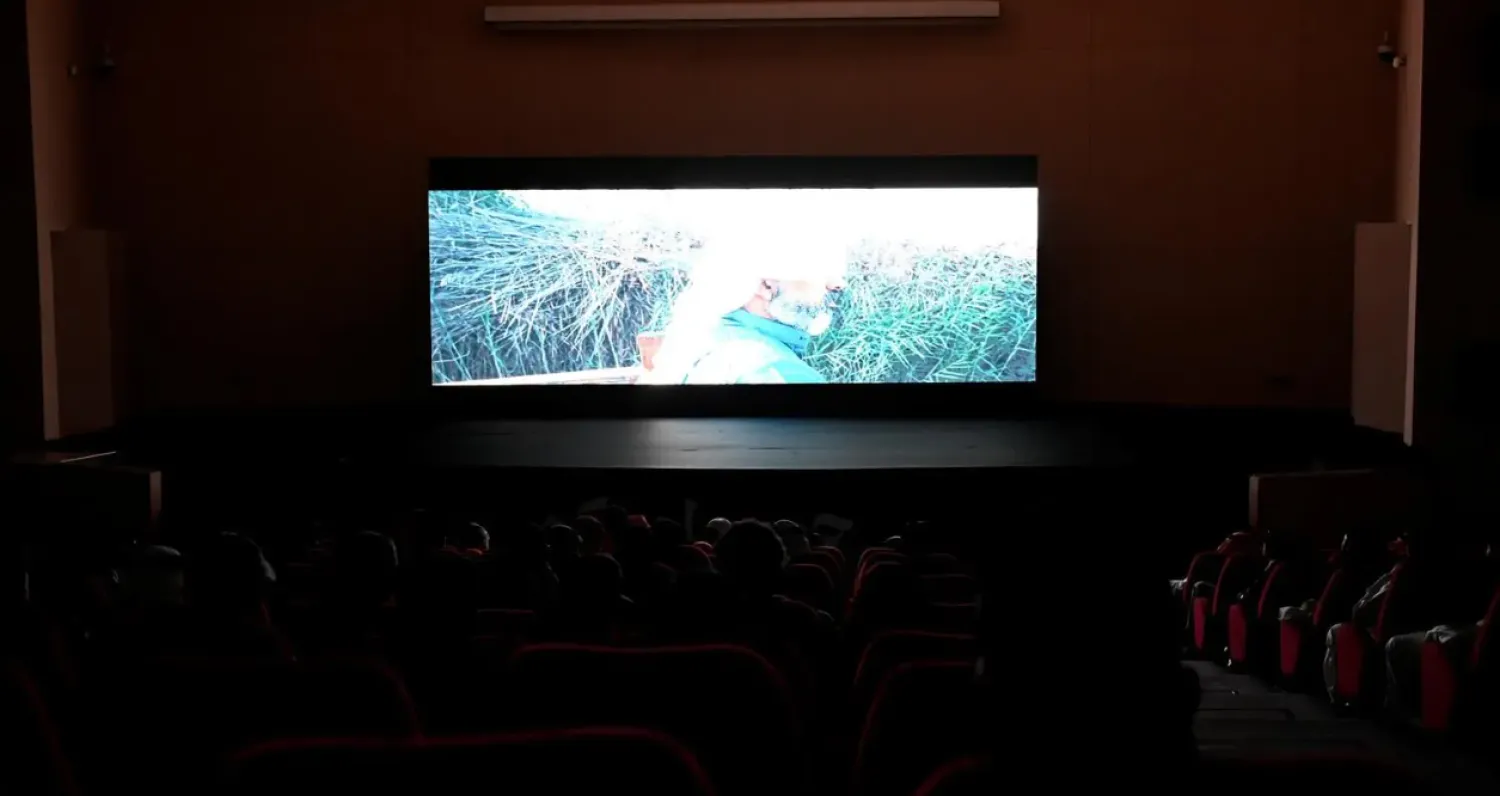
The initiative targets films that have completed filming or are nearing completion - SPA

Jazan Cinema Club has launched a film accelerator initiative to help filmmakers complete their projects and improve their technical readiness, increasing their chances of participating in film festivals, particularly the Saudi Film Festival.

The initiative targets films that have completed filming or are nearing completion.

A technical committee will evaluate each project, identify its needs, and provide development feedback and technical support to help bring it to completion, along with guidance on preparing festival submission requirements, SPA reported.

The initiative is part of the club’s efforts to support local talent and provide a practical pathway to help filmmakers move their projects from filming to festival participation, contributing to the growth of the film scene in Jazan Region.