Romanian Writer Cartarescu Hails Books as Balm in Turmoil

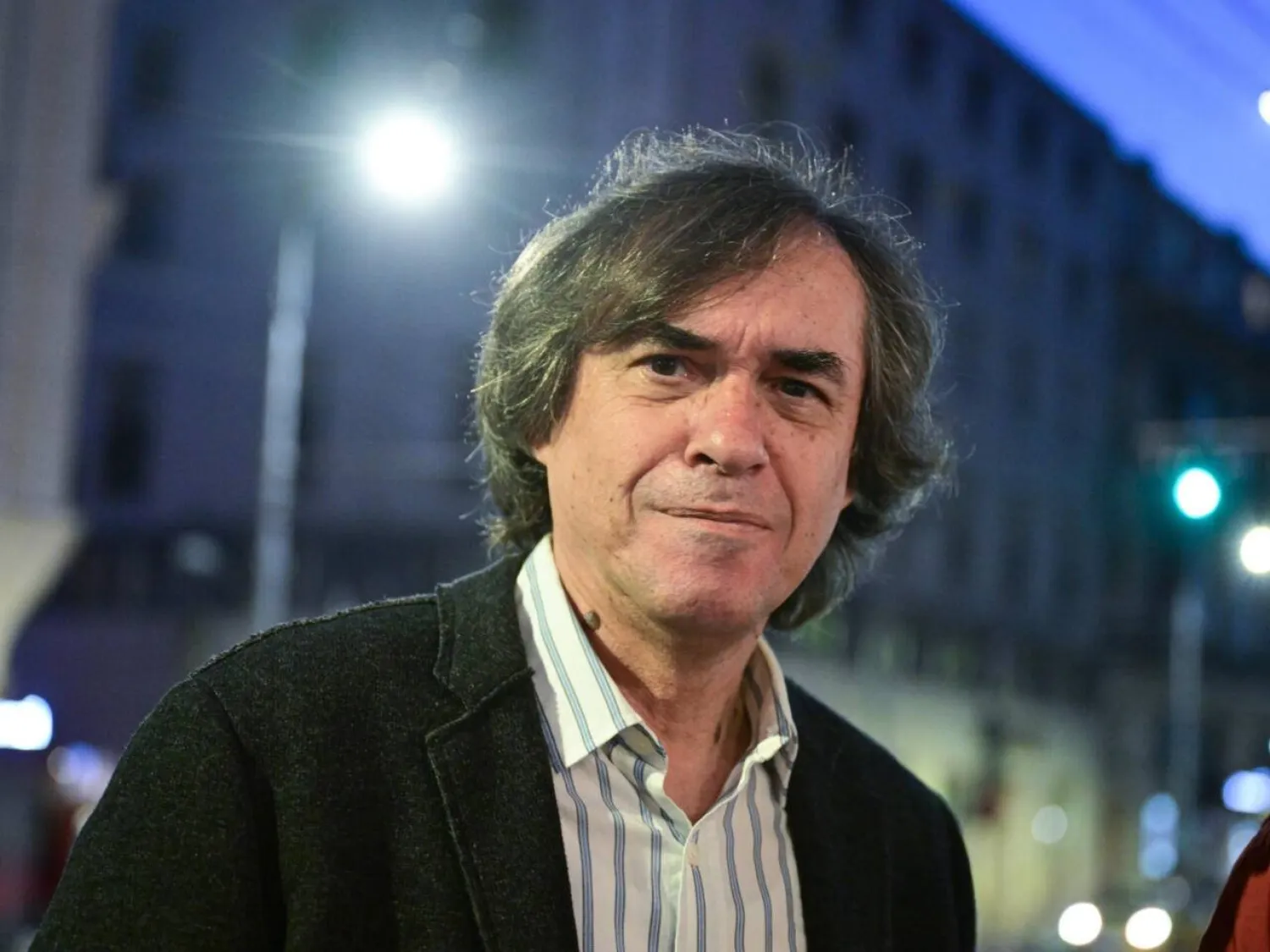
Mircea Cartarescu is the most translated contemporary Romanian writer. Daniel MIHAILESCU / AFP
TT

Romanian Writer Cartarescu Hails Books as Balm in Turmoil

Mircea Cartarescu is the most translated contemporary Romanian writer. Daniel MIHAILESCU / AFP

In an age of "overwhelming evil" and "generalised lies", Romanian novelist Mircea Cartarescu, a weaver of literary fantasies born from a childhood under a totalitarian regime, bets on writing to resist.

Literature is "like a bandage on a wound" in "frightening" times, Cartarescu told AFP at the launch of his latest book, a collection of aphorisms on writing, in Romania.

"These are times when we are threatened from so many sides that we no longer know what to guard against," he said, mentioning wars, social unrest, global warming and "ideological confusion".

Cartarescu, who turned 70 this year, is the most translated contemporary Romanian writer and has won many accolades, including the International Dublin Literary Award in 2024.

Real life and the imaginary merge in his novels, creating a universe that Cartarescu admits is an exercise in navel gazing.

"I write to be able to understand who I am," he has said.

- Childhood trauma -

Cartarescu, whose favorite writers are J. D. Salinger and Franz Kafka, has likened his writing process to termites building their nests without knowing the result in advance.

"I never wrote literature to publish books, but to live in them," he once said about his most recent novel, the 632-page "Theodoros", published in 2022.

Set in the 19th century, "Theodoros" tells the story of a servant's son who rises to become emperor.

Cartarescu has since been in no rush to finish another novel, but he has started on one -- though he told AFP it is "not a novel in the strict sense".

"It's something I've never written before, and I don't think anyone else has either," he said, refusing to go into further details.

Born in Bucharest in 1956 during a period he has previously described as "marked by poverty and terrible famine", the introverted boy was fascinated by literature from an early age.

As a student and then a teacher at the University of Bucharest, he lived only "through and for literature".

A huge fan of Bob Dylan, Cartarescu has translated 100 of the US folk singer's songs into Romanian and has described himself as a "beatnik, a liberal in the widest sense of the term".

But it was his childhood that marked him most and that he tries to rediscover, if not to relive, in his writings.

"It is the most obscure period, that which intrigues me most," he has said, pointing to the trauma of losing his twin brother at the age of 18 months.

"Nearly all that I write is linked to that. I have always felt that something was missing, as if I looked in a mirror and saw no one," he said in an interview with the Adevarul newspaper.

He blamed that death on the "awful conditions" in which his family lived -- they had just moved into a single filthy room in a working-class district of Bucharest.

- 'Collective madness' -

After years of deprivation, Cartarescu said December 22, 1989, when the totalitarian regime of Nicolae Ceausescu was overthrown, was "for all Romanians the happiest day".

Later, Cartarescu often advocated for the independence of the justice system, and took part in protests.

But in time he said he lost hope, especially after the pandemic, so he now prefers to stick to his writing.

In a published journal, he criticized the surge of a far-right candidate in the 2024 Romanian presidential elections as "collective madness".

He likens current times worldwide to those before World War II, but with added risks related to artificial intelligence, "the greatest threat to humanity".

He told AFP he would never use AI in his literature, nor read a book written with it, as his interest lies in exploring what is human.

"Why would I read the work of an insectoid or an alien?"

Dozens of his readers gathered in a Bucharest bookstore in October, listening in church-like silence to the novelist talk about his latest published work.

"We gather around a book to protest against a world that no longer resembles us," he told them.


Landmark Bus Tours, Folk Arts, and Stargazing Draw Crowds to 'Wasm Hail' Cultural Festival

The program features traditional camel processions, folk arts, stage and musical performances, handicraft stalls, exhibition pavilions, and classic car displays - SPA
TT

Landmark Bus Tours, Folk Arts, and Stargazing Draw Crowds to 'Wasm Hail' Cultural Festival

The program features traditional camel processions, folk arts, stage and musical performances, handicraft stalls, exhibition pavilions, and classic car displays - SPA

The Wasm Hail events at Al-Qishlah Palace in Hail have welcomed thousands of residents and tourists from within the region and beyond to enjoy a diverse array of experiences blending heritage, culture, and entertainment.

The program features traditional camel processions, folk arts, stage and musical performances, handicraft stalls, exhibition pavilions, and classic car displays. A dedicated tourist bus service also offers guided tours of landmarks, SPA reported.

Adding an educational dimension, the festival includes an astronomical experience enabling visitors to observe the moon and planets through optical telescopes and safely view the sun via specialized solar telescopes, highlighting Hail's diverse cultural and tourism assets.


A Long-Buried Ancient Library in Rome Opens to the Public After Restoration

 Marble archaeological remains from the western library of Trajan's Forum, which archaeologists believe may have housed the ancient Bibliotheca Ulpia, one of ancient Rome's most important libraries, are displayed during a press preview of the restored site in Rome, Thursday, Nov. 19, 2026. (AP)
Marble archaeological remains from the western library of Trajan's Forum, which archaeologists believe may have housed the ancient Bibliotheca Ulpia, one of ancient Rome's most important libraries, are displayed during a press preview of the restored site in Rome, Thursday, Nov. 19, 2026. (AP)
TT

A Long-Buried Ancient Library in Rome Opens to the Public After Restoration

 Marble archaeological remains from the western library of Trajan's Forum, which archaeologists believe may have housed the ancient Bibliotheca Ulpia, one of ancient Rome's most important libraries, are displayed during a press preview of the restored site in Rome, Thursday, Nov. 19, 2026. (AP)
Marble archaeological remains from the western library of Trajan's Forum, which archaeologists believe may have housed the ancient Bibliotheca Ulpia, one of ancient Rome's most important libraries, are displayed during a press preview of the restored site in Rome, Thursday, Nov. 19, 2026. (AP)

The famed Alexandria Library in Egypt may have been lost, but another of the ancient world's repositories for texts has been restored in Rome and is reopening to the public this week.

The ruins of the Ulpia library are located in Emperor Trajan’s Forum, just next to the iconic column that celebrates his victorious campaigns against the Dacians and the Roman conquest of what is modern-day Romania. It remained inaccessible for almost a century.

“After the Alexandria Library of Egypt, after the Library of Pergamon in Asia Minor, this one in the Trajan’s Forum was certainly one of the most important, given both the number of ‘volumina,’ as books were called in ancient times, and the quantity of documents," Claudio Parisi Presicce, an archaeologist and Rome's superintendent for cultural heritage, said in an interview with The Associated Press.

The place was in a state of ruin when discovered in 1932 during clearing works by Benito Mussolini's government for the road that became the famous Via dei Fori Imperiali. Later, it was covered in concrete and used as a storage room for some of the countless pieces from Trajan's Forum, the last and greatest of the imperial fora, built in 112 AD.

But the niches in its walls were evidently spots to set cabinets for scrolls, signaling that this was one of the two, two-story buildings comprising the Ulpia library referenced in ancient texts, Presicce said.

Archaeologists from Rome's superintendency for cultural heritage identify it as the Ulpia library's western building, which ancient texts indicate stored Greek-language scrolls.

The new permanent exhibition offers visitors an idea of the space as it used to be, featuring the remains of some of the library’s rich marble decorations — white for the walls, and different colors for its floor and columns. Immersive videomapping is also projected on its walls, showing the history of the library and its discovery. Instead of scroll-filled cabinets, spread throughout the space today are broken Corinthian columns and pieces of sculptures.

The library was a fundamental part of the Forum, and a place that for centuries attracted citizens from all over Rome with its vast collection of edicts and documents.

“The libraries were used by both common citizens, those who could afford a certain cultural level and a better education than those from the lower classes, but also by magistrates who needed access to older documents, or needed to check the norms that regulated the life of the community,” he said.

Restoration started in 2025, and lasted about a year. The 1.75-million-euro cost ($1.92 million) came from the European Union’s pandemic recovery funds — just one of many restoration projects Rome is carrying out across the city with EU money.

It will initially be opened to visitors only on Fridays, Saturdays and Sundays. Visits are scheduled every 40 minutes, 20 people at a time.

The library's eastern building remains buried beneath an 18th-century church, on the other side of Trajan's Forum, and stored Latin-language scrolls. There are no plans for its excavation.


Afghan Tradition Keeps Grapes Fresh for Winter Treat

This photograph taken on November 10, 2026 shows Afghan farmer Muhammad Saber Shojaei seal packing grapes in mud-and-straw discs known as Kanginas before storing them in a dark room in the Kalakan district of Kabul province. (AFP)
TT

Afghan Tradition Keeps Grapes Fresh for Winter Treat

This photograph taken on November 10, 2026 shows Afghan farmer Muhammad Saber Shojaei seal packing grapes in mud-and-straw discs known as Kanginas before storing them in a dark room in the Kalakan district of Kabul province. (AFP)

On the outskirts of Afghanistan's frenetic capital Kabul, Muhammad Saber Shojaei is carrying out a centuries-old task of preserving fistfuls of grapes to be eaten when winter bites.

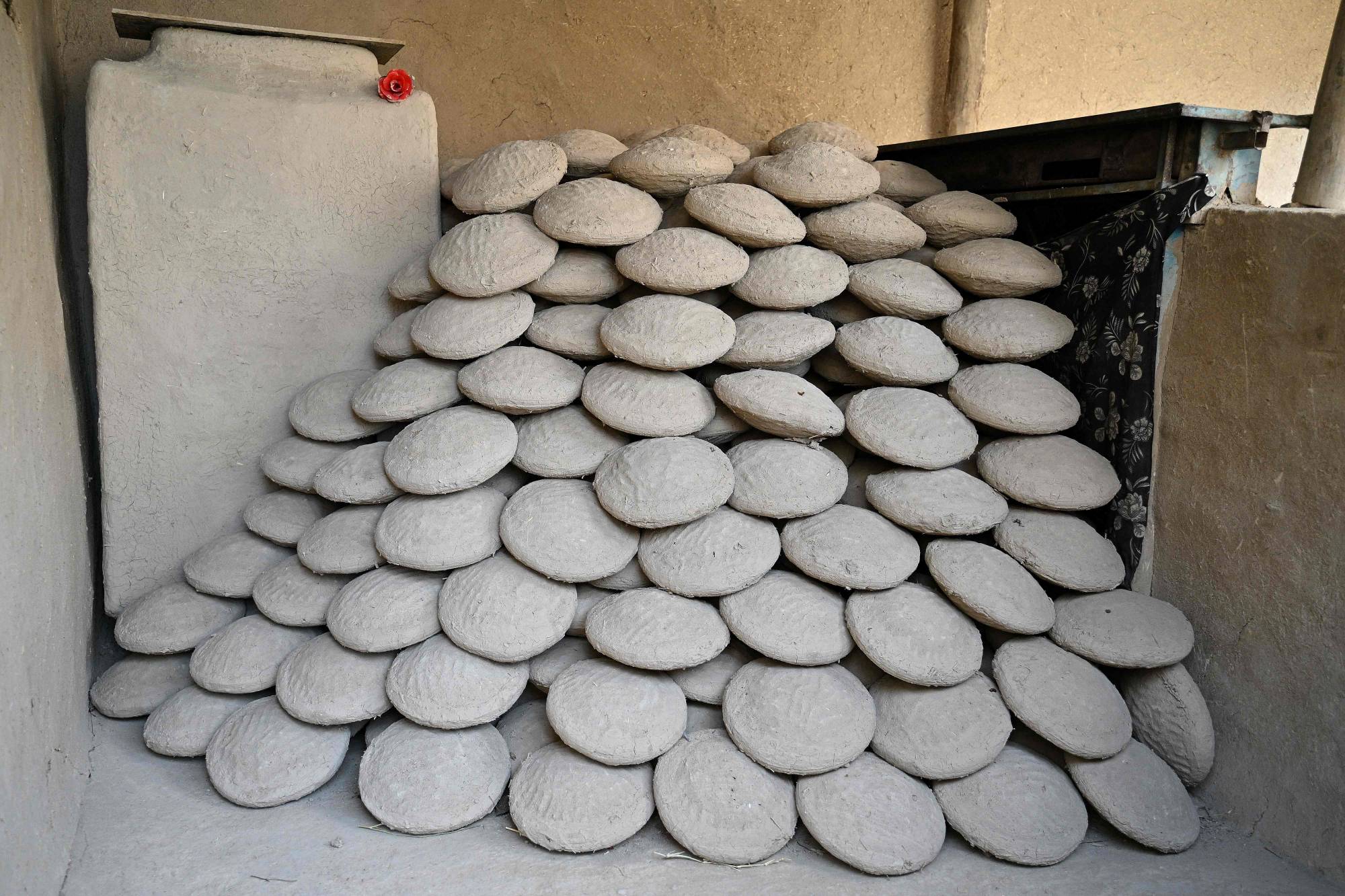
Crouched in front of dozens of "kanginas", clay-and-straw discs containing grapes, Shojaei recalls his father, who taught him the technique.

"I remember the old days, when we sat together around the sandali (stove), eating kangina grapes and enjoying those happy moments," said the 47-year-old from Kalakan district.

Carefully putting a bunch of grapes in one of the discs, Shojaei added a second disc on top and sealed the kangina with mud before placing it in a dark storage room.

"In this way, kanginas can keep grapes fresh from now until the spring," said the farmer, who makes about 700 each year to sell by the roadside.

No one knows quite how long kanginas have been used in Afghanistan, with estimates starting at "centuries" and the knowledge passed down through the generations.

This photograph taken on November 10, 2026 shows Kanginas, a traditional preserving method made from clay mud and straw used to keep grapes fresh for up to six months, in a storage inside of a house in the Kalakan district of Kabul province. (AFP)

During harvest season, grapes for sale can be seen bundled in big plastic bags, or piled high onto trucks as they're taken to markets further afield.

But such abundance comes with problems in Afghanistan, where cold storage to keep produce fresh is severely limited and the export route to Pakistan has been cut off by cross-border conflict.

Farhad Ezati, a 21-year-old trader, said "farmers can't even cover their costs" this year as grape prices have plummeted by 70 percent due to the border closure causing a supply glut.

Standing in a bright green field while laborers packed grapes into cardboard boxes, Ezati said competition among sellers is incredibly tough.

"Afghan grapes are the best," he said, his face brightening. "They're really high in quality... and have a really good taste."

- 'Keep our culture alive' -

Labor-intensive and fragile, kanginas cannot overcome large-scale storage or trade problems.

But in the depths of winter, Afghans living near the vineyards can buy them along the roadside or in nearby markets, and farming families can crack them open and enjoy fresh grapes.

Gulagha Frotan, a community leader in Kalakan, said people wait until snow or rain to enjoy them.

"We don't wash the grapes because they might lose their natural quality. We only blow away the dust, or shake them gently, and then they're ready to eat," the 61-year-old told AFP.

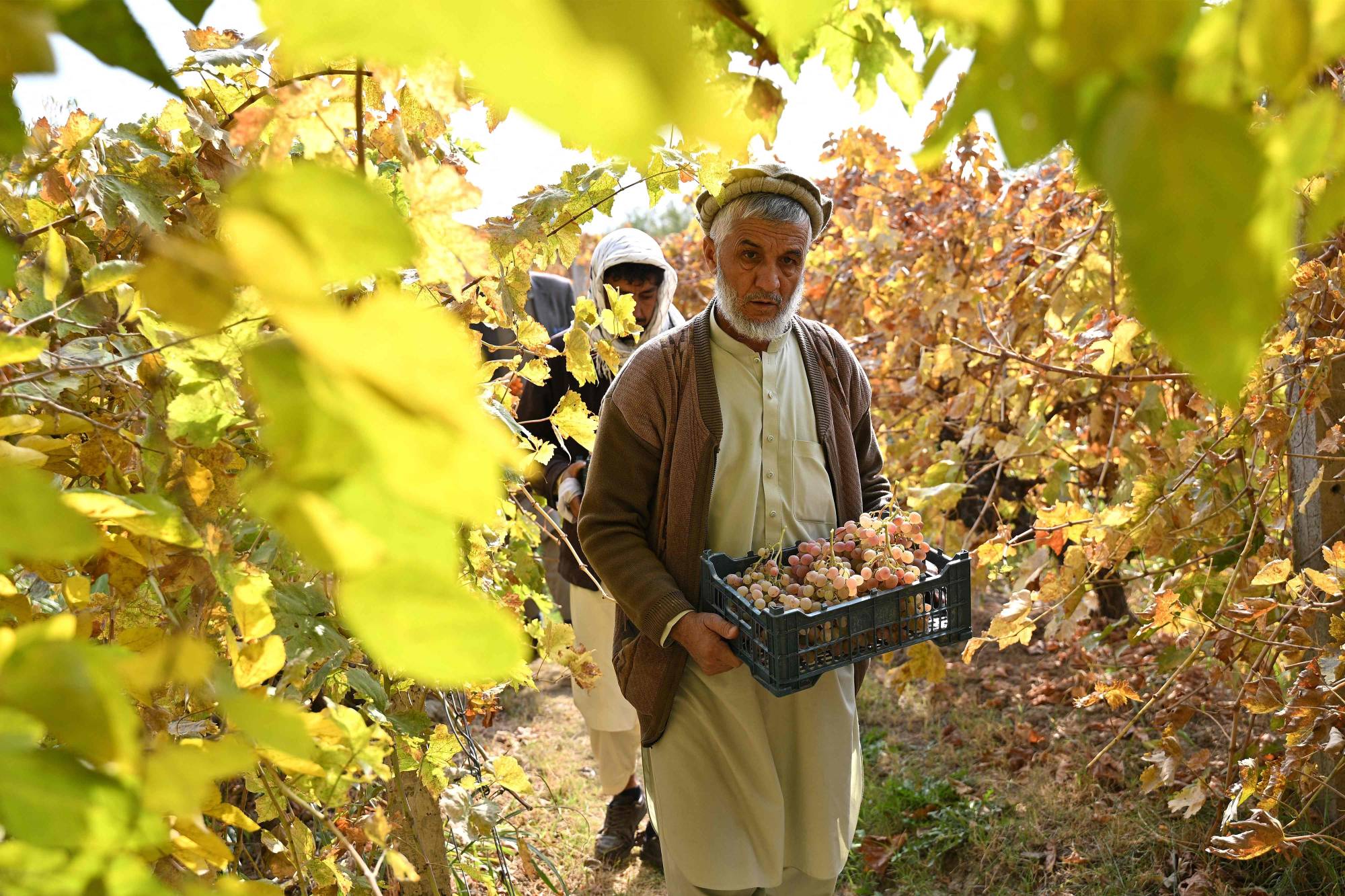
This photograph taken on November 10, 2026 shows an Afghan farmer carrying harvested fresh Taifi grapes in a vineyard in the Kalakan district of Kabul province. (AFP)

Despite its long history in the Kabul area, the practice is currently only being used in one other province, neighboring Parwan, according to the UN's Food and Agriculture Organization (FAO).

The agency's Ezatullah Noori said that, along with the cool weather, the large population in the area means that farmers don't have to travel far to sell the kanginas.

"There's potential for farmers to sell some of their grapes, rather than to lose them during the peak production season," said Noori, FAO's emergency and resilience team leader in Afghanistan.

He called for scientific research to better understand such unique heritage, as well as an organized effort to help farmers cooperate to sell their kanginas on a larger scale.

"I am afraid that one day this will disappear from our country and nobody will know how to make it," Noori told AFP.

"We should keep our culture alive."