'Hassan El Masry' Movie: Betting on Suspense Amid Gaza War Box Office Fears

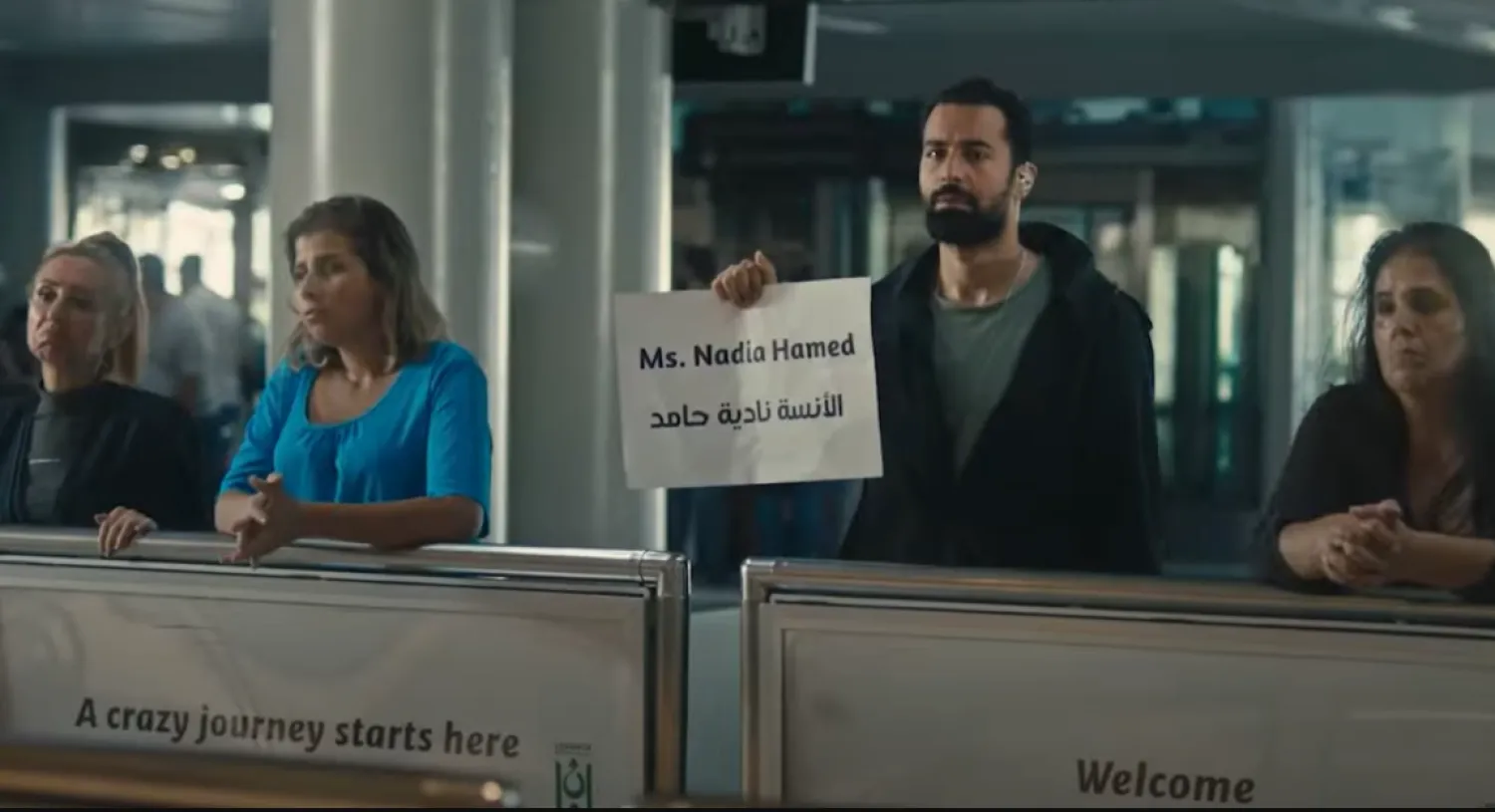
A scene from the movie via the production company
TT

'Hassan El Masry' Movie: Betting on Suspense Amid Gaza War Box Office Fears

A scene from the movie via the production company

“Hassan El Masry” ranked second in the Egyptian box office in the first week, with revenues estimated at over EGP2 million.

Starred by Egyptian actor Ahmad Hatem and the two Lebanese actresses Diamand Bou Abboud and Lina Sophia, the film is a new experience with an Egyptian-Lebanese team that also includes actors Jad Abu Ali, Jennifer Azar, Murad Karam, and Ferial Youssef from Tunisia.

Story of Noora Labib, "Hassan El Masry" was written by Samar Taher, and produced by Misr International Films.

It’s the company’s third work with Lebanese filmmaker Samir Habshi. The two former collaborations were the documentary “Lady of the Palace” and feature film “Smoke without Fire”.

The film hit cinemas on October 4, in Egypt, Saudi Arabia and the Gulf region. It revolves around Hassan, also known as "El Masry", who works for a private security company, and lives in guilt after he lost his mother and sister; he travels to Lebanon to escape his past, where he works in a security company too, but gets involved with arms traffickers and embarks on a dangerous mission.

Producer Gabi Khoury said he is delighted with what the film accomplished in its first week. “Most of the events take place in Lebanon, where most of the scenes were shot. The screening started on the same date in all Arab countries including Lebanon,” he told Asharq Al-Awsat, noting that “the political developments in the region, namely the war in Gaza, will affect the revenues of all the currently-screening films.”

Film critic Tarek al-Shennawi sees that the idea behind "Hassan El Masry" is focused on its screening in Egypt and Lebanon, especially that the producer is Lebanese. He also praised the experience that allowed every actor to speak their native accent, noting that “it’s an important thing, so the Egyptian audience becomes accustomed to the Lebanese accent, especially that the Lebanese people are already used to the Egyptian accent.”

“The box office is the decisive indicator. An actor becomes a star when their films make huge revenues in the market. Hasan El Masry movie ranked second in the Egyptian box office, and I am not sure it’s going to make it in Lebanon. So, the work is no more than just a movie that entertains the audience,” he concluded.


The Golden Trailer Awards: Hollywood’s ‘Oscars’ for Movie Previews

The gala started in 1999 when co-founders Monica Brady and Evelyn Watters were looking for a team to produce a trailer. (Getty Images/AFP)
TT

The Golden Trailer Awards: Hollywood’s ‘Oscars’ for Movie Previews

The gala started in 1999 when co-founders Monica Brady and Evelyn Watters were looking for a team to produce a trailer. (Getty Images/AFP)

The Golden Trailer Awards, which recognize the people behind Hollywood's best-made movie previews, returned for its 26th edition Thursday.

The gala started in 1999 when co-founders Monica Brady and Evelyn Watters were looking for a team to produce a trailer, only to find that those who worked in the field were practically anonymous.

"Trailer editors, the people creating some of the most memorable moments of the moviegoing experience, were completely unrecognized," Brady told AFP.

"They weren't credited on trailers, they weren't credited in films, and there wasn't even a directory to find them."

The pair, who remain as executive producers on the award show, oversaw 19 prizes given out during the inaugural ceremony in New York.

The ceremony was held in Los Angeles and recognized achievements in more than 100 categories.

The night's most coveted statuette for Best of Show went to the trailer for sci-fi movie "Project Hail Mary", starring Ryan Gosling, which was created by Wild Card Creative Group.

But what makes one movie trailer stand out from the rest?

"What makes a great trailer, first and foremost, is a great hook," Watters said.

- 'A tempting appetizer' -

An honoree will likely have "a fresh storyline, compelling characters, an emotional moment, and something audiences haven't seen before," she explained ahead of the ceremony.

"A winning trailer is a tempting appetizer, it is not the whole meal."

Taylor Engel, a creative director at Create Advertising Group -- which received 16 nominations this year for the company's work on trailers for "Sinners,Tron: Ares" and "Only Murders in the Building" -- said editing a trailer is like putting together pieces of a puzzle.

"We get materials at the beginning of the project, and it could be anything. Sometimes you get the movie, sometimes you get just dailies, you know, just the scenes that they shot," Engel said.

The challenge lies in combining the audio, video and editing effects to "tell maybe a different story or showcase the movie in some way."

Like film editing, movie trailers have evolved over the decades in Hollywood, and the crowded marketplace for attention has led to fierce competition.

Sometimes, the trailer ends up being better than the movie itself -- something that has become its own category in the Golden Trailer Awards.

Dubbed the "Golden Fleece," this year's nominees include trailers for the horror film "Shell" starring Elisabeth Moss and "The Strangers: Chapter 3."

- No AI used -

Despite the intense competition and demand, Engel said that the work in making movie trailers is not under the same pressure to utilize artificial intelligence as other sectors of Hollywood.

"Every cut is very specific in why you pair a shot with a certain piece of music," Engel said.

AI tools "may get better at recreating what's been done in the past, but what's exciting about trailers is when you see something that you've never seen before, you see it done in a different way," the creative director said.


In ‘Pressure,’ the Story of the Meteorologist Who Helped Save D-Day

 Anthony Maras, left, director/co-writer of the film "Pressure," poses with cast members Brendan Fraser, center, and Andrew Scott on Tuesday, May 12, 2026, in Los Angeles. (AP Photo/Chris Pizzello)
Anthony Maras, left, director/co-writer of the film "Pressure," poses with cast members Brendan Fraser, center, and Andrew Scott on Tuesday, May 12, 2026, in Los Angeles. (AP Photo/Chris Pizzello)
TT

In ‘Pressure,’ the Story of the Meteorologist Who Helped Save D-Day

 Anthony Maras, left, director/co-writer of the film "Pressure," poses with cast members Brendan Fraser, center, and Andrew Scott on Tuesday, May 12, 2026, in Los Angeles. (AP Photo/Chris Pizzello)
Anthony Maras, left, director/co-writer of the film "Pressure," poses with cast members Brendan Fraser, center, and Andrew Scott on Tuesday, May 12, 2026, in Los Angeles. (AP Photo/Chris Pizzello)

D-Day was supposed to happen on June 5, 1944. The story of why it ultimately took place on June 6 is one that has been a bit lost to history, consumed by the larger events surrounding it.

One day might not seem like much in the grand scheme, but it was a seismic delay in plans for the unprecedented and daring invasion, which would deploy nearly 160,000 Allied troops in Normandy.

Ultimately it came down to a recommendation from a shrewd Scottish meteorologist, Group Capt. James Stagg, who had to tell everyone, including Gen. Dwight D. Eisenhower and the Allied leadership, something they didn’t want to hear: The weather was going to be catastrophically bad. And no, he wasn’t certain about it.

The tense 72 hours before the invasion are brought to life in "Pressure," in theaters May 29, on the eve of the operation’s 82nd anniversary. An adaptation of David Haig’s acclaimed stage play, the film sheds light on this bit of history that would effectively change the course of the second World War.

Filmmaker Anthony Maras assembled a unique group of actors for the task at hand, calling on Brendan Fraser to play Eisenhower and Andrew Scott to play Stagg.

"I didn’t think I was an Ike Eisenhower when Anthony Maras sent me the script," Fraser said. "I got on a Zoom call and he said, ‘You gotta do this man.’ Me? Why? ‘It’s because he’s you, he’s like you. He’s just a regular guy.’ Really? I mean, I thought Eisenhower was this, you know, stern, staunch, something on coin."

Fraser went deep in his preparation, reading and listening to everything he could get his hands on to help him understand the man who would ultimately have to make the decision. The research even continued on set. Maras laughed that right before they shot Eisenhower’s famous "soldiers, sailors and airmen" speech, something that they’d rehearsed many, many times, he looked up and saw Fraser reading yet another biography. But he appreciated that the Oscar-winner was passionate about knowing everything he possibly could to get it right.

"He cared intensely for his troops," Fraser said. "It was my responsibility to honor their memory and to comport myself in a way that puts a human face on the seemingly academic decisions that go into an operation as massive as this."

Scott was the opposite in terms of how he approached his role. Yes, he read Stagg’s book and wanted to have a working understanding of the metrological jargon he’d have to be spouting. While history was important, for him, character was king. And he liked that Stagg is not the most immediately likable person, but he has integrity.

"The thing with Stagg is that he’s just not interested in charm ... or being liked at all," Scott said. "I think that’s to be admired actually, because he’s just there to do a job. So I like the fact that at the beginning of the movie, you’re like, whoa, this guy is not pleasant."

Maras said that for Scott, it was all about the inner, emotional life of the character, which was essential for a part that would require so much internal conflict.

"With Andrew, he has a quality to him where he can seemingly be doing very little — he’s sitting down, rearranging his tie, he can be reading a phone book — and you can’t look away," Maras said.

In the shadow of ‘Saving Private Ryan’

The actors weren’t the only ones feeling pressure of the assignment: Maras also had a behemoth looming in attempting to stage, however briefly, the D-Day invasion.

"You’ve kind of got to be crazy maybe to attempt it, given that Spielberg did it so masterfully," Maras said.

But unlike "Saving Private Ryan," which focused on the men storming the beach, "Pressure" is about the ones making the decisions. It’s a different perspective. Still, once they make the call to go, there would have to be at least some of the operation shown to juxtapose with the "bloody tense, wire-type atmosphere of the control room," Maras said.

Inspired by Peter Jackson’s World War I documentary "They Shall Not Grow Old," and the existence of dozens of hours of pristine 35 mm black and white film from the event, Maras decided that perhaps archival footage, colorized, would be the way to go. It was a different way to present D-Day that gave it immediacy, he said, as opposed to looking like history.

Ultimately, "Pressure" isn’t just a history lesson, or even a character drama with big personalities and even bigger stakes: It’s a portrait of leadership and ego clashing with facts and science. And its relevance to the present day is the reason Maras wanted to make the film in the first place.

"How do you bring your best self to the table to make the decision? How do you have the humility to acknowledge when you don’t know something? And how do you have the wisdom to determine who to trust? ... Eisenhower in the end showed that he was a maestro at that," Maras said.

"What I love about the Stagg character is he’s someone who feels compelled to tell someone something that they don’t want to hear, that they violently don’t want to but they need to hear. The world needs more of that."

Years later, John F. Kennedy, on the way to his own inauguration, asked Eisenhower what gave them the edge on D-Day. His response? "We had better meteorologists than the Germans."

"When life or death depends on you understanding the facts, it probably has a way of like cutting up the BS and getting to it," Maras said. "It’s a very clear example of a time where the Allied worlds’ future was at stake and they listened to someone who knew what he was talking about and they did all right."



Amazon Greenlights AI-Generated Shows for Children

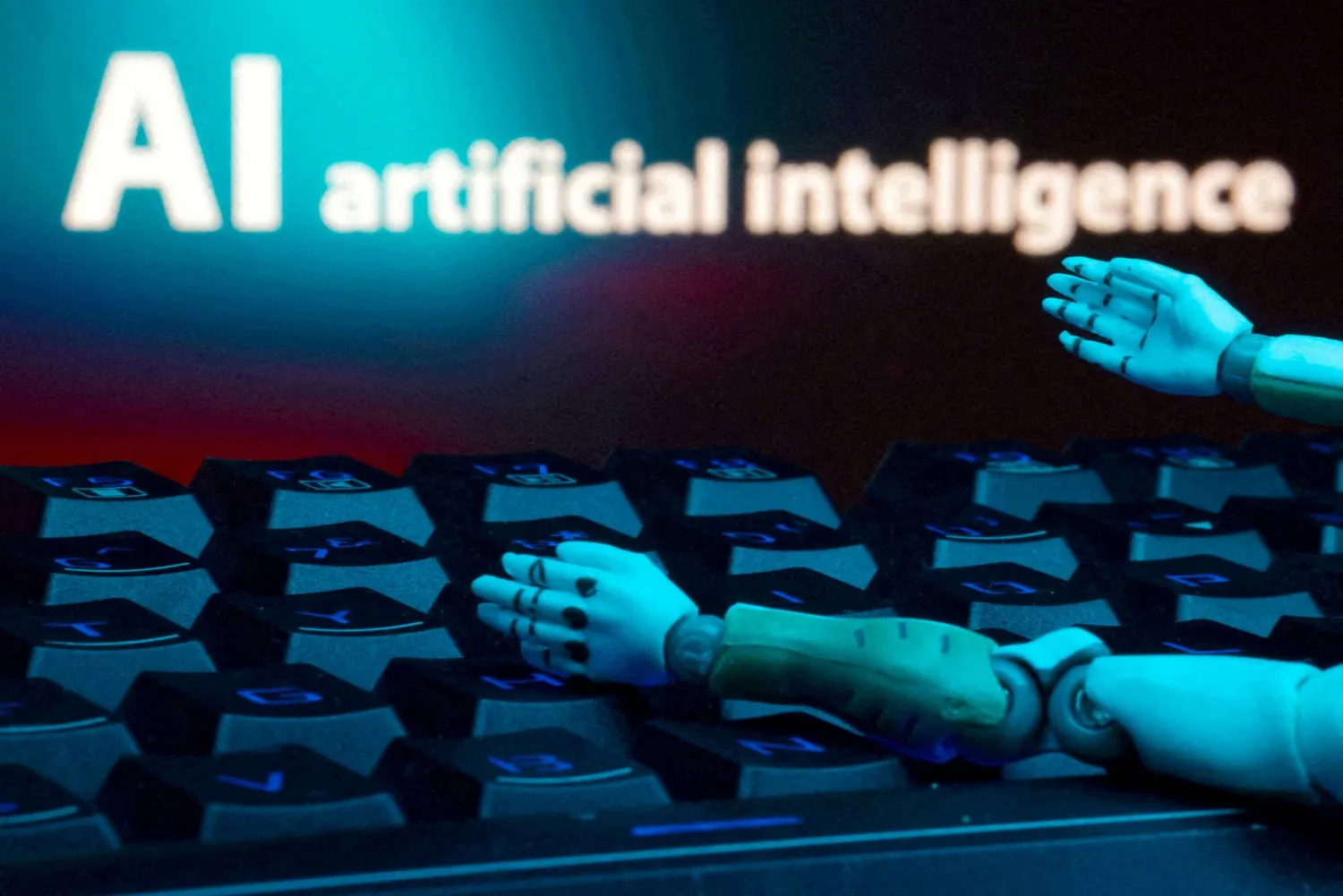
A message reading "AI artificial intelligence," a keyboard and robot hands are seen in this illustration created on January 27, 2025. (Reuters)
TT

Amazon Greenlights AI-Generated Shows for Children

A message reading "AI artificial intelligence," a keyboard and robot hands are seen in this illustration created on January 27, 2025. (Reuters)

Amazon MGM Studios announced Wednesday it has greenlit the first three children's shows that were created under a new initiative to use artificial intelligence (AI) in content development.

The GenAI Creators Fund pays filmmakers, digital creators and startups to use AI to develop their projects in a short time frame.

"Punky Duck" series director Jorge Gutierrez said he is used to spending two years making a pilot, but his new show was greenlit to run on Amazon after just two months.

Two more projects -- "Diana Music Hunters" from Albie Hecht and "Cupcake & Friends" from Buzzfeed Studios -- were also greenlit in a couple of months, reflecting a new approach from major studios.

Hollywood's unions and artists have raised concerns about the use of AI, with creatives, writers and actors fearing they could be replaced by digital facsimiles.

AI Studios chief at Amazon MGM Albert Cheng told the conference that the technology won't eliminate jobs, it will actually reduce costs and timelines to make it possible to increase the number of productions.

But Cheng acknowledged "AI is addictive," adding that it's important for humans to make sure they don't "succumb and let our brains go to waste."