


‘The Hunger Games’ Starts Fresh, without Katniss, in ‘The Ballad of Songbirds & Snakes’ 

Tom Blyth, and Rachel Zegler pose for photographers upon arrival at the World premiere of the film "The Hunger Games: The Ballad of Songbirds & Snakes" on Thursday, Nov. 9, 2023 in London. (AP)
TT

‘The Hunger Games’ Starts Fresh, without Katniss, in ‘The Ballad of Songbirds & Snakes’ 

Tom Blyth, and Rachel Zegler pose for photographers upon arrival at the World premiere of the film "The Hunger Games: The Ballad of Songbirds & Snakes" on Thursday, Nov. 9, 2023 in London. (AP)

Everyone had resigned themselves to the fact that “The Hunger Games” ended in 2015. The four-film blockbuster franchise had made nearly $3 billion at the global box office and helped Jennifer Lawrence skyrocket to superstardom. But Suzanne Collins’ Katniss Everdeen saga was over. And, frankly, everyone, including Collins, director Francis Lawrence and producer Nina Jacobson, was eager to take a break and do something else.

For several years after “Mockingjay — Part 2,” “Hunger Games”-related text conversations between Lawrence and Collins rarely went past sending one another screenshots of their films on Jeopardy categories. Then, in 2019, Jacobson and Lawrence got a call: Collins was putting the finishing touches on something new, a prequel set 64-years before Katniss volunteered as tribute. It would be focused on a young Coriolanus Snow, and there would be a big musical element.

“The Hunger Games: The Ballad of Songbirds & Snakes” arrives in theaters nationwide Friday at another transitional moment in Hollywood, where Marvel movies are no longer sure things and, for the first time in a long time, the biggest movies of the year aren’t already franchises.

And while the team was excited about the possibility of working together again, there were some nerves about whether or not there was an appetite for Hunger Games movies “without Katniss,” Lawrence told The Associated Press in a recent interview. But this was all before they’d laid eyes on the book.

Both Lawrence and Jacobson were soon brought into Collins’ agent’s office, seated in a locked room and given the book to read. To their relief, suddenly the Katniss problem didn’t seem so important anymore, and soon they were off to Lionsgate to get it off the ground.

“We were excited to be able to dive into something that didn’t feel like a rehash,” Jacobson said. “It didn’t feel like we were trying to imitate the previous movies.”

For Lawrence, it “felt like a ‘Hunger Games’ story” but also something unique, “with new thematic foundations.”

“Instead of a girls’ survival story, it was a young man’s descent into darkness,” Lawrence said. “It’s an origin story about a major character and also the series itself.”

As with the first film, Lawrence and Jacobson wanted to find fresh young talents to lead the franchise – not a TikTok star or someone already famous in another part of the world – and surround them with veteran actors. In this case, those established names would include Viola Davis, Peter Dinklage and Jason Schwartzman.

They found their young Snow, played in the original films by Donald Sutherland, via taped submission. The English actor Tom Blyth entered the running rather late and quickly became the frontrunner, beating out hundreds for the role.

“He just blew everybody out of the water,” Lawrence said. “He has a charisma, he has the right physical attributes. He’s Juilliard trained. He really knows his craft. He was going to be able to give us all the emotional values we need for the character’s journey. And he felt like a star.”

For Lucy Gray Baird, the District 12 tribute Snow is assigned to mentor for the 10th Hunger Games, Lawrence already had someone in mind. Like many film fans, he was transfixed by Rachel Zegler ’s film debut as Maria in Steven Spielberg’s “West Side Story” and persuaded her to co-star. It wasn’t a hard sell: “The Hunger Games” were already a big part of Zegler’s life having grown up with the books and the movies, which she and her mom and sister made events out of.

“As somebody who loves to call herself a fan first before anything else, the greatest gift you can get is more to the story,” Zegler said. “Rather than seeing it as a pressure cooker just waiting to explode, I see it as a really big blessing.”

Blyth, in his first starring role in Hollywood, felt some pressure. But he found comfort in the material they were working with.

“We’re lucky to be adapting a book that’s really good,” Blyth said. “Suzanne writes these big thinking pieces that are approachable for teenagers and younger people, which I think is a genuinely honorable feat — someone who wants to try and bring bigger ideas to young people while also entertaining them.”

Filming took place largely in Germany. The production looked to reconstruction-era Berlin for aesthetic and thematic inspiration for this post-war capitol that’s rebuilding and on tenuous political ground. And Trish Summerville was also brought back to design the ornate costumes, which include some Easter eggs for fans hidden in Lucy’s hand-painted corset.

“There’s this spectacle to the whole world,” Blyth said. “The whole thing is about spectacle. It’s about being distracted by beautiful things while everything else is going on.”

But even while creating a new world, the filmmakers were disciplined about the budget. Instead of resting on laurels and precedent – “Mockingjay Part 2” had a $160 million price tag – they kept theirs to a reported $100 million.

“We were very mindful that this was not a sequel but a prequel with a new cast,” Jacobson said. “We wanted to make sure that we were making this movie at a price that that made sense.”

It’s easy to forget that not everyone in Hollywood thought that they had a blockbuster in their hands at the beginning. Back in 2009, when Jacobson and her production company ColorForce acquired the rights to adapt Collins’ YA series, there was widespread skepticism about young adult material and about the appeal of female-fronted action movies that weren’t primarily romances.

“In the original series, we were able to take a lot of risks and really challenge a lot of industry assumptions,” Jacobson said. “The most important thing in this go-around was to still take those risks and not be playing it safe — to still feel like we’re making something that’s a bit on the subversive side.”

With its moral ambiguity and complicated characters, Jacobson thinks it might even be the kind of movie that audiences want to discuss and debate afterward. In the past year, she added, a lot of young people have discovered the franchise on streaming who will hopefully join established fans at the theater for “The Ballad of Songbirds & Snakes.”

“I’m hopeful that it will be a shared cultural experience and a communal experience at a time when we don’t have too many of those,” Jacobson said. “When they do happen, as they have this year with movies as different as ‘Barbie’ and ‘Oppenheimer,’ it certainly shows that if you give people a worthwhile and original story with some bold storytelling and a filmmaker with a voice, that they will show up. And we hope to be part of that showing up.”

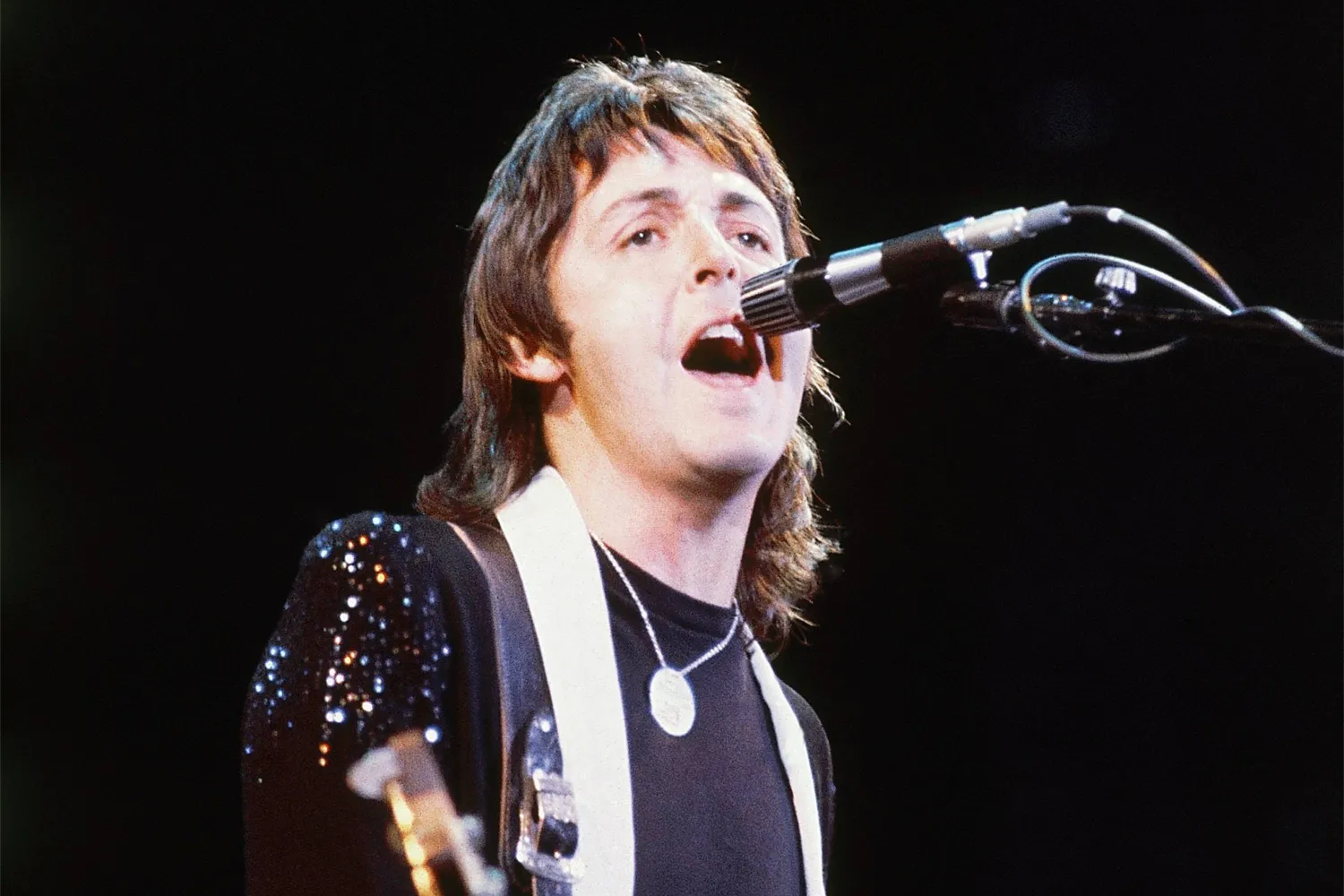


Movie Review: ‘Man on the Run’ Chronicles Paul McCartney’s Post-Beatles Long and Winding Road 

Paul McCartney, of Paul McCartney and Wings, performs at the Nassau Coliseum in Uniondale, NY on May 21, 1976. (AP)
TT

Movie Review: ‘Man on the Run’ Chronicles Paul McCartney’s Post-Beatles Long and Winding Road 

Paul McCartney, of Paul McCartney and Wings, performs at the Nassau Coliseum in Uniondale, NY on May 21, 1976. (AP)

If Peter Jackson’s “The Beatles: Get Back” was the supreme document of the Beatles’ final moments together and of their dissolution, Morgan Neville’s “Man on the Run” is a kind of sequel.

It begins in late 1969, just months after Savile Row rooftop concert. The Beatles have broken up. Paul McCartney has seemingly disappeared. There are even rumors that he’s dead. On a remote farm in Scotland, a confused and distraught McCartney wonders whether he’ll write “another note, ever.”

But the most surprising thing about revisiting this tumultuous, tabloid-ready period of McCartney’s life is a simple fact. When the Beatles broke up, McCartney was 27 years old. To say he had lived a lifetime by then would be an understatement. By just the sheer enormity of their production and colossal cultural impact, you might easily mistakenly put McCartney in middle age by then.

“Man on the Run,” premiering Friday on Prime Video, is the story of everything that came after. McCartney, an executive producer, is never seen sitting for an interview, but his off-camera musings mark the movie, a chronicle of self-renewal. For McCartney, kept boyish by the Beatles, the band's end meant a sudden coming of age.

“I had to look inside myself and find something that wasn’t the Beatles,” McCartney says in the film.

How you feel about McCartney’s post-Beatles career might inform how you feel about “Man on the Run.” For Neville, the celebrated documentary filmmaker of “Won’t You Be My Neighbor,” “Piece by Piece” and “20 Feet From Stardom,” it’s a period that offers no neat narrative, but — quite unlike the mythic Beatles years — something more like the ups and down of life, with regrets and triumphs along the way.

It didn’t get off to a good start. McCartney, blamed for the Beatles breakup, was guilt-ridden. His first records were a disappointment. Singing with Linda McCartney, his wife, wasn’t greeted well. A 1973 TV special that included a rendition of “Mary Had a Little Lamb” was, to put it a mildly, a misjudgment. A curious feature of McCartney’s largely sunny disposition is a nagging self-loathing.

“If I hear someone damning Paul McCartney, I tend to believe them,” he says, referencing the Beatles split.

“Get Back” offered a revelatory window into the group’s dynamics that put many of the old views of McCartney to bed. Comparisons are tough — “Get Back” is one of the greatest docs of the century — but Jackson’s film, drawn largely from footage shot by Michael Lindsay-Hogg, was also incredibly intimate. It captured not only the band’s individual relationships but the songwriting process in real time. (The emergence of “Get Back” from McCartney’s strumming and humming stands as one of the great sequences in documentary film.)

“Man on the Run” lacks that sense of closeness. By keeping the film in archival — the documentary is full of family photos and home movies — and without present-day talking heads, Neville lets us experience McCartney’s post-Beatles years as he did. It comes as a sacrifice, though, to a nearness to McCartney — and to the creation of his solo songs — that might have deepened the film.

The real arc of “Man on the Run” is building toward the creation of McCartney's first post-Beatles band, Wings. It’s in some ways an unlikely centerpiece. In the revolving makeup of the band, Denny Laine was the only permanent member outside Paul and Linda. On the other hand, Wings’ “Band on the Run” is the best album McCartney produced after the Beatles, and the clear culmination of years of struggle. If you needed one, this is your cue to go play “Jet” loud.

It turns out, to no one’s surprise, it’s hard to move on after being in the Beatles — especially for someone like McCartney who believed so sincerely in the band. Like its subject, “Man on the Run” inevitably pales next to films of the Beatles heyday. But it’s a meaningful companion piece about the end of an era and the start of a long and winding road.


Robert Carradine, ‘Revenge of the Nerds’ and ‘Lizzie McGuire’ Star, Dies at 71

Robert Carradine appears at the 24th Annual "A Night at Sardi's" in Beverly Hills, Calif., on March 9, 2016. (AP)
TT

Robert Carradine, ‘Revenge of the Nerds’ and ‘Lizzie McGuire’ Star, Dies at 71

Robert Carradine appears at the 24th Annual "A Night at Sardi's" in Beverly Hills, Calif., on March 9, 2016. (AP)

Robert Carradine, the youngest of his prolific Hollywood family and whose biggest hit was the 1984 comedy “Revenge of the Nerds,” has died at 71.

In a Tuesday statement to news outlets, his family said he lived with bipolar disorder for two decades and died by suicide.

“We want people to know it, and there is no shame in it,” his brother Keith Carradine told Deadline. “It is an illness that got the best of him, and I want to celebrate him for his struggle with it, and celebrate his beautiful soul. He was profoundly gifted, and we will miss him every day.”

Known for both his film and television work, Robert Carradine worked steadily in the industry for over 40 years. Though he collaborated with some of the most respected directors of the day, he never gained the worldwide recognition of his more famous siblings Keith Carradine (also the father of Martha Plimpton) and half-brother David Carradine, who died in 2009.

Robert Carradine, a Los Angeles native and son to character actor John Carradine, was introduced to audiences with roles on the television series “Bonanza” in 1971 and in the John Wayne Western “The Cowboys” in 1972.

Despite his family background, acting wasn't his first calling, though.

“I always had a passion to be a race car driver, and that’s what I thought I was going to do, and at some penultimate moment ... I think I was sitting with my brother David when ‘The Cowboys’ was being cast, and they were interested in David as the bad guy, and he didn’t want to be the guy that shot John Wayne in the back,” Carradine recalled in a 2013 interview with Popdose. “But he said, ‘You know, it is called The Cowboys, and they’re meeting all these young guys. Why don’t you go in?’”

In addition to starring in a short-lived television spinoff of “The Cowboys,” and appearing alongside David Carradine in his popular ABC series “Kung Fu,” he would go on to nab roles in Martin Scorsese’s “Mean Streets,” Hal Ashby’s Vietnam drama “Coming Home,” and Samuel Fuller’s World War II film “The Big Red One.”

The heights of his brother David's success eluded Robert Carradine, but the two could often be seen in the same projects, including in Walter Hill’s “The Long Riders” and Paul Bartel’s “Cannonball.”

Robert Carradine’s biggest hit would come in 1984 with the off-color comedy “Revenge of the Nerds,” in which where he played head nerd Lewis Skolnick, with his abrupt, infectious and guttural laugh. He reprised the role for the big-screen sequel and two made-for-television follow-ups, and continued to pay homage to the beloved character with a guest role on the series “Robot Chicken” and as a co-host (with “Revenge of the Nerds” co-star Curtis Armstrong) of the pop culture competition show “King of the Nerds,” which aired for three seasons.

In the 2000s, Carradine gained small-screen success in The Disney Channel’s “Lizzie McGuire” as the eponymous character’s father.

“It’s really hard to face this reality about an old friend,” Hilary Duff, who played Lizzie McGuire, wrote on Instagram. “There was so much warmth in the McGuire family and I always felt so cared for by my on-screen parents. I’ll be forever grateful for that. I’m deeply sad to learn Bobby was suffering.”

Work remained consistent even if the projects diminished in prestige and quality. Then Quentin Tarantino, ever the champion of fading character actors, cast Carradine in “Django Unchained” as one of the trackers in the 2012 film after seeing a “very furry” photograph, as Carradine told Popdose.

In 2015, Carradine was cited for a Colorado crash that injured him and his wife, Edith. They later divorced, after more than 25 years of marriage.

Carradine's survivors include his three children, actor Ever Carradine, Marika Reed Carradine and Ian Alexander Carradine.

“Whenever anyone asks me how I turned out so normal, I always tell them it’s because of my dad. I knew my dad loved me, I knew it deep in my bones, and I always knew he had my back,” Ever Carradine wrote on Instagram. “I think it’s partly because we basically grew up together. Twenty years age difference really isn’t that much, and while I never ever thought of him as a sibling, I did always think of him as my partner. We were in it together.”


UK to Regulate Netflix and Other Streamers in Line with Broadcasters 

The Netflix logo is displayed during an event in Mumbai, India, February 3, 2026. (Reuters)
TT

UK to Regulate Netflix and Other Streamers in Line with Broadcasters 

The Netflix logo is displayed during an event in Mumbai, India, February 3, 2026. (Reuters)

‌Britain said on Tuesday Netflix, Amazon Prime Video, Disney+ and other streamers would be required to follow the same rules on content and accessibility as traditional broadcasters like the BBC.

Two-thirds of households subscribe to at ‌least one ‌major streamer, with 85% ‌of ⁠people using an ⁠on-demand service each month, compared to 67% who watch live TV, the government said.

Bringing the services into the scope ⁠of regulator Ofcom's broadcasting ‌code would ‌protect audiences from harmful content, and ‌ensure the provision ‌of accessibility services like subtitles, it said.

Streaming services with more than 500,000 UK users will ‌have to adhere to the new standards, which ⁠include ⁠ensuring news is reported accurately and impartially and audiences are protected against harmful or offensive material.

Ofcom will have powers to investigate and take action where they consider there has been a breach of the code, it said.