


At the New York Film Festival, Legacies Loom Large

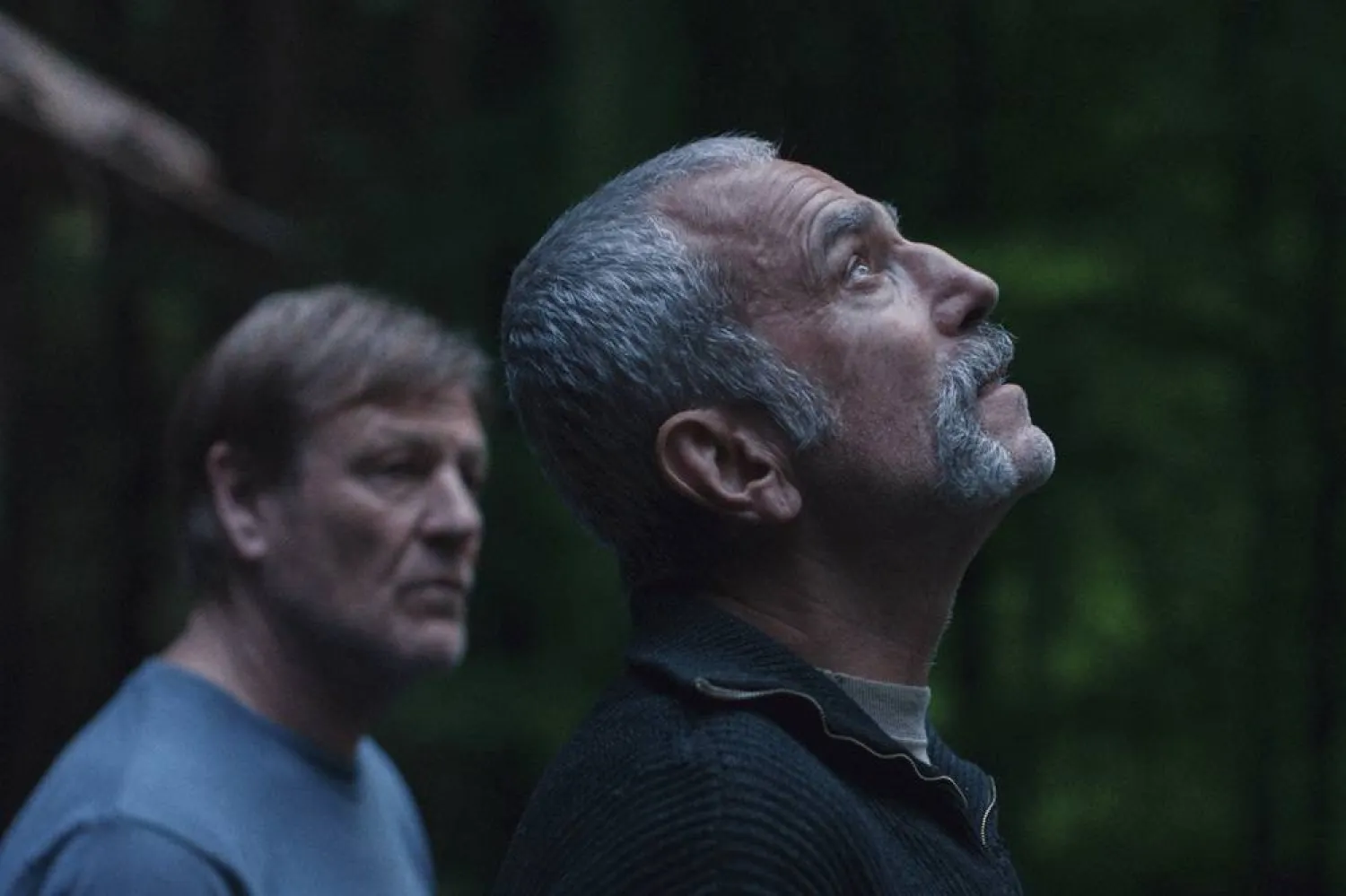
This image released by Focus Features shows Sean Bean, left, and Daniel Day-Lewis in a scene from "Anemone." (Focus Features via AP)
TT

At the New York Film Festival, Legacies Loom Large

This image released by Focus Features shows Sean Bean, left, and Daniel Day-Lewis in a scene from "Anemone." (Focus Features via AP)

Paul Thomas Anderson’s “One Battle After Another” isn’t part of the New York Film Festival’s lineup, but its agitated sense of inheritance and keeping a fighting spirit alive are all over this year’s cinematic convergence at Lincoln Center.

The New York Film Festival kicks off Friday, the same day Anderson’s antic American epic lands in theaters. These aren’t completely separate events. Lincoln Center, which hosts the festival, last weekend screened “One Battle After Another” in 70mm. And several of Anderson’s most important colleagues — Daniel Day-Lewis, Martin Scorsese — will be prominent at this year’s festival.

But more than that, much of what so energetically animates “One Battle After Another” can be felt across a wide spectrum of the 106 features unspooling across the 18-day festival. A variety of threads can be found in a slate ranging from the opening night film, Luca Guadagnino’s “After the Hunt,” to the closing film, Bradley Cooper’s “Is This Thing On?” But many of the highlights of the festival are, like Anderson’s film about a former radical (Leonardo DiCaprio) and his teenage daughter (Chase Infiniti), highly concerned with upholding a legacy, of family or duty or both.

That goes for the festival, itself, which has for 63 years been a standard-bearer for the best in cinema. Coming on the heels of the first barrage of fall festivals, the New York Film Festival, which gathers the best of other festivals while mixing in a handful of its own world premieres, has long been an Upper West Side haven for an aspirational idea of cinema.

“Anyone who cares about film knows that it is an art in need of defending, like many of our core values today,” Dennis Lim, the festival’s artistic director, said in announcing the main slate.

There’s no lack of urgency in this year’s lineup. That includes Laura Poitras and Mark Obenhaus’ “Clover-Up,” a portrait of the investigative reporter Seymour Hersh that doubles as a plea for freedom of the press; “Nuestra Tierra (Landmarks),” the first documentary by the great Argentine filmmaker Lucrecia Martel (“Zama,” “The Headless Woman”), about the 2009 murder of Indigenous community leader Javier Chocobar; and Kathryn Bigelow’s “A House of Dynamite,” an intense White House procedural about a nuclear missile bearing down on the Midwest.

“A House of Dynamite,” which Netflix will release Oct. 10, is part of a rich but specialized cinematic legacy. Like those twin 1964 movies, “Fail Safe” and “Dr. Strangelove or: How I Learned to Stop Worrying and Love the Bomb,” Bigelow’s film is a warning shot. It posits that time has dulled our concern for the threat of nuclear fallout, and it makes a convincing, anxiety-producing case that it’s time to rekindle a mid-century mindset.

Daniel Day-Lewis returns Opening day of the festival will feature the rebirth of a cinematic legacy in his own right. In “Anemone,” Day-Lewis returns from an acting retirement he announced in the wake of his second film with Anderson, 2017's “Phantom Thread.” He co-wrote “Anemone” with his son, Ronan Day-Lewis, who also directs. The movie, fittingly, is a father-son tale. Day-Lewis plays reclusive Irish man whose brother (Sean Bean) comes to his remote cabin to urge him to return to his son.

“Anemone,” which Focus Features will release Oct. 3, is an assured directorial debut for the young filmmaker that carries with it the very welcome news that Day-Lewis hasn’t lost an iota of his intensely magnetic screen presence in the interim.

The last time Day-Lewis appeared publicly in New York was to celebrate Scorsese last year at the National Board of Review Awards. Scorsese, a longtime NYFF regular, will be back at the festival for “Mr. Scorsese,” a five-part documentary series on the 82-year-old filmmaker directed by Rebecca Miller (also Day-Lewis' wife, making the festival a true family affair).

The documentary, which Apple TV+ will debut Oct. 17, is a wonderfully up-close look at Scorsese, featuring warmly intimate interviews with him and his collaborators that nearly answers the unanswerable question of how Scorsese does it. Because Scorsese carries with him so much movie history, Miller’s series is both a portrait of a legend and of half a century of cinema.

‘Sentimental Value’ and the Stillers

Living with the legacy of a show business families sets the backdrop of both Joachim Trier’s piercing family drama “Sentimental Value” (in theaters Nov. 7) and Ben Stiller’s highly personal documentary “Stiller & Meara: Nothing Is Lost” (in theaters Oct. 17, streaming Oct. 24).

In Trier’s film, one of the best of the year, Renate Reinsve, the breakout star of Trier’s “The Worst Person in the World,” plays an acclaimed stage actor estranged from her filmmaker father (Stellan Skarsgård). When he plots a highly autobiographical comeback film, their broken family is brought into uncomfortable proximity, yielding plenty of pain, humor and, maybe, the transcendence of art.

Similar frictions and catharses run through Stiller’s documentary, the actor-director’s portrait of his comedy duo parents, Anne Meara and Jerry Stiller. Stiller uses the copious amount of letters, recordings and diaries left behind by his parents to find a deeper understanding of their marriage — one where performing together was both a bond and a barrier to a singular love story. It, too, stretches across generations, pondering how Meara and Stiller’s relationship with work, fame and each other shaped their children, Ben and Amy.

These films and others give this New York Film Festival a sense of preoccupation with where we’ve come from and where we’re going — a hard-to-grasp divide that “One Battle From Another” tries so hard to straddle and that a festival entry like Óliver Laxe's explosive “Sirāt” is likewise so consumed with.

That’s true in a different way in Richard Linklater’s “Nouvelle Vague.” It’s one of two films by the director at this year’s festival, along with “Blue Moon,” starring Ethan Hawke as “Oklahoma!” lyricist Lorenz Hart. “Nouvelle Vague,” which Netflix will release Oct. 31, is a time capsule and ode to the French New Wave that dramatizes a seminal movie movement and the making of one of its greatest masterpieces, Jean-Luc Godard’s “Breathless.”

The movie, light and lovely, adopts much of the style and flavor of “Breathless,” shooting in black and white. In reconstructing Godard’s first feature, Linklater seeks to honor its unplanned and audacious spirit. Linklater’s Godard is resolutely, defiantly fixed on capturing the moment in a way that so many films — though not “One Battle After Another” — fall short of. He barks at his script supervisor: “Reality is not continuity!”


Taylor Swift Bags Best-selling Artist of 2025 Award

FILE PHOTO: Taylor Swift poses at the red carpet during the 67th Annual Grammy Awards in Los Angeles, California, US, February 2, 2025. REUTERS/Daniel Cole/File Photo
TT

Taylor Swift Bags Best-selling Artist of 2025 Award

FILE PHOTO: Taylor Swift poses at the red carpet during the 67th Annual Grammy Awards in Los Angeles, California, US, February 2, 2025. REUTERS/Daniel Cole/File Photo

US pop star Taylor Swift was crowned the biggest-selling global artist of 2025, industry body IFPI announced Wednesday, the fourth consecutive year and sixth time she has claimed its annual prize.

The 36-year-old's success was turbo-charged by the October release of her latest album, "The Life of a Showgirl", which set several streaming records, as well as the release of a docuseries about her record-breaking The Eras tour.

"2025 was another landmark year (for Swift), driven by exceptional worldwide engagement across streaming, physical and digital formats with the release of her 12th album ... and the documentary of her tour," IFPI said.

The body, which represents the recorded music industry worldwide, noted Swift had now won its top annual artist prize as many times as all other artists combined over the past 10 years, AFP.

IFPI hands out the Global Artist of the Year Award after calculating an artist's or group's worldwide sales across streaming, downloads and physical music formats during the calendar year and covers their entire body of work.

Swift beat out Korean group Stray Kids, which came in second -- its highest-ever ranking and the third consecutive year in the global top five.

Fresh from his Super Bowl halftime show, Puerto Rican artist Bad Bunny placed fifth in the rankings, his sixth consecutive year in the chart.

American rapper Tyler, The Creator marked his first appearance on the chart, in 12th place, with IFPI noting he had "continued to generate strong vinyl sales across his catalogue".

Meanwhile Japanese rock band Mrs. Green Apple entered the rankings for the first time one place below him, following what IFPI called "the success of their anniversary album '10'".


Berlin Film Festival Rejects Accusation of Censorship on Gaza

Berlinale Festival Director Tricia Tuttle speaks during the Berlinale Camera award ceremony honoring British composer Max Richter during the 76th Berlin International Film Festival, in Berlin, Germany, 18 February 2026. (EPA)
TT

Berlin Film Festival Rejects Accusation of Censorship on Gaza

Berlinale Festival Director Tricia Tuttle speaks during the Berlinale Camera award ceremony honoring British composer Max Richter during the 76th Berlin International Film Festival, in Berlin, Germany, 18 February 2026. (EPA)

The director of the Berlin Film Festival on Wednesday rejected accusations from more than 80 film industry figures that the festival had helped censor artists who oppose Israel's actions in Gaza.

In an open letter published on Tuesday, Oscar-winning actors Javier Bardem and Tilda Swinton were among dozens who criticized the Berlinale's "silence" on the issue and said they were "dismayed" at its "involvement in censoring artists who oppose Israel's ongoing genocide against Palestinians in Gaza".

In an interview with Screen Daily, the Berlinale's director, Tricia Tuttle, said the festival backs "free speech within the bounds of German law".

She said she recognized that the letter came from "the depth of anger and frustration about the suffering of people in Gaza".

However, she rejected accusations of censorship, saying that the letter contained "misinformation" and "inaccurate claims about the Berlinale" made without evidence or anonymously.

The row over Gaza has dogged this year's edition of the festival since jury president Wim Wenders answered a question on the conflict by saying: "We cannot really enter the field of politics."

The comments prompted award-winning novelist Arundhati Roy, who had been due to present a restored version of a film she wrote, to withdraw from the festival.

Tuttle said the festival represents "lots of people who have different views, including lots of people who live in Germany who want a more complex understanding of Israel's positionality than maybe the rest of the world has right now".

German politicians have been largely supportive of Israel as Germany seeks to atone for the legacy of the Holocaust.

However, German public opinion has been more critical of Israeli actions in Gaza.

Commenting on the row to the Welt TV channel, German Culture Minister Wolfram Weimer defended Wenders and Tuttle from criticism, saying they were running the festival "in a very balanced way, very sensitively".

"Artists should not be told what to do when it comes to politics. The Berlinale is not an NGO with a camera and directors," Weimer said.

Gaza has frequently been a topic of controversy at the Berlinale in recent years.

In 2024, the festival's documentary award went to "No Other Land", which follows the dispossession of Palestinian communities in the Israeli-occupied West Bank.

German government officials criticized "one-sided" remarks about Gaza by the directors of that film and others at that year's awards ceremony.


Over 80 Berlin Film Festival Alumni Sign Open Letter Urging Organizers to Take Stance on Gaza 

12 February 2026, Berlin: President of the Berlinale jury Wim Wenders waves to the audience on the opening night of the 76th Berlin International Film Festival, before the premiere of the opening film "No Good Men" at the Berlinale Palast. (dpa)
TT

Over 80 Berlin Film Festival Alumni Sign Open Letter Urging Organizers to Take Stance on Gaza 

12 February 2026, Berlin: President of the Berlinale jury Wim Wenders waves to the audience on the opening night of the 76th Berlin International Film Festival, before the premiere of the opening film "No Good Men" at the Berlinale Palast. (dpa)

More than 80 actors, directors and other ‌artists who have taken part in the Berlin Film Festival, including Tilda Swinton and Javier Bardem, signed an open letter to the organizers published on Tuesday calling for them to take a clear stance on Israel's war in Gaza.

"We call on the Berlinale to fulfil its moral duty and clearly state its opposition to Israel's genocide, crimes against humanity and war crimes against Palestinians," said the open letter, which was published in full in entertainment industry magazine Variety.

Multiple human rights experts, scholars and a UN inquiry say Israel's assault on Gaza amounts to genocide. Israel calls its actions self-defense after Hamas' October 2023 attack on Israel.

"We are appalled by Berlinale's institutional silence," ‌said the letter, which ‌was also signed by actors Adam McKay, Alia Shawkat and ‌Brian ⁠Cox, and director ⁠Mike Leigh.

It said organizers had not met demands to issue a statement affirming Palestinians' right to life and committing to uphold artists' right to speak out on the issue.

"This is the least it can - and should - do," the letter said.

The festival did not immediately respond to an emailed request for comment.

THE MOST POLITICAL FESTIVAL

The Berlin Film Festival is considered the most political of its peers, Venice and Cannes, and ⁠prides itself on showing cinema from under-represented communities and young ‌talent. However, it has been repeatedly criticized by pro-Palestinian activists ‌for not taking a stand on Gaza, in contrast to the war in Ukraine ‌and the situation in Iran.

Calls have also previously been made for the ‌entertainment industry to take a stance on Gaza.

Last year, over 5,000 actors, entertainers, and producers, including some Hollywood stars, signed a pledge to not work with Israeli film institutions that they saw as being complicit in the abuse of Palestinians by Israel.

Paramount studio later condemned that ‌pledge and said it did not agree with such efforts.

ROY PULLS OUT

Tuesday's letter also condemned statements by this year's ⁠jury president, German director ⁠Wim Wenders, that filmmakers should stay out of politics, writing: "You cannot separate one from the other."

Wenders' comments prompted Indian novelist Arundhati Roy, winner of the Booker Prize in 1997 for her novel "The God of Small Things", to pull out of the festival earlier this week.

Roy, who had been due to present "In Which Annie Gives It Those Ones", a 1989 film which she wrote, in the Berlinale's Classics section, characterized Wenders' comments as "unconscionable."

In response, festival director Tricia Tuttle issued a note on Saturday defending artists' decision not to comment on political issues.

"People have called for free speech at the Berlinale. Free speech is happening at the Berlinale," she said.

"But increasingly, filmmakers are expected to answer any question put to them," she wrote, and are criticized if they do not answer, or answer "and we do not like what they say."