


‘The Secret Agent’ Earns 4 Oscar Nominations, Boosting Brazilian Cinema

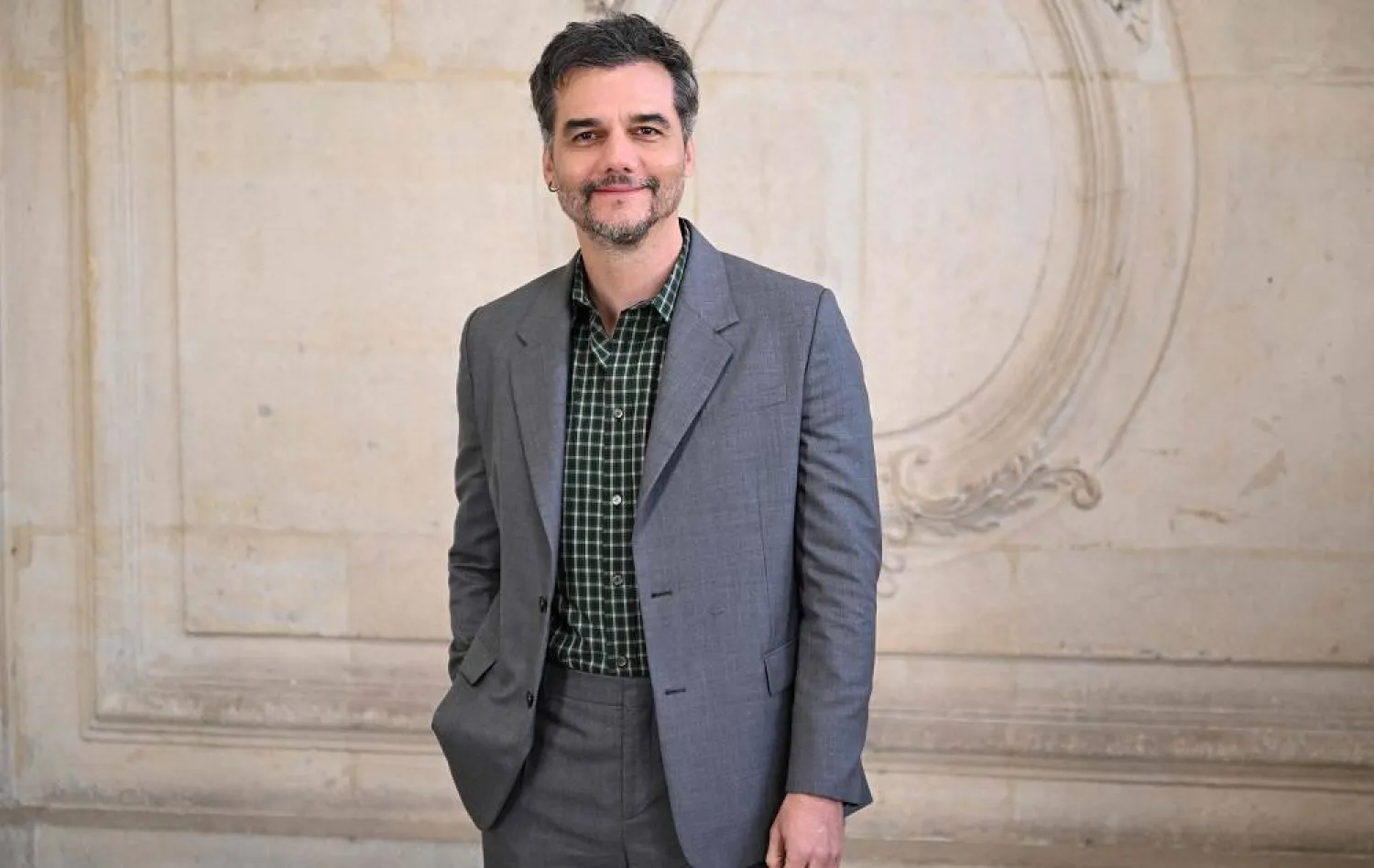
Brazilian actor and producer Wagner Moura poses for a photocall ahead of the Dior Menswear Ready-to-wear Fall-Winter 2026/2027 collection as part of the Men Paris Fashion Week in Paris on January 21, 2026. (AFP)
TT

‘The Secret Agent’ Earns 4 Oscar Nominations, Boosting Brazilian Cinema

Brazilian actor and producer Wagner Moura poses for a photocall ahead of the Dior Menswear Ready-to-wear Fall-Winter 2026/2027 collection as part of the Men Paris Fashion Week in Paris on January 21, 2026. (AFP)

Brazilians celebrated the nomination of “The Secret Agent” film to four Oscar categories on Thursday, which many said confirmed the rise of Brazilian cinema and its universal appeal.

“The Secret Agent” — nominated for best picture, best actor, best international film and achievement in casting — now shares Brazil's record for nominations, alongside the famed 2002 film “City of God” set in a favela in Rio de Janeiro.

“The Secret Agent” follows a widowed father — played by Wagner Moura — who becomes a target of Brazil’s military dictatorship in the 1970s simply because he stands up to a business owner with ties to the regime.

Director Kleber Mendonça Filho said that more than one million spectators have seen the film, in a video posted on social media Thursday following the nominations.

Last year, Brazilian feature film “I’m Still Here” was also a box office success, drawing millions of moviegoers. It was nominated in three categories and won best international feature, giving Brazil its first Oscar.

The back-to-back successes are leading many to say that Brazil is living a particularly fruitful moment for its cinema, including President Luiz Inácio Lula da Silva, who said that the local industry is currently “experiencing one of the best moments in its history.”

The nominations are “recognition of our culture and of Brazil’s ability to tell stories that move the world,” he said on social media.

“I’m Still Here” is also set during the dictatorship, and observers say both films have contributed to nationwide discussion about the dark period in Brazil's history from 1964 to 1985, when people were tortured and disappeared.

Lúcia Espírito Santo, a 78-year-old retired lawyer, said that she herself had to watch her words when she was studying law at university for fear of disappearing.

“What we see in the film happened a lot. People would disappear and you didn’t know why. Friends of mine from college disappeared because they spoke out, they advocated for freedom and democracy,” she said, exiting the cinema after seeing the film.

Sabrina Guimarães, a 20-year-old student at a Rio de Janeiro university, who went to see the film Thursday, said learning about the country’s history is essential.

“Even though we learn this stuff at school, we don’t spend much time on it and it’s not very specific. Feeling like you’re there in the person’s shoes, knowing what was happening at the time is very interesting,” she said.

“It’s good to understand what happened in the past so we don’t repeat these things in the future.”

Director Mendonça Filho said the film is a reaction to Brazil's past decade of political turmoil, including the far-right administration of former President Jair Bolsonaro, who last year was sentenced to 27 years and three months in prison for attempting a coup.

But the film also dialogues with the political climate in other places around the world, he said in an interview with The Associated Press on Thursday.

“The film is very Brazilian, but it’s also universal, so it can be used to discuss issues in the United States, in Europe or in Brazil,” Mendonça Filho said. “The theme of power being used to crush people and social classes is a theme that’s current, not just historical.”

Casting director Gabriel Domingues, who was nominated in the new category of “achievement in casting,” said the outpouring of support for the film reflects broader enthusiasm for Brazilian cinema.

“Brazilian cinema is really in a moment of intense emotion, beyond just excitement. People get very moved, with this participation in international events and awards and everything,” Domingues told The Associated Press, comparing it to Brazil's atmosphere around soccer.

Ana Paula Sousa, an expert in cinema and teacher at the ESPM University in Sao Paulo, said that the achievements of “I’m Still Here” and “The Secret Agent” are changing Brazilians’ relation to the film industry in a country were movie attendance is historically low.

“People are talking about Brazilian cinema and thinking it’s cool to talk about it. (...) That's something we didn’t see before, and it’s really great,” she said.

Sousa said she hopes the successes will spark more consistent movie attendance among Brazilians.

Espírito Santo, the elderly moviegoer in Rio, said that she was incredibly proud of Brazilian cinema following the Oscar nominations.

“We’re showing up, stepping onto the red carpet abroad,” she said. “Brazil is starting to look like a producer of films, of well-told stories.”




Taylor Swift Bags Best-selling Artist of 2025 Award

FILE PHOTO: Taylor Swift poses at the red carpet during the 67th Annual Grammy Awards in Los Angeles, California, US, February 2, 2025. REUTERS/Daniel Cole/File Photo
TT

Taylor Swift Bags Best-selling Artist of 2025 Award

FILE PHOTO: Taylor Swift poses at the red carpet during the 67th Annual Grammy Awards in Los Angeles, California, US, February 2, 2025. REUTERS/Daniel Cole/File Photo

US pop star Taylor Swift was crowned the biggest-selling global artist of 2025, industry body IFPI announced Wednesday, the fourth consecutive year and sixth time she has claimed its annual prize.

The 36-year-old's success was turbo-charged by the October release of her latest album, "The Life of a Showgirl", which set several streaming records, as well as the release of a docuseries about her record-breaking The Eras tour.

"2025 was another landmark year (for Swift), driven by exceptional worldwide engagement across streaming, physical and digital formats with the release of her 12th album ... and the documentary of her tour," IFPI said.

The body, which represents the recorded music industry worldwide, noted Swift had now won its top annual artist prize as many times as all other artists combined over the past 10 years, AFP.

IFPI hands out the Global Artist of the Year Award after calculating an artist's or group's worldwide sales across streaming, downloads and physical music formats during the calendar year and covers their entire body of work.

Swift beat out Korean group Stray Kids, which came in second -- its highest-ever ranking and the third consecutive year in the global top five.

Fresh from his Super Bowl halftime show, Puerto Rican artist Bad Bunny placed fifth in the rankings, his sixth consecutive year in the chart.

American rapper Tyler, The Creator marked his first appearance on the chart, in 12th place, with IFPI noting he had "continued to generate strong vinyl sales across his catalogue".

Meanwhile Japanese rock band Mrs. Green Apple entered the rankings for the first time one place below him, following what IFPI called "the success of their anniversary album '10'".


Berlin Film Festival Rejects Accusation of Censorship on Gaza

Berlinale Festival Director Tricia Tuttle speaks during the Berlinale Camera award ceremony honoring British composer Max Richter during the 76th Berlin International Film Festival, in Berlin, Germany, 18 February 2026. (EPA)
TT

Berlin Film Festival Rejects Accusation of Censorship on Gaza

Berlinale Festival Director Tricia Tuttle speaks during the Berlinale Camera award ceremony honoring British composer Max Richter during the 76th Berlin International Film Festival, in Berlin, Germany, 18 February 2026. (EPA)

The director of the Berlin Film Festival on Wednesday rejected accusations from more than 80 film industry figures that the festival had helped censor artists who oppose Israel's actions in Gaza.

In an open letter published on Tuesday, Oscar-winning actors Javier Bardem and Tilda Swinton were among dozens who criticized the Berlinale's "silence" on the issue and said they were "dismayed" at its "involvement in censoring artists who oppose Israel's ongoing genocide against Palestinians in Gaza".

In an interview with Screen Daily, the Berlinale's director, Tricia Tuttle, said the festival backs "free speech within the bounds of German law".

She said she recognized that the letter came from "the depth of anger and frustration about the suffering of people in Gaza".

However, she rejected accusations of censorship, saying that the letter contained "misinformation" and "inaccurate claims about the Berlinale" made without evidence or anonymously.

The row over Gaza has dogged this year's edition of the festival since jury president Wim Wenders answered a question on the conflict by saying: "We cannot really enter the field of politics."

The comments prompted award-winning novelist Arundhati Roy, who had been due to present a restored version of a film she wrote, to withdraw from the festival.

Tuttle said the festival represents "lots of people who have different views, including lots of people who live in Germany who want a more complex understanding of Israel's positionality than maybe the rest of the world has right now".

German politicians have been largely supportive of Israel as Germany seeks to atone for the legacy of the Holocaust.

However, German public opinion has been more critical of Israeli actions in Gaza.

Commenting on the row to the Welt TV channel, German Culture Minister Wolfram Weimer defended Wenders and Tuttle from criticism, saying they were running the festival "in a very balanced way, very sensitively".

"Artists should not be told what to do when it comes to politics. The Berlinale is not an NGO with a camera and directors," Weimer said.

Gaza has frequently been a topic of controversy at the Berlinale in recent years.

In 2024, the festival's documentary award went to "No Other Land", which follows the dispossession of Palestinian communities in the Israeli-occupied West Bank.

German government officials criticized "one-sided" remarks about Gaza by the directors of that film and others at that year's awards ceremony.


Over 80 Berlin Film Festival Alumni Sign Open Letter Urging Organizers to Take Stance on Gaza 

12 February 2026, Berlin: President of the Berlinale jury Wim Wenders waves to the audience on the opening night of the 76th Berlin International Film Festival, before the premiere of the opening film "No Good Men" at the Berlinale Palast. (dpa)
TT

Over 80 Berlin Film Festival Alumni Sign Open Letter Urging Organizers to Take Stance on Gaza 

12 February 2026, Berlin: President of the Berlinale jury Wim Wenders waves to the audience on the opening night of the 76th Berlin International Film Festival, before the premiere of the opening film "No Good Men" at the Berlinale Palast. (dpa)

More than 80 actors, directors and other ‌artists who have taken part in the Berlin Film Festival, including Tilda Swinton and Javier Bardem, signed an open letter to the organizers published on Tuesday calling for them to take a clear stance on Israel's war in Gaza.

"We call on the Berlinale to fulfil its moral duty and clearly state its opposition to Israel's genocide, crimes against humanity and war crimes against Palestinians," said the open letter, which was published in full in entertainment industry magazine Variety.

Multiple human rights experts, scholars and a UN inquiry say Israel's assault on Gaza amounts to genocide. Israel calls its actions self-defense after Hamas' October 2023 attack on Israel.

"We are appalled by Berlinale's institutional silence," ‌said the letter, which ‌was also signed by actors Adam McKay, Alia Shawkat and ‌Brian ⁠Cox, and director ⁠Mike Leigh.

It said organizers had not met demands to issue a statement affirming Palestinians' right to life and committing to uphold artists' right to speak out on the issue.

"This is the least it can - and should - do," the letter said.

The festival did not immediately respond to an emailed request for comment.

THE MOST POLITICAL FESTIVAL

The Berlin Film Festival is considered the most political of its peers, Venice and Cannes, and ⁠prides itself on showing cinema from under-represented communities and young ‌talent. However, it has been repeatedly criticized by pro-Palestinian activists ‌for not taking a stand on Gaza, in contrast to the war in Ukraine ‌and the situation in Iran.

Calls have also previously been made for the ‌entertainment industry to take a stance on Gaza.

Last year, over 5,000 actors, entertainers, and producers, including some Hollywood stars, signed a pledge to not work with Israeli film institutions that they saw as being complicit in the abuse of Palestinians by Israel.

Paramount studio later condemned that ‌pledge and said it did not agree with such efforts.

ROY PULLS OUT

Tuesday's letter also condemned statements by this year's ⁠jury president, German director ⁠Wim Wenders, that filmmakers should stay out of politics, writing: "You cannot separate one from the other."

Wenders' comments prompted Indian novelist Arundhati Roy, winner of the Booker Prize in 1997 for her novel "The God of Small Things", to pull out of the festival earlier this week.

Roy, who had been due to present "In Which Annie Gives It Those Ones", a 1989 film which she wrote, in the Berlinale's Classics section, characterized Wenders' comments as "unconscionable."

In response, festival director Tricia Tuttle issued a note on Saturday defending artists' decision not to comment on political issues.

"People have called for free speech at the Berlinale. Free speech is happening at the Berlinale," she said.

"But increasingly, filmmakers are expected to answer any question put to them," she wrote, and are criticized if they do not answer, or answer "and we do not like what they say."